楚才系列人形机器人

Search documents
武汉人工智能产业规模今年有望突破千亿元
Zheng Quan Shi Bao Wang· 2025-12-18 10:41
Group 1 - The core viewpoint of the news is that Wuhan's artificial intelligence industry is expected to exceed 100 billion yuan in scale this year, with over 1,000 AI companies gathered in the city and 9 companies listed in the 2025 Forbes China AI Technology Companies Top 50, ranking fourth nationwide [1][2] - The Wuhan government has implemented multiple policies to support breakthroughs in AI technology and industry, and the city has been approved as a national AI innovation application pilot zone and a national new generation AI innovation development experimental zone, holding an important position in the national strategic layout [1] - The Hubei provincial government has recently released implementation opinions to accelerate the development of the AI industry, aiming to establish a nationally influential AI innovation development highland and industrial development aggregation area by 2027, positioning Wuhan among the top tier of AI cities in the country [1] Group 2 - Wuhan has issued the "Promoting 'AI + Manufacturing' Action Plan," which aims to empower new industrialization through a dual drive of "intelligent industrialization and industrial intelligence," with goals to establish 20 national-level excellent smart factories and cultivate 100 benchmark applications of industrial intelligence by 2027 [2] - Industry leaders, such as the CEO of Ruilei Wisdom, highlighted Wuhan's strong advantages in AI industry development, supported by a national-level cybersecurity base, and expressed intentions to enhance overall industry security and service more fields [2] - The humanoid robot industry in Wuhan is experiencing explosive growth, with plans to establish a regional headquarters in Wuhan and expand market reach in central China, leveraging the city's industrial radiation capabilities [2]
武汉人工智能产业规模今年有望破千亿元
Chang Jiang Ri Bao· 2025-12-18 00:34
Core Insights - The 2025 Wuhan Artificial Intelligence Industry Cooperation and Exchange Conference focused on deepening industry cooperation and demand alignment in the AI sector [1] - Wuhan has implemented multiple policies to support breakthroughs in AI technology and industry, positioning itself as a key player in national strategic layouts [1][2] - The city aims to create a top-tier business environment to attract AI companies and ensure their growth and comfort [1] Industry Development - Wuhan's AI industry is projected to reach a scale of 70 billion yuan in 2024, with an annual growth rate exceeding 30% over the past three years, and is expected to surpass 100 billion yuan this year [2] - The city has over 1,000 AI companies, ranking fourth nationally with nine firms listed in the 2025 Forbes China AI Technology Companies Top 50 [2] - Notable products such as the Chucai series humanoid robots and various "national first" innovations in domestic databases and AI chips for smart vehicles have emerged from Wuhan [2] Company Perspectives - Executives from companies like Ruile Wisdom and Qianxun Intelligent expressed strong confidence in Wuhan's AI industry, highlighting its robust advantages and the presence of a national-level cybersecurity base [2] - Qianxun Intelligent plans to establish its Central China headquarters in Wuhan, leveraging the city's industrial radiation capabilities to expand into the central region market [2] - Attendees at the conference unanimously recognized Wuhan's foundational strengths in AI development, including talent, platforms, scenarios, ecosystems, and supportive policies [2]


半年报看发展|稳健运行 量质并进 湖北支点建设扎实推进
Sou Hu Cai Jing· 2025-07-30 10:26
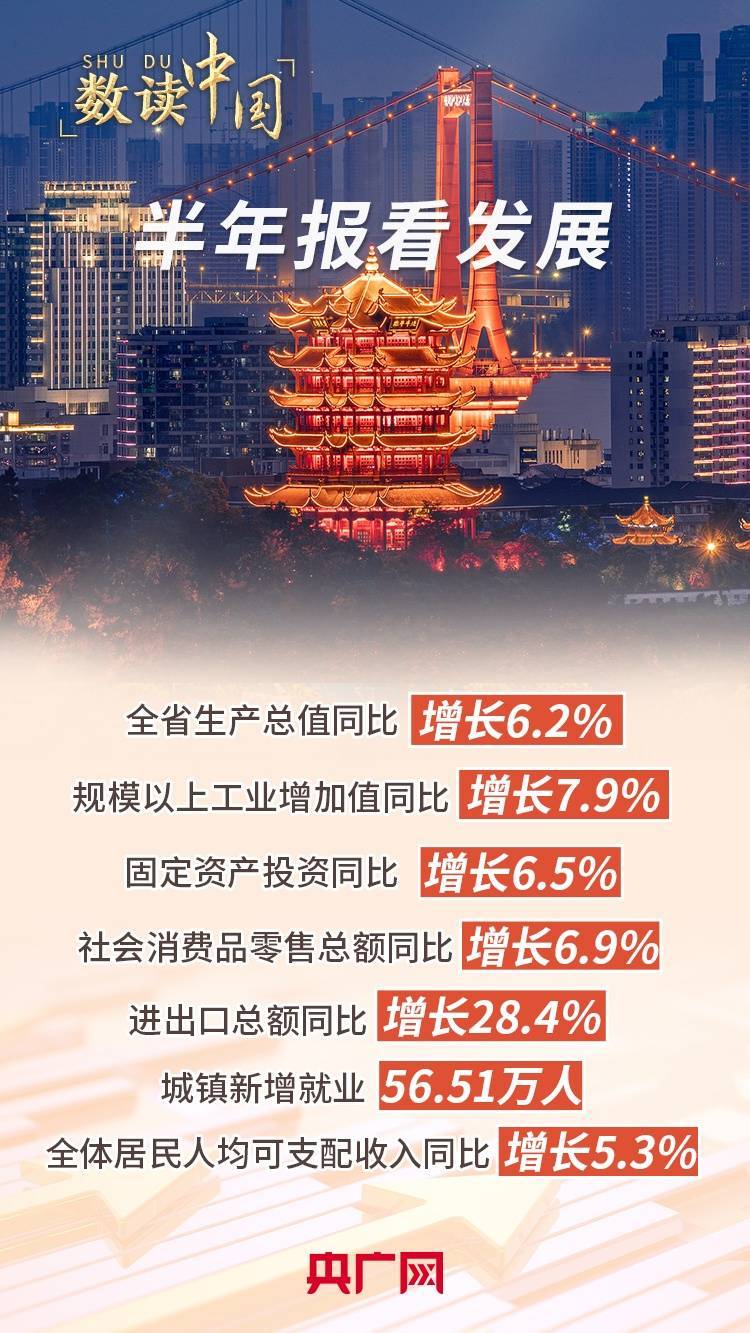
Economic Overview - Hubei Province achieved a GDP of 29,642.61 billion yuan in the first half of 2025, with a year-on-year growth of 6.2%, surpassing the national average by 0.9% [3][4] - The economic stability is reflected in both total growth and supply-demand coordination, with Hubei's GDP growth rate being 0.4 percentage points higher than the previous year [4] Supply and Demand Dynamics - Industrial added value for enterprises above designated size grew by 7.9%, exceeding the national average by 1.5 percentage points [5] - The service sector's revenue increased by 12.2%, outpacing the national average by 4.1 percentage points [5] - Fixed asset investment, retail sales of consumer goods, and total import-export volume grew by 6.5%, 6.9%, and 28.4% respectively, all significantly ahead of national averages [5] Innovation and Industrial Upgrading - Investment in high-tech industries rose by 8.8%, with high-tech service industry investment increasing by 24.6% [6] - The value added of high-tech manufacturing grew by 14.4%, contributing 27.5% to the industrial growth of enterprises above designated size [6] Service Sector Growth - The service sector's added value increased by 6.4%, with significant revenue growth in multi-modal transport and service industries [7] - Financial institutions reported a year-on-year growth of 9.3% in loans and 7.9% in deposits by the end of June [7] Trade and Export Performance - Hubei's total import-export volume reached 402.31 billion yuan, with a year-on-year growth of 28.4%, leading the central region [8] - Exports grew by 38.5%, significantly higher than the national average, with private enterprises accounting for 71.2% of total trade [8] Consumer Market Trends - Retail sales of consumer goods totaled 13,073.93 billion yuan, with a year-on-year growth of 6.9% [12] - The "old-for-new" policy spurred significant growth in retail sales of home appliances and furniture [12] Investment Highlights - Fixed asset investment (excluding rural households) grew by 6.5%, with manufacturing investment increasing by 12.5% [13] - Private investment, excluding real estate, showed a recovery trend with an 11.4% growth [13] Employment and Income - Hubei added 565,100 urban jobs in the first half of the year, with an average unemployment rate of 5.3% [14] - Per capita disposable income reached 18,930 yuan, reflecting a year-on-year growth of 5.3% [14] Agricultural Production - Summer grain production reached 9.901 billion jin, marking six consecutive years of growth [16] - Prices remained stable, with a slight increase in consumer prices, indicating improved terminal demand [16]