比亚迪元Pro

Search documents
盘点2025:让车企走下坡路的九大“致命伤”
3 6 Ke· 2026-01-16 12:12
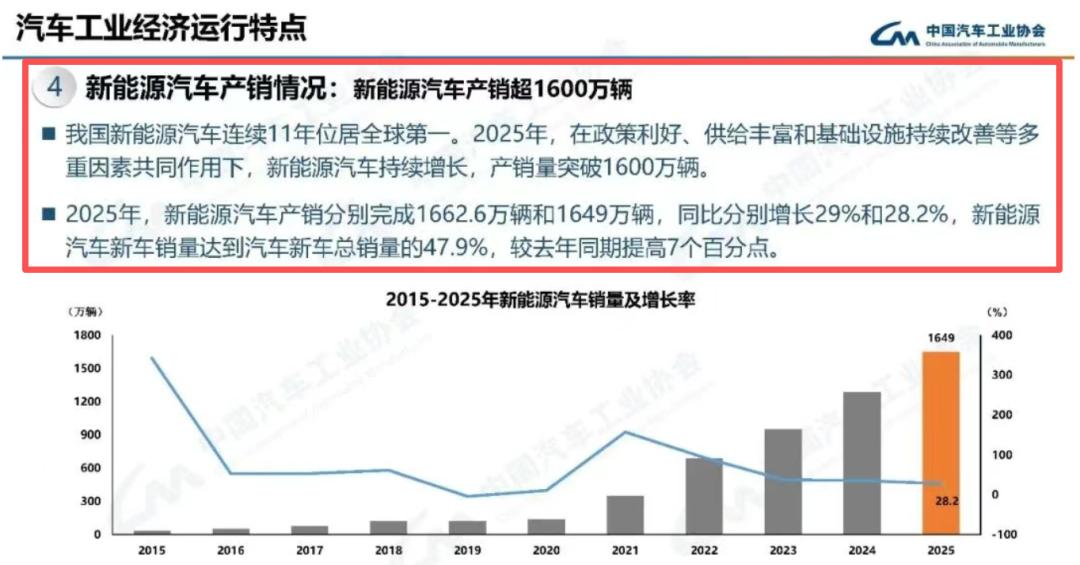
Core Insights - The Chinese electric vehicle (EV) market saw record production and sales in 2025, with 16.626 million units produced and 16.49 million units sold, marking a year-on-year growth of 29% and 28.2% respectively, maintaining its position as the global leader for 11 consecutive years [1][3] - A significant industry reshuffle is underway, with previously dominant brands experiencing declines, highlighting that success now hinges on minimizing errors rather than just speed [3][4] Group 1: Market Dynamics - The rapid evolution of the EV market has led to increased competition, with companies like Li Auto facing challenges due to slow product line updates, resulting in lost market share [4][9] - Competitors have surpassed Li Auto in key metrics such as electric range and technology, prompting Li Auto to accelerate its product upgrade cycle from four years to two [9][10] Group 2: Quality Control Issues - Manufacturing quality issues, such as the "spray powder" problem affecting BYD vehicles, have led to customer dissatisfaction and complaints, indicating potential weaknesses in quality control and supply chain management [10][11][14] - These quality concerns can erode brand loyalty and consumer trust, as they directly impact user experience [14] Group 3: Marketing and Trust - Some companies are engaging in "small print marketing," which obscures critical information and can lead to trust erosion among consumers, as seen with Xiaomi's SU7 [15][18] - The practice of reducing vehicle configurations without proper disclosure has resulted in significant backlash, particularly for XPeng's G6 model, leading to a sharp decline in brand reputation [18][22] Group 4: Design and Consumer Perception - Controversial design choices, such as those made for the Li Auto MEGA, have sparked public debate and negatively affected sales and brand image [23][25] - A disconnect between innovative design and consumer expectations can lead to adverse market reactions [25] Group 5: Supply Chain and Financial Health - The financial struggles of companies like Nezha, which reported a mere 15.45 million yuan in cash against debts exceeding 26 billion yuan, highlight the risks of aggressive expansion without solid financial foundations [30][32] - Poor supplier choices can lead to significant reputational damage, as seen with Zeekr's "zero self-ignition" claim being undermined by safety incidents [33][35] Group 6: Product Recalls and Safety - Major recalls due to safety issues, such as those affecting Xiaomi and BYD, underscore the importance of rigorous product testing and quality assurance [36][39] - Recalls not only incur financial costs but also severely damage brand reputation and consumer confidence [39] Group 7: Competitive Landscape - The EV industry is evolving into a comprehensive competition encompassing strategic stability, technological innovation, honest marketing, and robust supply chain management [39] - Companies that respect manufacturing principles and maintain a focus on user value are more likely to succeed in this challenging environment [39]





最新召回信息!车主速看
Huan Qiu Wang· 2025-10-20 06:55
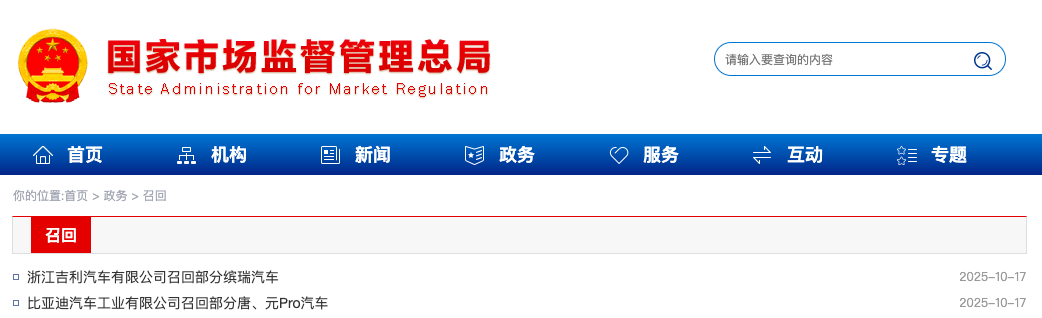
Core Points - The National Market Supervision Administration has announced a recall involving over 160,000 vehicles from BYD and Geely [1][5] Group 1: BYD Recall - BYD Auto Industry Co., Ltd. is recalling 44,535 units of the 2015 Tang series due to a design issue with components that may cause the drive motor controller to malfunction, potentially leading to safety hazards [3] - The recall includes vehicles produced between March 28, 2015, and July 28, 2017, and is initiated under the defect investigation by the National Market Supervision Administration [3] - Additionally, 71,248 units of the Yuan Pro electric vehicles are being recalled due to manufacturing issues that may lead to water ingress in the battery, posing safety risks [4] Group 2: Geely Recall - Geely Automobile Co., Ltd. is recalling 46,108 units of the 2019 Binrui 1.0T-6DCT and Binrui 1.0T BJ6 due to unclear labeling on the engine oil filler cap, which may result in engine damage if incompatible oil is used [5] - The recall affects vehicles produced between December 17, 2018, and March 31, 2020, and is also initiated following a defect investigation by the National Market Supervision Administration [5] - Geely will replace the oil filler cap and update the user manual for affected vehicles, ensuring safety and compliance with emission standards [5]