汤剂

Search documents
誉研堂递表港交所 以“全生命周期诊疗模式”构建现代中医服务体系
Zhi Tong Cai Jing· 2026-01-17 06:01
Core Viewpoint - Harbin Yuyuantang Traditional Chinese Medicine Clinic Group Co., Ltd. has submitted its prospectus to the Hong Kong Stock Exchange, aiming to leverage its innovative "full lifecycle diagnosis and treatment model" to enhance its market position in the traditional Chinese medicine sector [1][7]. Group 1: Business Model and Services - The company integrates offline licensed medical institutions with a dedicated online platform, creating a comprehensive service system that includes "offline initial diagnosis and online follow-up" [1][2]. - Yuyuantang's full lifecycle diagnosis and treatment model covers disease prevention, adjustment, treatment, and health maintenance, providing personalized and continuous health management services [2][7]. - The company has established a network of 48 self-operated licensed medical institutions in Northern China, utilizing a unified cloud-based medical information system for digital management [2][6]. Group 2: Market Position and Customer Loyalty - According to a report by Frost & Sullivan, Yuyuantang ranks second among private chain TCM medical service providers in Northern China by total revenue and first in revenue from medicinal pastes [1]. - The company's customer repurchase rate reached 81.1% as of September 30, 2025, indicating strong market recognition of its service value and efficacy [3]. Group 3: Product Development and Supply Chain - Yuyuantang adheres to the "one person, one prescription" principle, offering various personalized traditional Chinese medicine formulations, including decoctions, pills, powders, and pastes [4]. - The company has developed proprietary non-heritage pastes that enhance patient compliance and serve as key components in chronic disease management [4]. - Yuyuantang is focused on building a dedicated facility for producing traditional Chinese medicine pieces, ensuring supply chain security and quality control through vertical integration [6]. Group 4: Strategic Outlook - The company plans to expand its geographic footprint in provinces such as Shandong, Hebei, Henan, and Tianjin, while enhancing resource allocation and market influence [6]. - With the ongoing implementation of the "Healthy China 2030" initiative and various TCM revitalization policies, the market for TCM medical services is poised for systematic growth, aligning with the increasing demand for long-term health management [7].
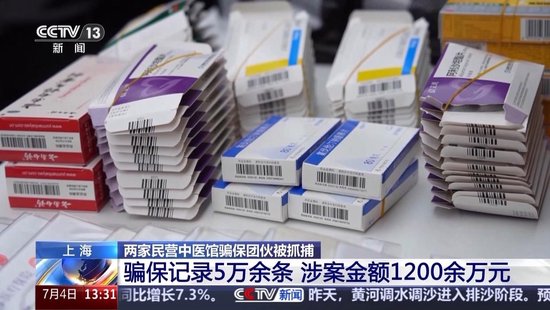
职工和药厂勾结、虚假开药 上海两家民营中医馆骗保1200余万元
Yang Shi Xin Wen Ke Hu Duan· 2025-07-04 06:36
Core Insights - The Shanghai police have dismantled a healthcare fraud ring involving a designated medical institution, which has committed over 50,000 fraudulent claims amounting to more than 120 million yuan in two years [1][13]. Group 1: Fraud Scheme Details - The fraud was orchestrated by the Yiyang Traditional Chinese Medicine Hospital, where internal staff colluded with external pharmaceutical companies to submit false claims [3][9]. - Investigations revealed that many insured individuals did not actually visit the hospital, yet their records showed multiple prescriptions and treatments [3][9]. - A specific employee, Zhao, was noted for bringing numerous neighbors to the hospital, resulting in over 300 visits in just six months [5]. Group 2: Investigation Findings - The police found that during visits, patients were not properly examined; instead, they were simply asked to sign and pay without any consultation [7]. - Data comparisons indicated that while only 2 to 3 patients were present, records showed over 10 visits, indicating a systematic fraud operation [9]. - Some staff members were involved in swapping expensive herbal medicines for cheaper alternatives, further complicating the fraud [11]. Group 3: Legal Actions and Outcomes - Following the identification of the fraud ring's structure, a major operation in October led to the arrest of 34 suspects, with additional arrests of 56 insured individuals in April [13]. - The fraud ring was led by a figure named Yan, who coordinated with stakeholders from the involved medical institutions to execute the fraudulent activities [13].