
汽车模型

Search documents
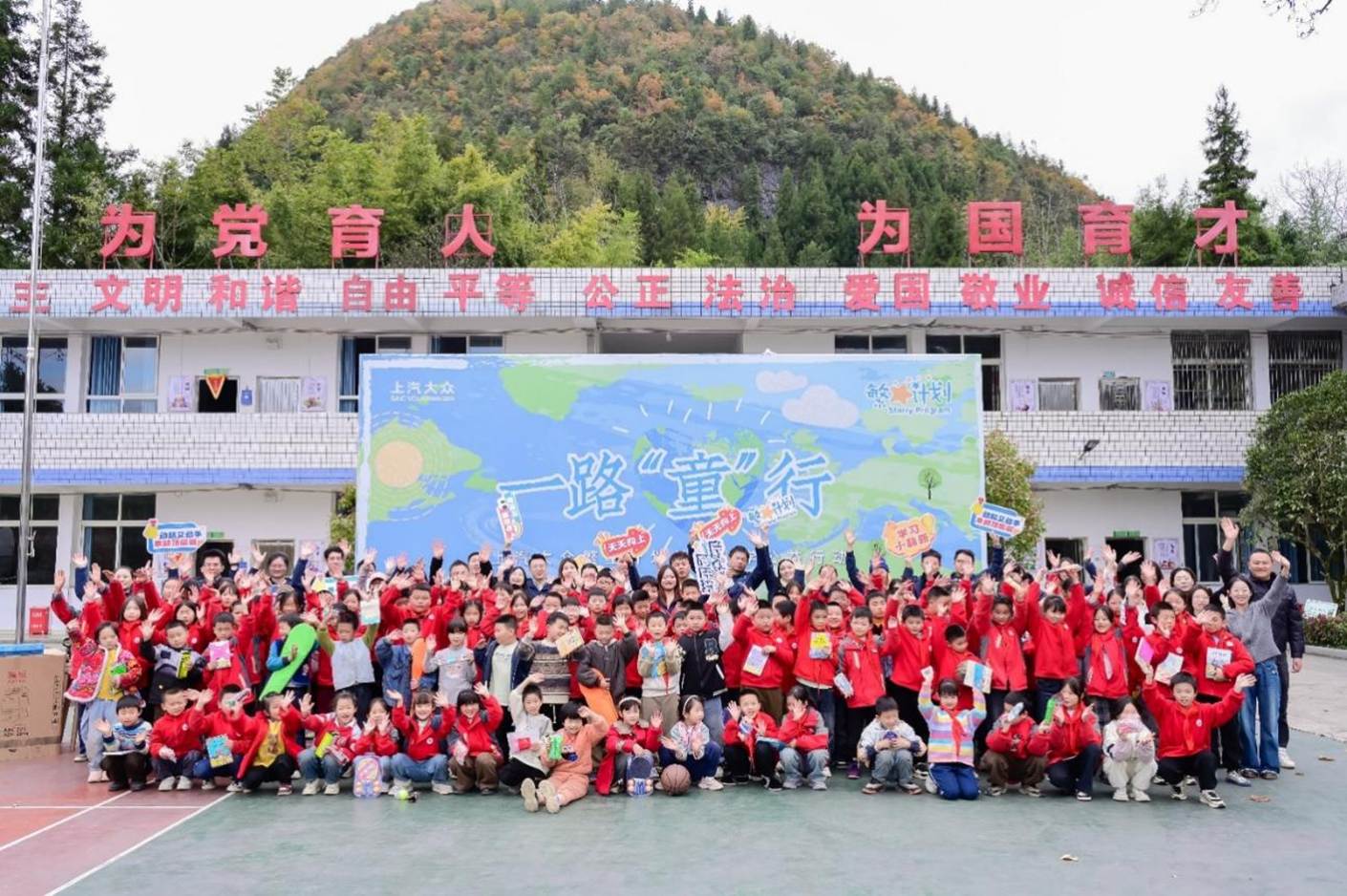
践行教育公益 上汽大众“繁星计划”公益行动走进湖北恩施
Zhong Guo Jin Rong Xin Xi Wang· 2025-11-19 12:49
Core Viewpoint - SAIC Volkswagen's "Star Plan" aims to enhance rural education through a series of initiatives, including the introduction of STEM courses and community engagement activities, to support the comprehensive growth of children in rural areas [1][3][8]. Group 1: Educational Initiatives - The "Star Plan" has partnered with the China Youth Development Foundation to develop STEM courses tailored for rural nine-year compulsory education, with the first implementations occurring at the SAIC Volkswagen Hope Primary School in Enshi, Hubei [3][5]. - The STEM curriculum integrates various scientific principles and engineering challenges, allowing students to engage in hands-on activities such as assembling solar-powered cars and creating automotive models [3][5]. - Additional interactive courses, including history and music, have been introduced to complement the STEM education, fostering a well-rounded educational experience for students [5]. Group 2: Long-term Commitment - Since its inception in 2015, the "Star Plan" has donated over 21 million yuan, establishing 11 Hope Schools across several provinces, benefiting over 20,000 youth [8][10]. - In 2023, the program was upgraded to include a teacher training initiative for STEM education, impacting over 400 teachers and benefiting more than 5,000 children [8][10]. - The company continues to expand its volunteer network and community partnerships to enhance the effectiveness of its educational programs and ensure sustainable development in rural education [10].


Labubu背后:玩具出海如何撕掉“代工”标签
Hu Xiu· 2025-06-12 04:21
Core Insights - The Chinese toy industry is undergoing significant transformation, moving from a reliance on OEM production to developing proprietary brands and IPs, as exemplified by the rise of original IPs like Labubu and the emergence of "copycat" products [1][2][3] - The export landscape is shifting, with self-branded toys accounting for 65.51% of total exports in 2024, indicating a successful brand transformation [2] - Despite the growth in self-branded exports, many toy factories still depend on low-margin OEM production, facing challenges such as order fluctuations and rising costs [2][7] Industry Challenges - The Chinese toy industry experienced a decline in exports after 26 months of growth, attributed to economic downturns and global supply chain adjustments [3] - High tariffs imposed in 2025 further exacerbated the challenges faced by toy manufacturers, leading to production halts in some cases [3][7] - Many companies are struggling with declining profit margins due to increased costs and heightened competition, prompting a search for new markets [7][8] Market Dynamics - The U.S. remains the largest market for Chinese toy exports, with a total export value of $10.55 billion in 2024, representing a 4.24% year-on-year increase [5] - Approximately 75% of toys purchased in the U.S. are sourced from China, highlighting the dependency of U.S. toy companies on Chinese manufacturing [6] - Companies are increasingly diversifying their market presence to mitigate risks associated with U.S. market fluctuations, with a focus on emerging markets and domestic sales [9][10] Strategic Shifts - Toy manufacturers are actively exploring new markets, including the Middle East and Southeast Asia, to reduce reliance on the U.S. market [10][11][13] - The domestic market is also gaining attention, with significant growth potential in the潮玩 (trendy toys) and二次元 (anime) sectors, projected to reach a market size of 77.42 billion yuan and 72.7 billion yuan respectively in 2024 [14] - Companies are leveraging their supply chain advantages to attract overseas clients, with notable interest from Middle Eastern countries [11][12] Innovation and Value Creation - The潮玩 and IP derivative products are emerging as key growth areas, with companies focusing on unique designs and branding to capture consumer interest [15] - High-end creative products, such as handcrafted models, are gaining traction in international markets, allowing companies to command higher profit margins [21] - The shift towards creating products with artistic and collectible value is seen as a strategic move to enhance competitiveness and resilience against market fluctuations [21]