
沪苏湖高铁

Search documents
长三角议事厅·周报|杭衢高铁牵引“1小时都市圈”向西扩容
Xin Lang Cai Jing· 2026-01-06 07:56
Core Viewpoint - The opening of the Hangzhou-Qiuzhou High-Speed Railway significantly enhances connectivity in the Yangtze River Delta, reducing travel time between Qiuzhou and Hangzhou to as little as 73 minutes, thereby transforming regional collaboration and economic dynamics [1][3][4]. Group 1: Infrastructure Development - The Hangzhou-Qiuzhou High-Speed Railway spans approximately 131 kilometers with a design speed of 350 km/h, facilitating faster travel and improved accessibility [1]. - The railway connects Qiuzhou with the existing high-speed rail network, creating a dual-channel system that enhances travel efficiency between Zhejiang's western regions and Hangzhou [3][4]. - Initial operations will feature 12 daily trains, with plans to increase to 34 trains per day by the first quarter of 2026, making cross-city travel more routine [4]. Group 2: Economic Integration - The railway's opening marks a shift from administrative-driven "mountain-sea cooperation" to market-driven collaboration, allowing industries to connect based on comparative advantages rather than reliance on government initiatives [5]. - The establishment of the Qiuzhou Hai Chuang Park, which has attracted over 140 companies, exemplifies the integration of R&D and production capabilities between Qiuzhou and Hangzhou [5][6]. - Significant investments in lithium battery materials projects in Qiuzhou, totaling nearly 479 billion yuan, highlight the region's growing industrial capacity and its ability to support high-value manufacturing [6]. Group 3: Urban and Regional Development - The Hangzhou-Qiuzhou High-Speed Railway contributes to a new urban network in the Yangtze River Delta, evolving from simple point-to-point connections to a more integrated and sustainable commuting framework [7]. - By 2025, the total investment in the Yangtze River Delta railway construction is expected to exceed 600 billion yuan, with over 2,600 kilometers of new rail lines, enhancing the overall connectivity of the region [7]. - The railway facilitates a shift in the relationship between Qiuzhou and the core areas of the Yangtze River Delta, moving from mere connectivity to deeper integration and collaboration [8].

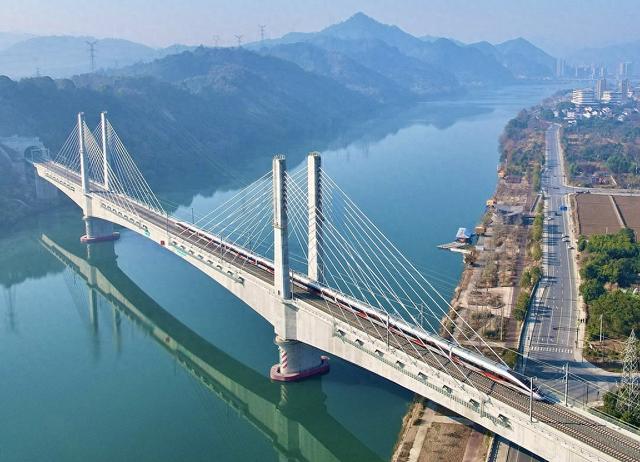
沪苏湖高铁开通运营一周年 累计运送旅客超3360万人次
Zhong Guo Xin Wen Wang· 2025-12-26 08:34
Core Insights - The opening of the Shanghai-Suzhou-Huzhou high-speed railway has significantly transformed transportation in the Yangtze River Delta, reducing travel time between the three cities from 2 hours to 30 minutes and facilitating the movement of over 33.6 million passengers in its first year of operation [1][2]. Group 1: Transportation Impact - The high-speed railway has increased the number of daily train services from 80 pairs to 111.5 pairs, achieving a high-density public transport operation [1]. - The railway has become the third route connecting Shanghai to Suzhou and Huzhou, enhancing the connectivity of the Yangtze River Delta transportation network [2]. Group 2: Economic and Industrial Development - The railway's operation has accelerated the flow of personnel, capital, and technology, leading to deeper industrial collaboration, particularly in Huzhou, where a dual-base model of "R&D in Shanghai-Hangzhou, manufacturing locally" is emerging [2]. - A high-end manufacturing company in Huzhou reported a 20% year-on-year increase in orders due to improved logistics efficiency, with transportation time reduced by three times and logistics costs lowered by 15% [2]. Group 3: Tourism and Lifestyle Enhancement - The integration of high-speed rail with tourism has created new economic growth points, making ancient towns like Zhouzhuang and Nanxun popular weekend destinations for Shanghai residents [3]. - The railway has enabled the realization of a "one-hour living circle," expanding access to shopping, medical services, and educational resources for residents in the surrounding areas [3].
沪苏湖高铁、常泰长江大桥等迎来通车后首次国庆“大考”路网协同,畅享新基建“一路生花”
Xin Hua Ri Bao· 2025-10-06 23:30
Core Viewpoint - The recent infrastructure developments in Jiangsu, including the opening of the Suzhou-Huzhou High-Speed Railway and the Changtai Yangtze River Bridge, have significantly improved transportation efficiency and enhanced the travel experience for citizens during the National Day holiday [1][5]. Group 1: Infrastructure Impact - The Suzhou South Station saw a total of 114,000 passengers from September 29 to October 6, while Shengze Station recorded 43,000 passengers, indicating strong demand for the new high-speed rail services [2]. - The Changtai Yangtze River Bridge managed an average daily traffic of 90,374 vehicles, with peak traffic on the first day of the holiday reaching 100,000 vehicles [2][3]. - The Ningyang Yangtze River Bridge experienced an 850% increase in traffic on October 1, with peak vehicle counts reaching approximately 19,000 [2]. Group 2: Operational Efficiency - Jiangsu's transportation department implemented ten measures to ensure smooth traffic flow, including a smart operation management platform that integrates various monitoring systems [3]. - The province has become the first in China to offer free towing and recovery services on highways, enhancing the overall travel experience [3]. - The Changtai Yangtze River Bridge has identified over 200 abnormal events with an accuracy rate exceeding 95%, demonstrating effective incident management [3]. Group 3: Service Enhancements - The Ningyang Yangtze River Bridge has upgraded its toll stations to mini service areas, providing amenities such as hot meals and electric vehicle charging stations [4]. - Cultural performances at the Shengze Station during the holiday period enriched the travel experience, showcasing local cultural heritage [4]. - The overall improvements in transportation infrastructure not only reduced travel times but also added a sense of warmth and community to the travel experience [4][6].
路网协同,畅享新基建“一路生花”
Xin Hua Ri Bao· 2025-10-06 21:27
Core Insights - The recent National Day holiday showcased the effectiveness of major infrastructure projects in Jiangsu, such as the Suzhou-Huzhou High-Speed Railway and the Changtai Yangtze River Bridge, significantly improving travel times and passenger experiences [1][5] Infrastructure Performance - The Suzhou South Station saw a total of 114,000 passengers from September 29 to October 6, while the Shengze Station recorded 43,000 passengers, indicating strong demand for the new high-speed rail services [2] - The Changtai Yangtze River Bridge experienced an average daily traffic of 90,374 vehicles, with a peak of 100,000 vehicles on the first day of the holiday, demonstrating its capacity to handle increased traffic [2][3] - The Ningyang Yangtze River Bridge reported a traffic surge of 850% on October 1, reaching a peak of approximately 19,000 vehicles, with expected return traffic peaks between 12,000 to 15,000 vehicles on October 7 and 8 [2] Traffic Management and Services - Jiangsu's transportation department implemented ten key measures to manage the high traffic flow, focusing on precise control and coordinated operations across the network [3] - The Changtai Yangtze River Bridge utilized a smart operation management platform, achieving over 95% accuracy in identifying abnormal events and ensuring rapid incident response [3] - The Ningyang Yangtze River Bridge enhanced services by transforming toll stations into mini service areas, providing food and charging stations, and ensuring quick accident resolution [4] Cultural Integration - The Suzhou-Huzhou High-Speed Railway incorporated cultural performances at the Shengze Station, enriching the travel experience and promoting local culture [4] - The overall infrastructure improvements not only reduced travel times but also enhanced the warmth and accessibility of transportation services, contributing to a more integrated regional experience [5]
沪苏湖高铁、杭温高铁推出新型票制产品
news flash· 2025-05-07 21:24
Core Viewpoint - Starting from May 8, the Shanghai-Suzhou-Hangzhou (沪苏湖) high-speed railway and the Hangzhou-Wenzhou (杭温) high-speed railway will introduce 13 new ticketing products aimed at meeting diverse commuting needs and providing flexible solutions for business travel [1] Ticket Products Overview - The new ticketing products are categorized into two main types: regular tickets and usage-based tickets [1] - Regular tickets are tailored to match the commuting needs of different groups, offering options such as 10 trips/30 days, 15 trips/30 days, and 20 trips/30 days, totaling 11 choices [1] - Usage-based tickets are designed for business travel and short-term project work, providing flexible options like 10 trips/90 days and 20 trips/90 days [1] Pricing and Discounts - The ticket prices will be based on the existing fare structure for high-speed trains, with multiple discount tiers available for ticket holders [1] - The new products are expected to offer various benefits to users, enhancing the overall travel experience [1]