
宁扬长江大桥

Search documents
跨江建新桥,有何硬实力?
Yang Zi Wan Bao Wang· 2025-12-11 02:43
Core Viewpoint - The company, China Communications Second Highway Engineering Bureau Co., Ltd., is a key player in bridge construction in the Yangtze River Delta, contributing to regional development through innovative and high-quality bridge projects [1][2]. Group 1: Company Overview - The company focuses on "high-tech, special, and difficult" bridge construction, aiming to enhance its brand through high-quality projects with excellent market image and customer satisfaction [2]. - It has participated in the construction of several world-leading bridges in the Jiangsu section, including the Runyang Yangtze River Highway Bridge and the Su-Tong Yangtze River Highway Bridge [2]. Group 2: Technological Innovations - The Nanjing Xinxingxu Yangtze River Bridge, with a main span of 1,760 meters, is now the largest in China and the third largest in the world, showcasing the company's innovative capabilities [3]. - The construction of the bridge's north anchor block involved a large-scale caisson structure that required precise sinking to a depth of 50 meters, equivalent to nearly 17 stories [5]. - The project team implemented innovative techniques such as the "air curtain" method to facilitate the sinking of the caisson, significantly reducing friction and accelerating the process [6][8]. Group 3: Construction Techniques - The company has successfully integrated advanced construction methods, such as the "piling and freezing method," to address challenges posed by groundwater during the construction of the south anchor block of the Runyang Yangtze River Bridge [7]. - The use of a new drainage and non-drainage sinking method at the Taizhou Bridge achieved a precision level exceeding standard requirements by 50 times [11]. Group 4: Equipment Development - The company developed a fully automated hydraulic cable hoisting machine capable of lifting loads up to 740 tons, which played a crucial role in the construction of the Runyang Yangtze River Bridge [9]. - The introduction of a central double cable surface hoisting machine at the Jiangxinzhou Yangtze River Bridge ensured high precision and efficiency in the installation of the bridge's superstructure [10]. Group 5: Quality Control - The company maintains a rigorous standard for construction precision, achieving a center plane deviation of only 9 millimeters and a tilt of 0.0007 at the Nanjing Yangtze River Bridge's south anchor block [11]. - The construction of the Jiangxinzhou Yangtze River Bridge required meticulous operations within a 70-centimeter gap, ensuring that elevation and planar coordinate errors did not exceed 2 millimeters [11].

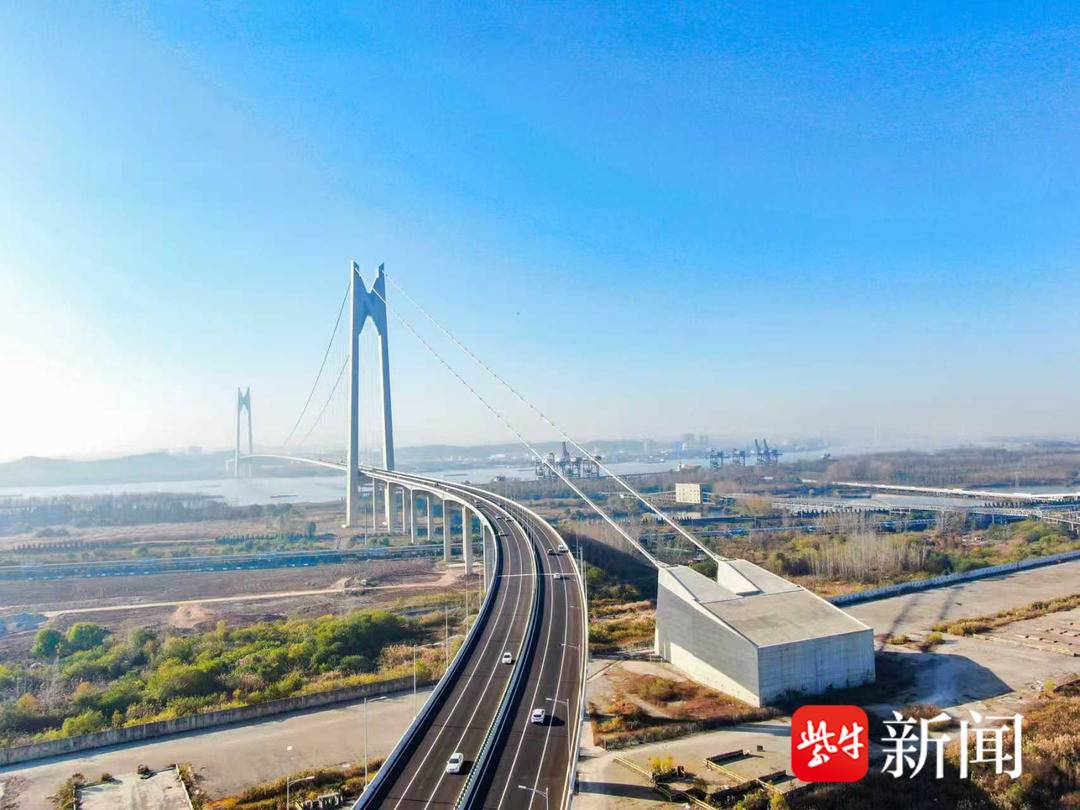
新生圩长江大桥今天将通车,南京以“中国跨度”撬动“拥江格局”
Nan Jing Ri Bao· 2025-11-26 02:31
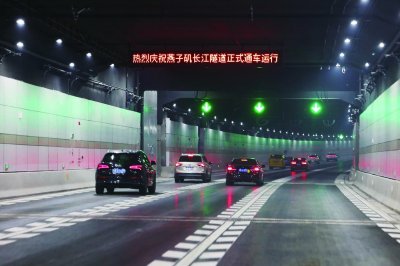
Core Insights - The opening of the Nanjing Xinshewei Yangtze River Bridge marks a significant milestone in the city's transportation infrastructure, being the third major river crossing completed during the 14th Five-Year Plan, enhancing the urban traffic layout and promoting regional integration [4][7][20]. Transportation Infrastructure Development - The Nanjing Xinshewei Yangtze River Bridge, with a main span of 1,760 meters, is recognized as the "first in China and third in the world" for its type, contributing to the city's goal of becoming a transportation hub [4][20]. - The bridge, along with the Yanziji Yangtze River Tunnel and the upcoming Ningyang Yangtze River Bridge, forms a network of crossings that significantly reduces travel time across the river, facilitating a more integrated urban experience [7][10][11]. Economic and Social Impact - The new bridge and tunnels have transformed commuting patterns, reducing travel times from 30 minutes to as little as 10 minutes for residents, thus enhancing the quality of life and economic opportunities in the region [10][11]. - The infrastructure improvements are expected to stimulate investment opportunities along the routes, as logistics efficiency increases for businesses [8][10]. Regional Integration and Urban Development - The development of these crossings is pivotal for the integration of the Nanjing metropolitan area, allowing for a more cohesive urban structure and promoting a "one-hour commuting circle" among Nanjing, Yangzhou, and surrounding areas [13][21]. - The transportation network is seen as a strategic link that not only connects cities but also integrates industrial chains, enhancing collaboration and economic growth across the region [21][22]. Future Plans and Projections - By the end of the 14th Five-Year Plan, Nanjing aims to have 15 river crossings, further solidifying its position as a key transportation hub and supporting its goal of becoming a globally influential center for industrial and technological innovation [17][20].
沪苏湖高铁、常泰长江大桥等迎来通车后首次国庆“大考”路网协同,畅享新基建“一路生花”
Xin Hua Ri Bao· 2025-10-06 23:30
Core Viewpoint - The recent infrastructure developments in Jiangsu, including the opening of the Suzhou-Huzhou High-Speed Railway and the Changtai Yangtze River Bridge, have significantly improved transportation efficiency and enhanced the travel experience for citizens during the National Day holiday [1][5]. Group 1: Infrastructure Impact - The Suzhou South Station saw a total of 114,000 passengers from September 29 to October 6, while Shengze Station recorded 43,000 passengers, indicating strong demand for the new high-speed rail services [2]. - The Changtai Yangtze River Bridge managed an average daily traffic of 90,374 vehicles, with peak traffic on the first day of the holiday reaching 100,000 vehicles [2][3]. - The Ningyang Yangtze River Bridge experienced an 850% increase in traffic on October 1, with peak vehicle counts reaching approximately 19,000 [2]. Group 2: Operational Efficiency - Jiangsu's transportation department implemented ten measures to ensure smooth traffic flow, including a smart operation management platform that integrates various monitoring systems [3]. - The province has become the first in China to offer free towing and recovery services on highways, enhancing the overall travel experience [3]. - The Changtai Yangtze River Bridge has identified over 200 abnormal events with an accuracy rate exceeding 95%, demonstrating effective incident management [3]. Group 3: Service Enhancements - The Ningyang Yangtze River Bridge has upgraded its toll stations to mini service areas, providing amenities such as hot meals and electric vehicle charging stations [4]. - Cultural performances at the Shengze Station during the holiday period enriched the travel experience, showcasing local cultural heritage [4]. - The overall improvements in transportation infrastructure not only reduced travel times but also added a sense of warmth and community to the travel experience [4][6].
路网协同,畅享新基建“一路生花”
Xin Hua Ri Bao· 2025-10-06 21:27
Core Insights - The recent National Day holiday showcased the effectiveness of major infrastructure projects in Jiangsu, such as the Suzhou-Huzhou High-Speed Railway and the Changtai Yangtze River Bridge, significantly improving travel times and passenger experiences [1][5] Infrastructure Performance - The Suzhou South Station saw a total of 114,000 passengers from September 29 to October 6, while the Shengze Station recorded 43,000 passengers, indicating strong demand for the new high-speed rail services [2] - The Changtai Yangtze River Bridge experienced an average daily traffic of 90,374 vehicles, with a peak of 100,000 vehicles on the first day of the holiday, demonstrating its capacity to handle increased traffic [2][3] - The Ningyang Yangtze River Bridge reported a traffic surge of 850% on October 1, reaching a peak of approximately 19,000 vehicles, with expected return traffic peaks between 12,000 to 15,000 vehicles on October 7 and 8 [2] Traffic Management and Services - Jiangsu's transportation department implemented ten key measures to manage the high traffic flow, focusing on precise control and coordinated operations across the network [3] - The Changtai Yangtze River Bridge utilized a smart operation management platform, achieving over 95% accuracy in identifying abnormal events and ensuring rapid incident response [3] - The Ningyang Yangtze River Bridge enhanced services by transforming toll stations into mini service areas, providing food and charging stations, and ensuring quick accident resolution [4] Cultural Integration - The Suzhou-Huzhou High-Speed Railway incorporated cultural performances at the Shengze Station, enriching the travel experience and promoting local culture [4] - The overall infrastructure improvements not only reduced travel times but also enhanced the warmth and accessibility of transportation services, contributing to a more integrated regional experience [5]
赛场内外皆相连,同城化生活日益走向现实
Nan Jing Ri Bao· 2025-07-17 02:34
Core Viewpoint - The article highlights the increasing connectivity between Nanjing and Yangzhou, driven by the rapid development of transportation infrastructure, which enhances the concept of "one-hour living circle" for residents and facilitates cross-city interactions [1][2][3]. Transportation Network Development - The Nanjing-Yangzhou railway connection, established in 2004, has evolved to feature over 50 high-speed trains daily, with departures every 20 minutes, making cross-city commuting a norm [2]. - The G40, Changshen, and Huning highways have significantly reduced travel time between Nanjing and Yangzhou, with the journey now taking approximately 1 hour and 10 minutes under normal conditions [2]. - Ongoing projects, such as the North Jiangsu High-Speed Railway, expected to open in 2027, will further reduce travel time to under 20 minutes between the two cities [3]. Key Infrastructure Projects - The Nanjing-Yangzhou Yangtze River Bridge, opened on January 1, 2023, has improved connectivity, allowing for a 6-minute crossing compared to previous routes [4]. - The Nanjing-Yangzhou Intercity Rail (S5 Line) is under construction, with 12 out of 16 stations currently being built, aiming to connect the two cities in just 35 minutes, marking a shift towards a "public transport" commuting model [5]. Urban Integration and Future Prospects - The ongoing integration efforts between Nanjing and Yangzhou, initiated in 2009, have led to significant infrastructure planning and development, enhancing regional connectivity and resource sharing [6][7]. - The future of Nanjing and Yangzhou's urban integration is expected to transform the concept of "neighboring" into a tangible reality, allowing for more convenient weekend travel and leisure activities for residents [6].