法瑞西单抗

Search documents
美股异动|诺华股价三连阳眼科业务出售引发市场关注
Xin Lang Cai Jing· 2025-09-30 23:31
Core Insights - Novartis is considering selling its ophthalmology business to China-based Kanghong Pharmaceutical, reflecting a strategic shift in response to changing global market dynamics [1][2] - The company has historically held a dominant position in the Chinese ophthalmology market but is now focusing on core areas such as cardiovascular, renal, metabolic, and oncology [1] - The competitive landscape in the Chinese ophthalmology market is intensifying, with Kanghong Pharmaceutical increasing its market share through innovative drugs and strong commercialization channels [1][2] Company Strategy - Novartis has been restructuring its global operations, including divesting from its ophthalmology segment to concentrate on four key therapeutic areas [1] - The sale of mature ophthalmic products in China is part of Novartis's strategy to reallocate resources towards more promising business segments [1] Market Dynamics - The emergence of new drugs like Faricimab is eroding Novartis's market share, leading to declining sales in its retinal disease portfolio [2] - The rise of biosimilars is expected to further complicate the competitive landscape by driving down prices in the ophthalmology sector [2] Competitive Landscape - Kanghong Pharmaceutical's acquisition of Novartis's ophthalmology business could reshape the market, leveraging its extensive distribution channels against Kanghong's research and development capabilities [2] - The evolving competition between Kanghong's broad distribution and Kanghong Pharmaceutical's innovative research will be a focal point in the future of the ophthalmology market [2] Investment Opportunities - Investors are advised to monitor Novartis's strategic adjustments and their implications for the market, as well as the performance of local companies in innovation and market expansion [2] - The ophthalmology drug market is expected to remain challenging yet full of opportunities for investment [2]

2.5亿元首付款 荣昌生物与参天中国就眼科创新药RC28-E达成合作
Mei Ri Jing Ji Xin Wen· 2025-08-19 09:21
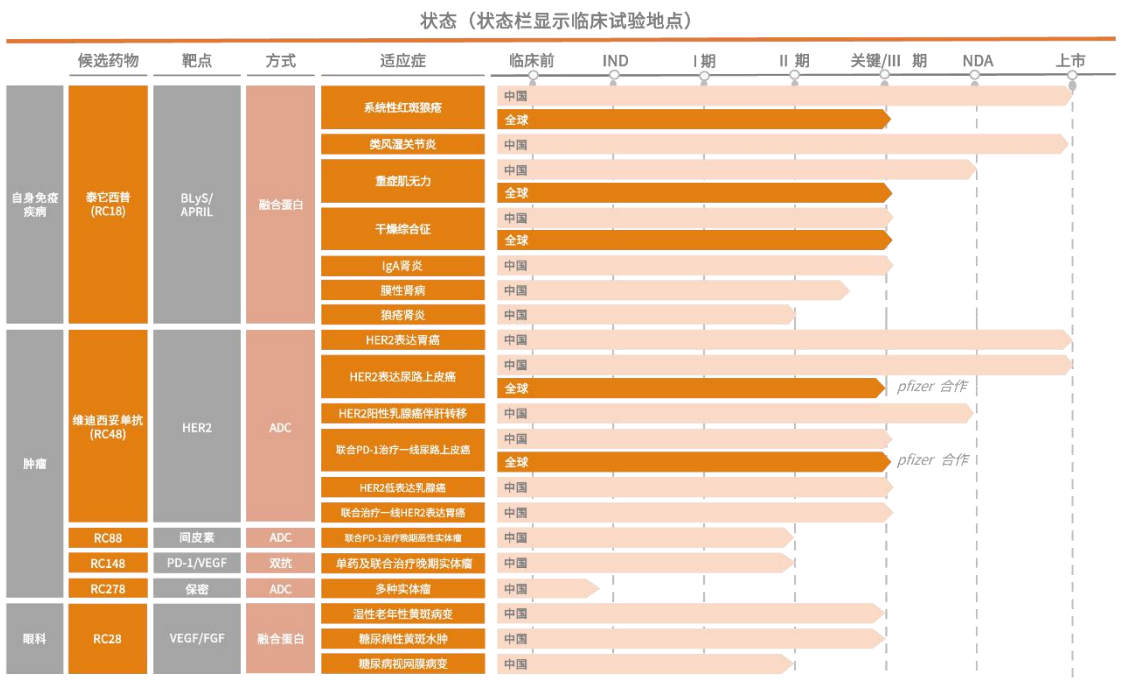
Core Viewpoint - Rongchang Biologics has announced a business development (BD) deal with Santen Pharmaceutical for the exclusive licensing of the ophthalmic innovative drug RC28-E in several Asian markets, marking its second BD announcement this year [1][2]. Group 1: Business Development and Financials - Rongchang Biologics will receive an upfront payment of 250 million yuan, with potential milestone payments totaling up to 520 million yuan for development and regulatory achievements, and up to 525 million yuan for sales milestones [1]. - The company will also earn a tiered sales royalty based on product sales in the licensed regions, ranging from high single-digit to double-digit percentages [1]. Group 2: Product Details and Clinical Trials - RC28-E is a dual-target fusion protein drug aimed at treating neovascular eye diseases, specifically targeting VEGF and FGF pathways to inhibit new blood vessel formation [2]. - The drug is currently undergoing Phase III clinical trials for wet age-related macular degeneration (wAMD) and diabetic macular edema (DME), with an expected submission for market approval in China for DME in the second half of 2025 and for wAMD in mid-2026 [3][5]. Group 3: Market Context and Competition - The domestic ophthalmic drug market is transitioning from generics to innovative products, with increasing competition as patents for existing drugs expire [6][9]. - Other companies, such as Qilu Pharmaceutical and Innovent Biologics, are also advancing in the development of biosimilars and innovative drugs in the ophthalmic space, indicating a shift towards more competitive innovation in the sector [9].


双抗巨变的时代已经来临?
Ge Long Hui· 2025-07-26 20:38
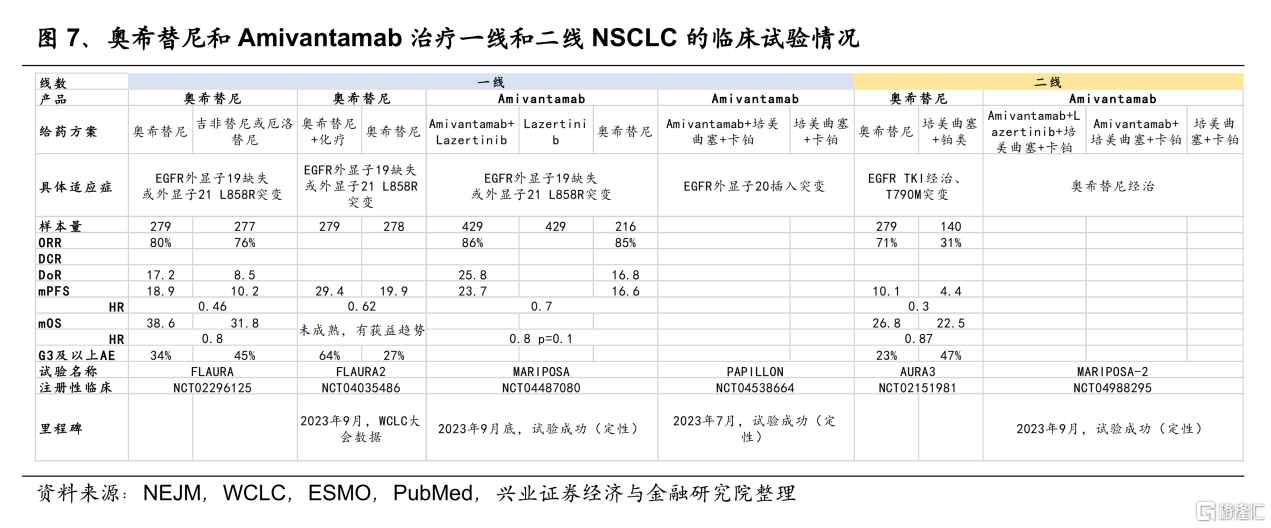
Core Insights - The dual antibody (dual-target) market is experiencing explosive growth in 2023, with major multinational corporations (MNCs) like Roche and Johnson & Johnson leading the charge [1][17] - Roche has successfully launched several dual antibodies in the Chinese market, including Glofitamab and Faricimab, while Johnson & Johnson's Amivantamab targets a $5 billion market in non-small cell lung cancer (NSCLC) [2][13] Group 1: Dual Antibodies in Hematological Malignancies - The dual antibody market began in 2014 with the FDA's accelerated approval of Blincyto for treating acute lymphoblastic leukemia, which generated $583 million in sales in 2022 [5] - Currently, most approved dual antibodies are focused on hematological malignancies, with a significant number targeting CD3 in various combinations [6][8] - The competition between dual antibodies and CAR-T therapies is intensifying, particularly in the CD3/CD20 target combination, which has over 10 candidates in development globally [8][9] Group 2: Broadening Applications in Solid Tumors - Dual antibodies are expanding into various indications, including genetic diseases and solid tumors, with significant potential in the latter [11] - Amivantamab, the first dual antibody approved for solid tumors, is projected to reach peak sales of $5 billion, supported by positive clinical data [13][15] - Roche's Faricimab has also made strides in ophthalmology, achieving $1.788 billion in sales in the first three quarters of 2023 due to its long-lasting efficacy [15] Group 3: Domestic Dual Antibody Development - The domestic dual antibody market is expected to enter a concentrated harvest period in 3-5 years, with over 20 candidates currently in development [18] - Domestic companies are increasingly pursuing international collaborations, with notable deals exceeding $1 billion in potential total transaction value [19] - The first domestic dual antibody, Kadofili monoclonal antibody, was approved in 2022, generating significant revenue and expanding its indications [21][22]