
格菲妥单抗

Search documents
新版医保目录落地,淋巴瘤治疗核心创新药已实现全病程医保覆盖
Bei Ke Cai Jing· 2026-01-28 10:48
Core Viewpoint - The new national basic medical insurance drug list has officially been implemented, significantly improving the accessibility of innovative therapies for lymphoma treatment, including bispecific antibodies and ADCs [1][4]. Group 1: Impact of New Drug Inclusion - The inclusion of innovative drugs like Gefitinib and Vobasertib in the national medical insurance directory enhances patient accessibility and treatment options for lymphoma [4]. - The new insurance policy allows for comprehensive coverage of core innovative drugs throughout the treatment process for lymphoma, thereby increasing the availability of these therapies [1][4]. Group 2: Patient Needs and Treatment Efficacy - Lymphoma is a common malignant tumor in China, with diffuse large B-cell lymphoma (DLBCL) accounting for approximately 40% of cases, and 30%-40% of patients facing recurrence or refractory conditions [2]. - There is a pressing demand for new drugs among patients with DLBCL, as highlighted in the "2022 White Paper on the Survival Status of DLBCL Patients in China" [3]. Group 3: Historical Context and Improvements - Since the approval of the first targeted CD20 therapy, Rituximab, in 1998, the five-year survival rate for DLBCL patients in China has improved by 10%-15% [5]. - The continuous introduction of innovative drugs into the medical insurance system has led to significant improvements in treatment efficacy and quality of life for lymphoma patients [5]. Group 4: Recommendations for Policy Implementation - Experts emphasize the importance of ensuring that innovative therapies reach patients effectively, advocating for consistent core rules and standards in medical insurance policies across regions [5]. - There is a call for innovative payment methods and a multi-tiered insurance system to facilitate the rapid adoption of new therapies, particularly for difficult-to-treat or relapsed lymphoma patients [5].
淋巴瘤创新药“医保新政”落地,全病程保障为患者生命续航
Qi Lu Wan Bao· 2026-01-16 09:30
Core Insights - The implementation of the 2025 National Basic Medical Insurance Drug List on January 1, 2026, includes innovative drugs for lymphoma, particularly bispecific antibody drugs, marking a significant advancement in the treatment landscape for lymphoma patients [1][3]. Group 1: Lymphoma Treatment Landscape - The incidence of lymphoma is rising due to improved diagnostic capabilities and an aging population, with approximately 100,000 new cases reported annually in China [3]. - The five-year survival rate for lymphoma patients in China is about 40%, which lags behind that of Western countries, partly due to limited access to innovative drugs [3]. - The establishment of specialized lymphoma centers is being promoted nationwide to enhance diagnostic precision and treatment outcomes [3]. Group 2: Innovative Drug Developments - Recent advancements in lymphoma treatment include the emergence of monoclonal antibodies, bispecific antibodies, antibody-drug conjugates (ADCs), and small molecule targeted therapies [3]. - The introduction of the new medical insurance policy is expected to accelerate the integration of innovative drugs into clinical practice, aligning China's treatment standards more closely with international benchmarks [3]. Group 3: Specific Drug Insights - Among various lymphoma subtypes, diffuse large B-cell lymphoma (DLBCL) is the most prevalent, accounting for about 50% of hospitalized patients in specialized centers [4]. - Approximately 30%-40% of DLBCL patients may progress to relapsed or refractory disease, which poses significant treatment challenges and increases healthcare costs [4]. - The bispecific antibody drug, Gefitinib, is now included in the National Basic Medical Insurance Drug List, providing new treatment options for patients with relapsed/refractory DLBCL [4][5]. Group 4: Financial Impact of Insurance Coverage - The inclusion of innovative drugs in the insurance list significantly reduces treatment costs; for instance, the ADC drug, Vebotuzumab, saw an 80% reduction in treatment expenses after being added to the insurance list [8]. - Patients previously deterred by high costs can now access innovative treatments, improving their chances of survival [8]. Group 5: Regional Healthcare Initiatives - The establishment of regional medical alliances aims to ensure that advanced treatments are accessible locally, promoting the goal of providing high-quality care without the need for patients to travel far [9]. - The 2025 National Medical Insurance Drug List added 114 new drugs, with 50 being innovative drugs, particularly benefiting the oncology sector [9].


罗氏旗下血液全产品亮相进博会 点亮血液疾病治愈蓝图
Zheng Quan Ri Bao Wang· 2025-11-07 06:45
Core Viewpoint - Roche showcases its comprehensive blood product portfolio at the 8th China International Import Expo, emphasizing its commitment to advancing the treatment of blood diseases and contributing to the "Healthy China 2030" initiative [1] Group 1: Innovations in Blood Disease Treatment - Roche has introduced four innovative blood cancer drugs in the last four years, covering a wide range of indications for aggressive and indolent lymphomas, marking a significant expansion in its treatment offerings [2] - The company has actively participated in the establishment of a multi-tiered medical insurance system in China, with its drug MabThera being one of the first original drugs included in the national medical insurance list [2] Group 2: New Drug Developments and Approvals - The company is set to showcase new indications for its foundational drug for indolent lymphoma, Ocrevus, which may soon be approved for treating lupus nephritis [3] - Roche's innovative treatment for hemophilia, NXT007, aims to achieve "zero bleeding" for patients with type A hemophilia, demonstrating its commitment to advancing non-factor preventive therapies [3] Group 3: Strategic Partnerships and Ecosystem Development - Roche aims to enhance the ecological construction of the blood cancer field in China, expanding its focus from lymphoma to multiple myeloma [3] - The company emphasizes its dedication to improving patient accessibility and affordability in China, while also enhancing the international influence of Chinese research [3]
双抗巨变的时代已经来临?
Ge Long Hui· 2025-07-26 20:38
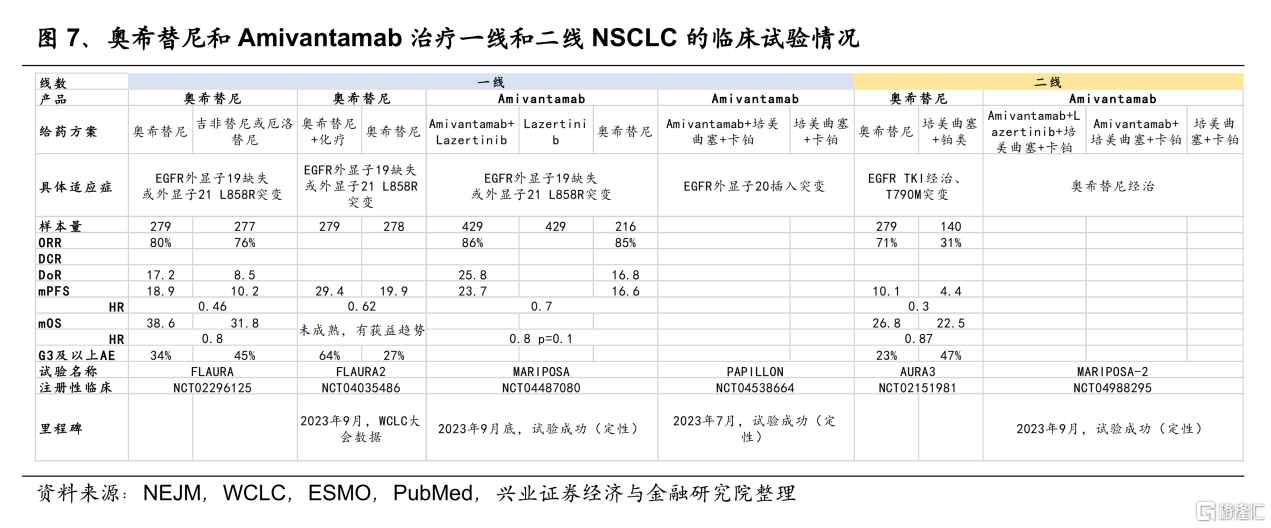
Core Insights - The dual antibody (dual-target) market is experiencing explosive growth in 2023, with major multinational corporations (MNCs) like Roche and Johnson & Johnson leading the charge [1][17] - Roche has successfully launched several dual antibodies in the Chinese market, including Glofitamab and Faricimab, while Johnson & Johnson's Amivantamab targets a $5 billion market in non-small cell lung cancer (NSCLC) [2][13] Group 1: Dual Antibodies in Hematological Malignancies - The dual antibody market began in 2014 with the FDA's accelerated approval of Blincyto for treating acute lymphoblastic leukemia, which generated $583 million in sales in 2022 [5] - Currently, most approved dual antibodies are focused on hematological malignancies, with a significant number targeting CD3 in various combinations [6][8] - The competition between dual antibodies and CAR-T therapies is intensifying, particularly in the CD3/CD20 target combination, which has over 10 candidates in development globally [8][9] Group 2: Broadening Applications in Solid Tumors - Dual antibodies are expanding into various indications, including genetic diseases and solid tumors, with significant potential in the latter [11] - Amivantamab, the first dual antibody approved for solid tumors, is projected to reach peak sales of $5 billion, supported by positive clinical data [13][15] - Roche's Faricimab has also made strides in ophthalmology, achieving $1.788 billion in sales in the first three quarters of 2023 due to its long-lasting efficacy [15] Group 3: Domestic Dual Antibody Development - The domestic dual antibody market is expected to enter a concentrated harvest period in 3-5 years, with over 20 candidates currently in development [18] - Domestic companies are increasingly pursuing international collaborations, with notable deals exceeding $1 billion in potential total transaction value [19] - The first domestic dual antibody, Kadofili monoclonal antibody, was approved in 2022, generating significant revenue and expanding its indications [21][22]


2025年5月第二周创新药周报-20250511
Southwest Securities· 2025-05-11 12:43
Investment Rating - The report maintains an "Outperform" rating for the pharmaceutical industry as of May 11, 2025 [1]. Core Insights - The A-share innovative drug sector saw a weekly increase of 2.33%, outperforming the CSI 300 index by 0.33 percentage points, while the biopharmaceutical sector rose by 0.75% [2][17]. - In the past six months, the A-share innovative drug sector has cumulatively increased by 5.43%, outperforming the CSI 300 index by 9.13 percentage points, whereas the biopharmaceutical sector has decreased by 10.55% [2][17]. - The Hong Kong innovative drug sector experienced a decline of 2.14%, underperforming the Hang Seng Index by 3.75 percentage points, with a cumulative increase of 22.08% over the past six months [2][20]. - The XBI index in the US fell by 8.59% this week, with a cumulative decline of 22.72% over the past six months [2][23]. Summary by Sections Domestic Key Innovative Drug Progress - In May, one new drug was approved for market launch in China, with no new indications approved [3][41]. Overseas Key Innovative Drug Progress - In May, there were no NDA or BLA approvals in the US, Europe, or Japan for innovative drugs [4][45]. Global Key Innovative Drug Transaction Progress - A total of 12 key transactions occurred globally this week, with one disclosed transaction amounting to 415 million USD between Alchemab Therapeutics and Eli Lilly [5]. Market Performance - The report indicates that 39 stocks in the innovative drug sector rose while 67 fell during the week, with the top gainers being HaiChuang Pharmaceutical-U (22.76%), Changchun High-tech (8.99%), and Zhongsheng Pharmaceutical (8.98%) [2][16]. - The top decliners included Fuhong Hanlin (-12.64%), Connaught-B (-12.40%), and Boan Biotechnology (-11.77%) [2][16]. Clinical Trials and Approvals - In May, there were 23 newly announced clinical trials in China, including 17 in BE/I phase, 4 in II phase, and 2 in III phase [31].
罗氏格菲妥单抗新适应症在华获批
news flash· 2025-05-07 09:10
Core Viewpoint - Roche Pharmaceuticals China has received approval from the National Medical Products Administration of China for its innovative bispecific antibody Glofitamab (Columvi) for a new indication, which is to be used in combination with Gemcitabine and Oxaliplatin (GemOx) for the treatment of adult patients with relapsed or refractory diffuse large B-cell lymphoma not otherwise specified (DLBCL NOS) who are unsuitable for autologous stem cell transplantation (ASCT) [1] Group 1 - The new indication for Glofitamab targets a specific patient population with DLBCL NOS [1] - The approval highlights Roche's commitment to expanding treatment options for patients with challenging cancer types [1] - The combination therapy aims to improve outcomes for patients who have limited treatment options [1]