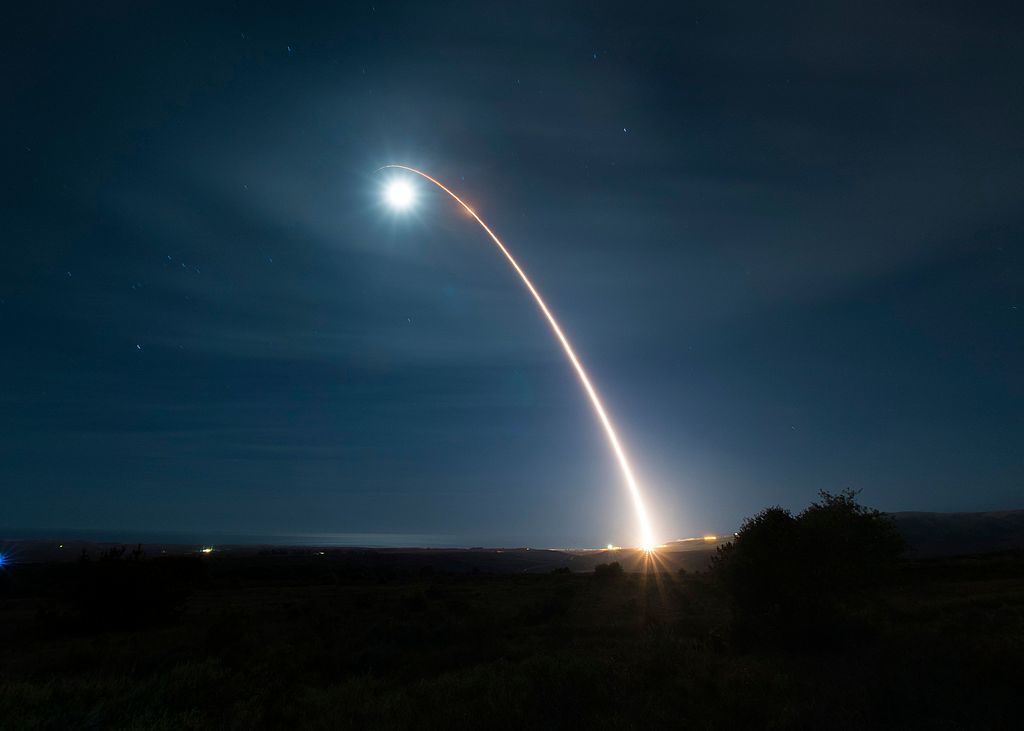
核军备竞赛

Search documents
惊天争议!特朗普拟与沙特达成核协议,舍弃防扩散“护栏”
Jin Shi Shu Ju· 2026-02-20 02:55
Core Viewpoint - The Trump administration is pushing for a civil nuclear agreement with Saudi Arabia that lacks long-standing non-proliferation safeguards, raising concerns about nuclear weapon development in the region [1][2]. Group 1: Agreement Details - The proposed U.S.-Saudi civil nuclear agreement (known as the "123 Agreement") aims to place U.S. industry at the center of Saudi Arabia's civil nuclear development [2]. - The agreement opens the door for Saudi Arabia to potentially develop uranium enrichment capabilities, which is a pathway to acquiring nuclear weapons [2]. - The Trump administration submitted a preliminary report to Congress, indicating that additional safeguards and verification measures would be included, but specifics remain vague [2]. Group 2: Political Reactions - Bipartisan concerns exist among U.S. lawmakers, with many insisting that any agreement must include strict barriers to prevent Saudi Arabia from obtaining uranium enrichment or spent fuel reprocessing capabilities [1]. - The Arms Control Association (ACA) expressed worries that the Trump administration has not adequately considered the proliferation risks associated with the proposed nuclear cooperation [2]. - The report suggests that Congress has a responsibility to scrutinize the proposed agreement and its implications for non-proliferation [3]. Group 3: Regional Implications - Saudi Crown Prince Mohammed bin Salman has indicated that if regional adversaries like Iran develop nuclear weapons, Saudi Arabia would seek to do the same for security reasons [2]. - The timing of this agreement coincides with the expiration of a key U.S.-Russia strategic arms limitation treaty, heightening global concerns about a new arms race [1]. Group 4: Legislative Process - The Trump administration is expected to submit the formal 123 Agreement to Congress by February 22, with a 90-day period for Congress to act on it [3]. - If neither the House nor the Senate passes a resolution of disapproval within this timeframe, the agreement will take effect, allowing Saudi Arabia to advance its civil nuclear program [3].
美国企图污蔑中国搞核试验,中俄驳斥:完全没有根据
Xin Lang Cai Jing· 2026-02-18 15:12
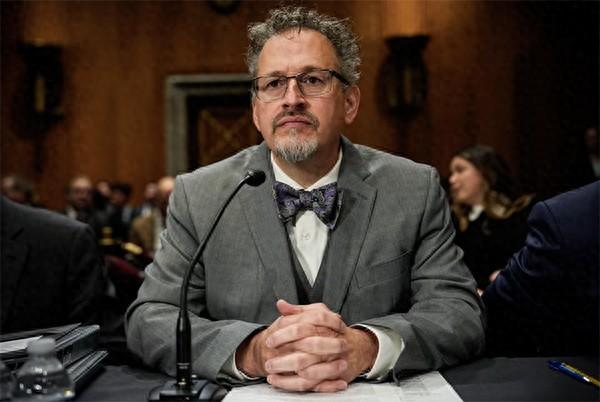
Core Viewpoint - The article discusses the recent accusations made by the U.S. against China regarding nuclear tests, which are seen as attempts to justify the U.S. resuming its own nuclear testing following the expiration of the New START treaty [1][3]. Group 1: U.S. Accusations and Responses - U.S. Assistant Secretary of State Christopher Yeaw claimed that a seismic event near China's Lop Nur nuclear test site in 2020 indicated a nuclear test, suggesting that China might be using "decoupling" methods to hide such tests [1][3]. - The Chinese Embassy in the U.S. responded by stating that the U.S. accusations are baseless and politically motivated, aimed at justifying its own nuclear testing [3][8]. - Russian officials also denied the U.S. claims, asserting that neither Russia nor China conducted any nuclear tests, and emphasized the lack of evidence supporting the U.S. allegations [3][5]. Group 2: Historical Context and Nuclear Arsenal - The article highlights that the last confirmed nuclear tests by the U.S. and China occurred in 1992 and 1996, respectively, while Russia's last confirmed test was in 1990 [6]. - Current estimates indicate that Russia possesses approximately 4,300 nuclear warheads, the U.S. has around 3,700, and China has about 600 [6]. Group 3: Implications of the New START Treaty Expiration - The expiration of the New START treaty has raised concerns about a potential new arms race, with analysts suggesting that the U.S. may double its nuclear arsenal in the absence of such agreements [7][8]. - Experts warn that the U.S. leadership's belief in winning a nuclear arms race could lead to dangerous outcomes, including the proliferation of nuclear weapons among allied nations [7].

维护国际核军控体系刻不容缓
Xin Lang Cai Jing· 2026-02-14 13:28
Core Viewpoint - The expiration of the New START treaty between the US and Russia on February 5 raises significant concerns about global nuclear stability, with the risk of nuclear weapon use at its highest level in decades [1]. Group 1: Treaty Implications - The New START treaty played a crucial role in limiting the number of nuclear warheads and delivery vehicles deployed by the US and Russia, thereby maintaining global strategic stability and enhancing mutual trust between major powers [1]. - The treaty's expiration means that both superpowers can produce and deploy nuclear weapons without any treaty restrictions, leading to decreased strategic transparency and increased risks of misjudgment [1]. Group 2: Historical Context - Historically, the US has been a primary disruptor of global strategic stability, having withdrawn from several arms control and trust-building mechanisms since the 21st century, including the Anti-Ballistic Missile Treaty and the Intermediate-Range Nuclear Forces Treaty [2]. - The US aims to establish a new arms control framework while simultaneously enhancing its military capabilities, such as the Iron Dome missile defense system, reflecting its pursuit of absolute security and military hegemony [2]. Group 3: China's Position - China's nuclear capabilities are significantly smaller than those of the US and Russia, and it maintains its nuclear arsenal at the minimum level necessary for national security, rejecting any arms race [3]. - China adheres to a responsible nuclear strategy, committing to a no-first-use policy and not threatening non-nuclear weapon states, which contradicts the notion of involving a smaller nuclear power in equal arms reduction discussions [3]. Group 4: Call for Responsible Action - In light of the New START treaty's expiration, it is urgent for the US to take responsibility and engage in constructive dialogue with Russia to restore strategic stability, which is a common expectation of the international community [3].
没有规则的核赛场,美国疯狂扩核,俄罗斯亮出致命反制
Feng Huang Wang Cai Jing· 2026-02-11 13:43
Group 1 - The expiration of the New START treaty on February 5 marks a significant shift in global nuclear disarmament, moving from a phase of reduction to one of potential escalation [1][2] - The U.S. plans to increase its nuclear arsenal, with a projected budget increase from $756 billion to $946 billion over the next decade, representing a growth of over 25% [2] - The U.S. is also pursuing the "Iron Dome" initiative to develop an unconstrained missile defense system, which could provoke a new arms race as other nations enhance their nuclear capabilities in response [2][3] Group 2 - The New START treaty, originally signed in 2010, limited both the U.S. and Russia to 1,550 deployed nuclear warheads and 700 delivery vehicles, but relations have deteriorated significantly since the Ukraine conflict [3][4] - Russia has shifted its nuclear policy from a no-first-use stance to a more aggressive posture, developing new strategic weapons like the "Zircon" and "Poseidon" to counter NATO's conventional advantages [5][6] - The U.S. has not committed to a no-first-use policy, which raises the nuclear threshold and complicates the strategic landscape [4][5] Group 3 - The U.S. is seeking to involve China in nuclear negotiations, but China maintains its position of a defensive nuclear strategy and will not participate in arms races [7][8] - The introduction of new technologies and high-survivability weapons complicates future arms control negotiations, as the U.S. continues to increase its nuclear capabilities [7][8] - The current state of nuclear relations reflects a breakdown of strategic trust and frameworks, leading to a more dangerous global environment than during the Cold War [8]

俄罗斯喊话美国,美国喊话中国,中国回应:表示遗憾
Xin Lang Cai Jing· 2026-02-07 16:40
Core Points - The expiration of the New START treaty marks the first time in over half a century that there are no treaties limiting the nuclear arsenals of the world's two largest nuclear powers, the US and Russia, raising concerns about a new arms race and nuclear proliferation [1][6] - The UN Secretary-General has stated that the risk of nuclear weapon use is at its highest level in decades, highlighting the urgency of the situation [1] Group 1: Nuclear Arsenal Overview - By 2025, Russia is projected to have 4,309 nuclear warheads, while the US will have 3,700, with approximately 1,770 of the US warheads deployed and 1,930 in reserve [1] - The US is undergoing a comprehensive modernization of its nuclear triad, including the replacement of the Minuteman III ICBM with the Sentinel ICBM, the replacement of Ohio-class submarines with Columbia-class submarines, and the procurement of the B-21 long-range bomber [2][4] Group 2: Treaty Implications - The New START treaty, which was signed in 2010 and extended in 2021, limited the number of deployed strategic nuclear warheads to 1,550 and established verification mechanisms, which are now no longer in effect [5][6] - With the treaty's expiration, both the US and Russia may increase their nuclear arsenals beyond 6,000 warheads in the next decade, as the constraints have been lifted [6] Group 3: Global Nuclear Dynamics - The absence of a nuclear arms control agreement may lead to an imbalance in global nuclear capabilities, prompting other nuclear-armed states to enhance their arsenals [9][10] - The potential for a nuclear arms race could escalate the quality and quantity of nuclear weapons, with implications for deployment in new domains such as space [10] Group 4: Future Negotiations - There is a call for a new nuclear arms control agreement that includes not only warhead numbers but also new delivery systems such as hypersonic missiles and nuclear-powered torpedoes [11] - The US has suggested that China should join nuclear disarmament talks, although China has expressed reluctance to participate, citing its nuclear capabilities as significantly lower than those of the US and Russia [13][14]
美俄失去最后一道核军控“护栏”
Xin Lang Cai Jing· 2026-02-06 12:41
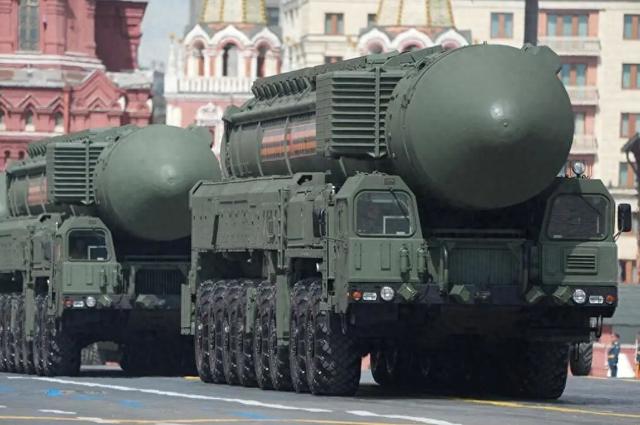
Core Viewpoint - The expiration of the New Strategic Arms Reduction Treaty (New START) between the U.S. and Russia raises concerns about a potential new arms race and threats to global strategic stability as no agreement for extension or replacement has been reached [2][8]. Summary by Sections Treaty Overview - The New START treaty, signed in 2010, aimed to limit the number of strategic nuclear weapons held by the U.S. and Russia, capping deployed strategic warheads at 1,550 and deployed delivery systems at 700 [3]. - The treaty included verification mechanisms such as on-site inspections and data exchanges, enhancing transparency and reducing the risk of accidental conflict [3]. Current Status and Responses - Russia's President Putin suggested a voluntary limitation of weapons to treaty limits for at least one year post-expiration, but the U.S. has not officially responded to this proposal [4]. - Analysts note that the treaty's continuation is complicated by a lack of trust between the two nations, exacerbated by the deterioration of U.S.-Russia relations due to the Ukraine conflict [6]. Challenges to Renewal - The U.S. perception of threats has evolved, with a focus on advanced conventional weapons and hypersonic systems, leading to a diminished interest in traditional arms control frameworks [6]. - Domestic political factors in the U.S., including skepticism from the Republican party and previous administration's push for new multilateral agreements, contribute to the challenges in extending the treaty [6][7]. Implications of Treaty Expiration - The end of the treaty could lead to a significant increase in nuclear arsenals, with projections suggesting that the number of deployed nuclear warheads could exceed 6,000 within a decade [8]. - The absence of constraints may complicate crisis management and increase the risk of miscalculations, heightening global strategic risks [8]. Call for New Arrangements - Experts emphasize the need for new arms control measures or trust-building initiatives to prevent escalation and maintain international security [9].
当不成总统了?特朗普下达撤退指令,美军出动:发起5轮空袭
Sou Hu Cai Jing· 2026-02-06 07:36
Group 1 - The core viewpoint of the article highlights the escalating tensions in the Middle East and the domestic political landscape in the U.S. amid Trump's presidency, with significant events impacting future developments [1] Group 2 - Trump's presidency appears to be under pressure as he orders the withdrawal of approximately 700 immigration enforcement personnel from Minnesota, while still maintaining a significant presence of over 2300 personnel in the state [3] - The ongoing protests in Minnesota and other areas reflect a growing discontent with Trump's immigration policies, which have seen his approval ratings drop to 39%, the lowest since he took office [5] - The Democratic Party is intensifying its attacks on Trump's administration, particularly regarding immigration enforcement, which may become a key issue in the upcoming midterm elections [6] Group 3 - Trump warns the Federal Reserve regarding his nominee for the chair position, indicating that if the nominee does not support interest rate cuts, he may lose the position, reflecting Trump's ongoing pressure on the Fed [8] Group 4 - A Florida court sentenced a man to life imprisonment for attempting to assassinate Trump, highlighting the serious security challenges faced by the president amid multiple assassination attempts since his 2024 campaign announcement [10] Group 5 - The U.S. military conducted five airstrikes in Syria targeting ISIS, which may indicate an expansion of U.S. military presence in the region and a potential increase in tensions with Russia [12] Group 6 - The impending expiration of the U.S.-Russia New START treaty on February 5 raises concerns about a potential new arms race, as Russia has not received a formal response from the U.S. regarding its proposal to extend the treaty [13]
这项条约到期,这两个核大国的较量少了道“紧箍”
Xin Jing Bao· 2026-02-06 06:13
Core Points - The New START treaty, the last existing agreement limiting nuclear weapons between Russia and the U.S., is set to expire on February 5, 2026, highlighting its critical importance as other nuclear treaties have been abandoned [1][2] - The treaty, signed in 2010, limits both countries to 1,550 nuclear warheads and a maximum of 700 deployed intercontinental ballistic missiles, submarine-launched ballistic missiles, and heavy bombers [2] - The treaty was extended for five years in 2021, but recent tensions have led to Russia suspending its participation in verification mechanisms and expressing a willingness to take military countermeasures [2][4] Group 1 - The New START treaty is the only remaining agreement that includes notification, verification, and compliance mechanisms between the U.S. and Russia, who together hold 87% of the world's nuclear weapons [1] - Russia's Foreign Ministry announced a temporary withdrawal from the treaty's verification mechanisms in August 2022, citing U.S. actions that undermine mutual trust [2] - In February 2023, President Putin announced Russia's suspension of participation in the treaty, although the Kremlin stated that Russia would still adhere to the treaty's limits on nuclear weapons [2][4] Group 2 - The relationship between Trump and Putin was initially seen as potentially beneficial for treaty renewal, but Trump's later stance on nuclear testing raised concerns [3] - Analysts suggest that Russia's strong rhetoric may be a strategy to negotiate from a position of strength, as nuclear weapons serve primarily as a deterrent [5] - The U.S. is reportedly negotiating with Russia to continue adhering to the treaty, with discussions taking place in Abu Dhabi [4] Group 3 - Trump's administration aims to include China in a new nuclear arms control treaty, rather than extending the New START treaty [6] - China's stance on nuclear weapons is characterized by a commitment to a defensive strategy and a refusal to engage in an arms race, maintaining its nuclear capabilities at a minimum level [6] - The U.S. may need to revert to bilateral negotiations with Russia on nuclear arms control, given the complexities of involving China [7] Group 4 - Criticism of Trump's approach to nuclear arms control has emerged from U.S. lawmakers, who argue that his administration has neglected this critical area [8] - The UN Secretary-General has expressed concern over the lack of binding constraints on the nuclear arsenals of the two countries, warning of a potential new arms race [8] - The expiration of the New START treaty is viewed as a significant threat to global strategic stability, with fears that it could lead to a breakdown in the international nuclear arms control framework [8]
刚后退一步,不到24小时,特朗普报复来了,呼吁立即逮捕奥巴马
Sou Hu Cai Jing· 2026-02-06 05:33
Group 1 - The expiration of the New START treaty between the US and Russia is imminent, which could lead to a new nuclear arms race as both countries possess over 90% of the world's nuclear weapons [3][4] - Former President Obama expressed concerns that the failure to act could undermine decades of diplomatic efforts and destabilize global security [3] - The recent one-week ceasefire in Ukraine, facilitated by Trump, ended with Russia resuming attacks on Ukrainian energy facilities, raising questions about the effectiveness of such agreements [4][6] Group 2 - The nomination of the Federal Reserve Chair has become a contentious issue, with Democrats and Republicans in fierce opposition, impacting US monetary policy and potentially global financial markets [9][11] - Trump's nominee, Walsh, has faced backlash from Democrats who argue that his nomination threatens the independence of the Federal Reserve [9][11] - Ongoing investigations into Federal Reserve officials could further complicate the nomination process, with implications for the stability of US monetary policy [9][13]
俄美唯一核军控条约失效,俄方释放对话信号,美方“稍后作出决定”
Huan Qiu Shi Bao· 2026-02-05 22:32
Core Viewpoint - The expiration of the New Strategic Arms Reduction Treaty (New START) between Russia and the United States marks the first time in over half a century that there are no binding limits on their strategic nuclear arsenals, raising concerns about global security and stability [1][4][10] Group 1: Treaty Expiration and Implications - The New START treaty, which limited both countries to 1,550 deployed strategic nuclear warheads and 700 delivery vehicles, has officially expired, leading to fears of increased nuclear competition and instability [4][7] - Russian officials expressed regret over the treaty's expiration, indicating that they no longer feel bound by its terms and may pursue their own strategic military policies [3][5] - The lack of a binding treaty could lead to misunderstandings and miscalculations, increasing the risk of nuclear conflict [9][10] Group 2: International Reactions and Concerns - UN Secretary-General António Guterres highlighted the severe implications for international peace and security, urging both nations to return to negotiations [4] - Analysts warn that the treaty's expiration could weaken decades of norms and transparency in nuclear competition, potentially prompting non-nuclear states to reconsider their commitments to non-proliferation [7][9] - The expiration is seen as a reflection of deteriorating strategic stability and security, rather than an isolated event [10] Group 3: Future of Arms Control - Observers note that the expiration of the treaty does not immediately signal a new arms race, as both nations may prefer to avoid escalating tensions too quickly [8][9] - The potential for future agreements remains uncertain due to existing disputes and the complexity of negotiations [8][9] - The absence of structured diplomatic dialogue may lead to a more fragile international security environment, increasing the likelihood of misinterpretations and misjudgments [9]