
核试验

Search documents
美方指责中国曾进行核爆试验,外交部回应
Xin Lang Cai Jing· 2026-02-25 08:42
Core Viewpoint - The Chinese government firmly rejects accusations from the U.S. regarding nuclear tests, emphasizing its commitment to the Comprehensive Nuclear-Test-Ban Treaty (CTBT) and urging the U.S. to adhere to its own nuclear testing moratorium commitments [1][1][1] Group 1 - The U.S. Assistant Secretary of State for Arms Control, Yeo, accused China of conducting nuclear explosion tests, suggesting that the U.S. may resume its own nuclear tests based on reciprocity [1] - The Comprehensive Nuclear-Test-Ban Treaty Organization reported detecting two minor seismic events in China on June 22, 2020, but stated that the data was insufficient for a credible assessment of the events' causes [1] - The Chinese spokesperson, Mao Ning, criticized the U.S. for making baseless accusations and attempting to evade its international arms control obligations, which she claims damages the U.S.'s international credibility [1]
外交部:美方指责捕风捉影、遮遮掩掩,根本站不住脚
Xin Jing Bao· 2026-02-25 07:39
Core Viewpoint - The Chinese government firmly denies U.S. accusations of conducting nuclear explosion tests, labeling them as baseless and an attempt to deflect attention from its own obligations in international arms control [1] Group 1: China's Position on Nuclear Testing - China consistently supports the objectives of the Comprehensive Nuclear-Test-Ban Treaty and adheres to the commitment of the five nuclear powers to suspend nuclear tests [1] - The Chinese government emphasizes that the U.S. is attempting to tarnish China's reputation to evade its own international arms control responsibilities, which undermines its credibility on the global stage [1] Group 2: Call for U.S. Compliance - China urges the U.S. to honor its commitment to suspend nuclear tests and to uphold the international consensus against nuclear testing [1] - The Chinese government calls for the U.S. to cease seeking excuses to resume nuclear testing [1]
中美举行军控会谈?中方回应
Huan Qiu Shi Bao· 2026-02-24 22:59
Group 1 - The Chinese Foreign Ministry spokesperson expressed the hope that the U.S. would engage in strategic stability dialogue with Russia and discuss the follow-up arrangements for the New START treaty [1] - The U.S. Assistant Secretary of State for Arms Control and Nonproliferation, Yeo, met with the Russian delegation and is scheduled to meet with China and other delegations in Geneva, indicating that these talks are more substantive following the expiration of the New START treaty [1] - The U.S. has reportedly held "preparatory" meetings with Russia and China in Washington after the New START treaty's expiration, and has communicated multiple times with the UK and France regarding nuclear weapons issues [1] Group 2 - Yeo accused China of significantly expanding its nuclear arsenal and conducting secret nuclear tests, while the Chinese disarmament ambassador refuted these claims, stating that the U.S. is fabricating excuses for its own nuclear test resumption [2] - Yeo claimed that the New START treaty has flaws due to China's "opaque nuclear weapons development," asserting that China is rapidly approaching the treaty's nuclear warhead limits and could have enough fissile material to produce over a thousand nuclear warheads by 2030 [2] - Military expert Zhang Junsha stated that the U.S. push for China to join nuclear disarmament talks is a pretext for its own nuclear arsenal expansion, highlighting that as of the end of 2024, China is estimated to have around 600 nuclear warheads, significantly fewer than the U.S. and Russia, which each have around 5,000 [2] Group 3 - Zhang Junsha argued that the U.S. aims to curb China's self-defense nuclear capabilities and use this as an excuse to withdraw from international nuclear mechanisms, noting that Russia has also questioned the sincerity of the U.S. in including the UK and France in negotiations [3] - He emphasized that China is the last of the five permanent members of the UN Security Council to develop nuclear weapons and is the only one that has committed to a no-first-use policy, maintaining a principle of minimum deterrence for self-defense [3] - The disparity in nuclear capabilities among the U.S., Russia, and China is significant, and the U.S. demand for China to join negotiations lacks both practical foundation and moral justification [3]
美国企图污蔑中国搞核试验,中俄驳斥:完全没有根据
Xin Lang Cai Jing· 2026-02-18 15:12
Core Viewpoint - The article discusses the recent accusations made by the U.S. against China regarding nuclear tests, which are seen as attempts to justify the U.S. resuming its own nuclear testing following the expiration of the New START treaty [1][3]. Group 1: U.S. Accusations and Responses - U.S. Assistant Secretary of State Christopher Yeaw claimed that a seismic event near China's Lop Nur nuclear test site in 2020 indicated a nuclear test, suggesting that China might be using "decoupling" methods to hide such tests [1][3]. - The Chinese Embassy in the U.S. responded by stating that the U.S. accusations are baseless and politically motivated, aimed at justifying its own nuclear testing [3][8]. - Russian officials also denied the U.S. claims, asserting that neither Russia nor China conducted any nuclear tests, and emphasized the lack of evidence supporting the U.S. allegations [3][5]. Group 2: Historical Context and Nuclear Arsenal - The article highlights that the last confirmed nuclear tests by the U.S. and China occurred in 1992 and 1996, respectively, while Russia's last confirmed test was in 1990 [6]. - Current estimates indicate that Russia possesses approximately 4,300 nuclear warheads, the U.S. has around 3,700, and China has about 600 [6]. Group 3: Implications of the New START Treaty Expiration - The expiration of the New START treaty has raised concerns about a potential new arms race, with analysts suggesting that the U.S. may double its nuclear arsenal in the absence of such agreements [7][8]. - Experts warn that the U.S. leadership's belief in winning a nuclear arms race could lead to dangerous outcomes, including the proliferation of nuclear weapons among allied nations [7].

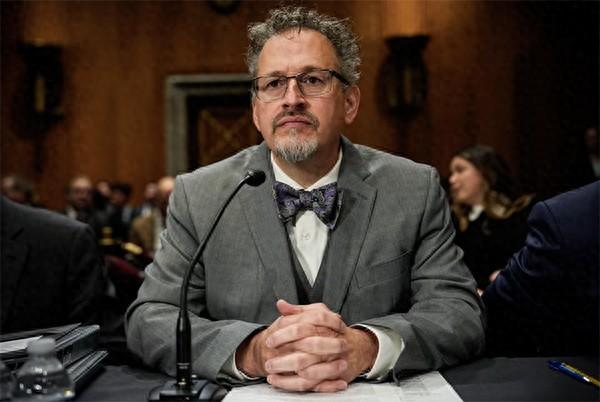
外交部:中方反对美方为自身重启核试验编造借口
Xin Hua She· 2026-02-11 11:30
Core Viewpoint - The Chinese government strongly opposes the U.S. accusations regarding China's nuclear policy, asserting that the U.S. is distorting facts to justify its own nuclear ambitions and evade its responsibilities in nuclear disarmament [1][2] Group 1: U.S. Nuclear Policy Criticism - The Chinese Foreign Ministry spokesperson criticized the U.S. for seeking nuclear hegemony and manipulating political narratives to deflect attention from its own nuclear disarmament obligations [1] - The U.S. is described as the largest disruptor of international nuclear order and global strategic stability, particularly due to its abandonment of the New START treaty and its focus on nuclear weapons modernization [1][2] Group 2: China's Nuclear Stance - China maintains a stable nuclear policy focused on self-defense and peaceful development, emphasizing its commitment to international peace and security [2] - The Chinese government urges the U.S. to reaffirm its commitment to a moratorium on nuclear testing and to engage in strategic stability dialogues with Russia regarding the New START treaty [2]
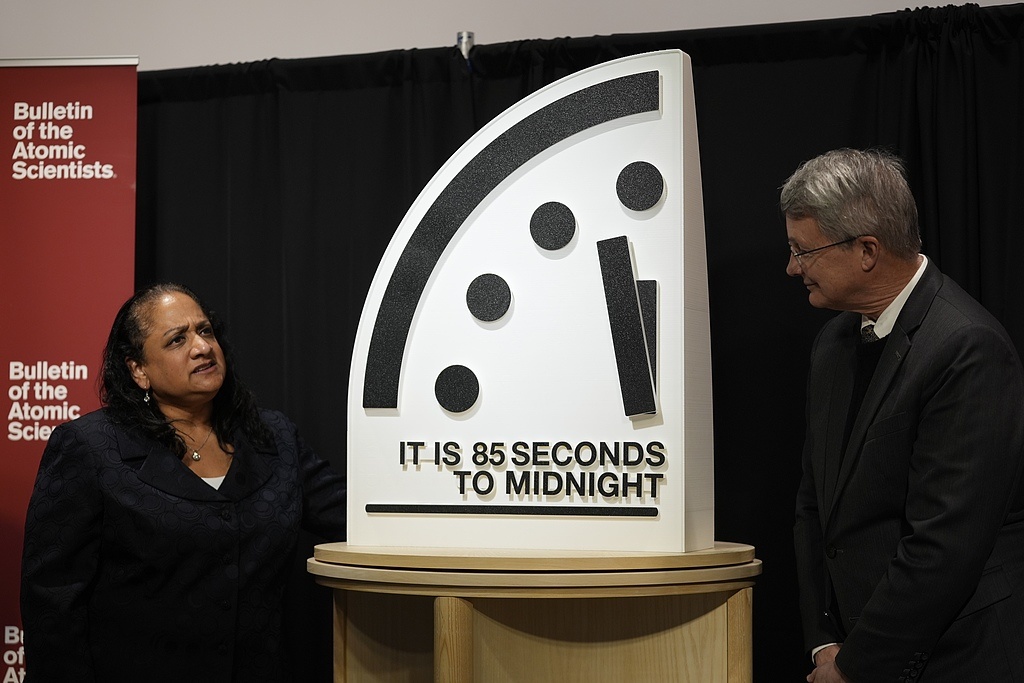
又推进4秒,“末日之钟”倒计时只剩85秒
Huan Qiu Shi Bao· 2026-01-28 23:02
Core Viewpoint - The "Doomsday Clock" has been moved to 85 seconds to midnight, marking the most dangerous level in nearly 80 years, reflecting escalating global risks, particularly nuclear threats and geopolitical tensions [1][3]. Group 1: Doomsday Clock Mechanism - The "Doomsday Clock" was established in 1947 by scientists who developed the first atomic bomb, serving as a warning mechanism for global risks such as nuclear threats and climate change [3]. - The clock's time is adjusted annually based on the perceived existential risks faced by humanity, with the current adjustment reflecting a worsening situation [3]. Group 2: Global Risks and Concerns - The publication's head, Bell, indicated that any government adopting a new imperialistic governance model would push the clock closer to midnight, highlighting the lack of improvement in nuclear risks by 2025 [3]. - Concerns were raised regarding the resurgence of nuclear testing threats, the ongoing Russia-Ukraine conflict, escalating tensions in the Middle East, and the spread of misinformation through artificial intelligence [3][4]. Group 3: Geopolitical Tensions - Since Trump's return to the White House, geopolitical tensions in the Western Hemisphere have intensified, with actions perceived as undermining the existing international order [4]. - Specific actions include the forced control of Venezuelan President Maduro and threats against other Latin American countries, which have damaged transatlantic security cooperation [4]. Group 4: Symbolic Nature of the Clock - The "Doomsday Clock" serves as a symbolic mechanism aimed at raising public awareness of global crises, although some experts have questioned its effectiveness as a metaphor [4]. - Historical context shows that the clock can be reset; for instance, it was moved back to 23:43 in 1991 after the signing of the Strategic Arms Reduction Treaty [4].
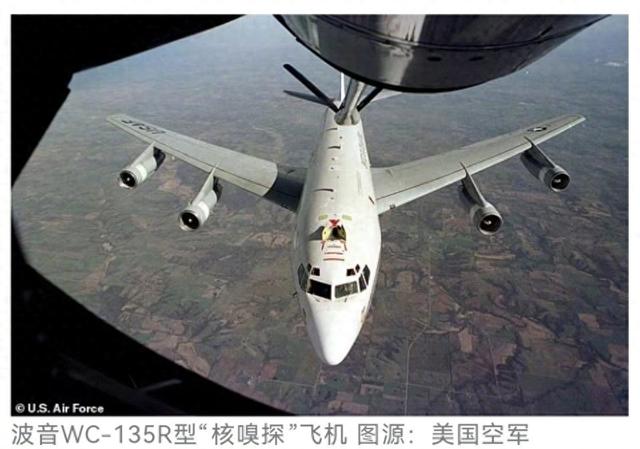
罕见!美军“核嗅探”飞机在多州上空飞行
Xin Lang Cai Jing· 2026-01-09 16:41
Core Viewpoint - The U.S. Air Force's Boeing WC-135R "Constant Phoenix" reconnaissance aircraft conducted flights over several states to monitor nuclear test activities, coinciding with the expiration of the U.S.-Russia New START treaty on February 5 [1][3]. Group 1: Aircraft Operations - The WC-135R aircraft took off from Nebraska, flew over South Dakota, and circled near Fargo, North Dakota, before heading to Rapid City, South Dakota [3]. - This aircraft is specially modified with an onboard atmospheric collection system to gather air samples for detecting radioactive materials from nuclear explosions [3]. Group 2: Purpose and Context - The flights are typically for crew training, equipment calibration, or background radiation monitoring, and are not usually announced unless significant events occur [3]. - The timing of this flight has drawn attention due to the impending expiration of the New START treaty, which governs nuclear arms control between the U.S. and Russia [3]. Group 3: Political Implications - The article references a previous statement by President Trump ordering the military to resume nuclear weapons testing after a 33-year hiatus, which has raised concerns about potential escalations in nuclear testing by both the U.S. and Russia [3].
若美国进行核试验俄将对等回应
Xin Lang Cai Jing· 2025-12-22 17:13
Core Viewpoint - Russia's Deputy Foreign Minister Ryabkov stated that Russia will respond in kind if the United States begins nuclear testing, emphasizing the seriousness of the strategic situation following the expiration of the New START treaty [1] Group 1: Strategic Arms Control - Ryabkov mentioned that the U.S. has not responded to Russia's initiatives regarding the core limitations of the New START treaty after its expiration [1] - Russia is prepared for potential changes in the strategic landscape following the treaty's expiration and is making efforts to avoid the worst-case scenarios [1] - The New START treaty, signed in 2010, aims to limit the number of nuclear warheads and delivery systems deployed by both countries, originally set to expire in 2021 but extended to February 2026 [1] Group 2: International Relations - Ryabkov asserted that Russia has no intention of attacking EU and NATO countries and is even prepared to legally formalize this stance [1] - President Putin indicated that Russia would continue to adhere to the core limitations of the New START treaty for one year after its expiration, provided the U.S. does not take actions that disrupt the existing balance [1]
俄副外长:若美国进行核试验俄将对等回应
Xin Hua She· 2025-12-22 14:44
Core Viewpoint - Russia's Deputy Foreign Minister Ryabkov stated that Russia will respond in kind if the United States begins nuclear testing, indicating a potential escalation in nuclear tensions between the two nations [1] Group 1: Strategic Arms Treaty - Ryabkov mentioned that the U.S. has not responded to Russia's initiatives regarding the core limitations of the New START Treaty after its expiration [1] - Russia is prepared for the strategic situation that may arise after the treaty's expiration and is making efforts to avoid the worst-case scenario [1] - The New START Treaty, signed in 2010, aims to limit the number of nuclear warheads and delivery systems deployed by both countries, originally set to last for 10 years but extended to February 5, 2026 [1] Group 2: Relations with the U.S. and NATO - Ryabkov emphasized that Russia has no intention to attack EU and NATO countries and is even prepared to legally formalize this stance [1] - He expressed that Russia still has many questions regarding the U.S. stance on the Ukraine issue, although some actions taken by the U.S. government are seen as correct [1] - Ryabkov noted that the EU appears to be trying to prevent a converging stance between Russia and the U.S. on the resolution of the Ukraine issue [1]
俄驻美大使:美方至今未说明其核试验立场
Yang Shi Xin Wen Ke Hu Duan· 2025-11-19 13:51
Core Points - The Russian Ambassador to the U.S., Dalchiev, stated that the U.S. has not clarified its position on nuclear testing, raising concerns about its responsible behavior [1][2] - Dalchiev mentioned that dialogue between Russia and the U.S. is stagnant but not completely halted, with ongoing contacts at various levels [2] - U.S. President Trump indicated that the U.S. would conduct nuclear tests like other countries but did not disclose whether this includes detonating nuclear warheads [2]