
泰信优势领航

Search documents
坑爹啊,收益被稀释了100倍...
Sou Hu Cai Jing· 2026-01-14 10:50
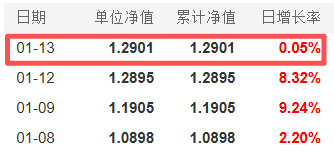
Core Viewpoint - The "Debang Stable Growth" fund, focused on AI applications, has attracted significant attention due to its heavy holdings in stocks that surged, leading to an estimated net value increase of 5%. However, the actual return was only 0.05%, indicating severe dilution of returns for existing shareholders [1][8]. Fund Performance and Market Dynamics - The fund reportedly attracted 12 billion yuan in a single day, raising questions about its net asset value and share dilution effects [2][8]. - The calculation of fund net value is based on the formula: Fund Net Value = Fund Net Assets / Fund Shares, which can be affected by large inflows of new subscriptions [3]. - A scenario was presented where a significant inflow of cash (2 billion yuan) could dilute the returns for existing shareholders if the fund holds a large amount of cash instead of stocks during market fluctuations [4][3]. Historical Context and Comparisons - On October 8, 2024, a similar situation occurred where a financial technology ETF rose by 15.89%, but its corresponding fund only increased by 4.24%, highlighting the dilution effect [5][6]. - The performance of "Debang Stable Growth" on January 12 showed that while its heavy holdings rose by over 16%, the fund's net value only increased by 8.32%, indicating a significant dilution due to large inflows [6][11]. Fund Management Response - In response to the influx of capital and the resulting dilution, "Debang Stable Growth" announced purchase limits for new subscriptions, with specific caps on single accounts [11][12]. - Other AI-focused funds have also begun to implement similar purchase limits, although many remain unrestricted [11]. Comparative Analysis of Other Funds - Other funds in the AI application sector have shown varying degrees of performance, with some experiencing less impact from large inflows compared to "Debang Stable Growth" [11]. - The media ETF linked fund on January 13 demonstrated a disparity in performance, with the ETF rising by 1.6% while the linked fund only increased by 0.7%, further illustrating the dilution issue [11].

主动权益基金工具化打法卷土重来
Zhong Guo Zheng Quan Bao· 2026-01-13 20:46
Core Viewpoint - The surge in the A-share AI application sector has led to a significant increase in the popularity of AI-focused mutual funds, prompting concerns about potential dilution of fund returns due to large inflows of capital [1][2][3] Fund Performance and Market Reaction - On January 12, the A-share AI application sector experienced a notable rise, with 14 actively managed equity funds achieving returns exceeding 10% in a single day, and 37 funds returning over 8% [2] - The performance of the Debon Stable Growth fund was under scrutiny as its A-class shares returned only around 8% despite its top ten holdings rising by 10%-20% [2][3] Fund Subscription Limits - In response to the influx of capital, Debon Fund announced a reduction in subscription limits for its A and C class shares from 10 million and 1 million to 100,000 and 10,000 respectively, effective January 14 [1][3] - This decision was made to protect existing shareholders and maintain the stability of fund operations [3][4] Industry Trends - The rise of tool-based investment strategies in the A-share market has led some public fund companies to explore actively managed equity funds that can outperform index products [4][5] - These "tool-type" funds are characterized by clear labels and high elasticity, appealing to investors seeking high returns [5][6] Risks and Challenges - The rapid influx of funds can dilute existing shareholders' returns and complicate fund management, as seen in previous market cycles [5][6] - The concentration of investments in emerging sectors increases the risk of significant losses if market conditions change, as these sectors often have high uncertainty [6][7]
“工具基”热度飙升,谁在买单?
Zhong Guo Zheng Quan Bao· 2026-01-13 15:02
Core Insights - The A-share AI application sector experienced a significant surge on January 12, leading to increased interest in "concept funds" focused on AI applications, such as the Debon Stable Growth Fund [1][2] - The influx of funds into these actively managed equity products raised concerns about potential dilution of returns for existing investors, prompting Debon Fund to implement purchase limits [1][4] Fund Performance and Market Reaction - On January 12, 14 actively managed equity funds achieved returns exceeding 10%, with 37 funds returning over 8%, driven by the AI application sector's performance [2] - The Debon Stable Growth Fund's top ten holdings saw gains of 10%-20%, yet the fund's A-class share only returned around 8%, leading to discussions among investors on social media [2][3] Purchase Limitations - To manage the influx of capital and protect existing investors, Debon Fund announced a reduction in purchase limits for its A and C class shares from 10 million and 1 million to 100,000 and 10,000 respectively, effective January 14 [4] - Other funds, such as Yongying High-end Equipment and Yongying Information Industry, also implemented similar purchase restrictions to manage high demand [4] Investment Trends - The rise of tool-based investment strategies has led public fund institutions to explore actively managed equity funds that focus on specific emerging sectors [5][6] - These "tool-type" funds are characterized by clear labels and high elasticity, appealing to internet investors and generating significant interest on social media [6][7] Market Dynamics and Risks - The concentration of investments in niche sectors can lead to significant price movements, attracting more capital and creating a feedback loop of rising stock prices [7] - However, the high uncertainty associated with emerging sectors poses risks, as rapid capital inflows can lead to increased volatility and potential losses for investors if market conditions change [7][8]