春季躁动行情

Search documents
资金进场!单日净流入超百亿
Zhong Guo Zheng Quan Bao· 2026-02-25 13:09
Market Overview - On February 25, major A-share indices collectively rose, with the ChiNext Index increasing by over 1.4%. More than 1,000 out of over 1,400 ETFs in the market saw gains [1] ETF Performance - The rare earth and rare metal sector ETFs performed notably well, with 8 related ETFs ranking among the top ten for daily gains, all exceeding 5%. Year-to-date, these 8 ETFs have accumulated gains of over 20% [2] - On February 24, the ETF market experienced a net inflow of over 11 billion yuan, marking the highest single-day net inflow in the past six trading days. ETFs focused on the Hong Kong stock market showed strong capital attraction, with over half of the top ten ETFs by net inflow being Hong Kong ETFs [3][8] Rare Earth and Rare Metal ETFs - On February 25, all 8 ETFs focused on rare earth and rare metals closed higher, with gains leading the ETF market. Four products linked to the CSI Rare Earth Industry Index rose over 6%, while four linked to the CSI Rare Metal Theme Index rose over 5%. The CSI Rare Earth Industry Index includes 43 constituent stocks related to rare earth mining, processing, trading, and applications, with only one stock declining by the close [4] - During the trading session, four rare earth ETFs reached new highs since their inception, with some funds doubling in value since launch. The CSI Rare Metal Theme Index includes up to 50 constituent stocks involved in rare metal mining, smelting, and processing, with all 50 stocks rising by the close [5] Specific ETF Gains - The following ETFs showed significant daily and year-to-date gains: - Brazil ETF E Fund: 7.26% daily gain, 36.55% YTD - Rare Earth ETF E Fund: 6.25% daily gain, 22.66% YTD - Rare Earth ETF: 6.12% daily gain, 22.68% YTD - Rare Earth ETF: 6.08% daily gain, 22.63% YTD - Rare Earth ETF Jiashi: 6.07% daily gain, 22.47% YTD - Rare Metal ETF: 5.74% daily gain, 24.27% YTD - Rare Metal ETF: 5.68% daily gain, 24.09% YTD - Rare Metal ETF ICBC: 5.68% daily gain, 24.42% YTD - Rare Metal ETF Fund: 5.49% daily gain, 24.27% YTD - Sci-Tech Semiconductor ETF: 5.04% daily gain, 24.72% YTD [6] Declining ETFs - Energy sector ETFs experienced some pullback, with two S&P Oil & Gas ETFs showing the largest declines in the market, both of which had risen over 9% the previous day. Additionally, some media sector ETFs also saw significant declines [6] Hong Kong ETFs - On February 24, Hong Kong market-focused ETFs attracted significant capital, with the top ten ETFs by net inflow including seven Hong Kong ETFs that collectively saw over 7 billion yuan in net inflows. Since the beginning of February, these seven ETFs have accumulated over 28 billion yuan in net inflows [8][9] New ETF Issuances - On February 25, several ETFs began issuance, including the Huatai-PB Hang Seng Technology ETF and the Huaxia CSI Battery Theme ETF, with the issuance period for the Huatai-PB CSI Animal Husbandry Industry ETF ending on March 6 [11] Investment Outlook - Looking ahead, the technology and resource sectors are expected to remain key investment themes. Emerging technologies, including internet, media, computing, robotics, electronics, and military sectors, are highlighted as potential areas of focus. Value stocks in consumer services, food and beverage, and building materials are also anticipated to present investment opportunities [12]

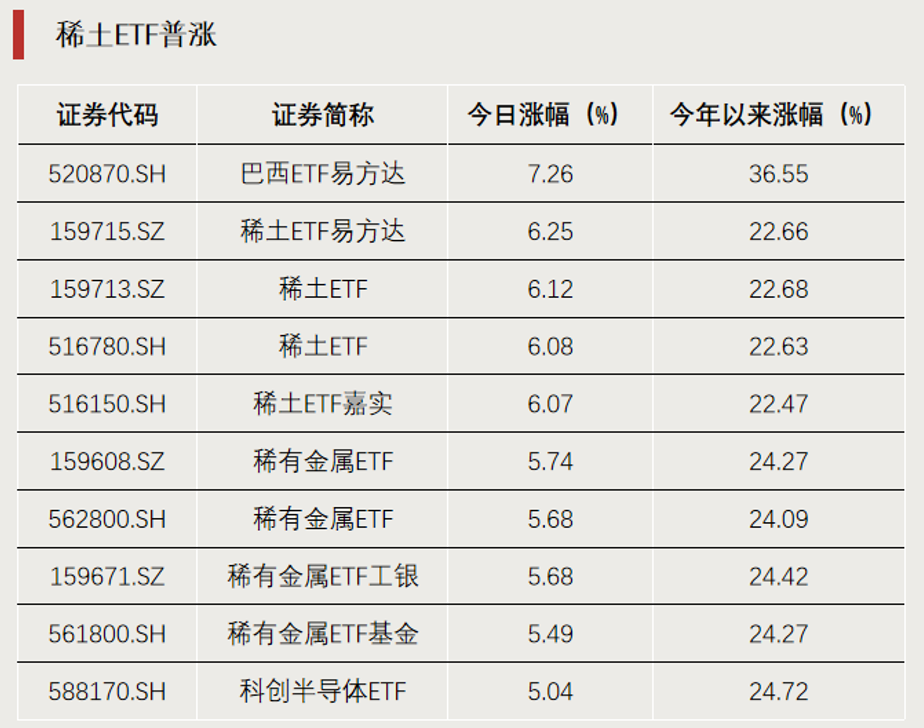
铝:关注春季躁动行情,氧化铝:检修增加,铸造铝合金:跟随电解铝
Guo Tai Jun An Qi Huo· 2026-02-25 02:06
Report Industry Investment Rating - Not provided in the given content Core Viewpoints - The report suggests paying attention to the spring rally in the aluminum market, with increased maintenance in the alumina sector and the cast aluminum alloy market following the trend of electrolytic aluminum [1] Summary by Relevant Catalogs Aluminum - **Futures Market**: The closing price of the SHFE aluminum main contract was 23,550, down 175 from a month ago and up 2,305 from three months ago; the trading volume was 118,216, a significant decrease compared to previous periods; the open interest was 127,637, also showing a downward trend. The LME aluminum 3M closing price was 3,111, up 23 from a month ago and up 241 from three months ago. The LME cancelled warrant ratio was 10.46%, showing a small increase. The LME aluminum cash - 3M spread was - 27.99 [1] - **Spot Market**: The domestic aluminum ingot social inventory was 1125,000 tons, showing an increasing trend. The SHFE aluminum ingot warrant was 282,600 tons, also increasing. The LME aluminum ingot inventory was 471,600 tons, showing a slight decrease. The electrolytic aluminum enterprise profit and loss was 7,152.34, showing an upward trend compared to previous periods [1] Alumina - **Futures Market**: The closing price of the SHFE alumina main contract was 2,829, down 34 from a month ago and up 13 from three months ago; the trading volume was 252,117, showing a large decrease compared to previous periods; the open interest was 286,192, with a complex change trend. The near - month contract to the first - continuous contract spread was - 144 [1] - **Spot Market**: The domestic average alumina price was 2,646, showing a downward trend. The alumina Lianyungang CIF price was 330 US dollars/ton, with little change [1] Aluminum Alloy - **Futures Market**: The closing price of the aluminum alloy main contract was 22,320, up 280 from the previous day and up 155 from a week ago; the trading volume was 5,471, showing a decrease. The open interest was 11,540, also showing a decrease. The near - month contract to the first - continuous contract spread was 80 [1] - **Spot Market**: The ADC12 theoretical profit was 632, showing a certain change compared to previous periods. The Baotai ADC12 price was 23,200, with an increase of 100 [1] Other Information - **Trend Intensity**: The trend intensity of aluminum is 1, alumina is 0, and aluminum alloy is 1, indicating different market trends [3] - **External News**: The Fed governor warned that monetary policy may not be able to cope with the unemployment wave caused by AI; Trump's 10% "global tariff" took effect on Tuesday, and the implementation schedule of the 15% tariff has not been finalized, which has caused global fluctuations [3]
北证指数开年涨超6%,机构看好春季行情
Huan Qiu Wang· 2026-02-22 01:15
Core Viewpoint - The Beijing Stock Exchange (BSE) has seen a significant increase in market activity since the beginning of 2026, with the BSE 50 Index rising by 6.20% and notable stock performance variations among individual companies [1][3]. Group 1: Stock Performance - A total of 26 stocks on the BSE have increased by over 20% this year, with Liancheng CNC leading at a remarkable 172.98% increase, followed by Liujin Technology at 128.27% and Yinen Power at 99.7% [3]. - Other companies such as Keli Co., Minsida, and Oputai have also shown strong performance in the market [3]. Group 2: Market Capitalization - Better Ray holds the top position in market capitalization on the BSE with a valuation of 33.25 billion yuan, followed by Hengdongguang at 26.48 billion yuan [3]. - Hengdongguang is projected to achieve a net profit attributable to shareholders of 270 million to 310 million yuan in 2025, representing a year-on-year growth of over 80% [3]. - Other companies like Jinbo Bio, Shuguang Shuchuang, and Xingtou Ce Kong have market capitalizations exceeding 10 billion yuan [3]. Group 3: Market Outlook - Analysts believe that the BSE market is showing signs of a spring rally after several years of operation, with good annual performance expectations for listed companies [3]. - Galaxy Securities indicates that the active trading volume in the sector remains high, and valuations are at a relatively low stage, suggesting potential for a spring phase rally driven by events and policies [3].

基金配置策略报告(2026年2月期):股市短期震荡,从叙事走向验证
HWABAO SECURITIES· 2026-02-13 02:25
Market Overview - In January 2026, the equity market showed a good profit effect, with major indices rising, while the bond market stabilized after fluctuations[3] - The performance of cyclical and growth sectors remained strong, with non-ferrous metals, media, and oil and petrochemicals leading gains at 23.02%, 18.85%, and 14.95% respectively[3] - Conversely, the banking, comprehensive finance, and transportation sectors experienced declines of -6.18%, -4.46%, and -0.89% respectively[3] Bond Market Insights - The bond market showed resilience after a period of decline, with major bond fund indices recording gains of 0.24%, 0.20%, and 0.16% for long-term, bond index, and short-term pure bond indices respectively[12] - The performance of first-level, second-level, and convertible bond fund indices increased by 0.85%, 1.65%, and 6.90% respectively, following the strength of the equity market[12] Investment Strategy - The report suggests a balanced allocation strategy in February, focusing on sectors with strong profit elasticity and clear benefits from technological advancements, particularly in "light, electricity, and storage" segments[4] - Traditional dividend stocks are recommended as stabilizing components in investment portfolios, enhancing risk management[4] Risk Considerations - The report emphasizes the need for caution in the bond market, advising against extending duration too much due to the current narrow credit spreads and potential challenges in capital gains[6] - It highlights the importance of monitoring policy signals and maintaining a diversified allocation to mitigate risks in a complex market environment[6] Performance Metrics - The active equity fund selection index has achieved a cumulative net value of 1.5819 since its inception on May 11, 2023, outperforming the CSI 930950 index by 25.37%[23] - The short-term bond fund selection index has a cumulative net value of 1.0481, with an excess return of 0.5456% relative to its benchmark since December 12, 2023[31]
基金早班车丨机构齐声“持股过节”,哑铃策略备战春节红包
Sou Hu Cai Jing· 2026-02-11 00:44
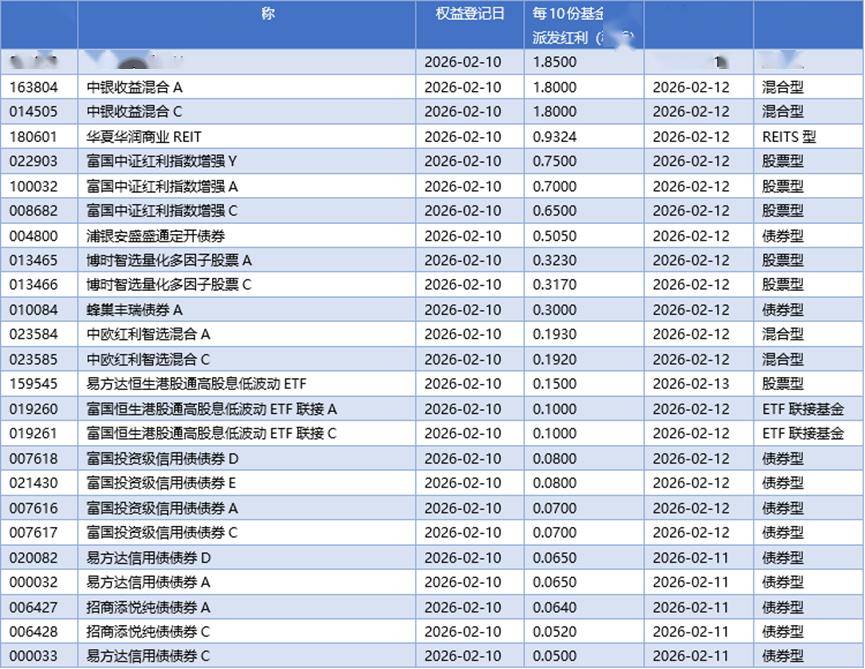
Group 1: Market Overview - The last trading week before the Spring Festival sees brokerages, public funds, and private equity leaning towards "holding stocks for the festival" with expectations for a positive post-holiday market driven by portfolio structure [1] - A "barbell strategy" is emerging as a consensus among institutions, focusing on high-dividend, low-valuation defensive assets on one end and technology growth offensive varieties on the other to prepare for potential spring market excitement [1] - On February 10, A-shares exhibited a "structural differentiation" pattern, with the Shanghai Composite Index rising by 5.28 points (0.13%) to 4128.37 points, while the Shenzhen Component Index increased by 2.19 points (0.02%) to 14210.63 points, and the ChiNext Index fell by 12.23 points (0.37%) to 3320.54 points [1] Group 2: Fund News - No new funds were launched on February 10, but 43 funds distributed dividends, primarily bond funds, with the highest dividend payout from the Bank of China Income Mixed Securities Investment Fund at 1.8500 yuan per 10 fund shares [2] - From February 3, there was a reversal in net outflows from stock ETFs, with a significant inflow of over 10 billion yuan into the market, particularly favoring small-cap ETFs like the CSI 1000 and CSI 2000, while ETFs related to non-ferrous metals faced net outflows [2] - By the end of 2025, the total scale of domestic ETFs is expected to exceed 6 trillion yuan, with an annual growth rate of 62%, increasing their share of A-share market capitalization to 6.1% [2]
沪指险守4000点,白酒重挫,机构称A股年内或再创新高,港股蔚来飙涨8%
21世纪经济报道· 2026-02-06 07:41
Market Overview - The A-share market experienced a slight decline, with the Shanghai Composite Index down 0.25% to 4065 points, briefly dipping to 4029 points during the day [1] - The Shenzhen Component Index fell by 0.33%, and the ChiNext Index decreased by 0.73% [1][2] - Total market turnover was 2.16 trillion yuan, a decrease of 308 billion yuan from the previous trading day, with over 2700 stocks rising [1] Sector Performance - The mining and oil sectors saw gains, with stocks like Tongyuan Petroleum and Zhun Oil Co. hitting the daily limit [4] - The fluorochemical sector also performed well, with Tianji Co. reaching the daily limit [4] - Lithium mining and battery sectors were active, with Enjie Co. hitting the daily limit [4] - Conversely, the liquor sector faced declines, with Huangtai Liquor hitting the daily limit down, and Moutai falling by 2.57% [4][5][6] - The commercial retail and duty-free sectors dropped, with Baida Group hitting the daily limit down [4] Notable Stock Movements - Alibaba-related stocks surged, with Dataport hitting the daily limit and several other stocks rising significantly [4] - In the Hong Kong market, major tech stocks like Alibaba and Meituan saw declines, while the lithium battery and new energy vehicle sectors performed well, with NIO rising by 8% [6][8] Commodity Prices - International precious metal prices rebounded, with spot gold rising nearly 1% and recovering above 4900 USD/ounce, while spot silver increased by over 2% [8][9] - Analysts suggest that the current upward trend in gold prices is driven by liquidity expectations and ongoing geopolitical tensions [9] Economic Outlook - The macroeconomic outlook indicates potential for a rebound in both Chinese and global economies within the next 6-12 months, which may support metal prices after adjustments [9][10] - The market is expected to see further upward movement in the stock market, with liquidity being a significant driver of market changes [10]

A股超3800股上涨,化工锂电爆发,港股科技股下挫,茶饮股走强
21世纪经济报道· 2026-02-06 04:10
Market Overview - On February 6, A-shares opened lower but rebounded, with the ChiNext index dropping nearly 2% at one point. Over 3,800 stocks in the market rose [1] - The total trading volume reached 1.39 trillion yuan, with a predicted volume of 2.14 trillion yuan, a decrease of 56.4 billion yuan [2] Sector Performance - The traditional Chinese medicine sector saw significant gains, with Hansoh Pharmaceutical hitting the daily limit, and Zhen Dong Pharmaceutical and Bioventure rising over 10%. This follows the Ministry of Industry and Information Technology's announcement of a five-year plan for high-quality development in the Chinese medicine industry [2] - The chemical sector also performed well, with stocks like Jangtian Chemical and Wanrun New Energy hitting the daily limit, and several others rising over 10% [3] Notable Stocks - Jiangtian Chemical: Current price 37.62 yuan, trading volume 24.08 million, up 14.52%, with a 60-day increase of 29.59% and a year-to-date increase of 61.39% [4] - Wanrun New Energy: Current price 87.80 yuan, trading volume 599,000, up 11.92%, with a year-to-date increase of 16.45% [4] - Shanshan Co.: Current price 14.37 yuan, trading volume 170 million, up 10.03%, with a year-to-date increase of 6.37% [4] Consumer Sector - The consumer sector faced declines, particularly in the liquor and tourism industries, with Huangtai Liquor hitting the daily limit down and Guizhou Moutai falling over 2.6% [5] Economic Outlook - Analysts predict that A-shares may reach new highs this year, with expectations of a "tight then loose" monetary policy from the Federal Reserve, a weaker dollar, and a balanced external and internal demand [6][7] Hong Kong Market - On the same day, Hong Kong's three major indices opened significantly lower, with the Hang Seng Index dropping over 1.2%. Major tech stocks like Alibaba and JD Health fell over 3% [8][9] Company Highlights - NIO saw a counter-trend increase of over 6%, with the company expecting an adjusted operating profit of approximately 700 million to 1.2 billion yuan for Q4, marking its first quarterly adjusted operating profit [10]

未知机构:20260202Dzh的近期市场理解1本次市场调整并非国内-20260203
未知机构· 2026-02-03 01:55
Summary of Conference Call Notes Industry Overview - The recent market adjustment is not driven by domestic fundamentals or regulatory policies, but primarily by fluctuations in overseas commodity sectors and the spillover effects of deleveraging [1] - The tightening of overseas liquidity and the withdrawal of leveraged funds have created a chain reaction, which has transmitted risk preferences to the A-share market [1] - Future assessments should focus on changes in overseas liquidity and the progress of deleveraging as key variables, as prior domestic marginal disturbances are not the main logic [1] Key Market Insights - As of 8 PM today, overseas commodities such as gold, silver, and copper have shown signs of stabilization [2] - Notably, during the recent two trading days of market adjustment, the CSI 300 ETF did not exhibit significant volume changes [2] - The stability in trading volume of this core broad-based ETF during the market decline reflects key funds' recognition of the current market position [2] - The implied volatility (IV) of the CSI 300 and the CSI 1000 has risen to historically high levels, indicating extreme market panic [2] - High implied volatility typically corresponds to a release of market fear, suggesting that short-term market sentiment may be nearing a turning point [2] Strategic Recommendations - Overall, the core logic of the spring market rally before the Spring Festival has not fundamentally changed, and the current market adjustment may have created a "golden pit" for phase-based positioning [2] - It is recommended to adopt a balanced allocation strategy, focusing on high-growth and undervalued sectors, potentially prioritizing large-cap stocks before small-cap stocks to seize the opportunities presented by this adjustment [2]
A股大跌,原因来了!公募最新研判
Zhong Guo Ji Jin Bao· 2026-02-02 11:13
Core Viewpoint - The recent adjustment in A-shares is attributed to a combination of technical corrections and emotional releases, rather than systemic risks, with a continued positive outlook for the spring market driven by economic recovery and liquidity easing [1][2][4]. Market Adjustment Reasons - The primary disturbance in the market is linked to the nomination of Kevin Warsh as the next Federal Reserve Chairman by President Trump, which is interpreted as a hawkish stance advocating for "rate cuts + balance sheet reduction," leading to a stronger dollar and impacting commodity prices [2][3]. - The direct trigger for the adjustment was the significant drop in international precious metals markets, particularly gold and silver, which negatively affected the A-share market, especially in the non-ferrous metals sector [2][3]. Market Structure and Performance - Despite the overall market decline, certain sectors such as electric grid equipment, liquor, and banking showed resilience and strength, indicating a structural differentiation rather than a complete market downturn [2][4]. - The market is expected to enter a phase of consolidation, with a focus on verifying corporate earnings and fundamental performance as the Chinese New Year approaches [4][5]. Future Market Outlook - The spring market rally is anticipated to continue, supported by domestic policies aimed at stabilizing expectations and expanding domestic demand, with a focus on sectors like consumption and technology [4][6]. - The market is likely to experience a balanced structural feature, with opportunities in previously lagging sectors such as consumption and finance, as well as in technology growth stocks that are supported by industry trends [6][7]. Investment Focus Areas - Investment strategies should consider sectors with clear industry trends and low macroeconomic dependence, such as computing power and energy storage, as well as undervalued high-beta index sectors like non-bank financials [6][7]. - Post-earnings announcement, the market may focus on themes such as commercial aerospace, AI applications, and sectors experiencing price increases like petrochemicals and construction materials [7].
春季躁动下的核心底仓选择
Xin Lang Cai Jing· 2026-02-02 04:19
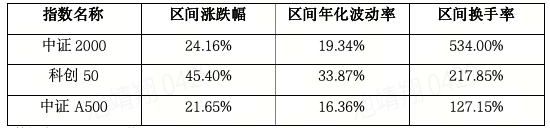
Core Viewpoint - The current capital market is vibrant, presenting a choice between small-cap stocks and the future potential of the Sci-Tech Innovation Board. Investors are encouraged to establish a stable core investment, represented by the CSI A500 index, before diversifying into various styles for a balanced portfolio [1][9]. Performance Comparison - Over the past six months, the CSI A500 index achieved a return of 21.65% with a volatility of 16.36%, providing a more stable holding experience compared to the CSI 2000 and Sci-Tech 50 indices, which had returns of 24.16% and 45.40% respectively, but with higher volatilities of 19.34% and 33.87% [2][10][12]. - The turnover rate for the CSI A500 was 127.15%, which is moderate compared to the higher turnover rates of the CSI 2000 (534.00%) and Sci-Tech 50 (217.85%), making it more suitable for ordinary investors [12][10]. Dividend and Valuation - The CSI A500 index offers a significantly higher dividend yield compared to the Sci-Tech 50 and CSI 2000, providing a layer of safety and predictable cash flow for investors [3][11]. - In terms of valuation, the rolling P/E ratio for the CSI A500 is 17.38, with a percentile rank of 76.47%, indicating a more reasonable valuation compared to the CSI 2000 and Sci-Tech 50, which have P/E ratios of 168.51 and 177.24, respectively, and are in the higher historical percentile ranks [6][16]. Strategic Recommendations - In the current market environment, the CSI A500 is recommended as a core holding due to its balance of returns and volatility. Investors may consider a "core-satellite" strategy, anchoring the majority of their portfolio in the A500 ETF while allocating a smaller portion to high-potential sectors like semiconductor design and equipment [8][17].