德邦稳盈增长

Search documents
德邦基金“大V带货”风波后,8年女董事长离任
Xin Lang Cai Jing· 2026-02-27 13:21
Core Viewpoint - The recent leadership change at Debon Fund, with the resignation of Chairman Zuo Chang and the appointment of Wu Xiaochun as acting chairman, comes amid regulatory scrutiny following a marketing violation involving internet influencers. This transition may signal a strategic move to strengthen internal controls within the company [1][22]. Group 1: Leadership Change - Zuo Chang has resigned as chairman after nearly 8 years, marking the end of a 17-year career within the Debon system [1][22]. - Wu Xiaochun, a veteran of Debon Securities with 15 years of experience, has taken over as acting chairman. His background in risk management may indicate a focus on compliance and internal controls following recent regulatory issues [1][22][28]. Group 2: Regulatory Issues - Debon Fund faced regulatory penalties for engaging in improper marketing practices with internet influencers, leading to a suspension of new fund registrations [8][29]. - The company was found to have violated regulations by not adequately disclosing risks to investors, which resulted in accountability measures against several executives [8][29][34]. Group 3: Fund Performance - Under Zuo's leadership, Debon Fund's assets under management grew from 13.1 billion yuan to nearly 70 billion yuan by the end of 2025, despite a drop to 8 billion yuan in 2018 due to regulatory changes [3][35]. - The Debon Stable Growth Fund saw significant performance fluctuations, with a peak net value of 1.2982 in January 2025, reflecting a 36% increase over a short period, driven by investments in AI-related stocks [36][38]. Group 4: Market Reactions - Following the regulatory penalties, Debon Fund implemented purchase limits on its popular funds to protect existing investors and manage inflows, reducing the maximum purchase amounts significantly [40][42]. - The fund's net value has shown volatility, with a recent decline of 7.94% in the A share class, indicating potential risks associated with rapid inflows and market sentiment [42].


德邦基金董事长离任 此前公司曾陷入基金营销风波
Bei Ke Cai Jing· 2026-02-14 06:53
Group 1 - The core point of the news is the leadership change at Debon Fund, with Zuo Chang stepping down as chairman and Wu Xiaochun taking over the role, aimed at optimizing the company's governance structure [1] - Debon Fund currently manages 34 products, including active equity, index-enhanced, fixed income, and money market funds, with a total public asset management scale of 69.7 billion yuan as of December 31, 2025 [1] - The company emphasized that the core teams in investment research, sales, and operations remain stable, ensuring that all fund products are operating normally and that client funds and interests are not affected [1] Group 2 - A regulatory report indicated that a certain fund company, referred to as D Fund, faced penalties for collaborating with unqualified internet influencers to market high-risk products to unsuitable investors [2] - D Fund was ordered to rectify its practices and had its public fund product registration suspended, with accountability measures taken against its general manager and other responsible personnel [2] - Earlier in January, Debon Fund was reported to have a single-day inflow of 12 billion yuan, but the company clarified that it does not disclose intra-day fund size data, which is confirmed only after end-of-day settlement [2]
与德邦基金合作的无资质大V处罚落地 “爱理财的小羊”账号遭永久禁言
Xi Niu Cai Jing· 2026-02-05 07:40
Group 1 - The account of the financial influencer "爱理财的小羊" has been permanently banned on the Ant Wealth community due to violations related to financial marketing practices [2] - The ban is linked to a scandal involving a fund product that reportedly had a single-day subscription volume exceeding 100 billion yuan [2] - Regulatory investigations revealed that a fund company collaborated with an internet influencer lacking the necessary qualifications for fund sales, paying substantial advertising fees for promotional activities [2] Group 2 - The fund company involved in the incident is 德邦基金, and the specific product in question is 德邦稳盈增长 [2] - The influencer "爱理财的小羊" has over 2 million followers on platforms like Douyin and has previously attracted attention for high return rates in product promotions [2]

仍有平台、博主“顶风”,“基金实时估值”悄转私域
2 1 Shi Ji Jing Ji Bao Dao· 2026-02-03 13:23
Core Viewpoint - The recent incident involving Debang Fund's rapid capital inflow of 12 billion yuan has highlighted the chaotic internet marketing practices within the fund industry, prompting regulatory scrutiny on misleading tools like real-time valuation and ranking lists [1][19]. Group 1: Regulatory Response - Regulators have emphasized the need for fund sales institutions and third-party platforms to conduct self-examinations and remove misleading tools that could mislead investors [1]. - This is not the first regulatory action; in June 2023, regulators had already mandated the removal of real-time valuation features due to risks of significant discrepancies between estimated and actual net values [13][19]. - The case of Debang Fund serves as a catalyst for renewed regulatory focus on the potential harm caused by misleading valuation data and its impact on investor behavior [19][20]. Group 2: Market Dynamics - Since February, there has been a surge in posts sharing fund valuation tools on social media platforms, with some influencers directing followers to private groups for access [4][12]. - Some self-media accounts have begun selling real-time valuation software, with prices ranging from a few yuan to over ten yuan [4]. - Despite regulatory requirements to remove certain features, some platforms have continued to offer modified versions of these tools, indicating a reluctance to fully comply with regulations [9][10]. Group 3: Investor Behavior and Risks - The rapid dissemination of distorted valuation data through social networks can create herd behavior among investors, leading to irrational trading decisions [18]. - The discrepancy between real-time valuation and actual net value can mislead investors, as seen in the case of Debang Fund, where the reported real-time increase was significantly higher than the actual net value increase [19]. - There is a strong demand from investors for more data and tools to bridge the information gap, which may lead to further regulatory challenges as platforms seek to meet this demand while remaining compliant [16][22].
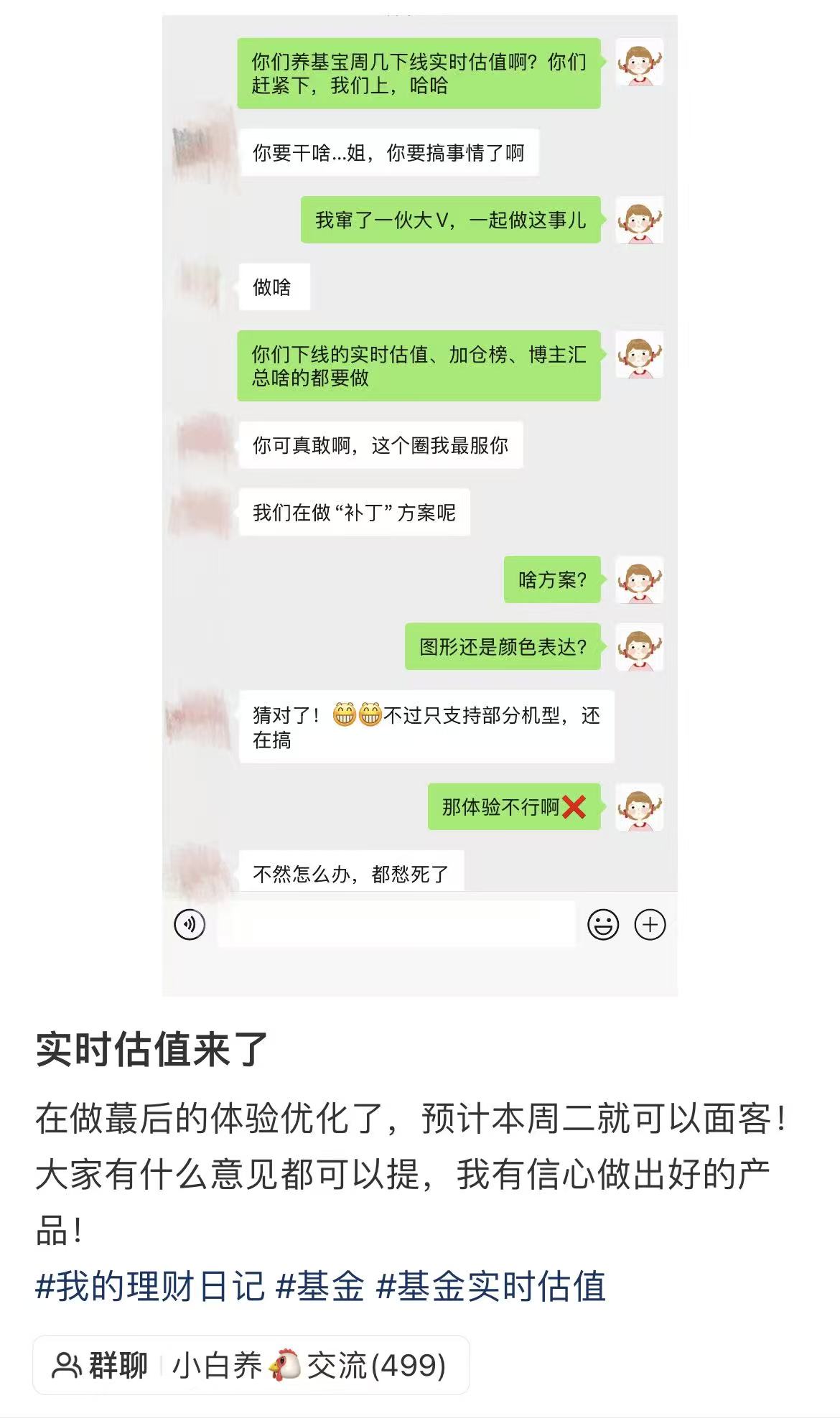
基金公司联手无资质“大V”诱导投资者
Xin Lang Cai Jing· 2026-02-01 18:19
Core Viewpoint - Recent regulatory actions target the collaboration between fund companies and unqualified internet influencers, aiming to protect investors from misleading marketing practices and potential financial risks [1][3][9]. Group 1: Regulatory Actions - The Securities and Fund Institutions Regulatory Division reported that D Fund Company engaged in marketing partnerships with unqualified internet influencers, leading to misleading promotions that encouraged unsuitable investors to purchase high-risk products [1][3]. - Regulatory measures include ordering D Fund Company to correct its practices and suspending the registration of its public fund products, holding responsible parties accountable [3][9]. - The report emphasizes the need for fund companies to enhance investor suitability management and prohibits collaborations with unqualified influencers [9][10]. Group 2: Misleading Marketing Practices - Influencers often showcase personal investment successes and market insights, which can mislead followers into making impulsive investment decisions [2][3]. - The report highlights that some fund sales institutions and unlicensed platforms have reintroduced features like "real-time fund valuation," which can mislead investors and dilute fund returns [6][7]. - The use of performance rankings and real-time valuation features by platforms is seen as a tactic to attract investors, potentially leading to significant inflows into funds without adequate risk disclosure [7][9]. Group 3: Industry Response - The industry is witnessing a crackdown on misleading practices, with platforms like Knowledge Planet and Xueqiu taking steps to eliminate unqualified content and protect investors [9][10]. - Influencers with large followings are facing scrutiny, and some have reported suspending partnerships due to regulatory pressures [9][10]. - The regulatory framework aims to ensure that financial product promotions are truthful and that investors are adequately informed about risks [8][9].
一天卖100亿的德邦基金,出大事了
Xin Lang Cai Jing· 2026-02-01 12:38
Core Viewpoint - The regulatory body has penalized a public fund company, Debang Fund, for collaborating with an unqualified internet influencer to promote a fund, leading to significant investor inflows and subsequent regulatory actions [1][3][32]. Group 1: Regulatory Actions - The regulatory agency issued a notice on January 29, 2026, stating that Debang Fund engaged in marketing cooperation with an internet influencer lacking the necessary qualifications, resulting in the payment of substantial advertising fees [1][32]. - As a consequence, Debang Fund was ordered to rectify its practices and had its public fund product registration suspended, with accountability measures taken against senior management [3][32][51]. Group 2: Fund Performance and Investor Impact - The fund involved, Debang Stable Growth, has underperformed, with a total return of only 25.23% since its inception nearly nine years ago, translating to an annualized return of just 2.56% [12][41]. - On January 12, 2026, the influencer's promotion led to over 10 billion yuan in subscriptions for the fund in a single day, despite its poor historical performance [2][40]. - The fund's performance has been particularly weak, with a return of only 8.06% in 2025, placing it at the bottom of its peer group [44][48]. Group 3: Marketing Practices and Industry Implications - The collaboration involved the influencer leveraging their significant following to encourage investors to purchase a high-risk product, which may not align with their risk tolerance [5][34]. - The incident highlights a broader issue within the industry regarding the adequacy of risk disclosures and the appropriateness of marketing strategies employed by fund companies [21][50]. - The regulatory notice emphasized the need for fund companies to adhere to compliance standards and not prioritize short-term growth over professional integrity [21][50]. Group 4: Broader Industry Reactions - The incident has sparked a regulatory storm that may affect not only Debang Fund but also platforms like Ant Wealth, which facilitated the influencer's promotion [28][58]. - The regulatory body has called for enhanced self-regulation among fund sales institutions and third-party platforms to prevent misleading advertising practices [29][58].
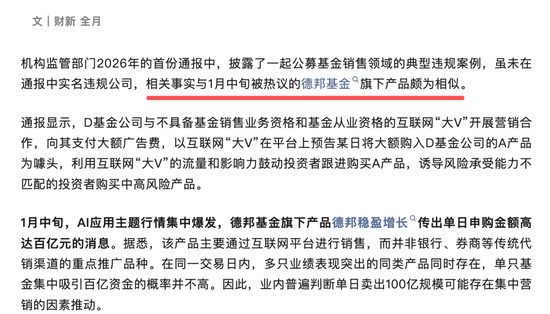
超300个账号被封禁,部分平台实时估值全线下架
21世纪经济报道· 2026-01-31 07:49
Core Viewpoint - The article discusses the intensified regulatory scrutiny on internet financial influencers ("大V") in the context of mutual fund sales, highlighting the need for compliance and the crackdown on misleading marketing practices [1][3][18]. Regulatory Actions - Regulatory bodies have issued a new "Institutional Supervision Bulletin," emphasizing strict measures against institutions and individuals involved in non-compliant sales practices [1][3]. - Major third-party fund sales platforms have begun to remove features such as real-time valuation and performance rankings in response to regulatory demands [1][13][16]. Impact on Influencers - A prominent financial influencer, active on Douyin and Ant Wealth, faced scrutiny after promoting a fund, leading to significant follower-driven investments [3][7]. - The influencer publicly denied any wrongdoing, but regulatory findings indicated that the fund company had engaged in marketing collaborations with unqualified influencers, paying substantial advertising fees [3][7]. Platform Responses - As of January 26, over 300 accounts were banned, and more than 100,000 pieces of content were removed from Ant Wealth due to compliance issues [6][11]. - Other platforms, such as Tonghuashun and JD Finance, have also suspended features that could mislead investors, indicating a broader industry shift towards compliance [12][16]. Market Context - The regulatory focus on preventing excessive speculation and market manipulation has been a priority since the A-share market's recent volatility [18]. - The ongoing regulatory efforts aim to create a more transparent and investor-centric mutual fund sales environment, moving away from short-term promotional tactics [18].

超300个账号被封禁,部分平台实时估值全线下架
2 1 Shi Ji Jing Ji Bao Dao· 2026-01-31 07:12
Core Viewpoint - The regulatory authorities are intensifying scrutiny on the marketing practices of internet financial influencers ("大V") in the fund sales sector, following incidents that raised compliance concerns and potential market manipulation [1][2][3]. Regulatory Actions - The latest regulatory bulletin emphasizes strict measures against institutions and individuals involved in improper sales practices, urging fund sales institutions and third-party platforms to enhance self-examination and correction [1][4]. - As of January 26, major third-party fund sales platforms have swiftly removed features like real-time valuation and live rankings, with Ant Fortune cleaning over 100,000 pieces of content and banning more than 300 accounts for compliance violations [1][4]. Marketing Practices of Influencers - The phenomenon of financial influencers publicly showcasing their fund portfolios has been controversial, as it often lacks adequate risk warnings and can lead to market manipulation [2][3]. - A specific incident involving a financial influencer who promoted a fund on social media led to significant scrutiny, revealing that the influencer had engaged in marketing collaborations with a fund company without proper qualifications [3]. Platform Responses - Following the regulatory bulletin, platforms are required to address misleading functionalities that could confuse investors, such as real-time valuation and ranking features [5][6]. - Major platforms like Tonghuashun and JD Finance have already announced the suspension of certain features to comply with regulatory demands [6]. Industry Trends - The ongoing regulatory efforts signal a shift towards a more transparent and compliant marketing ecosystem in the public fund industry, moving away from reliance on short-term promotional tactics [7]. - The combination of regulatory measures and platform self-regulation aims to create a more investor-centric environment, promoting high-quality development in fund sales [7].

下架实盘榜、实时估值,互联网基金销售平台火速响应监管
2 1 Shi Ji Jing Ji Bao Dao· 2026-01-30 15:07
Core Viewpoint - The regulatory authorities have intensified scrutiny on the marketing practices of internet financial influencers ("Big Vs") in the mutual fund sales sector, following a significant incident involving Debon Fund and a prominent influencer that led to over 10 billion yuan in net subscriptions in a single day [1][3]. Group 1: Regulatory Actions - The latest regulatory report emphasizes strict measures against institutions and individuals involved in improper sales practices, urging fund sales organizations and third-party platforms to conduct self-examinations [1][2]. - Following the regulatory announcement, major third-party fund sales platforms have quickly removed features such as real-time valuation and performance rankings to comply with new guidelines [2][9]. Group 2: Marketing Practices of Influencers - The practice of financial influencers publicly sharing their fund portfolios has raised compliance concerns, as it often lacks adequate risk warnings and can lead to market manipulation [3][4]. - The influencer at the center of the Debon Fund controversy has a significant following of over 4 million on platforms like Douyin and Ant Wealth, and their actions have drawn regulatory attention due to potential violations [4][6]. Group 3: Platform Responses - Ant Wealth has initiated regular announcements regarding financial compliance violations, having removed over 100,000 pieces of content and banned more than 300 accounts for misleading financial promotions [7]. - Following the regulatory report, platforms like Tonghuashun and JD Finance have ceased operations of features that could mislead investors, such as "real-time valuation" and "top performers" lists [9][10]. Group 4: Industry Implications - The ongoing regulatory efforts aim to create a more transparent and compliant mutual fund sales environment, moving away from short-term marketing tactics that rely on rankings and real-time displays [11]. - Industry experts suggest that as these regulations take effect, the mutual fund sales ecosystem is likely to evolve towards a more investor-centric and high-quality development phase [11].
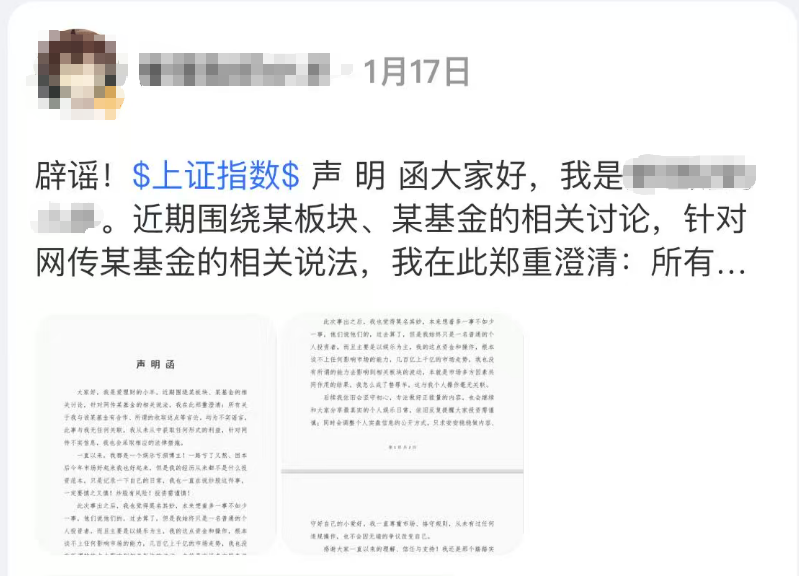
<span class="js_title_inner">“大V预告买入基金”竟是套路?
Di Yi Cai Jing Zi Xun· 2026-01-30 10:03
Core Viewpoint - The regulatory scrutiny of the fund industry has intensified, particularly targeting the "flow marketing" practices involving unqualified internet influencers, as evidenced by a recent case involving a fund company that faced penalties for colluding with such influencers to artificially inflate subscription volumes [2][3][4]. Group 1: Regulatory Actions - The China Securities Regulatory Commission (CSRC) has issued a double penalty to a fund company for violating sales regulations, including a mandate to correct practices and a suspension of new product registrations [2][4]. - The regulatory measures are part of a broader initiative to address the "scale worship" mentality in the fund industry, shifting the focus from short-term growth to investor-centric compliance [2][9]. - The CSRC has emphasized the need for proper risk disclosure and investor suitability management, aiming to prevent mismatches in risk tolerance among investors [8][10]. Group 2: Industry Practices - The fund company involved was found to have collaborated with unqualified influencers, paying substantial advertising fees to promote a fund product, which led to a surge in subscriptions [3][4]. - There is a growing concern about the impact of "real-time valuation" features and misleading ranking lists on investor behavior, which can distort perceptions of fund performance and lead to irrational investment decisions [6][7]. - The industry is witnessing a shift from a focus on product sales to providing services, as regulatory measures push for a more sustainable and compliant operational model [9][10]. Group 3: Market Reactions - The market has reacted to the news of regulatory actions, with discussions around the implications of such "explosive" subscription volumes in a generally restrained market environment [5][9]. - Some platforms have already begun to rectify their practices in response to regulatory scrutiny, indicating a potential industry-wide shift towards compliance and responsible marketing [9][10]. - The phenomenon of "herding behavior" among investors, driven by influencer endorsements and misleading performance metrics, poses risks to market stability and investor interests [5][8].