海上钻井平台

Search documents
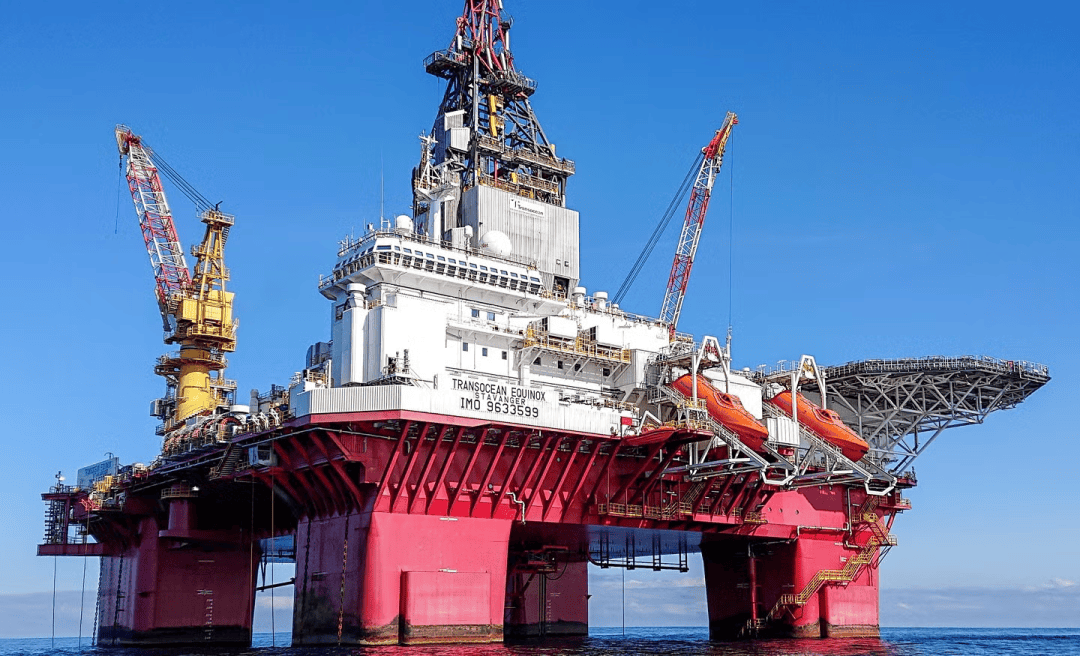
全球最大海上钻井船东正式诞生
Sou Hu Cai Jing· 2026-02-22 21:21
Group 1 - The core point of the article is the merger agreement between Transocean and Valaris, which will create the world's largest offshore drilling contractor with over 70 drilling platforms and a total value of nearly 120 billion RMB [1] - The acquisition is structured as an all-stock transaction valued at approximately 5.8 billion USD, equivalent to about 400.69 billion RMB, resulting in a combined company valuation of around 17 billion USD, or approximately 1,174.44 billion RMB [3] - Post-merger, Transocean shareholders will hold about 53% of the new company's equity, while Valaris shareholders will own the remaining 47% [3] Group 2 - The merger aims to achieve a high degree of asset complementarity between the two companies, creating a comprehensive service capability that covers all scenarios and water depths [3] - The new company will possess 73 drilling platforms, making it one of the largest fleets globally, with operations spanning ultra-deep water, harsh environments, and shallow water markets [3] - The fleet will include 33 ultra-deepwater drilling ships, 9 semi-submersible drilling platforms, and 31 modern jack-up drilling rigs, along with approximately 10 billion USD in contracts, ensuring stable operations for the next 1-2 years [3] Group 3 - Prior to the merger, Transocean was a leading offshore drilling platform operator with 27 mobile offshore drilling units, including 20 ultra-deepwater floating drilling platforms [4] - Valaris, on the other hand, was recognized for its diverse fleet and extensive operational experience across all major offshore basins, owning 49 offshore drilling units, including 13 ultra-deepwater drilling ships [4] - The merger is expected to accelerate the oligopolistic trend in the global offshore drilling industry, with the new company poised to dominate the high-end drilling market, particularly in the ultra-deepwater sector [5]



SFL - Third Quarter 2025 Results
Globenewswire· 2025-11-11 11:06
Core Insights - SFL Corporation Ltd. announced preliminary financial results for Q3 2025, reporting a quarterly cash dividend of $0.20 per share, marking the 87th consecutive quarterly dividend [1][5]. Financial Performance - Total operating revenues reached $178 million, with approximately 86% derived from charter hire in shipping and 14% from energy [9]. - Adjusted EBITDA was reported at $113 million, which includes $8 million from associated companies [9]. - The net income for the quarter was $8.6 million, translating to $0.07 per share [9]. Strategic Focus - The company is committed to maintaining a modern and efficient fleet, having invested nearly $100 million in fuel efficiency and cargo optimization upgrades [4]. - These initiatives have added approximately $1.2 billion to the fixed rate charter backlog, which currently stands at around $4 billion, ensuring strong cash-flow visibility [4][5]. Operational Highlights - All assets, except for the legacy drilling rig Hercules, are employed on profitable charters with high utilization [4]. - The company is optimistic about securing new employment for Hercules in the upcoming year and is exploring strategic opportunities to unlock additional value [4]. Dividend Information - The declared quarterly cash dividend of $0.20 per share will be paid on or around December 29, 2025, with the record date set for December 12, 2025 [5].


国泰海通 · 晨报0618|策略、机械
国泰海通证券研究· 2025-06-17 15:09
Core Viewpoint - The article emphasizes the optimistic outlook for China's stock market, highlighting the emergence of new technology trends and business models, a decrease in opportunity costs for stock investments, and improved economic policies that favor investor returns. This creates a favorable environment for thematic investments, particularly in frontier technologies, advanced manufacturing, and structural improvements, with a focus on investment opportunities for the second half of 2025 [1][6][11]. Group 1: Frontier Technologies - Theme 1: AI and Embodied Intelligence - Artificial intelligence is expected to follow a path of "information infrastructure construction," "basic software deployment," "online application explosion," and "restructuring offline industries," with AI becoming a key catalyst for commercialization and increasing demand for computing power [2]. - The application of embodied intelligence is accelerating in fields such as research, education, and healthcare, with a focus on specific robotic products like quadrupedal and exoskeleton robots [2]. - Theme 2: Bioeconomy and Brain-Machine Interfaces - Biotechnology is rapidly advancing, enabling traditional industries to upgrade, with synthetic biology and information crossover technologies opening new spaces in the bioeconomy [3]. - The brain-machine interface industry is in the exploratory phase, with several tech companies attempting breakthroughs in hardware and applications [3]. - Theme 3: 6G Communication - 6G technology is set to revolutionize communication with significant improvements in speed and latency, with research expected to start in 2025 and commercial systems planned for 2030 [4]. Group 2: Advanced Manufacturing - Theme 4: Low-altitude Economy and Commercial Space - The low-altitude economy is entering a "manned era," with market size expected to exceed one trillion yuan by 2026, driven by the establishment of non-controlled airspace and operational certifications [7]. - The commercial space sector is anticipated to see significant growth due to the increasing demand for satellite launches and the development of satellite constellations [7]. - Theme 5: Deep-sea Technology - The government has prioritized deep-sea technology, with policies accelerating the industrialization process and a projected marine production value exceeding ten trillion yuan by 2024 [8]. - Theme 6: Self-sufficiency - The semiconductor sector is becoming a focal point in the technology competition, with policies promoting mergers and acquisitions to deepen domestic replacements [9]. Group 3: Structural Improvements - Theme 7: Smart Driving - The penetration of advanced smart driving technologies is accelerating, with significant cost reductions expected in related hardware due to scale effects from companies like BYD [10]. - Theme 8: New Consumption Brands - The consumption recovery is showing a "K-shaped" divergence, with traditional consumption under pressure while new consumption is thriving, driven by digital economy and infrastructure changes [12]. - Theme 9: Price Cycle Products - Some cyclical industries are beginning to reduce capacity, with expectations for improved supply-demand dynamics leading to price recoveries in related sectors [13]. - Theme 10: Regional Economy - There is an increasing urgency to address regional development imbalances, with accelerated investment in western infrastructure and supportive policies for local industries [14].