海尔油烟机

Search documents
2025年全球智慧家庭发明专利榜单揭晓:海尔智家14连冠
Huan Qiu Wang· 2026-01-12 06:32
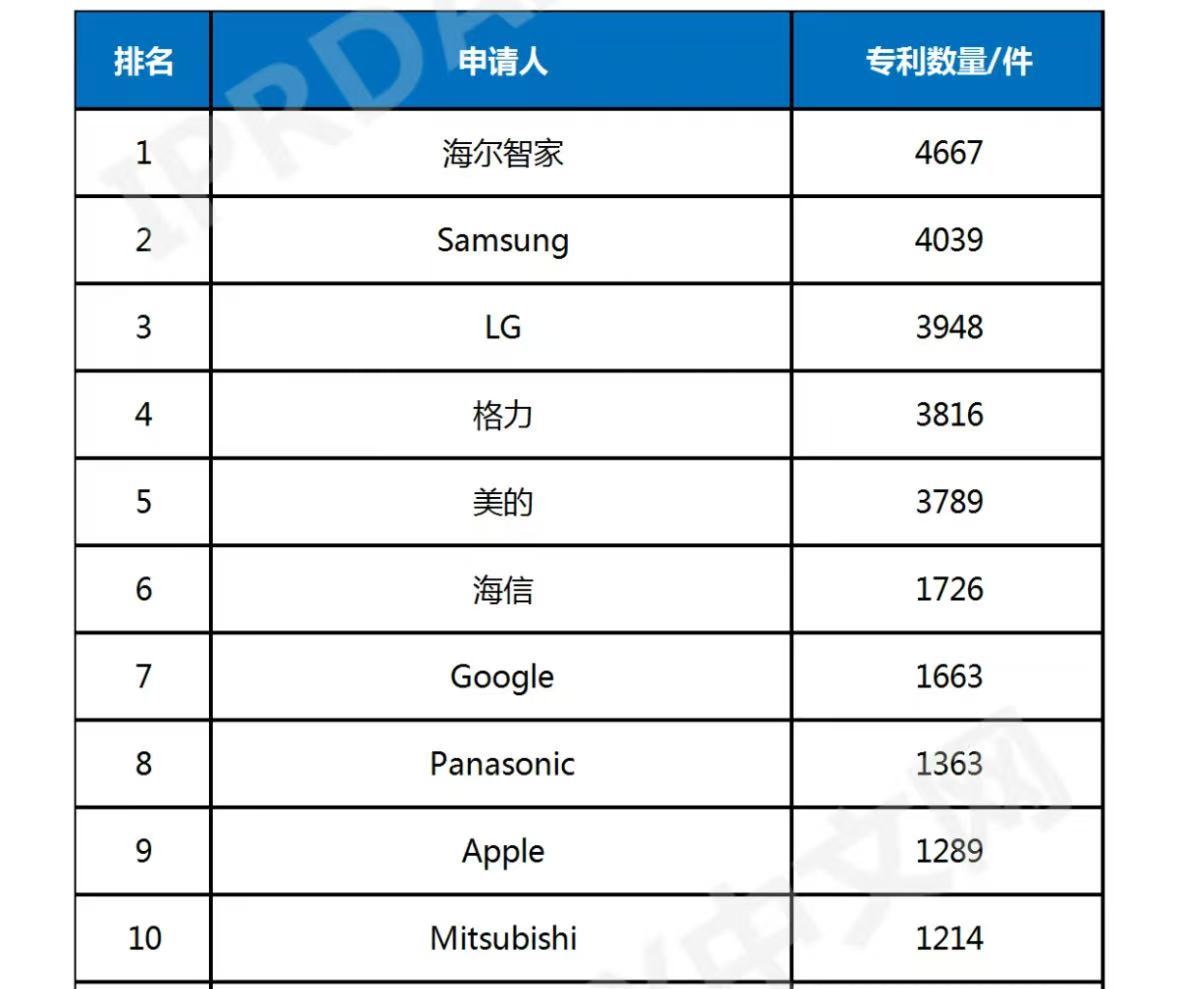
Core Viewpoint - The article emphasizes the importance of patents in the smart home industry as a measure of technological strength and innovation, highlighting Haier Smart Home's leadership with 4,667 patent applications, marking its 14th consecutive year at the top of the global rankings [1][2][4]. Group 1: Patent Leadership - Haier Smart Home leads the global smart home patent rankings with 4,667 published patent applications, followed by Samsung (4,039) and IG (3,948) [2]. - The continuous success of Haier Smart Home is attributed to its long-term commitment to innovation across smart appliances and comprehensive smart home solutions [2][4]. Group 2: Strategic Alignment - The shift in competition from individual smart products to ecosystem-based solutions aligns with Haier Smart Home's user-centric strategy, integrating AI as a foundational capability to enhance user experiences [4][5]. - Haier Smart Home's patent innovations are designed to address real user needs, exemplified by its AI-enabled refrigerator that accurately identifies food items with a 99.8% accuracy rate [5][6]. Group 3: User-Centric Innovations - Each patent from Haier Smart Home aims to enhance user experiences, such as smart appliances that interact seamlessly in various home scenarios, improving convenience and efficiency [6]. - The company's focus on transforming technological advancements into practical solutions ensures that smart home devices are intuitive and responsive to user habits [6][7]. Group 4: Future Outlook - Haier Smart Home's 14 consecutive years of patent leadership is seen as a foundation for future innovations, promising more intelligent and user-friendly smart living solutions [7].


国家贴息叠加分期免息 消费提振新解法
Bei Jing Shang Bao· 2025-10-30 17:00
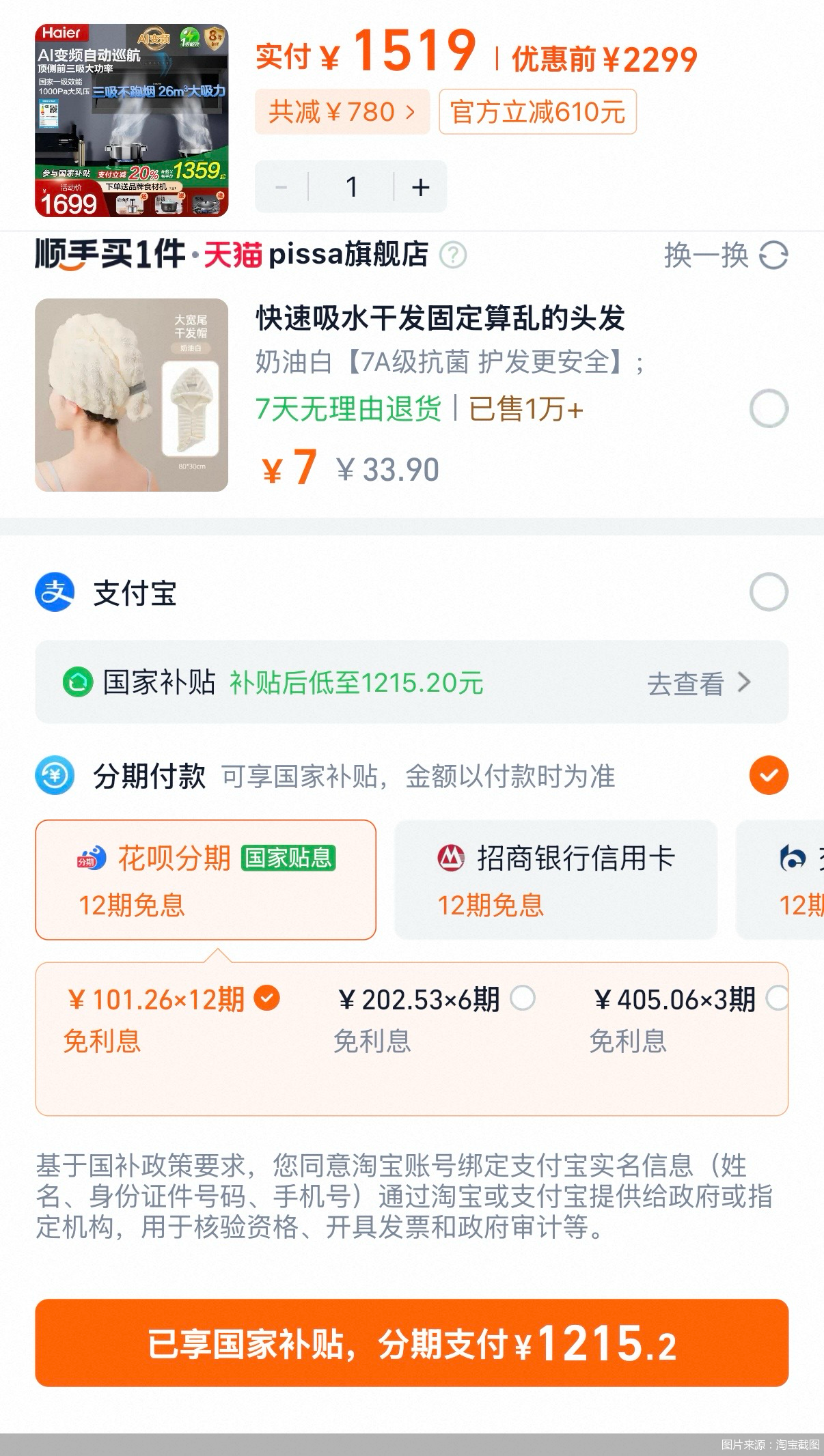
Core Insights - The "National Subsidy" initiative launched during this year's "Double 11" shopping festival aims to boost consumer spending through financial incentives, allowing consumers to enjoy interest-free installment payments on selected products [1][6] - This initiative represents a collaboration between government fiscal policies, financial tools, and commercial entities to stimulate consumption, creating a win-win situation for consumers, merchants, and policymakers [1][5] Group 1: Policy Implementation - The "National Subsidy" program was implemented following the issuance of the "Personal Consumption Loan Fiscal Subsidy Policy Implementation Plan" by the Ministry of Finance, the People's Bank of China, and the financial regulatory authority [1][6] - The program allows consumers to purchase products marked with "National Subsidy" and enjoy interest-free installment payments through platforms like Taobao and Tmall, enhancing the shopping experience [2][3] Group 2: Consumer Benefits - Consumers can access significant discounts; for example, a Haier range hood originally priced at 2299 yuan is available for 1215.2 yuan after a 20% subsidy [2][3] - The program has increased the coverage of high-instalment interest-free products by 60%, with the number of eligible products reaching tens of millions [3][5] Group 3: Merchant Response - Merchants are responding positively to the initiative, with nearly 70% reporting increased sales after offering interest-free installment options, leading to an average sales increase of 30% for subsidized products [4][5] - The strategy is expected to drive significant sales during the "Double 11" event, with past data indicating that categories with high interest-free installment rates see the highest growth in transaction volume [5][6] Group 4: Financial Strategy - The combination of "National Subsidy" and interest-free installments is part of a broader strategy to provide targeted financial support for consumption, ensuring that funds are directed towards genuine consumer spending [6] - The initiative aligns with the government's goal of enhancing consumer spending without resorting to excessive credit expansion, focusing on specific consumption areas [6]
国家贴息落地分期免息,消费提振新解法
Bei Jing Shang Bao· 2025-10-30 13:43
Core Insights - The "National Subsidy" initiative launched during this year's "Double 11" shopping festival aims to boost consumer spending by providing interest-free installment payment options for selected products [1][12] - This initiative is a collaboration between government fiscal policy, financial tools, and commercial entities, creating a win-win situation for consumers, merchants, and policymakers [1][11] Group 1: Policy and Implementation - The "National Subsidy" program was implemented following the release of the "Personal Consumption Loan Fiscal Subsidy Policy Implementation Plan" by the Ministry of Finance, the People's Bank of China, and the financial regulatory authority [1][12] - The program allows consumers to purchase products marked with the "National Subsidy" label on e-commerce platforms like Taobao and Tmall, enabling them to enjoy interest-free installment payments without additional applications [2][12] - The initiative has led to a 60% increase in the coverage of high-instalment products eligible for interest-free payments on Taobao and Tmall, with the number of such products reaching tens of millions [8][12] Group 2: Consumer Behavior and Market Response - Consumers are increasingly favoring interest-free installment payments, with 85% preferring this option even when they can afford to pay in full [10] - Merchants report a significant sales boost, with nearly 70% indicating that offering interest-free installment options has led to a noticeable increase in sales, averaging a 30% rise for key subsidized products [10][11] - The combination of "National Subsidy" and "trade-in" programs allows consumers to benefit from dual subsidies, further enhancing the attractiveness of high-value items [8][11] Group 3: Future Implications - Analysts believe that this model of "policy guidance and market operation" could extend beyond e-commerce platforms, potentially becoming a regular feature of consumer support initiatives [13] - The collaboration between government and commercial entities is seen as a way to transform consumer credit from merely a spending tool into a service that enhances quality of life [13]