海带苗

Search documents
新华视点丨奋力谱写城乡协调发展新篇章
Xin Hua She· 2025-12-30 06:33
Group 1 - Urban-rural coordinated development is a key engine for promoting Chinese-style modernization, with various regions adapting to local conditions to stimulate endogenous motivation and achieve integrated development [2] - Shanghai's "ice and snow economy" is gaining traction in shopping malls, transforming cold resources into a vibrant winter economy by linking markets and brand consumption [4] - Yiwu, known as the "world supermarket," is preparing for the next Christmas season, exporting nearly 80% of global Christmas supplies across over 100 countries and regions [5][9] Group 2 - In Cangzhou, Hebei, a unique market event is set to launch on December 27, 2026, featuring interactive and experiential activities that celebrate traditional culture [7] - Heilongjiang's Suiling County is enhancing agricultural facilities, with a vegetable industry park yielding over 21,000 pounds of produce and generating a net income of 60,000 yuan [9] - The province's facility agriculture area reached 427,000 acres by the end of Q3 2025, marking an 11% year-on-year increase, contributing significantly to farmers' income [9]


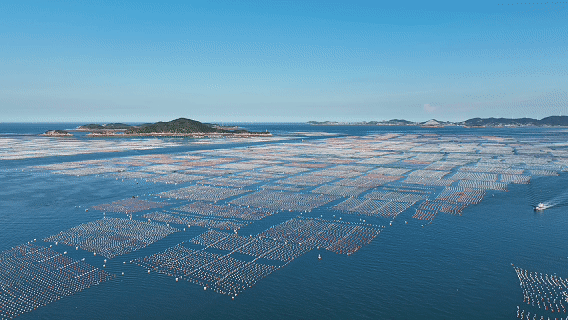
辽宁大连:播种海带苗
Ren Min Wang· 2025-11-23 02:49
Core Insights - The article discusses the cultivation of kelp seedlings in Dalian, Liaoning, highlighting the importance of this activity for local aquaculture and marine economy [1][2][3][4] Industry Overview - Kelp farming is a significant sector in Dalian, contributing to the local economy and providing sustainable seafood options [1][2] - The region's favorable marine conditions support the growth of kelp, making it a viable industry for both environmental and economic benefits [3][4] Company Activities - Local companies are actively involved in the seeding process of kelp, which is essential for the upcoming harvest season [1][2] - The initiative aims to enhance the production capacity of kelp, which is increasingly in demand for various culinary and industrial applications [3][4]
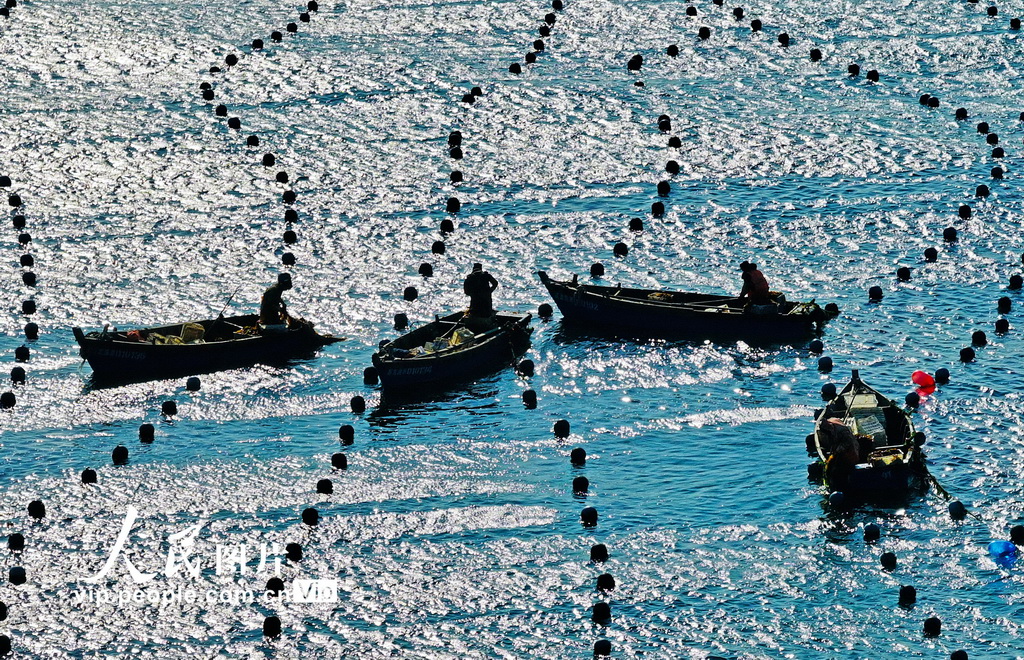
四中全会精神在基层|山东:耕海牧渔充盈“蓝色粮仓”
Xin Hua She· 2025-11-14 07:59
Core Insights - Shandong province is actively developing marine ranching, enhancing its marine fishery industry and contributing to the "blue granary" concept [1] Industry Development - As of now, Shandong has established 139 marine ranches at the provincial level or above, including 71 national-level ranches, accounting for 38% of the total in the country [1] - The province has developed a complete industrial chain from aquaculture, fishing to deep processing [1] Production Goals - In 2024, Shandong aims to achieve a marine product output of 8.25 million tons, with a value-added output exceeding 100 billion yuan, maintaining its leading position in the country [1]
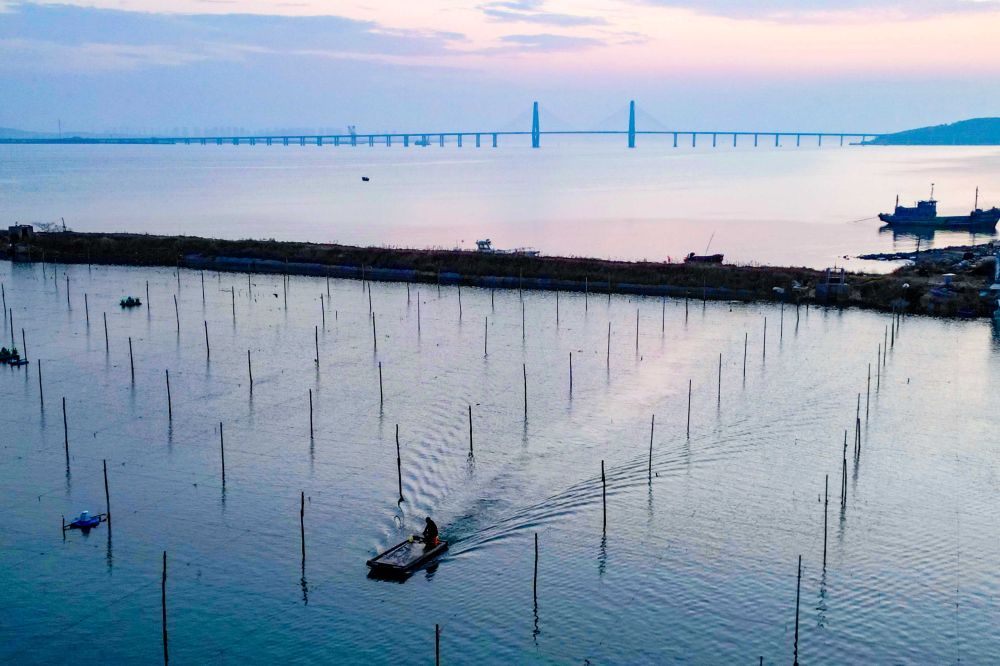
“中国鲍鱼第一县”:电力推动下的渔业现代化转型
Zhong Guo Neng Yuan Wang· 2025-06-04 08:57
Core Insights - The article highlights the development of the marine economy in Lianjiang County, Fujian Province, emphasizing its significant contributions to China's aquaculture industry, particularly in abalone and seaweed production [1][7]. Group 1: Economic Contributions - In 2024, Lianjiang's fishery production value is projected to exceed 30.206 billion yuan, with total aquatic product output ranking second among county-level regions in China [1]. - Lianjiang is responsible for half of the national seaweed seedlings and ranks first in abalone farming output among county-level regions [1][9]. - The production of dried seaweed is expected to reach 360,000 tons, while abalone farming output is projected at 59,300 tons, generating a value of over 4.864 billion yuan [7]. Group 2: Infrastructure and Power Supply - Reliable electricity supply is crucial for the development of the aquatic product industry in Lianjiang, with the local power company providing comprehensive support for electricity needs [2][4]. - The largest pollution-free seaweed seedling base in the country is located in Lianjiang, producing 300,000 seedlings annually, which significantly enhances the efficiency of the seedling cultivation process [2]. - An 800 kVA power capacity increase was successfully implemented to meet the growing electricity demands of the seedling base, transforming seasonal production into a year-round operation [4]. Group 3: Industry Transformation - Lianjiang has integrated 81 enterprises across the breeding, farming, processing, and sales sectors to create a deep processing industry alliance for aquatic products [7]. - The collaboration between the power supply company and local businesses has facilitated the establishment of a complete industrial chain from seedling cultivation to sales, enhancing the overall value of the abalone industry [9][12]. - The processing of abalone has seen a significant increase in value, with the output value per ton rising from approximately 1 million yuan to 3 million yuan, and the processing utilization rate improving from below 40% to over 80% [9]. Group 4: Resilience and Risk Management - The local power company has improved the resilience of the electricity grid by upgrading 16 lines and reinforcing 780 poles, which is essential for maintaining stable production in the face of natural disasters [8]. - The integration of stable electricity supply has fortified the industry's ability to withstand market fluctuations, providing a robust foundation for the complete industrial chain [9][12].