扇贝

Search documents
“古灵精怪”农产品批量上线
Xin Lang Cai Jing· 2026-02-15 22:17
Core Insights - The article highlights the achievements of agricultural innovation teams in Liaoning province, showcasing unique agricultural products and technological advancements in the sector [1][2] Group 1: Agricultural Innovations - Unique agricultural products such as sweet melons with a sugar content of 19.5 degrees, small apples weighing over 20 grams, and white strawberries are results of agricultural technology innovation [1] - A total of 105 core technologies were tackled by innovation teams, resulting in 13 technology achievement awards [1] - The maize team's haploid breeding technology achieved a haploid induction rate of 15.6% and a line formation rate of 70%, reaching an advanced international level [1] Group 2: Integrated Technology Solutions - The 15 teams developed 84 integrated technology models to support the entire agricultural industry chain [2] - The rice team's high-quality production technology was selected as a key technology by the Ministry of Agriculture and Rural Affairs [2] - The fruit tree team's drone technology for pest control in apple cultivation achieved over 90% effectiveness and is widely promoted in apple-growing regions [2] Group 3: Future Goals and Collaboration - The provincial agricultural department aims to align with the national modern agricultural technology system, breaking down barriers between departments, regions, and disciplines [2] - The innovation teams will focus on stabilizing food supply, enhancing the entire industry chain, and promoting green and efficient agricultural development [2] - Goals include supporting the development of trillion-yuan industrial clusters and hundred-billion-yuan characteristic industries [2]

北极帝王蟹销量占全国近20%份额|哈尔滨临空经济区打造北方北极水产集散基地
Sou Hu Cai Jing· 2026-02-15 02:22
Core Insights - The first bonded warehouse re-export trade of king crab in Harbin has been established, creating a new channel for the bonded re-export trade of Arctic king crab and filling a gap in the industry in Heilongjiang Province [1] - The collaboration between Harbin Airport Bonded Investment Development Group and Heilongjiang Kunkun International Trade Co., Ltd. aims to develop a seafood distribution hub in Northern China [1] Group 1: Business Development - The bonded group has built the largest and most comprehensive aquatic animal bonded temporary storage base in the province, increasing the number of temporary storage pools for king crab from 20 to 65, capable of storing nearly 200 tons [1] - Kunkun International Trade Co. is positioned as a "technology mover" for global wild imported seafood, focusing on king crab and has entered the local retail market, becoming a core supplier for major companies like Hema [1] - The company expects to capture nearly 20% of the national king crab sales during the 2025 fishing season, with an 8-fold increase in sales compared to the previous year, aiming for a revenue of 2 billion yuan, and targeting 3 billion yuan in 2026 [1] Group 2: Logistics and Distribution - Kunkun International Trade has established a multi-dimensional logistics system from Zarubino Port to Harbin and target markets, utilizing temperature-controlled land and air transport for rapid delivery to Hong Kong and Southeast Asia [2] - The company relies on Harbin's resource advantages to create a "temporary storage + dual delivery system," with 90% of domestic transport handled by water trucks, achieving T+0 delivery efficiency [4] - The business has expanded to cover over 30 cities, with plans to establish a temporary storage base in Hong Kong by mid-2026, aiming to create a global S2B2C import system for wild seafood [4] Group 3: Regulatory and Strategic Initiatives - Harbin Customs has set up specialized teams to provide customized services, achieving record approval times for transit and bonded warehouse registration [4] - The initiative is transforming Heilongjiang from "border trade" to "hub trade," with plans to normalize and scale the bonded re-export of aquatic animals [6] - The strategy aims to leverage geographical and transportation advantages to enhance trade with Russia, contributing to the national northward opening strategy [6]


闪电评论丨烟火聚市井,旺市启新程:山东“三大集”点燃消费新活力
Sou Hu Cai Jing· 2026-02-06 10:18
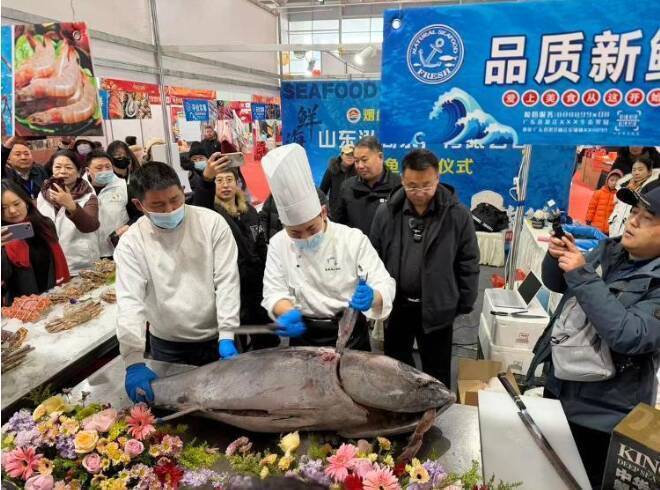
Core Viewpoint - The "Three Major Markets" in Shandong Province are revitalizing local economies and enhancing consumer engagement during the Spring Festival, contributing to the province's economic growth in the new five-year plan period [1][6]. Group 1: Event Overview - The "Three Major Markets" themed activities, including the "Yellow River Market," "Canal Market," and "Ocean Market," were launched simultaneously in various locations such as Heze, Dezhou, and Yantai on February 4 [1]. - The theme of the events is "Explore Shandong Markets, Buy New Year Goods, Celebrate a Peaceful Spring Festival," focusing on comprehensive integration across various sectors [3]. Group 2: Economic Impact - The "Three Major Markets" serve as a robust supply chain for the local economy, enhancing consumer welfare and acting as a "new thoroughfare" for the community [3][5]. - Shandong is the first province in China to exceed a total agricultural output value of 1 trillion yuan, leveraging market initiatives to boost consumption and ensure a solid supply [3]. Group 3: Cultural Integration - The events emphasize cultural elements, showcasing local traditions and performances, such as Shandong storytelling and folk dances, which enrich the consumer experience [4]. - The markets feature a variety of local products, including fresh seafood and traditional crafts, reflecting the cultural heritage of the region [4]. Group 4: Rural Revitalization - The "Three Major Markets" are pivotal in promoting rural revitalization by connecting agricultural producers with consumers, thereby enhancing local economic development [5]. - The initiative aims to expand its reach in 2024 and 2025, further promoting the "Good Guest Shandong" brand and integrating tourism, agriculture, and commerce [5].
日本农产品出口连创13年新高,对中国大陆增7%
日经中文网· 2026-02-03 07:08
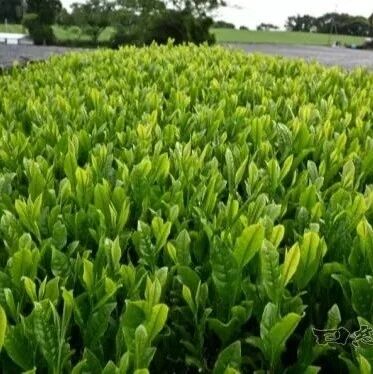
Core Viewpoint - Japan's agricultural and fishery exports are experiencing significant growth, driven by products like green tea, beef, and yellowtail, although the 2025 export target of 2 trillion yen has not been met [2][4]. Group 1: Export Growth - Agricultural exports increased by 12.1% to 1.1008 trillion yen, with fishery products growing by 17.2% to 423.1 billion yen [4]. - The top ten export markets all saw year-on-year growth, with the United States leading at a 13.7% increase, reaching 276.2 billion yen [4]. - Green tea exports surged by 98.2% to 72.1 billion yen, driven by rising demand in Europe and ASEAN countries [7]. Group 2: Specific Product Performance - Green tea, scallops, and beef are notable growth categories, with green tea increasing by 357 million yen due to heightened interest in Japanese food [8]. - Scallop exports rose by 211 million yen, primarily due to increased processing exports to Vietnam [8]. - Yellowtail exports grew by 27.4% to 52.8 billion yen, benefiting from its popularity as sushi material in various regions [7]. Group 3: Challenges and Future Goals - December saw a 2.2% decline in exports, attributed to changes in demand patterns due to the timing of the Chinese New Year [7]. - Japan's government aims to increase agricultural and fishery exports to 5 trillion yen by 2030, acknowledging the need for better marketing and diversification of export markets [9].
各地年货市场、大集陆续升温 多元供给精准对接群众需求
Yang Guang Wang· 2026-02-01 00:40
Group 1 - The article highlights the increasing vibrancy of the New Year market as the Spring Festival approaches, with various regions ensuring stable supply and smooth circulation to meet diverse consumer demands [1][3] - In Xi'an, a market features auspicious decorations and themed goods, particularly those related to the Year of the Horse, which are popular among consumers [2][3] - Shanxi province is organizing over 150 key activities for the Spring consumption season, focusing on premium shopping, exquisite food, and cultural experiences to cater to varied consumer needs [3] Group 2 - The year-end market in Taiyuan showcases over 6,000 products, with local specialties like millet and vinegar being particularly favored by consumers [3][4] - Online live streaming is being utilized for the year-end market, allowing consumers to shop conveniently from home while also supporting farmers' income through direct sales [5] - In Shanghai, themed New Year markets are being launched, featuring a variety of flowers and local specialties, along with the distribution of consumer coupons to stimulate holiday spending [5][7] Group 3 - The import of fresh seafood is gaining popularity among residents, with Fuzhou's Mawei Port being a key hub for imported seafood, ensuring freshness through expedited customs processes [6][7] - The Fuzhou Customs is implementing 24/7 inspection services for fresh goods, ensuring quick processing and zero delays for perishable items [7]
备年货啦!
Xin Lang Cai Jing· 2026-01-31 07:08
Core Viewpoint - The article highlights the significance of traditional and local delicacies in Sanya's New Year celebrations, emphasizing the cultural importance of these foods in enhancing the festive atmosphere. Group 1: Traditional Foods - Red sugar rice cake, known as "Nian Nian Gao," symbolizes good fortune and is a staple in Sanya's New Year celebrations [2][4] - The preparation of red sugar rice cake involves mixing glutinous rice flour with fragrant red sugar, resulting in a soft and chewy texture when steamed [6] - Seafood dishes such as pan-fried mackerel and hot pot with grouper are essential components of the festive meal, showcasing the local culinary culture [11][12] Group 2: Snacks and Sweets - Traditional snacks like "Jing Guo" (sugar-coated snacks) are highlighted as favorites, contributing to the festive joy [24] - Candies, seeds, and dried fruits are considered essential for creating a festive atmosphere during the New Year celebrations [26] - The consumption of sugar tangerines is notably high, with reports of individuals consuming up to 10 kilograms in a day, indicating their popularity [28][30] Group 3: Main Dishes - Chicken is a central dish in Sanya's New Year banquets, with "Bai Zhan Ji" (white cut chicken) being a favorite due to its tender meat and flavorful dipping sauce [34][39] - Duck and goose are also common on the festive table, although they do not hold the same prominence as chicken [41] Group 4: Beverages - Traditional beverages such as Jianlibao, Wanglaoji, coconut juice, and winter melon tea are staples during the New Year, reflecting the local drinking culture [42][46] Group 5: Decorations and Symbolism - The presence of plants like kumquat trees is essential for good luck, symbolizing wealth and prosperity for the coming year [51] - Purchasing auspicious flowers and plants adds vibrancy to homes during the New Year, enhancing the festive spirit and expressing hopes for the new year [54]

农林牧渔行业周报第3期:12月末能繁降至3561万头,旺季猪价走强
HUAXI Securities· 2026-01-26 00:45
Investment Rating - The industry rating is "Recommended" [3] Core Insights - The report highlights the strengthening of pork prices as the breeding stock decreases to 35.61 million heads by the end of December, indicating a bullish trend in the market [1][2] - The report emphasizes the importance of the seed industry revitalization action, which has made significant progress in enhancing seed security and promoting domestic seed usage [1][12] - The commercialization of genetically modified crops is expected to accelerate, contributing to higher self-sufficiency rates in key varieties [1][12] Summary by Sections Planting Industry - The Ministry of Agriculture and Rural Affairs has reported progress in the seed industry revitalization action, with a focus on policy support, funding, and institutional guarantees [1][12] - Key companies recommended for investment include Beidahuang and Suqian Agricultural Development, as well as leading seed companies like Dabeinong and Longping High-Tech [1][12] Pig Farming - The average price of live pigs is reported at 12.99 CNY/kg, with a week-on-week increase of 2.27% [2][13] - The breeding stock of sows is at 39.61 million heads, showing a year-on-year decrease of 2.9% [2][13] - Recommended companies in the pig farming sector include Lihua Co., Muyuan Foods, and Shuanghui Development [5][13] Feed and Veterinary - The average price of pig feed is 2.65 CNY/kg, reflecting a week-on-week increase of 0.38% [52] - Companies in the feed sector such as Haida Group and veterinary companies like Jinhai Biological and Zhongmu Co. are expected to benefit [5][13]


农林牧渔行业周报第2期:消费旺季推动猪价抬升,看好节后去化加速-20260119
HUAXI Securities· 2026-01-19 05:03
Investment Rating - Industry rating: Recommended [3] Core Insights - The pork price is rising due to the peak consumption season, and there is an expectation for accelerated destocking after the holiday [2][12] - The Ministry of Agriculture and Rural Affairs emphasizes the importance of agricultural modernization and the commercialization of genetically modified crops to enhance yield and self-sufficiency [1][11] - The report highlights the profitability recovery in pig farming, with self-breeding and purchased piglets turning profitable, indicating a short-term challenge for capacity destocking [2][12] Summary by Sections Planting Industry Chain - The Ministry of Agriculture and Rural Affairs is supporting Shandong province in enhancing grain production and agricultural modernization, focusing on technology and innovation [1][11] - Key recommended stocks in the planting sector include Beidahuang and Suqian Agricultural Development, with a focus on genetically modified seed companies like Dabeinong and Longping High-Tech [1][11] Swine Farming - The average price of live pigs is 12.72 CNY/kg, with a week-on-week increase of 1.26% [2][12] - The number of breeding sows is 39.9 million, showing a decrease of 1.1% month-on-month and 2.1% year-on-year, indicating a steady adjustment in production capacity [2][12] - Recommended stocks in the swine sector include Muyuan Foods, WH Group, and others, with a focus on companies that show significant cost improvements and high future output elasticity [2][12]


河北水产品“游”向世界餐桌
Xin Lang Cai Jing· 2025-12-22 23:27
Group 1 - The event held in Qinhuangdao aimed to promote Hebei aquatic products and facilitate international market connections, showcasing the province's rich aquatic resources [1][2] - Hebei ranks first in China for flounder production, second for pufferfish, scallops, and Chinese shrimp, and third for sole fish, indicating a strong position in the national aquatic product market [1] - The province has established over 50 national and provincial aquatic breeding farms and more than 400 seedling bases, focusing on high-quality development in the aquatic industry [2][3] Group 2 - The annual production of aquatic products in Hebei exceeds 1.18 million tons, with steady growth across various sectors [3] - Hebei aquatic products are sold in over 50 countries and regions globally, contributing positively to the province's goal of becoming a marine stronghold and enhancing agricultural development [3]
中国卤味香飘东南亚,周黑鸭海外首店落子马来西亚开启全球化征程
Qi Lu Wan Bao· 2025-12-15 05:21
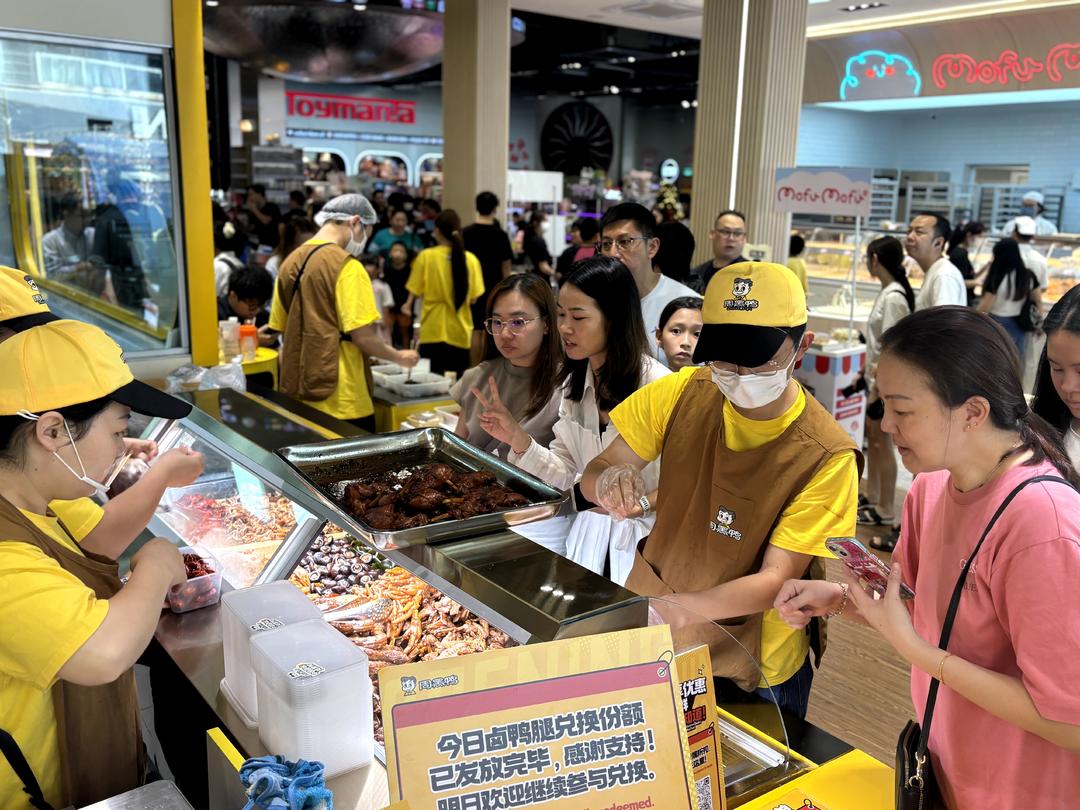
Core Insights - The opening of the first overseas store of the well-known Chinese brand Zhou Hei Ya in Port Klang, Malaysia, marks a significant step in its globalization strategy, showcasing the brand's commitment to expanding beyond the Chinese market [1][11]. Group 1: Market Reception - The store's opening was met with enthusiasm, with long queues and positive feedback from local consumers, indicating a strong demand for Zhou Hei Ya's products in Malaysia [3][7]. - Customers expressed their excitement on social media, highlighting the unique flavor profile of Zhou Hei Ya's products, which combines sweet, spicy, and savory elements that resonate well with local tastes [7][10]. Group 2: Operational Model - The store features a "front store, back kitchen" operational model, allowing customers to see the preparation process, which enhances trust and aligns with local consumer preferences for food safety [5][10]. - The product range includes both classic items like duck necks and innovative offerings tailored to local tastes, such as seafood options, demonstrating a balance between brand heritage and local adaptation [5][10]. Group 3: Strategic Planning - Zhou Hei Ya's successful entry into the Malaysian market is attributed to thorough market research and strategic planning, including prior product testing in local supermarkets [8][11]. - The brand aims to expand its presence in Southeast Asia before moving into Western markets, utilizing a dual-channel strategy that includes both physical stores and retail partnerships [12][14]. Group 4: Future Outlook - The company plans to focus on quality and consumer experience as it expands globally, ensuring that its products maintain high standards while adapting to local markets [10][14]. - Zhou Hei Ya's journey from a local brand to an international player reflects the broader trend of Chinese brands gaining confidence and recognition on the global stage [14].