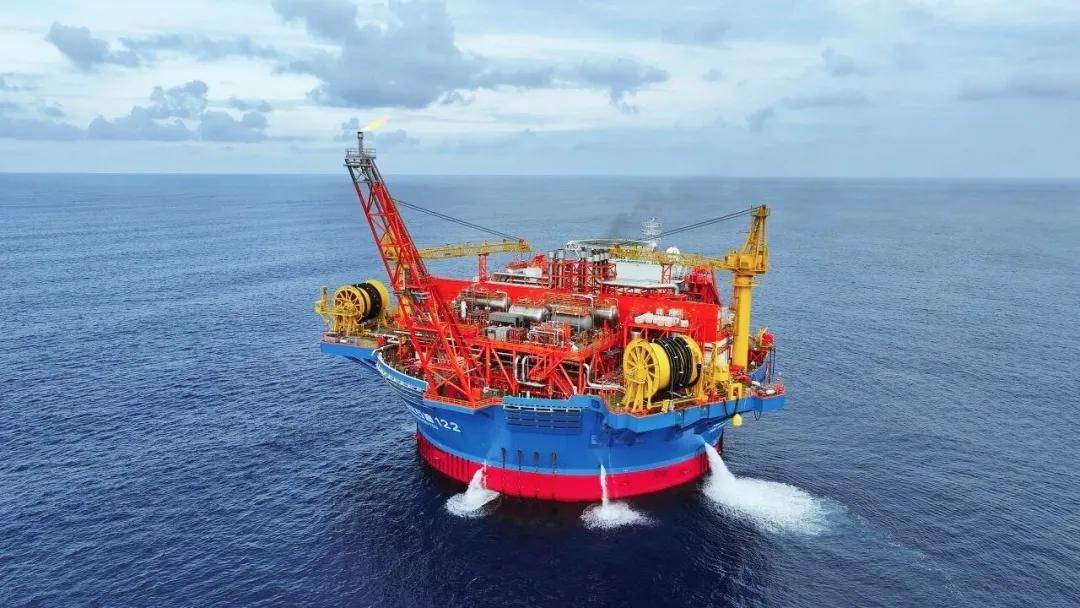
海洋石油119

Search documents
“AII in AI”的风 吹到了大海
2 1 Shi Ji Jing Ji Bao Dao· 2025-10-29 13:04
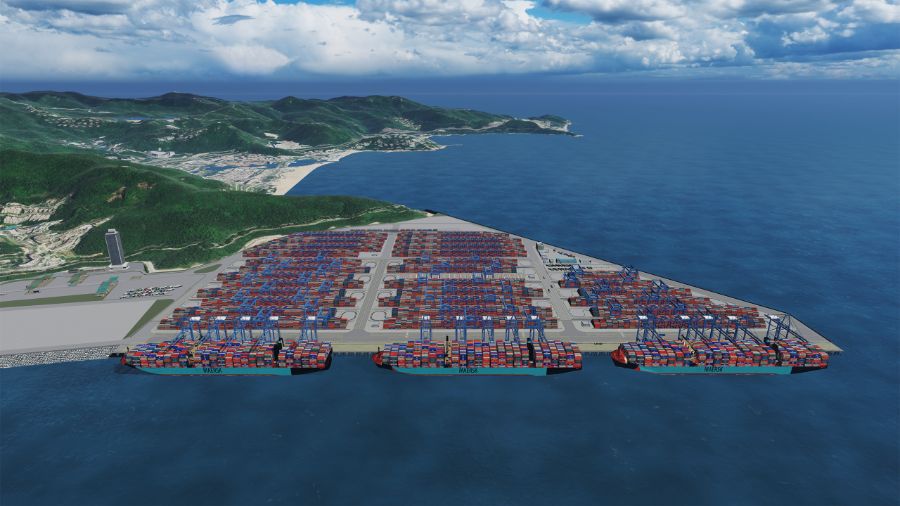
Core Viewpoint - The integration of AI into the marine economy is rapidly advancing, with significant applications showcased at the 2025 China Marine Economy Expo in Shenzhen, highlighting the transformation of traditional industries through AI technologies [1][2]. Group 1: AI Applications in Marine Industry - Leading marine enterprises such as China Merchants, China Mobile, and China Unicom are demonstrating the latest AI applications, including autonomous vehicles and advanced shipping models, which enhance operational efficiency and safety [1][3]. - The "Shipping GPT" and "Fishing Book" models are examples of how AI is reshaping high-risk industries, while the "Sea Aster No. 1" has proven its effectiveness in disaster scenarios, avoiding production losses of 199,000 tons and reducing shutdown losses by over 1.5 billion yuan [1][16]. Group 2: Policy and Strategic Initiatives - Various regions are promoting "AI + Marine" initiatives, with Zhejiang Province aiming to establish over ten landmark applications by 2027, and Shenzhen releasing multiple industry application scenarios covering marine law enforcement and deep-sea resource development [1][8]. - The establishment of the "Marine AI Big Model Industry Alliance" in Qingdao, with Huawei as a leading member, signifies a collaborative effort to advance AI in marine applications [1][8]. Group 3: Smart Port Developments - The Shenzhen Mawan Port has transformed into the first 5G smart port in the Guangdong-Hong Kong-Macao Greater Bay Area, utilizing AI for automated operations, which increases efficiency by 20% compared to manual operations [3][4]. - The upcoming Yantian Port East Operation Area, set to open in 2026, will implement AI technologies for remote control and intelligent digital management, aiming for an annual throughput of 3 million TEUs [6]. Group 4: Telecommunications and AI Integration - Major telecommunications companies are prioritizing AI, with China Mobile reporting direct AI-related revenues in the tens of billions, and China Unicom forming a "Smart Ocean Corps" to leverage AI and 5G capabilities [8][9]. - AI applications in marine environments include the "Fishing Book" for smart aquaculture and the "Yue Shui An" platform for maritime safety, showcasing the potential for AI to address traditional challenges in the marine sector [9][11]. Group 5: Deep-Sea Engineering Innovations - China's deep-sea engineering projects, such as the "Sea Aster No. 1" and "Ocean Oil 119," utilize advanced technologies like digital twins and AI algorithms to enhance operational efficiency and safety in extreme conditions [12][15]. - These projects have demonstrated resilience against severe weather, with the ability to avoid significant production losses during typhoons, showcasing the effectiveness of integrated digital technologies in deep-sea operations [16][17].

300多家涉海龙头企业集结 2025海博会深圳启幕
2 1 Shi Ji Jing Ji Bao Dao· 2025-10-29 09:57
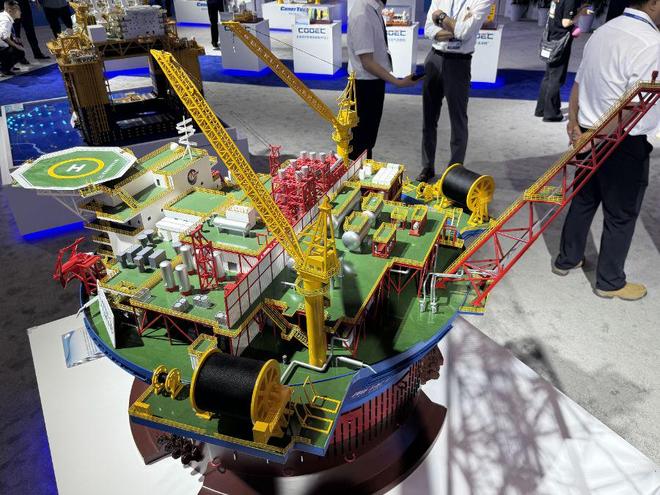
Core Insights - The 2025 China Marine Economy Expo (referred to as "Marine Expo") opened in Shenzhen, themed "Digital Intelligence Deep Blue, Co-creating the Future," marking its first market-oriented exhibition with an area of 40,000 square meters and over 300 participating enterprises [1] Group 1: Exhibition Highlights - The Marine Expo focuses on four core areas: marine energy, deep-sea technology, marine intelligent equipment, and marine electronic information, while also extending to high-potential sectors like marine modern services, marine biomedicine, and coastal tourism [2] - Major companies, including Fortune 500 firms, large state-owned enterprises, and specialized "little giant" companies, participated in the exhibition, showcasing advanced marine technologies and equipment [2] Group 2: Technological Innovations - The "Marine Oil 119" platform integrates 14 oil and gas production modules and features the most complex offshore oil and gas processing technology in China, equivalent to a 300,000 square meter onshore facility [3] - The "Sea Aster 1" platform employs 15 key technologies for intelligent control and introduces a new desulfurization device and dual-fuel generator, enhancing energy efficiency and environmental sustainability [3] - The "Sea Base 2" platform utilizes digital twin technology for real-time monitoring and AI algorithms to optimize structural stress, extending its design life to 50 years and improving operational efficiency [3] Group 3: International Collaboration - The Marine Expo emphasizes international collaboration, featuring seven core forums discussing topics such as blue economic growth and global marine governance, including the APEC International Marine Seminar [4] - Experts highlight that new technologies will drive high-quality development in the marine economy, transitioning from resource exploitation to sustainable development led by technological innovation [4] Group 4: Future Directions in Marine Development - The core directions of the "Deep Blue Revolution" are summarized as "inward, deep, intelligent, and green," focusing on understanding marine life systems, advancing deep-sea exploration technologies, creating a "transparent ocean" through digital integration, and promoting harmonious coexistence with nature [5][6]
300多家涉海龙头企业集结,2025海博会深圳启幕
2 1 Shi Ji Jing Ji Bao Dao· 2025-10-29 09:08
Core Insights - The 2025 China Marine Economy Expo, themed "Digital Intelligence Deep Blue, Co-creating the Future," is being held in Shenzhen from October 28 to 30, showcasing over 300 leading enterprises and technology companies in the marine sector [1][2] - The expo features four core exhibition areas focused on marine energy, deep-sea technology, marine intelligent equipment, and marine electronic information, along with three high-potential application fields: modern marine services, marine biomedicine, and coastal tourism [1][2] - The event aims to create a platform for communication and cooperation in the marine economy, with participation from Fortune 500 companies, large state-owned enterprises, and specialized "little giant" firms [1][2] Industry Developments - The "Marine Oil 119" platform integrates 14 oil and gas production function modules, representing the most complex offshore oil and gas processing technology in China, akin to a 300,000 square meter onshore facility [3] - The "Hurricane One" platform features a smart integrated control system and new natural gas desulfurization technology, enhancing energy efficiency and environmental sustainability in offshore oil fields [3] - The "Sea Base Two" platform employs digital twin technology with 16,000 monitoring points, optimizing structural stress through AI algorithms, extending its design life to 50 years, and improving operational efficiency by 22% [3] Future Directions - The marine economy is expected to transition from resource exploitation to a model driven by technological innovation and sustainable development, termed the "Deep Blue Revolution" [4][5] - This revolution is characterized by four dimensions: inward exploration of marine life systems, deep-sea technological advancements, the creation of a "transparent ocean" through digital monitoring, and a harmonious coexistence with nature [5][6] - Future marine development will focus on renewable energy sources such as offshore wind, tidal, and wave energy, contributing to a "blue energy grid" for coastal economic and social development [6]

3800万吨只是开始!中国深海“三巨头”正在改写全球能源版图
Sou Hu Cai Jing· 2025-10-18 13:20
Core Insights - The cumulative crude oil production of the Liuhua oil field group has surpassed 38 million tons, marking a significant milestone in China's deepwater oil and gas development, transitioning from a "follower" to a "leader" in the industry [1][7] - The Liuhua oil field group is China's first self-operated deepwater oil field group, featuring the largest underwater production system in offshore oil and gas fields [1] Technological Advancements - The "Ocean Oil 119" FPSO functions as a floating oil and gas processing plant, managing three underwater production systems, showcasing significant technological complexity [3] - The "Hurricane No. 1" is Asia's first cylindrical FPSO, designed for enhanced stability in rough seas, while the "Hurricane No. 2" is the first deepwater jacket platform in Asia, capable of operating 27 production wells simultaneously [3] - The digital twin system implemented in the Liuhua oil field group allows for real-time monitoring of equipment status, predictive maintenance, and operational efficiency improvements [5][6] Environmental Impact - The gas recovery system on the "Ocean Oil 119" has reduced carbon emissions by 750,000 tons, equivalent to planting over 40 million trees, demonstrating a proactive approach to integrating green practices into production [5][6] - The "Hurricane No. 1" features the first offshore gas desulfurization system in China, capable of reducing emissions by 13,000 tons at peak production [5] Strategic Importance - The advancements in the Liuhua oil field group enhance China's energy security, reducing reliance on imported oil, which currently stands at 70% [7] - The successful methodologies from the Liuhua oil field can be replicated in other deepwater blocks, with over 70% of China's deepwater oil and gas resources located in the South China Sea [7] Future Outlook - The production milestone of 38 million tons is seen as a starting point, with ongoing improvements in the digital twin system and further deepwater exploration on the horizon [8] - Mastery of deepwater oil and gas development technologies positions China favorably in the global energy landscape, potentially reshaping future energy dynamics [8]