
海葵一号

Search documents
石化科技筑基强国路——中国制造“十四五”成就展创新成果扫描
Zhong Guo Hua Gong Bao· 2026-02-02 03:37
Core Insights - The "14th Five-Year Plan" has led to significant advancements in China's manufacturing sector, particularly in petrochemical and chemical industries, showcasing breakthroughs in high-end manufacturing, new materials, and intelligent industrial robots [1] Petrochemical Equipment Highlights - During the "14th Five-Year Plan," China's petrochemical and chemical industry achieved notable successes in key technologies and major equipment [2] - The "Dream" deep-sea drilling vessel can operate in unlimited ocean areas and has a drilling capacity of 11,000 meters [2] - The JSD6000 deep-water lifting and pipe-laying vessel can perform operations in ultra-deep waters of 3,000 meters [2] - The "Deep Sea No. 1" energy station features nearly 200 key oil and gas processing devices and can store up to 20,000 cubic meters of oil [2] - The "Hurricane No. 1" integrates digital technology for marine development and has a maximum oil storage capacity of 60,000 tons [2] - The domestically developed 110 MW heavy-duty gas turbine "Taihang 110" represents a core equipment for efficient energy conversion and clean utilization [2] - The 180,000 tons/year ethylene compressor unit by ShenGu Group has achieved significant breakthroughs in equipment localization, reaching international leading performance [2] New Materials Innovation - The innovation capability of China's new materials industry has been continuously enhanced during the "14th Five-Year Plan," promoting the petrochemical industry towards high-end development [3] - Tibet Mining Development Co., Ltd. has developed lithium carbonate materials with a purity of 99.5%, crucial for lithium battery production [3] - China National Building Material Group has created special protective coatings that can withstand extreme temperature changes from -180°C to 500°C [3] - China Northern Rare Earth Group has developed rare earth catalytic materials with excellent hydrothermal stability and catalytic performance for petrochemical applications [3] - The company has also established a low-pressure solid-state hydrogen storage demonstration station with a storage capacity of 100 kg [3] Advanced New Materials - The National Graphene Innovation Center and Ningbo Zhaoxin Technology Co., Ltd. have developed graphene that can disperse in various polar solvents and polymer matrices, enhancing its core properties [4] - This graphene material enables energy density in power batteries to exceed 450 Wh/kg, applicable in new energy and chemical sectors [4] Accelerated Application of Intelligent Industrial Robots - The application of intelligent industrial robots has surged during the "14th Five-Year Plan," significantly enhancing automation and modernization in the petrochemical industry [5] - The flexible internal welding robot developed by the Southwest Pipeline Company can perform one-click intelligent welding and adapt to complex terrains [5] - Since its demonstration application in 2024, this robot has completed over 6,600 welds with a total weld length of approximately 25,000 meters and a first-pass qualification rate of 98.9%, improving welding efficiency by 27% compared to traditional methods [6] - The flexible robot showcased by Harbin Institute of Technology is the first globally to detect the entire pipeline system, providing intelligent solutions for industrial pipeline safety [6]


向海洋要发展,青岛着力建设现代海洋中心城市
Qi Lu Wan Bao· 2026-01-20 14:33
Core Viewpoint - Qingdao is positioning itself as a modern marine center city, aiming for a marine GDP growth of approximately 6.5% by 2025, ranking third among marine cities in China, supported by a comprehensive policy framework for high-quality marine economic development [1][9]. Policy Upgrades - The "Marine 20 Policies" are set to provide over 400 million yuan in funding, tripling the previous policy's scale, focusing on key industries and supporting measures from technology talent incentives to blue finance [2]. - The policies aim to revitalize traditional fisheries and promote emerging sectors like marine equipment and marine pharmaceuticals, with specific financial support for new marine health products and cosmetics [2]. Technological Leadership - Qingdao's marine technology sector is bolstered by significant research capabilities, with eight provincial marine technology innovation centers and 137 technology achievements transitioned to practical applications during the "14th Five-Year Plan" [3]. - The city has completed the first Asian cylindrical floating production storage and offloading unit, enhancing its capabilities in deep-water oil and gas development [3]. Artificial Intelligence Integration - By 2025, Qingdao will establish the first national marine AI model industry alliance, with models capable of predicting global marine environments with 3000 times the efficiency of traditional methods [4]. Exploration of Marine Economy - The modern marine industry now accounts for 44% of Qingdao's economy, with significant growth in marine vessel and equipment manufacturing [5]. - Innovations in traditional fisheries have led to the development of large-scale intelligent fishing vessels, enhancing productivity and operational efficiency [5]. Shipping Sector Growth - Qingdao's port has expanded its capabilities, with new shipping routes and a ranking of fourth in global cargo throughput, while also enhancing its international shipping service functions [7]. - The establishment of various marine insurance and oil and gas centers has improved Qingdao's position in the global shipping index [7]. Future Development Plans - By 2026, Qingdao aims to further integrate marine strategies, focusing on 188 key projects with a total investment of 210 billion yuan, and enhancing its role in global marine governance [9]. - The city plans to implement ten key marine cooperation projects and host significant international marine forums to strengthen its global influence [9].
海洋生产总值2120.7亿!青岛西海岸新区向海图强逐浪高
Qi Lu Wan Bao· 2026-01-05 23:59
Core Viewpoint - Qingdao West Coast New Area is positioned as a strategic support for the development of a maritime power, with significant growth in marine economic output projected during the 14th Five-Year Plan period, increasing from 139.5 billion yuan in 2020 to 212.07 billion yuan in 2024, representing an average annual growth rate of approximately 11% [1] Group 1: Strategic Planning and System Reconstruction - The Qingdao West Coast New Area has initiated a comprehensive reform of its institutional mechanisms and policy systems to enhance marine economic development, avoiding fragmented management by integrating various committees into a unified management system [2] - A complete policy chain has been established, focusing on top-level design, industry cultivation, technological innovation, and resource support to empower marine economic development [3] Group 2: Infrastructure and Port Development - The area boasts significant natural advantages with major deep-water ports, including the Qingdao Port, which has seen cargo and container throughput increase from 630 million tons and 23.71 million TEUs in 2021 to 710 million tons and 30.87 million TEUs by 2024, ranking 4th and 5th globally respectively [4] - The Qingdao Port has become a hub for modern marine industries, with advancements such as Asia's first automated terminal and a significant increase in shipping routes, enhancing its competitiveness as an international shipping hub [4] Group 3: Technological Empowerment and Industrial Transition - The Qingdao West Coast New Area emphasizes the integration of technological innovation and industrial transformation, with a focus on developing a modern marine industry system [5][6] - The area has established numerous marine research institutions and innovation platforms, fostering a conducive environment for technological advancements and the commercialization of marine technologies [6] Group 4: Marine Industry Innovations - The region has pioneered initiatives in various sectors, including the establishment of the first deep-sea green aquaculture experimental zone in China and advancements in marine pharmaceuticals and renewable energy projects [7] - Significant projects include the world's first large-scale intelligent fishing vessel and the first factory-based seawater hydrogen production project, showcasing the area's commitment to innovation in marine industries [7] Group 5: Global Engagement and Ecological Sustainability - The Qingdao West Coast New Area actively engages in international cooperation, hosting high-level marine forums and establishing partnerships with global marine organizations [8] - The area has maintained excellent water quality and has implemented extensive ecological restoration projects, demonstrating a commitment to sustainable development alongside economic growth [9][10] Group 6: Modern Marine Governance - The establishment of a smart marine management platform integrates advanced technologies for comprehensive oversight of marine resources, enhancing governance capabilities [10] - The area is exploring innovative management models and regulatory frameworks to improve marine governance, ensuring a balance between development and ecological protection [10] Group 7: Future Outlook - As the Qingdao West Coast New Area transitions from the 14th to the 15th Five-Year Plan, it is poised to become a robust support for China's maritime power strategy through systemic reforms across various sectors [11]
深耕蔚蓝壮大海洋新兴产业
Jing Ji Ri Bao· 2025-12-17 00:05
Core Insights - The marine economy in China has shown steady progress in the first three quarters of this year, particularly in emerging marine industries, with marine engineering equipment deliveries and hand-held order amounts increasing by 13.6% and 7.0% year-on-year, respectively [1] - Emerging marine industries are crucial for cultivating new productive forces in the marine sector and expanding blue development spaces, serving as a core engine for high-quality development of the marine economy [1] Group 1: Industry Development - China's marine engineering equipment has maintained the largest share in the international market for seven consecutive years, with a projected value-added growth of 9.1% in 2024 [1] - The successful design and construction of advanced marine engineering equipment, such as the "Hai Kui No. 1" floating production storage and offloading unit and the "Kai Tuo No. 2" deep-sea heavy-duty mining vehicle, signify a leap from following to leading in high-end marine engineering equipment [1] - The marine biopharmaceutical industry is accelerating the transformation of results based on the "blue pharmacy" plan, showcasing the synergistic effects of regional differentiated layouts and innovation factor aggregation [1] Group 2: Global Context and Challenges - Globally, emerging marine industries have become a strategic high ground for developed countries, with China demonstrating unique institutional advantages and scale effects in this sector [2] - China's offshore wind power installed capacity has ranked first in the world for four consecutive years, providing significant support for the technological iteration of high-end equipment such as wind installation vessels and submarine cables [2] - Challenges remain, including low self-sufficiency rates in core deep-sea technologies and insufficient mechanisms for the transformation of scientific and technological achievements [2] Group 3: Future Strategies - To address these challenges, a multi-faceted approach is needed, including strengthening technological innovation to break through key core technologies and forming a marine technology innovation consortium involving national laboratories, key universities, and leading enterprises [2] - Establishing a national marine industry investment fund to guide social capital into key areas such as high-end marine engineering equipment and marine biomedicine through equity investment and risk compensation [3] - Enhancing infrastructure networks, including the construction of a marine three-dimensional observation network and the promotion of 5G communication networks to extend into marine areas, is essential for improving industry support capabilities [3]
刷新纪录!我国在这一领域实现重大跨越
Sou Hu Cai Jing· 2025-12-15 05:58
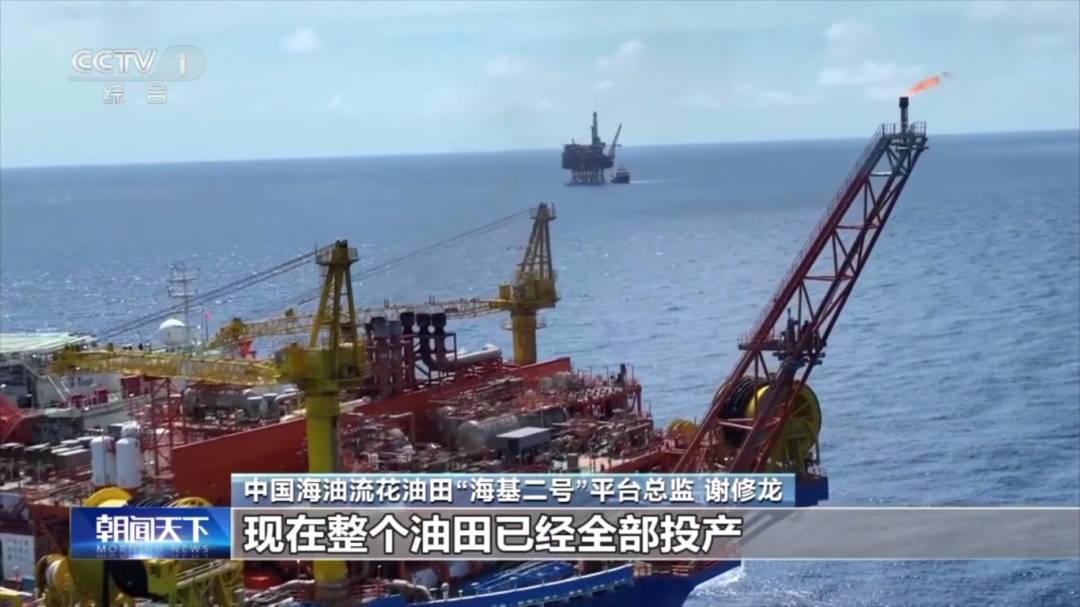
Core Viewpoint - The successful full production of the Liuhua oil field's secondary development project marks a significant advancement in China's deepwater oilfield development capabilities, achieving a daily crude oil output of 3,900 tons and setting a new production capacity record [1][3]. Group 1: Project Overview - The Liuhua oil field, China's first deepwater oil field, has fully commenced its secondary development project, consisting of 32 production wells, with an expected annual output exceeding 1 million tons next year [1]. - The project is located approximately 240 kilometers southeast of Shenzhen, utilizing the "Haiji No. 2" deepwater jacket platform and includes a subsea production system and a cylindrical offshore oil and gas processing plant [1][3]. - Since the first production wells were put into operation in September of last year, the cumulative crude oil production has surpassed 900,000 tons [1]. Group 2: Technological Innovations - The "Haiji No. 2" platform incorporates 15 globally leading technologies and features a highly integrated digital twin system that optimizes maintenance strategies and reduces operational costs [9]. - The platform is designed for deepwater operations, standing at 428 meters tall and weighing over 50,000 tons, making it the highest and heaviest offshore oil production platform in Asia [9]. - The project has successfully implemented a set of stable oil control and water management technologies, significantly improving the oil recovery rate and extending the operational lifespan of the oil field by 30 years [14]. Group 3: Industry Significance - The development of the Liuhua oil field represents a breakthrough in addressing the challenges of deepwater reef limestone oil reservoir extraction, which is recognized as a global technical difficulty [5][12]. - China's deepwater oil and gas exploration and development capabilities have made historic progress, with the country becoming one of the few able to independently conduct deepwater oil and gas exploration [15]. - The deepwater oil and gas production capacity has exceeded 12 million tons of oil equivalent, contributing significantly to national energy security [19].


3900吨,投运,新纪录!深海开采“硬核实力”筑牢经济发展“硬支撑”
Yang Shi Wang· 2025-12-14 05:30
Core Viewpoint - The successful full production of the Liuhua oil field's secondary development project marks a significant advancement in China's deepwater oilfield development capabilities, with daily crude oil production reaching 3,900 tons, setting a new record [1][5][30]. Group 1: Project Overview - The Liuhua oil field secondary development project consists of the Liuhua 11-1 and 4-1 oil fields, with an average water depth of 305 meters [3][20]. - The project includes 32 production wells, with a total drilling depth exceeding 75,000 meters, and aims to achieve an annual production of over 1 million tons by 2026 [1][19]. Group 2: Technological Innovations - The project utilizes advanced technologies, including a deepwater jacket platform and a cylindrical floating production storage and offloading unit, to enhance oil recovery and efficiency [9][22]. - The "Haiji No. 2" platform, a key asset in the project, incorporates 15 globally leading technologies and features a digital twin system for optimal maintenance strategies [13][15]. Group 3: Production Achievements - Since the first production wells were put into operation in September 2024, the project has produced over 900,000 tons of crude oil [3][5]. - The daily production rate has reached a new high, surpassing previous records set in the last 22 years of oil field operations [5][24]. Group 4: Industry Impact - The successful development of the Liuhua oil field represents a breakthrough in tackling the challenges of deepwater reef limestone oil reservoir extraction, which is recognized as a global technical difficulty [7][20]. - China's deepwater oil and gas exploration and development capabilities have made significant strides, with the country becoming one of the few able to independently conduct deepwater oil and gas exploration [26][30].
我国首个深水油田二次开发项目全面投产 开采寿命延长30年
Xin Lang Cai Jing· 2025-12-14 04:46
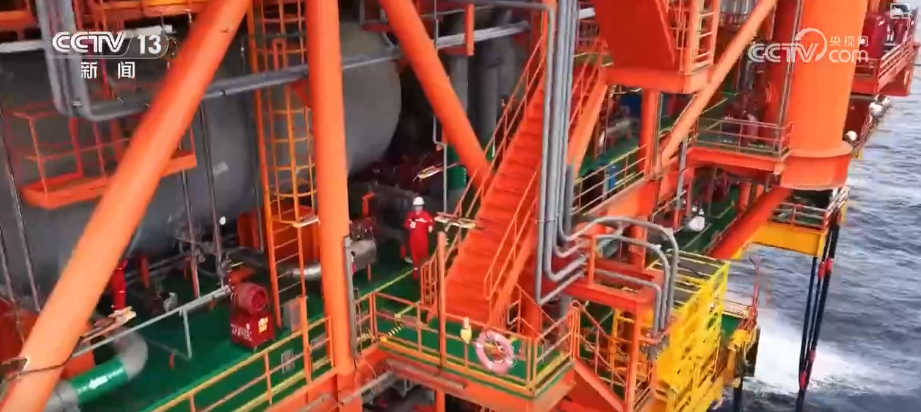
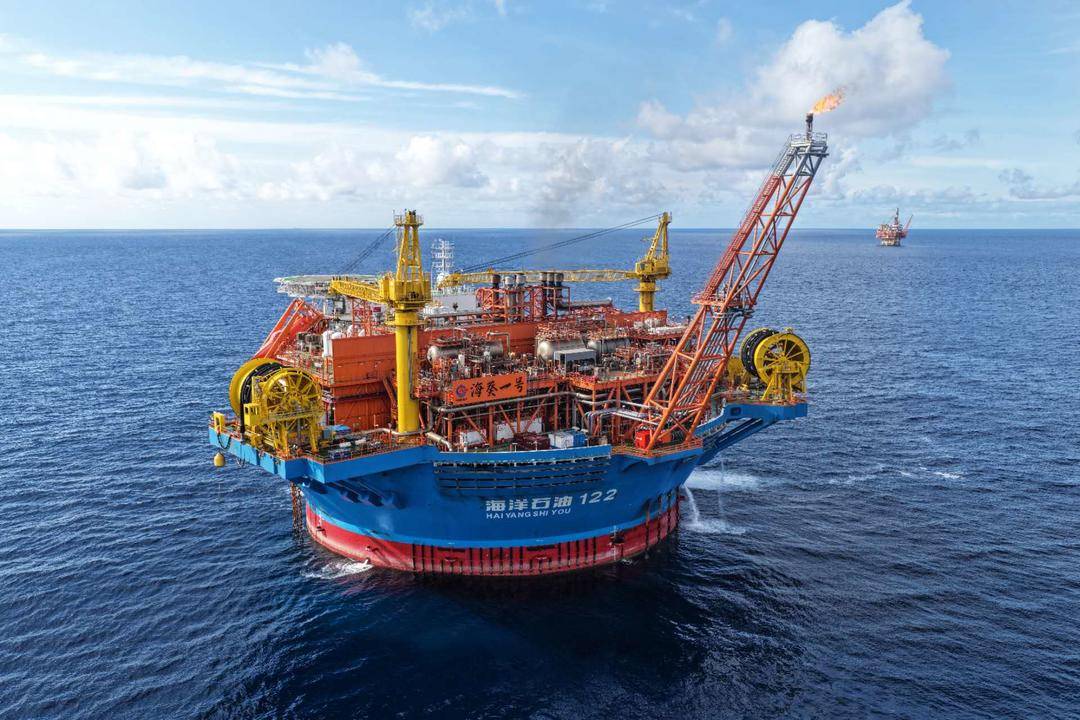
Core Insights - The successful deployment of the last production well on the "Hai Ji No. 2," Asia's first deepwater jacket platform, marks the full production launch of the Liuhua oilfield secondary development project, representing a significant advancement in China's deepwater complex reservoir development [1][2]. Group 1: Project Overview - The Liuhua oilfield secondary development project is located in the Pearl River Mouth Basin and consists of the Liuhua 11-1 and 4-1 oilfields, with an average water depth of approximately 305 meters [1][2]. - The project is designed to produce from 32 production wells, and since the first batch of wells was put into operation in September of the previous year, daily crude oil production has reached 3,900 tons, setting a new production capacity record [1][2]. Group 2: Technical Achievements - The Liuhua oilfield is China's first deepwater oilfield and has the largest proven geological reserves of reef limestone oil in the country, having produced over 20 million tons of crude oil since its inception in 1996, with an estimated 140 million tons of crude oil reserves still hidden beneath the seabed [1][2]. - The development of deepwater reef limestone reservoirs is recognized globally as a highly challenging task. Key to the secondary development of the Liuhua oilfield is the control of water and stabilization of oil, which has led to a significant reduction in the comprehensive water cut of the development wells compared to design expectations, thereby greatly enhancing the recoverable reserves and recovery rates, extending the field's lifespan by 30 years [3]. Group 3: Infrastructure - Major production facilities for the Liuhua oilfield secondary development project include the "Hai Ji No. 2" platform and Asia's first cylindrical FPSO (Floating Production Storage and Offloading) unit, "Hai Kui No. 1." Crude oil extracted is initially processed on the "Hai Ji No. 2" platform before being transported 2.5 kilometers to the "Hai Kui No. 1" for further processing and storage [2][3].
我国首个深水油田二次开发项目全面投产|科技观察
Sou Hu Cai Jing· 2025-12-14 02:23
Core Insights - The successful launch of the "Hai Ji No. 2" deepwater jacket platform marks the full production of China's first deepwater oil field, the Liuhua oil field, which is significant for national energy security [1][3] Group 1: Project Overview - The Liuhua oil field is located in the Pearl River Mouth Basin and consists of the Liuhua 11-1 and 4-1 oil fields, with an average water depth of approximately 305 meters [1] - The project is designed to produce from 32 wells, with daily crude oil production reaching 3,900 tons, setting a new production capacity record since the first wells were put into operation in September of the previous year [1][3] Group 2: Technical Challenges and Innovations - Deepwater reef limestone reservoirs are recognized as one of the most challenging types of oil reservoirs to develop due to their complex internal structures [3] - Key strategies for the second development phase include precise control of oil column height, systematic improvement of water control effectiveness, and innovative measures such as "screen-blind combination" and "intelligent compartmentalization" [3] Group 3: Infrastructure and Production Capacity - The main production facilities include the "Hai Ji No. 2" platform and the "Hai Kui No. 1" FPSO, which processes and stores crude oil [4] - The "Hai Kui No. 1" has a total height of nearly 90 meters and a maximum oil storage capacity of 60,000 tons, capable of processing 5,600 tons of crude oil daily [4] Group 4: Economic and Operational Impact - The "Hai Ji No. 2" platform integrates over 300 systems for intelligent oil and gas extraction, significantly speeding up operations and increasing crude oil production by over 190,000 tons [5] - The operational success of the Liuhua oil field demonstrates the reliability of the water control technology and the economic effectiveness of the deepwater development model, contributing to China's goal of large-scale and efficient development of similar deepwater oil and gas resources [5]
从大国重器到蓝色药库,青岛海洋经济的深蓝突围
Qi Lu Wan Bao· 2025-12-09 21:11
Core Insights - Qingdao aims for a 6.5% growth in marine GDP in 2024, focusing on becoming a modern marine economic hub driven by technological innovation [2][12] - The city achieved a marine GDP of 5613.2 billion yuan in 2024, accounting for 5.2% of the national and 30.6% of the provincial marine GDP, contributing 33% to the city's overall GDP [3][11] - Qingdao is advancing its marine industry towards high-end, intelligent, green, and clustered development, fostering new productive forces in the marine sector [4][13] Technological Innovations - The "high-efficiency, wide-band, high-reliability pneumatic wave energy conversion device" developed by Tsinghua University won a special gold award at the 49th Geneva International Invention Exhibition, addressing cost and reliability issues in wave energy generation [2][12] - The first 15,000-ton intelligent aquaculture vessel "Guoxin 1" is set to be delivered in April 2025, capable of producing 3,600 tons of high-quality fish annually [4][14] - Qingdao is developing 34 marine AI models, enhancing predictive capabilities for ocean conditions [3][13] Marine Economy Development - The marine economy's contribution rate reached 6.9%, driving a 2.1 percentage point increase in overall economic growth [3][11] - The marine industry is structured into three sectors: primary (2.9%), secondary (43.5%), and tertiary (53.6%), indicating a balanced development approach [3][11] - Qingdao's marine drug development, including the first domestic immune anti-tumor marine drug BG136, is progressing to clinical trials, showcasing the potential of marine resources [15] International Collaboration - The "Ocean Decade" International Cooperation Center was established in Qingdao, integrating into the UN's global top-level scientific initiatives [17][18] - Qingdao hosted the first UN Ocean City Conference in February 2025, facilitating international dialogue on marine governance and technology [18][19] - The city is expanding its "blue circle" of international cooperation, enhancing its role in global marine governance [19][20] Environmental Sustainability - Qingdao is recognized for its top-tier marine ecological protection and restoration efforts, contributing to sustainable management and the creation of a harmonious marine ecosystem [20][21] - The city is actively engaging in digital initiatives to promote marine conservation awareness through virtual platforms [20][21] - The "2025 Marine Ecological Protection and Restoration Consensus" was released to guide sustainable practices in marine ecosystems [20]
【深圳特区报】为强国建设注入澎湃动能——从高交会看中国式现代化的创新注脚
Sou Hu Cai Jing· 2025-11-25 08:33
Group 1 - The 27th China International High-Tech Achievements Fair (CIHTAF) showcased over 5,000 cutting-edge achievements and facilitated more than 170 billion yuan in intended transactions and financing, attracting over 450,000 attendees [2][11] - CIHTAF serves as a significant platform for the transformation of high-tech achievements and reflects China's commitment to integrating into the global innovation network through openness and innovation-driven development [2][6] - The fair featured 22 specialized exhibition areas with over 5,000 renowned enterprises and international organizations, highlighting advancements in deep-sea energy development, nuclear power technology, and autonomous systems [4][5] Group 2 - The event marked a shift in China's information industry, showcasing advancements such as Huawei's Ascend 384 super node and non-invasive brain-machine interfaces, indicating a move towards self-reliance in core technologies [5][6] - CIHTAF has evolved significantly since its inception in 1999, expanding from 2 million square meters and 2,856 exhibitors to 400,000 square meters with over 90% of exhibits being high-tech products, including AI, robotics, and commercial aerospace [6][11] - The fair has facilitated 1,023 supply-demand matches and investment projects, with intended transaction and financing amounts exceeding 170 billion yuan, demonstrating its role in driving technological innovation and economic growth [11][12] Group 3 - CIHTAF has become a global innovation magnet, attracting over 120 countries and regions, and fostering international collaboration through specialized pavilions and procurement activities [7][9] - The event has seen participation from major international firms, indicating recognition of China's market potential and innovation environment, with companies like Remote and Hansa Flex seeking deeper cooperation [8][9] - The fair emphasizes the importance of integrating technology research, industry application, and market navigation, creating a comprehensive ecosystem for innovation [12][13]
