液氦

Search documents
霍尔木兹海峡风云:科学仪器供应链影响几何?
仪器信息网· 2026-03-08 09:01
Core Viewpoint - The situation in the Strait of Hormuz significantly impacts the supply chain of helium and specialty gases, which are crucial for the scientific instrument industry. Companies in this sector need to closely monitor developments and strategically plan their procurement schedules [1][2]. Helium Supply Chain - Qatar is a major helium producer, accounting for approximately 30% of global production, with nearly all exports passing through the Strait of Hormuz. Helium is essential for the operation of high-end scientific instruments such as nuclear magnetic resonance machines and gas chromatography devices [3]. - Iran has a production capacity for neon gas, holding a global market share of about 15%-20%. Neon is a key raw material for scientific instruments [3]. Logistics and Transportation - If the Strait of Hormuz remains closed for an extended period, ships would need to reroute around the Cape of Good Hope, adding approximately 8-10 days to the Asia-Europe shipping route [8]. - This delay could affect the timely delivery of high-priority scientific instruments and components, particularly those related to biological sample testing and production line equipment [9]. - Some shipping companies have announced emergency surcharges due to the situation, leading to noticeable fluctuations in container shipping rates on the Asia-Europe route [9]. Industry Response and Adaptation - Companies are diversifying their procurement sources by establishing partnerships with multiple gas suppliers to mitigate risks. Domestic helium resource development is also underway, with companies like PetroChina and Sinopec building helium extraction facilities [10]. - Optimizing inventory management for critical materials like liquid helium and specialty gases is becoming standard practice, with companies maintaining safety stock and planning procurement 2-3 months in advance [10]. - The adoption of technologies such as zero-evaporation helium technology and helium recovery systems is progressing, which can reduce dependency on continuous helium supply [10]. Market Sentiment and Price Fluctuations - The market sentiment may lead to short-term price volatility for specialty gases, although actual supply impacts will depend on the duration of the current geopolitical tensions. If the closure of the Strait is temporary, the effects will be limited [6][10].


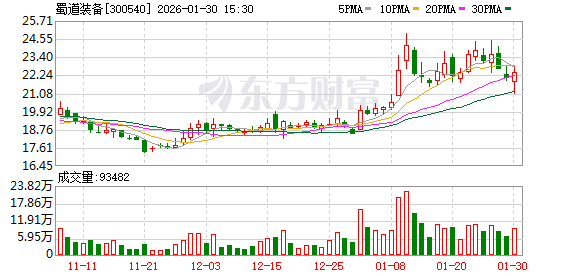
蜀道装备:公司自主投资建设的LNG-BOG提氦装置可生产高纯氦气
Mei Ri Jing Ji Xin Wen· 2026-01-30 07:39
Core Viewpoint - Shudao Equipment (300540.SZ) is a national high-tech enterprise with core independent intellectual property rights, focusing on the R&D, manufacturing, and sales of LNG liquefaction equipment, liquid air separation equipment, and low-temperature storage and transportation equipment [2] Group 1: Business Overview - The company has leading domestic technical capabilities in key technologies such as hydrogen liquefaction, hydrogen storage and refueling, and helium extraction and liquefaction [2] - The LNG-BOG helium extraction device independently invested and constructed by the company can produce high-purity helium [2] - Although commercial production of liquid helium has not yet commenced, the company has mastered the core technology for helium liquefaction and possesses the capability for liquid helium preparation [2] Group 2: Market Strategy - Liquid helium, as a cryogenic coolant, can be used in controlled nuclear fusion devices [2] - The company expresses gratitude for investor suggestions and aims to enhance market promotion and technical docking in the high-end low-temperature equipment sector [2] - The company plans to actively participate in relevant scientific research and engineering project bidding to achieve business breakthroughs when conditions are ripe [2]

氦独立“反击战”,中国打赢了
虎嗅APP· 2025-10-26 09:50
Core Viewpoint - The article discusses China's strategic shift in helium production, highlighting the country's efforts to reduce dependence on imported helium and establish a self-sufficient helium industry, which is crucial for high-tech sectors like semiconductor manufacturing and aerospace [4][20][41]. Group 1: Helium Supply Crisis - In early 2022, several top Chinese universities and research institutions faced helium supply shortages, leading to significant operational disruptions [4][6]. - The price of liquid helium surged from 80 yuan to 400 yuan per liter within months, forcing laboratories to dismantle systems to recover helium for continued operations [6][18]. - China's reliance on imported helium has been a long-standing issue, with over 90% of helium supplies historically controlled by the United States [17][18]. Group 2: Helium Resource Identification - Helium is a rare gas primarily sourced from the radioactive decay of uranium and thorium, found in limited natural gas fields [8][10]. - From 2018, Chinese geological teams began identifying helium resources in domestic gas fields, discovering helium concentrations between 0.05% and 0.2% in several locations [22][25]. - Key regions identified for potential helium extraction include Xinjiang and Sichuan, which were previously overlooked [25][31]. Group 3: Technological Advancements - The extraction of helium from natural gas is complex due to the small size of helium molecules, making it challenging to separate [26][30]. - Chinese research institutions and companies have made significant advancements in helium extraction technologies, achieving stable industrial production by 2020 [30][31]. - By 2023, China had established multiple helium extraction facilities, with a projected annual production of over 300 million cubic meters by 2025 [31][34]. Group 4: Strategic Implications - The development of a domestic helium industry represents a historical shift for China, moving from reliance on imports to establishing a complete helium supply chain [36][37]. - The article draws parallels between helium and rare earth elements, emphasizing their strategic importance in modern technology and the need for self-sufficiency [41][44]. - With both helium and rare earths under its control, China enhances its position in global technology competition, reducing vulnerability to external supply disruptions [45][46].