
深海作业机器人

Search documents
趋势研判!2026年中国深海科技行业政策、产业链、市场规模、竞争企业及发展策略:应用价值持续凸显,将在全球深海事业发展中占据关键地位[图]
Chan Ye Xin Xi Wang· 2026-02-10 01:17
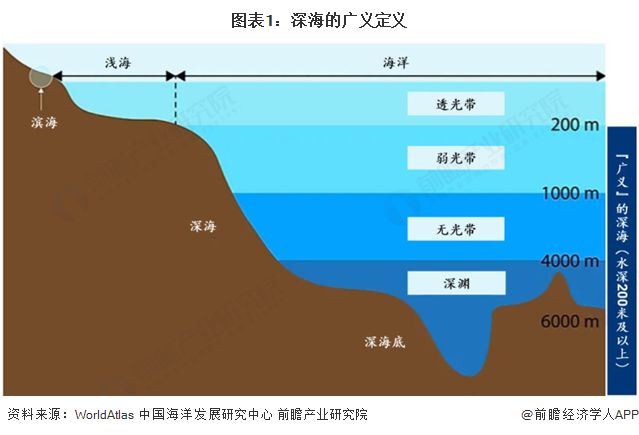
Core Viewpoint - Deep-sea technology is crucial for transforming potential resource advantages into real productivity, playing a significant role in economic development and ensuring national resource security [1][5]. Group 1: Definition and System of Deep-Sea Technology - Deep-sea technology refers to a series of scientific technologies and equipment systems used for exploring, researching, and developing deep-sea resources, typically below 200 meters [1]. - The essence of deep-sea technology lies in systematic technological innovation, transforming the deep sea from a cognitive blank area into a sustainable development space [2]. - The internal system of deep-sea technology includes three core dimensions: scientific cognition, engineering technology, and industrial application, which support and develop together with policy evolution [2]. Group 2: Current Development Status of Deep-Sea Technology - The deep sea is increasingly recognized as a strategic space for ensuring national resource security as land resources deplete [4]. - China's marine economy has shown strong growth, with an estimated marine economic output of approximately 5.1 trillion yuan in the first half of 2025, reflecting a year-on-year increase of about 5.8% [4]. - The rapid development of deep-sea technology in China over the past decade is unprecedented domestically and considered a miracle in international technological history [5]. Group 3: Market Size and Growth Projections - The market size of China's deep-sea technology is projected to be approximately 2.7 trillion yuan by 2025, with an expected increase to about 2.92 trillion yuan by 2026 [5]. Group 4: Industry Chain of Deep-Sea Technology - The deep-sea technology industry chain consists of a complete structure from upstream raw materials and components to midstream equipment manufacturing and downstream diverse applications [6]. - Upstream includes key raw materials like titanium alloys and special steel, while midstream focuses on deep-sea detection and operational equipment manufacturing [6]. Group 5: Development Environment and Policies - The deep-sea technology sector is receiving significant attention and support from the government, with multiple policies encouraging its development and innovation [6]. - The 2025 Government Work Report explicitly mentions promoting deep-sea technology as a new emerging industry [6]. Group 6: Competitive Landscape - Major companies in the deep-sea technology sector include China CRRC, China Shipbuilding, and Zhenhua Heavy Industries, focusing on deep-sea detection, resource development, and comprehensive systems [7]. - China CRRC has established a presence in the deep-sea robotics sector and reported revenues of approximately 183.87 billion yuan in the first three quarters of 2025 [8]. - Zhenhua Heavy Industries has made significant advancements in intelligent marine engineering equipment, achieving revenues of about 34.46 billion yuan in 2024, with a year-on-year growth of 4.62% [9]. Group 7: Development Strategies - The development of deep-sea technology is a strategic choice for China to overcome resource constraints and expand development space, contributing to the goal of building a marine power and sustainable development [10]. - The industry is expected to evolve towards interdisciplinary integration, collaborative efficiency across the entire chain, and participation in global governance [10].



预见2025:《2025年中国深海科技行业全景图谱》(附市场现状、竞争格局和发展趋势等)
Qian Zhan Wang· 2026-01-15 02:13
Industry Overview - Deep-sea technology refers to a series of scientific technologies and equipment systems used for exploration, research, and development in deep-sea areas (typically below 200 meters) [1] - The industry encompasses deep-sea detection, resource development, environmental monitoring, and biological research, including technologies like manned submersibles, unmanned underwater vehicles, and autonomous underwater robots [1] Industry Chain Analysis - The deep-sea technology industry chain includes three main areas: deep-sea material research, deep-sea equipment manufacturing and system integration, and deep-sea resource and application development [3] - Upstream material research focuses on providing high-strength, high-pressure resistant, and corrosion-resistant materials essential for deep-sea equipment [3] - Midstream involves the manufacturing of deep-sea equipment, including manned submersibles and underwater robots, which are critical for deep-sea research and resource exploration [3] - Downstream development focuses on the commercial extraction of deep-sea oil, gas, and minerals, as well as the technological commercialization of underwater security and deep-sea data centers [4] Industry Development History - The development of China's deep-sea technology has gone through four stages, from initial exploration in the late 1980s to the current phase of comprehensive layout and frontier exploration since 2021 [7][10] Policy Background - National policies for the deep-sea technology industry are characterized by systematic and precise features, aiming to promote high-quality development through top-level design and industry guidance [12] - Key policies include support for deep-sea equipment development, critical technology breakthroughs, and financial backing for long-term financing of deep-sea enterprises [12][13] Current Industry Status - The marine economy market in China has exceeded 10 trillion yuan, with deep-sea technology becoming a core driver of new industries [15] - The deep-sea technology market size has grown from 1.90 trillion yuan in 2020 to 2.53 trillion yuan in 2024, with an average annual growth rate of approximately 7.4% [16] - Investment in deep-sea equipment has increased significantly, from less than 100 million yuan in 2020 to 745 million yuan in 2024, reflecting a compound annual growth rate of 72% [18] Regional and Competitive Landscape - Guangdong and Hainan account for nearly 30% of the industry enterprise distribution, with Guangdong at 18% and Hainan at 14% [26] - The competitive landscape shows differentiation, with state-owned enterprises like China Shipbuilding and CNOOC leading in deep-sea equipment manufacturing, while companies like Baotai and Hailanxin excel in specialized materials and underwater communication systems [27] Future Industry Trends - The deep-sea technology market is projected to reach 3.8 trillion yuan by 2030, driven by ongoing investments in traditional oil and gas exploration and the commercialization of new applications [31] - Key trends include the intelligent and autonomous development of equipment, accelerated green energy development, expansion of new application scenarios, and deepening industry chain collaboration [32][34]
找矿走向深蓝
Ren Min Ri Bao Hai Wai Ban· 2026-01-01 00:05
Core Viewpoint - The deep-sea mining sector is emerging as a new frontier for technological and strategic competition among nations, driven by the increasing global demand for critical metals such as nickel, cobalt, copper, and others found in polymetallic nodules on the ocean floor [4][6]. Group 1: Importance of Deep-Sea Mining - Deep-sea mining is crucial for enhancing the supply chain autonomy of strategic minerals, with China's reliance on imports for metals like cobalt reaching nearly 99% and copper at 77% [7]. - The economic value of deep-sea mining is significant, with the value of extracted minerals from the ocean floor estimated to be 6,000 to 7,000 yuan per ton, compared to only a few hundred yuan for land-based sources [7]. - The development of deep-sea mining technology is expected to drive upgrades across multiple industries, including high-end equipment, marine engineering, and new materials [8]. Group 2: Challenges in Deep-Sea Mining - The primary challenges in deep-sea mining include technological difficulties, environmental concerns, and high costs [9]. - Technological challenges involve ensuring the reliability and efficiency of mining equipment under extreme conditions, such as high pressure and low temperatures, which require advanced materials and systems [10]. - Environmental challenges stem from insufficient understanding of deep-sea ecosystems, leading to potential irreversible impacts from mining activities [10]. - Cost-related challenges include high capital and operational expenses, fluctuating metal prices, and potential regulatory barriers, making commercial viability uncertain [11]. Group 3: Future Development and Strategic Planning - China has outlined a long-term roadmap for deep-sea mining, emphasizing the need for coordinated resource exploration and sustainable development [12]. - Recent initiatives include collaborative exploration efforts with countries like the Cook Islands to assess deep-sea mineral resources and establish environmental baselines [13]. - The focus for future development should be on foundational research, international cooperation, and creating sustainable frameworks for deep-sea mining [14].
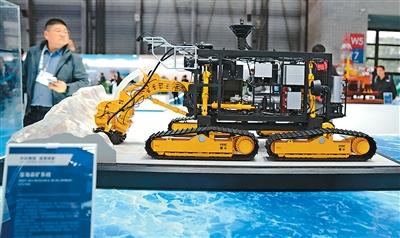
山东未来机器人以100%国产化填补国内深海智能装备领域空白
Qi Lu Wan Bao Wang· 2025-09-03 03:42
Group 1 - The Weihai municipal government held a press conference focusing on the shipbuilding and marine engineering equipment industry chain, highlighting innovation and brand development [1] - Shandong Future Robot Co., Ltd. is the only private enterprise in China capable of manufacturing deep-sea operation robots, establishing an innovative transformation system based on "deep-sea scenario traction + full-chain closed-loop verification" [1] - The company has recruited Dr. Leng Jianxing, a recipient of the National Science and Technology Progress Award, as the technical leader to drive core technology breakthroughs in deep-sea operation robots [1] Group 2 - The company has built a deep-sea robot simulation testing center and a deep-water pressure testing center to replicate real deep-sea high-pressure conditions [1] - Each deep-sea robot undergoes a "three-stage testing" process, including extreme pressure testing, practical exercises in nearshore environments, and final acceptance testing at sea [1] - The company has established a "demand customization - rapid iteration" mechanism to cater to various scenarios such as offshore wind power operation and deep-sea oil and gas development [2] Group 3 - The company has developed multiple deep-sea operation robots for leading enterprises like CNOOC, China Shipbuilding Industry Corporation, and China Railway Bridge Bureau, achieving a 100% localization rate and filling several gaps in the domestic deep-sea intelligent equipment sector [2]
