无人潜航器

Search documents
俄乌冲突,进入了第五个年头……
Xin Lang Cai Jing· 2026-02-23 23:45
Core Viewpoint - The ongoing Russia-Ukraine conflict, which has lasted for four years, is characterized by significant changes in battlefield dynamics, tactics, and troop availability, with no clear path to peace in sight [6][30]. Group 1: Battlefield Changes - The conflict has shifted from a rapid offensive strategy to a stalemate, with both sides entrenched in a war of attrition since early 2024 [11][20]. - Initial Russian strategies aimed for quick victories but were thwarted by Ukrainian resistance, leading to a prolonged conflict marked by low-intensity, high-consumption confrontations [8][11]. - The battlefield has evolved into a "Russian offense, Ukrainian defense" scenario, with Russia leveraging its numerical and logistical advantages [11][20]. Group 2: Tactical Changes - The nature of warfare has transformed from traditional methods to a mixed approach incorporating AI, unmanned systems, and electronic warfare [14][17]. - Ukraine has effectively utilized asymmetric tactics, such as low-cost, high-impact operations, to regain momentum in the conflict [15][17]. - Both sides are engaged in intense electronic warfare, with Russia deploying advanced jamming systems while Ukraine relies on allied technological support [17][20]. Group 3: Troop Availability Changes - After four years of conflict, both Russia and Ukraine are experiencing a depletion of troop resources, with Ukraine facing a more severe manpower crisis [21][22]. - Russia's military personnel target is set at 2.389 million, while Ukraine's active military force is approximately 880,000, highlighting a growing disparity [23][25]. - Recruitment strategies differ significantly, with Ukraine relaxing age limits and seeking foreign volunteers, while Russia employs economic incentives and institutionalized conscription [25][30]. Group 4: Geopolitical Implications - The prolonged conflict has strained Western unity in supporting Ukraine, with increasing fatigue and dissent regarding ongoing aid [27][29]. - Diverging strategic goals between the U.S. and Europe are becoming apparent, leading to a weakening of transatlantic partnerships [29][30]. - The conflict has also elevated the voice of Global South nations, which are asserting their strategic autonomy and influencing global governance dynamics [30].


下一个国家级战略主线:深海科技(附42页PPT)
材料汇· 2026-02-02 14:42
Core Viewpoint - The article emphasizes the strategic importance of deep-sea technology as a national priority, highlighting its potential in resource security, defense, and the development of a blue economy [14][23][57]. Group 1: Deep-Sea Technology as a National Strategy - Deep-sea technology is positioned as a key national strategic focus, alongside commercial aerospace and low-altitude economy [14]. - The government has initiated large-scale application demonstrations for new technologies in deep-sea industries, marking a significant policy shift [14][23]. - Recent government reports have highlighted deep-sea technology for the first time, indicating its importance in future industrial development [14][23]. Group 2: Resource Security and Global Competition - The U.S. and Japan are actively pursuing deep-sea resource exploration, indicating a competitive landscape for global marine resources [25][31]. - The article notes that the U.S. has significant deep-sea mineral resources, with estimates suggesting over 1 billion tons of polymetallic nodules in its offshore areas [30]. - Japan plans to initiate experimental drilling for rare earth elements in its exclusive economic zone, aiming to reduce reliance on imports from China [31]. Group 3: Defense and National Security - The article discusses the need for enhanced underwater defense capabilities, as current security measures are deemed insufficient [50]. - The concept of a "water under the national gate" highlights vulnerabilities in underwater security, necessitating a robust defense strategy [50]. - The U.S. and Japan have established comprehensive military strategies focused on deep-sea operations, enhancing their maritime control [48][50]. Group 4: Blue Economy and Industrial Development - The blue economy is projected to be a trillion-dollar industry, with significant growth potential in sectors like deep-sea mining, aquaculture, and marine tourism [18][24]. - The deep-sea industry chain encompasses everything from basic materials to high-end equipment manufacturing, indicating a complex and interdisciplinary approach [73][74]. - The article outlines various emerging sectors within the blue economy, including deep-sea wind power and marine biotechnology [68][72]. Group 5: Policy and Regulatory Framework - Multiple regions in China are developing policies to promote deep-sea technology, with plans focusing on marine economic development and innovation [11][12]. - The article lists specific policy documents from provinces like Hainan and Shandong that aim to enhance deep-sea technology capabilities [13]. - The government's strategic plans emphasize the integration of deep-sea technology into broader economic and environmental goals [61].

预见2025:《2025年中国深海科技行业全景图谱》(附市场现状、竞争格局和发展趋势等)
Qian Zhan Wang· 2026-01-15 02:13
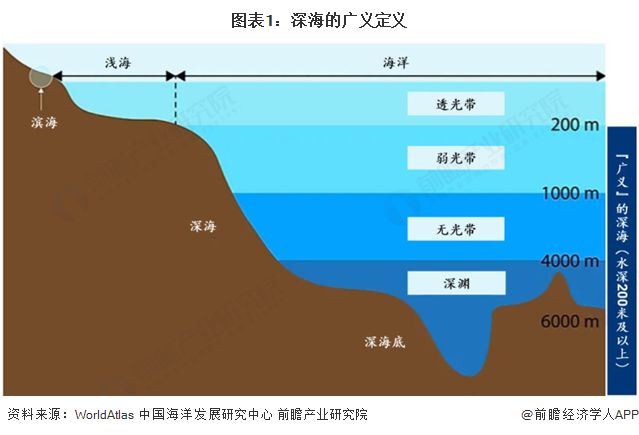
Industry Overview - Deep-sea technology refers to a series of scientific technologies and equipment systems used for exploration, research, and development in deep-sea areas (typically below 200 meters) [1] - The industry encompasses deep-sea detection, resource development, environmental monitoring, and biological research, including technologies like manned submersibles, unmanned underwater vehicles, and autonomous underwater robots [1] Industry Chain Analysis - The deep-sea technology industry chain includes three main areas: deep-sea material research, deep-sea equipment manufacturing and system integration, and deep-sea resource and application development [3] - Upstream material research focuses on providing high-strength, high-pressure resistant, and corrosion-resistant materials essential for deep-sea equipment [3] - Midstream involves the manufacturing of deep-sea equipment, including manned submersibles and underwater robots, which are critical for deep-sea research and resource exploration [3] - Downstream development focuses on the commercial extraction of deep-sea oil, gas, and minerals, as well as the technological commercialization of underwater security and deep-sea data centers [4] Industry Development History - The development of China's deep-sea technology has gone through four stages, from initial exploration in the late 1980s to the current phase of comprehensive layout and frontier exploration since 2021 [7][10] Policy Background - National policies for the deep-sea technology industry are characterized by systematic and precise features, aiming to promote high-quality development through top-level design and industry guidance [12] - Key policies include support for deep-sea equipment development, critical technology breakthroughs, and financial backing for long-term financing of deep-sea enterprises [12][13] Current Industry Status - The marine economy market in China has exceeded 10 trillion yuan, with deep-sea technology becoming a core driver of new industries [15] - The deep-sea technology market size has grown from 1.90 trillion yuan in 2020 to 2.53 trillion yuan in 2024, with an average annual growth rate of approximately 7.4% [16] - Investment in deep-sea equipment has increased significantly, from less than 100 million yuan in 2020 to 745 million yuan in 2024, reflecting a compound annual growth rate of 72% [18] Regional and Competitive Landscape - Guangdong and Hainan account for nearly 30% of the industry enterprise distribution, with Guangdong at 18% and Hainan at 14% [26] - The competitive landscape shows differentiation, with state-owned enterprises like China Shipbuilding and CNOOC leading in deep-sea equipment manufacturing, while companies like Baotai and Hailanxin excel in specialized materials and underwater communication systems [27] Future Industry Trends - The deep-sea technology market is projected to reach 3.8 trillion yuan by 2030, driven by ongoing investments in traditional oil and gas exploration and the commercialization of new applications [31] - Key trends include the intelligent and autonomous development of equipment, accelerated green energy development, expansion of new application scenarios, and deepening industry chain collaboration [32][34]
地缘技术|“武士精神”正在重回硅谷
Xin Lang Cai Jing· 2026-01-06 23:41
Core Insights - Palantir Technologies, founded by Peter Thiel, has established itself as a significant player in the U.S. military-industrial complex, surpassing traditional defense contractors like Raytheon [3] - The company signed a $10 billion long-term contract with the U.S. Army in August 2025 to provide data support and software services over the next decade, marking the largest digital military contract awarded to a tech company [3] - The relationship between Silicon Valley and U.S. military security strategy has deep historical roots, with technological advancements often driven by military needs [5][6] Group 1: Company Overview - Palantir is a software and big data technology company based in Silicon Valley, co-founded by Peter Thiel, who is also known for his book "Zero to One" [1] - The CEO, Alexander Karp, is a notable figure with a Ph.D. from Goethe University and has been actively involved in public debates on technology and ethics [3] Group 2: Military Contracts and Collaborations - The $10 billion contract with the U.S. Army is a significant milestone for Palantir, emphasizing its role in modern military operations [3] - The U.S. Department of Defense has increasingly relied on Silicon Valley for technological advancements, with companies like Palantir benefiting from military contracts [6][7] Group 3: Technological Innovation and Defense Strategy - The emergence of new technologies such as artificial intelligence and quantum computing is central to U.S. military strategy, particularly in response to China's advancements [8][9] - The U.S. military is focusing on creating a "data-driven, AI-enabled army" to counter challenges posed by China, with initiatives like the "Replicator" project aimed at deploying low-cost autonomous systems [8][9] Group 4: Impact of Global Conflicts - The ongoing Russia-Ukraine conflict has accelerated the adoption of emerging technologies in military operations, benefiting companies like Palantir and Anduril [10] - The U.S. Department of Defense's Project Maven aims to leverage AI for military applications, with Palantir playing a crucial role in developing the necessary data integration platforms [12] Group 5: Geopolitical Context - The U.S. government's strategic focus on countering China's military capabilities has led to increased investments in defense technology, with Palantir positioned to capitalize on this trend [14] - The narrative of a "China threat" is being utilized by Silicon Valley companies to secure funding and contracts, with Palantir's software being used to monitor Chinese activities [14]


Stifel:美国防预算迎“无人机元年”,2026年将成行业拐点,这些标的或成赢家
智通财经网· 2025-12-18 07:22
Core Insights - The U.S. defense industry is at a turning point, with a significant shift towards unmanned systems expected by 2026, termed the "Year of Drones" [1] - The growth in unmanned systems spending is driven by technological advancements, escalating geopolitical threats, and new political will following recent government changes [1] Historical Context - The current defense landscape is compared to the state of manned aircraft in 1935, where unmanned systems currently represent only a small percentage of the defense budget [2] - The report predicts that unmanned systems will become a major growth area in the budget, similar to how manned aircraft dominated by 1955 [2] Political Drivers - Significant legislative and executive actions in 2025 are laying the groundwork for this transition, including multiple executive orders from President Trump focusing on defense procurement modernization and enhancing U.S. drone capabilities [3] - The "Great Beautiful Act," signed into law on July 4, allocates billions for drone infrastructure, including $2.1 billion for medium unmanned surface vessels [3] Market Dynamics - The government aims to rebuild a "mid-tier defense supplier base," warning that traditional contractors may suffer if they do not adapt to new demands for rapid and scalable production [5] - Companies with "manufacturing adaptability" and business integration capabilities are expected to emerge as long-term winners in this evolving landscape [5] Preferred Stocks - Pure play stock recommendations include Kratos Defense (KTOS.US), Ondas (ONDS.US), and AeroVironment (AVAV.US) [6] - Diversified stock recommendations include Teledyne (TDY.US), CACI International (CACI.US), and Leidos (LDOS.US) [7] Key Technology Areas - Several sub-markets are expected to grow rapidly, including $1.5 billion for loitering munitions, $1.5 billion for unmanned underwater vehicles, and $1.3 billion for counter-drone systems [8] - Collaborative combat aircraft are designed to work alongside F-35 and F-47 fighters, creating a "disposable scale" where the loss of a drone is tactical rather than strategic [9] - The U.S. is accelerating procurement of loitering munitions influenced by the Ukraine war, with projects like LASSO funding systems such as the "Spring Knife" [9] - The Navy is shifting to "single-mission hulls" to reduce costs, including the MASC project for surface vessels and the "Ghost Shark" project for large unmanned underwater vehicles [9] - A wave of contracts is expected to protect venues during the 2026 World Cup from drone threats, funded by new allocations from the Department of Homeland Security [9] - Despite perceptions of high valuations based on current P/E ratios, the report emphasizes that the industry is in the early stages of a transformative shift towards unmanned systems [9]
深海科技驱动深海新纪元,铸就强国新支点
2025-12-17 15:50
Summary of Key Points from Conference Call Records Industry Overview - The conference call discusses the development of deep-sea technology in China, highlighting its strategic importance for national security and economic benefits. The industry is part of the "14th Five-Year Plan" and faces challenges such as insufficient funding and technological gaps compared to the U.S. [1][3][4] Core Insights and Arguments - **Strategic Importance**: Deep-sea technology is crucial for military security, as evidenced by recent incidents involving underwater drones. China needs to enhance its capabilities in this area to safeguard national interests [3][4]. - **Economic Potential**: Development in deep-sea resources like oil, gas, and rare earth minerals can yield significant economic returns. The industry also supports related sectors such as exploration, communication, and equipment manufacturing [1][3][5]. - **Funding Challenges**: There is a pressing need for increased investment in deep-sea projects that promise economic returns, such as oil and gas extraction. Policy support is also necessary to prioritize these initiatives [4][10]. - **Technological Gaps**: China lags behind the U.S. in establishing a global underwater monitoring network and detailed deep-sea navigation maps, which are essential for national security [3][4]. Regional Developments - **Shanghai Initiatives**: Shanghai is focusing on deep-sea oil and gas development and offshore wind energy, utilizing floating wind turbine technology and exploring hydrogen production to address energy storage and transportation issues [7][10]. - **Hainan Projects**: Hainan is advancing the exploration and development of deep-sea oil and gas, as well as combustible ice, while also working on hydrogen and methanol production technologies to enhance energy efficiency [9][10]. Technological Advancements - **Equipment Manufacturing**: China has made significant progress in deep-sea equipment manufacturing, with manned submersibles like "Jiaolong" and "Fendouzhe" achieving international standards. The rapid development of unmanned submersibles has also reduced operational costs [1][24]. - **New Technologies**: Advanced technologies are being applied in deep-sea oil and gas exploration, including autonomous mining vehicles and flexible pipeline systems for resource extraction [25][26]. Economic Impact - **Market Size**: The marine economy in China is projected to reach 10 trillion RMB by 2024, with fishing and coastal agriculture being the largest contributors, accounting for 36% and 18% respectively [2][13]. - **Investment Opportunities**: The development of deep-sea technology is expected to enhance national security and economic resilience, making it a critical area for investment [34][40]. Risks and Challenges - **Technical Risks**: There are concerns about equipment corrosion and high depreciation costs, although no major issues have been reported so far. Geopolitical risks also pose challenges, particularly in resource-rich areas [39]. - **Funding Limitations**: While national policies support deep-sea economic development, actual funding remains limited, necessitating local governments to identify profitable projects to attract investment [38]. Future Directions - **Hydrogen Energy**: The hydrogen energy sector is highlighted as a promising area for future growth, which could drive the development of related companies and technologies [40]. - **Comprehensive Development**: The future of deep-sea technology encompasses military applications, ecological protection, scientific research, and commercial exploitation of marine resources [5][6][28]. This summary encapsulates the key points discussed in the conference call, providing insights into the current state and future prospects of deep-sea technology and its implications for China's economy and security.
乌无人潜航器袭击俄舰船,在水面引发剧烈爆炸,俄黑海舰队:乌方未达目的
Xin Jing Bao· 2025-12-16 05:24
Core Viewpoint - The Ukrainian Security Service claims to have successfully attacked a Russian Navy submarine using an unmanned underwater vehicle, resulting in an explosion and loss of operational capability for the submarine [1] Group 1: Attack Details - The attack reportedly caused a significant explosion on the water's surface, leading to the destruction of the Russian submarine [1] - The Russian Black Sea Fleet's press service stated that the attempt to attack their naval vessels did not achieve its intended purpose [1] Group 2: Russian Response - The Russian Black Sea Fleet claimed that surface ships and submarines docked at the port were not damaged by the attack [1] - It was reported that no sailors were injured and that they continue to perform their regular duties [1]
俄称乌克兰无人潜航器袭击俄潜艇未达目的
Xin Jing Bao· 2025-12-16 01:57
Core Viewpoint - The Ukrainian Security Service claims to have successfully attacked a Russian Navy submarine using an unmanned underwater vehicle, resulting in an explosion and loss of operational capability for the submarine [1] Group 1: Attack Details - The attack occurred on December 15, with video evidence showing a significant explosion on the water's surface [1] - Ukraine asserts that the attack led to the explosion and fire on the Russian submarine, rendering it incapable of operations [1] Group 2: Russian Response - The Russian Black Sea Fleet's press service stated that the attempt to attack their naval vessels did not achieve its intended goals [1] - They reported that surface ships and submarines docked at the port were not damaged, and no sailors were injured, maintaining normal duty operations [1]
俄军称新控制一居民点 乌总统称乌美柏林会谈富有成效
Yang Guang Wang· 2025-12-16 00:38
Group 1 - The Russian Ministry of Defense reported that in the past 24 hours, Russian forces targeted 167 areas including facilities for transporting Western weapons, ammunition, and fuel depots belonging to Ukrainian forces [1] - Ukraine's National Security Bureau stated that a joint special operation was conducted against a Russian submarine docked at Novorossiysk port using unmanned underwater vehicles, although the Russian Black Sea Fleet confirmed that the attack did not result in any damage to ships or submarines [1] - Ukrainian President Zelensky indicated that recent talks with the United States in Berlin were productive, with preliminary consensus reached on several key issues [1] - Leaders from Germany, France, and EU institutions announced the formation of a "multinational force" to support Ukraine, which will assist in rebuilding its armed forces, ensuring airspace security, and enhancing maritime security, including military operations within Ukraine [1] Group 2 - The Central Bank of Russia has filed a lawsuit in the Moscow Arbitration Court seeking compensation of over 1.8 billion rubles (approximately 22.66 million USD) from the European Clearing Bank, which holds a significant amount of frozen Russian assets [2] - Discussions within the EU regarding financing arrangements for aid to Ukraine have entered a critical phase, but negotiations on using frozen Russian assets to support Ukraine are expected to become increasingly difficult [2]
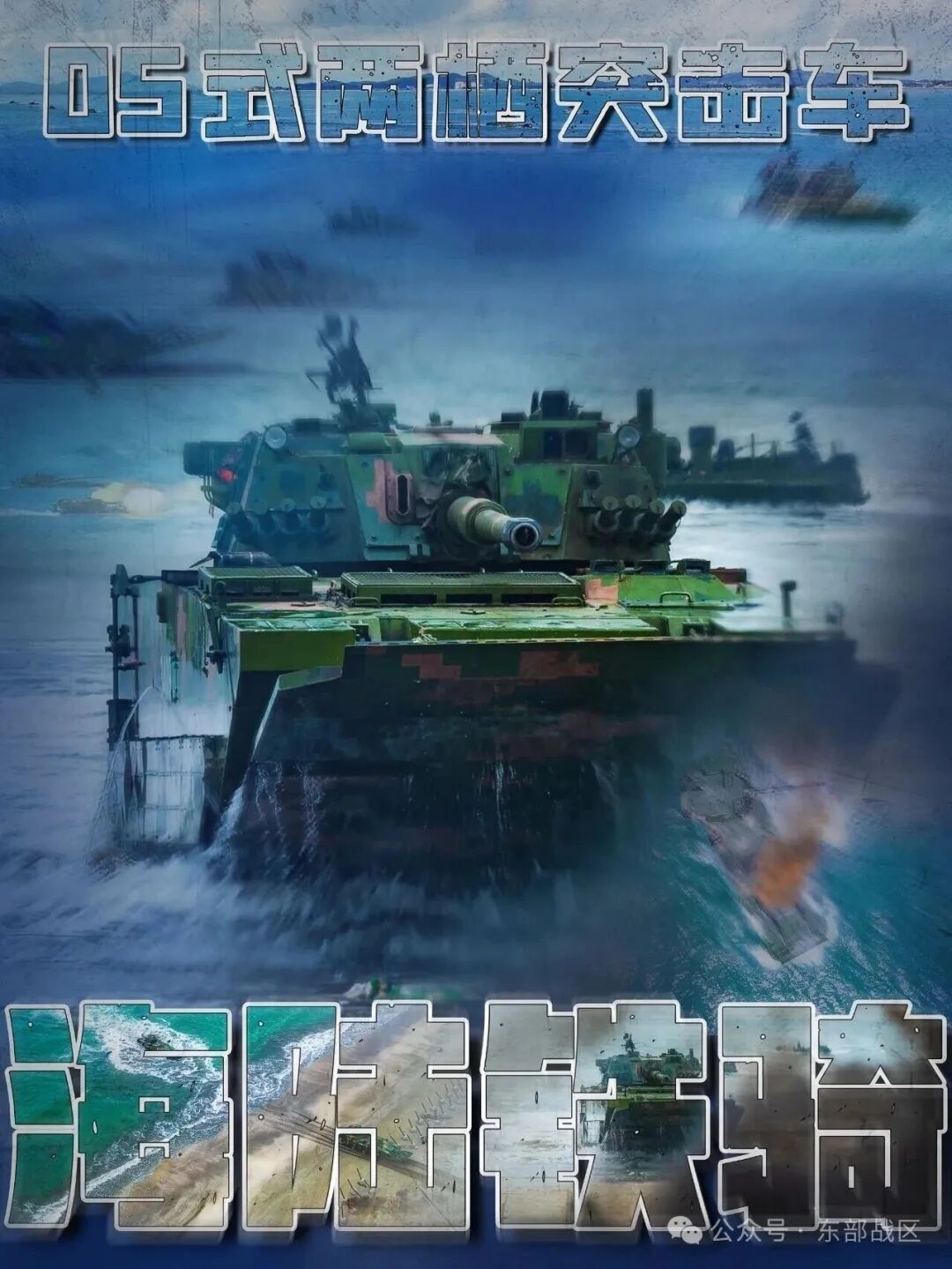
05式两栖突击车高清画面发布 东部战区:为登陆而生!央视曝光:无人军团出击 超燃抢滩登陆演练现场披露
Mei Ri Jing Ji Xin Wen· 2025-11-21 00:58
Core Insights - The Eastern Theater Command has released high-definition images of the Type 05 amphibious assault vehicle, highlighting its capabilities for rapid deployment and effective combat in landing operations [1] - The evolution of warfare is leading to the integration of unmanned forces, which are reshaping battlefield rules and enhancing landing operations [3] - Future amphibious assault operations are expected to incorporate robotic units, including armed robotic dogs and unmanned reconnaissance vehicles, which can be rapidly deployed from amphibious assault ships [4] Group 1 - The Type 05 amphibious assault vehicle is designed for speed, enabling "over-the-horizon landings" to reduce the risk of enemy fire on landing craft [1] - The vehicle features high precision, allowing for quick target acquisition and engagement under complex battlefield conditions [1] - It possesses significant firepower, with multiple munitions capable of suppressing enemy coastal defenses to facilitate the movement of subsequent forces [1] Group 2 - Unmanned forces are expected to create new scenarios for intelligent landing operations, enhancing stealth and flexibility [3] - The future structure of amphibious landing forces will likely include a "robotic army," utilizing various unmanned systems for rapid deployment and combat [4] - Advanced technologies such as unmanned surface vessels and underwater drones will be deployed from amphibious assault ships, enabling a new era of unmanned and intelligent warfare [4]