
海底数据中心

Search documents
伊朗战争,加速了这个赛道
吴晓波频道· 2026-03-15 00:30
Core Viewpoint - The article discusses the emerging trends in data center construction, focusing on the shift towards space and underwater data centers as solutions to traditional data center challenges, including high energy consumption and environmental concerns [2][5][18]. Group 1: Space Data Centers - Amazon Web Services (AWS) faced significant disruptions after being targeted by military actions in the Middle East, highlighting vulnerabilities in cloud service infrastructure [2][5]. - Google announced the "Solar Catcher Project" to build a satellite network in space, aiming to overcome energy and cooling limitations of ground data centers, with plans to launch prototype satellites by 2027 [8][9]. - China's plan for space data centers includes a phased approach from 2025 to 2035, focusing on energy supply and cooling technologies, with the goal of establishing a large-scale space data center by 2035 [12][9]. - Space data centers can significantly reduce operational costs, as they can utilize abundant solar energy and natural cooling from the space environment, potentially saving millions in electricity and water costs [11][12]. Group 2: Underwater Data Centers - China's first commercial underwater data center, built by Hailanxin, aims to leverage the ocean's cooling properties, significantly reducing energy consumption and land use compared to traditional data centers [18][20]. - The Shanghai Lingang underwater data center project has demonstrated substantial efficiency improvements, including a 22.8% reduction in electricity use and a 100% reduction in water use [20]. - The development of underwater data centers is supported by government policies aimed at accelerating digital technology advancements and establishing marine science data centers [20][26]. - Companies are making technological advancements to address challenges in underwater data center construction, such as high pressure and corrosion resistance, with innovations in materials and cooling systems [25][18]. Group 3: Industry Opportunities - The shift to space and underwater data centers presents new opportunities for regional economic development, particularly in areas like Hainan and Shanghai, which are becoming hubs for commercial space and marine technology [27][30]. - The commercial space industry is rapidly growing, with significant investments in launch facilities and satellite technology, as evidenced by the revenue generated by the Wenchang International Space City [27][29]. - The integration of AI and cloud computing in these new data center formats is expected to drive further innovation and efficiency in data processing and storage solutions [32][30].





深海科技多点开花:上市公司业绩预喜、订单落地,国际化步伐加快
Sou Hu Cai Jing· 2026-02-26 09:53
Core Insights - The deep-sea technology sector in China has shown strong growth since 2026, with multiple listed companies announcing performance forecasts and engaging in strategic collaborations, capacity expansions, and application scenario developments [1][4] - The industry is transitioning from being policy-driven to a dual-driven model of market and technology, highlighting the increasing value in deep-sea resource exploration and high-end marine equipment manufacturing [1][4] Company Performance - Approximately 80% of deep-sea technology-related listed companies reported year-on-year net profit growth for 2025, indicating a significant improvement in overall profitability [3][4] - Hailanxin (300065.SZ) expects a net profit of 40 million to 60 million yuan for 2025, with a year-on-year increase of 387.47% to 631.2%, attributed to its "boutique strategy" and advantages in subsea data center projects [3] - Dajin Heavy Industry (002487.SZ) anticipates a net profit of 1.05 billion to 1.2 billion yuan, reflecting a year-on-year growth of 121.58% to 153.23%, driven by rapid growth in overseas offshore wind power projects [3] Strategic Collaborations and Investments - Strategic collaborations are crucial for expanding application scenarios, while strategic investments are key for enhancing industry layouts [5] - TanHuang Technology (688039.SH) and Shenhao Technology (300853.SZ) have formed a strategic partnership to focus on deep-sea detection and operations, promoting the application of deep-sea robotics [5] Order and Capacity Developments - Major orders have been secured, with Oriental Cable (603606.SH) winning contracts worth approximately 108 million yuan in the deep-sea technology sector, which will support its growth during the 14th Five-Year Plan [6] - Dajin Heavy Industry is in the process of ramping up production at its Tangshan Caofeidian deep-sea base, which has a designed annual capacity of 500,000 tons [6] International Market Expansion - Companies like Juyi Rigging (002342.SZ) are expanding their international presence, having established a stable sales network in over 100 countries and focusing on markets in the Middle East and Southeast Asia [7] - Dajin Heavy Industry is also advancing its international strategy, having completed its layout in the Polish market, which will facilitate further expansion into Europe [7] - Despite challenges, Chinese companies are expected to gradually enhance their influence in the global deep-sea technology market, supported by initiatives like the Belt and Road [7]
工商银行(601398.SH):目前暂无海底数据中心的建设规划
Ge Long Hui· 2026-02-25 08:21
Group 1 - The company is closely monitoring the development of new technologies such as underwater data centers and their industry applications [1] - Currently, there are no plans for the construction of underwater data centers by the company [1]

工商银行:目前暂无海底数据中心的建设规划
Ge Long Hui· 2026-02-25 08:20
Group 1 - The company is closely monitoring the development of new technologies such as underwater data centers and their industry applications [1] - Currently, there are no plans for the construction of underwater data centers by the company [1]
陆数海算 绿色算力再升级
Zhong Guo Zi Ran Zi Yuan Bao· 2026-02-13 02:16
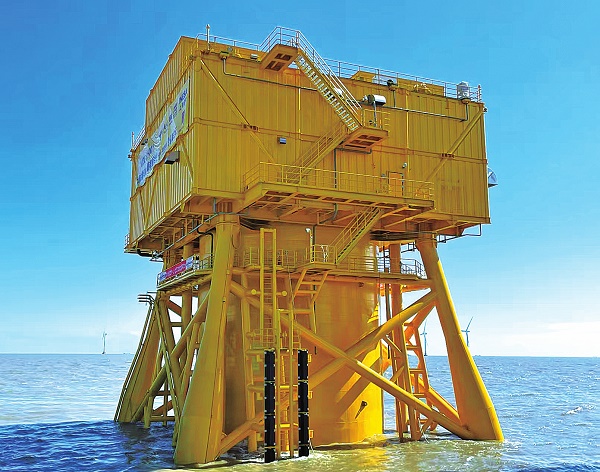
Core Insights - The first underwater data center in China, utilizing offshore wind power and seawater cooling, has been officially launched in Shanghai Lingang, marking a significant advancement in the integration of artificial intelligence infrastructure and marine energy utilization [1][3]. Group 1: Project Overview - The underwater data center is located approximately 10 kilometers from the coastline in the eastern sea area of Nanhui, Pudong New District, with a total investment of 1.6 billion yuan and a planned capacity of 24 megawatts, with the first phase demonstrating 2.3 megawatts [3]. - The project features a design Power Usage Effectiveness (PUE) of no more than 1.15 and a green electricity supply rate exceeding 95% [3]. Group 2: Technological Innovations - The center employs seawater as a natural cooling source, utilizing "power heat pipes + efficient seawater natural cooling" technology to reduce mechanical cooling losses and eliminate reliance on freshwater cooling [3]. - It connects directly to the Lingang offshore wind farm through a photovoltaic composite cable, creating a zero-distance collaboration model for power generation, transmission, and computing, significantly reducing transmission losses [3]. - The underwater deployment saves over 90% of land space, providing a sustainable computing solution for densely populated urban areas [3]. Group 3: Business Ecosystem - The project integrates a business system covering artificial intelligence, information technology application innovation, and international data services, supporting national digital security strategies and regional innovation needs [6]. - China Telecom Shanghai has deployed its self-developed AI computing platform, collaborating with Lingang Computing Company to create a scheduling system for high-density computing scenarios [6]. - The Shanghai Electric Group leads the construction of a fully domestic computing cluster, focusing on key industries such as finance, government, and manufacturing, to enhance local software and hardware collaboration [6]. Group 4: Future Prospects - As the first wind power-connected underwater data center, the project serves as a technology validation platform and standard incubation base for future large-scale deployments [8]. - Stakeholders are actively researching plans for constructing multi-megawatt offshore wind-connected, power-computing collaborative underwater data center clusters [8]. - This model is expected to expand from Lingang to coastal areas nationwide, creating a new "blue sea green computing" model to facilitate the green, secure, and intensive development of computing power in China [8].
海底数据中心机房优势与全球关注
Sou Hu Cai Jing· 2026-02-10 09:36
Core Insights - The underwater data center in Shanghai represents a significant advancement in green computing, utilizing offshore wind energy to power its operations, thus reducing reliance on traditional fossil fuels [1][3] - This project addresses the challenges faced by large cities like Shanghai regarding land and energy consumption, providing a solution that allows for the establishment of data centers without occupying valuable land [3][5] - The successful implementation of this concept demonstrates the commercial viability of innovative technologies in the green infrastructure sector, positioning China favorably in the global dialogue on sustainable development [5][6] Group 1: Technological Innovation - The Shanghai Lingang project connects directly to an offshore wind farm, allowing it to operate primarily on clean energy, significantly reducing its carbon footprint and energy costs [3][6] - The data center boasts an energy efficiency ratio of below 1.1, which is considerably better than the industry average, leading to annual savings of 61 million kilowatt-hours [3][8] - The use of seawater for cooling not only reduces operational costs but also minimizes equipment failure rates, enhancing overall reliability [3][5] Group 2: Market Implications - The project is seen as a benchmark for future developments in other coastal provinces such as Guangdong, Zhejiang, and Shandong, with industry experts closely monitoring its first full-year operational report [8] - The competitive landscape is shifting as global tech giants like Google and Amazon seek to lower data center energy consumption, with China's underwater model potentially influencing other countries with extensive coastlines and wind resources [6][8] - The project has sparked interest in the entertainment industry, with studios exploring underwater data center services for data security and privacy, indicating a growing market for such innovative solutions [9] Group 3: Future Prospects - The initial high investment costs of underwater data centers must be justified by long-term energy savings and land use efficiency for widespread adoption [8] - Ongoing challenges include managing extreme marine weather conditions and long-term corrosion resistance, which will require continuous technological advancements [8][9] - The concept of "underwater computing tourism" has emerged, suggesting potential for public engagement and interest in these advanced infrastructures [9]

“蓝海绿算”!全球首个“海风直联”海底数据中心在沪启用
Huan Qiu Wang· 2026-02-10 06:08
Core Viewpoint - The world's first underwater data center utilizing "offshore wind direct connection" technology has officially commenced operations in Shanghai Lingang, marking a significant breakthrough in the integration of artificial intelligence infrastructure, marine energy utilization, and marine engineering in China [1][3]. Investment and Project Overview - The total investment for the Shanghai Lingang underwater data center project is 1.6 billion yuan, with a total construction scale of 24 megawatts planned in two phases. The first phase, now operational, has a construction scale of 2.3 megawatts [3]. - The project innovatively combines "offshore wind power direct connection" and "natural seawater cooling" technologies, achieving a PUE (Power Usage Effectiveness) of no more than 1.15 and a green electricity supply rate exceeding 95% [3]. Design and Engineering Innovations - This underwater data center is the first of its kind to integrate "offshore wind power direct connection" and "natural seawater cooling" technologies, facing complex marine conditions that traditional designs cannot accommodate [4]. - The design team has created a new structural model for the underwater data center, utilizing a "cylindrical vertical structure" for the data cabin, which enhances internal usable space and reduces wave impact, significantly improving overall stability [6]. Construction and Installation Achievements - The construction team employed innovative welding techniques, achieving a one-time pass rate of 98.6% during the welding of the conduit frame, demonstrating high precision and quality control [8]. - The installation process involved a complex underwater operation, where the data cabin was successfully submerged and precisely aligned with the underwater steel piles, achieving "zero deviation" during the critical installation phase [11].
海兰信(300065.SZ):在积极推进以海上风电相结合的海底数据中心业务
Ge Long Hui· 2026-02-06 07:37
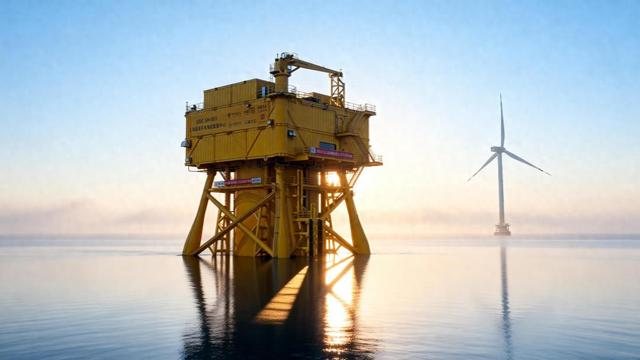
Group 1 - The company is actively promoting its underwater data center business in conjunction with offshore wind power [1]

建设“海底数据中心”,将全面重塑智能汽车的未来?
Zhong Guo Qi Che Bao Wang· 2026-01-30 07:38
Core Viewpoint - The construction of underwater data centers is expected to reshape the future of smart cars by addressing the increasing computational demands of the automotive industry, particularly in the context of autonomous driving and vehicle-to-everything (V2X) communication [4][9]. Group 1: Underwater Data Centers - The Guangdong Province has issued an action plan to promote the integration of the digital economy with the marine industry, including the exploration of underwater data centers [3]. - Underwater data centers utilize advanced technologies to ensure the safe operation of servers under high pressure, connecting to shore stations via underwater optical cables for stable power supply and high-speed data transmission [7][8]. - These centers can significantly reduce operational costs by over 40% due to lower cooling requirements and do not occupy valuable land resources, addressing the scarcity of land in urban areas [8]. Group 2: Computational Demands of Smart Cars - Smart cars, especially those with Level 3 autonomous driving capabilities, require substantial computational power, processing data at rates of several gigabytes per second [5]. - Traditional land-based data centers face limitations in energy consumption and land availability, making them less suitable for the growing demands of the smart automotive sector [6]. Group 3: Benefits of Underwater Data Centers for Smart Cars - Underwater data centers can provide low-latency computing support, reducing data transmission delays to an average of 14 milliseconds, which is critical for real-time decision-making in autonomous driving [9]. - The integration of underwater data centers with offshore wind power can create a sustainable ecosystem that supports the smart automotive industry while promoting carbon neutrality [10]. - Future developments may lead to a "vehicle-road-cloud-sea" collaborative smart transportation system, enhancing traffic flow optimization and personalized travel services [10].

珠海市海洋发展局局长扶志:985体系发力“海上新基建”
Nan Fang Du Shi Bao· 2026-01-23 06:07
Core Viewpoint - Zhuhai is leveraging its marine advantages to develop "new marine infrastructure" through a systematic "985" work framework aimed at unlocking the potential of its blue territory [1][2]. Group 1: Functional Islands Development - The "985" work framework includes the development of nine functional islands categorized into innovation, information, and integration types [2]. - Innovation islands will feature a technology demonstration island, marine equipment island, green building materials island, and comprehensive energy island, showcasing advanced marine technologies and sustainable practices [2][3]. - Information islands will focus on building a seabed data center as part of a computing infrastructure, capitalizing on natural cooling from seawater and proximity to offshore wind farms [3]. - Integration islands will include emergency and cold chain storage facilities, an ecological tourism platform, a marine center for industry services, and multifunctional floating islands for various marine applications [3]. Group 2: High-Energy Marine Platforms - Eight high-energy marine platforms will be established, including a national marine comprehensive testing ground and a future marine ranch demonstration area, enhancing marine technology and smart aquaculture [4]. - The platforms will support various emerging industries, including a comprehensive service hub for yachts and a marine big data application center to coordinate marine data resources [4]. Group 3: Support Systems - Five support systems will be implemented to strengthen top-level design and mechanism guarantees, including a special leadership group, expert advisory committee, and investment cooperation fund to attract social capital [5]. - The marine development strategy aims to position Zhuhai as a leader in marine innovation, contributing significantly to the city's high-quality development [5].