港股科技指数基金

Search documents
港股科技类指数为啥波动,估值如何呢?|第435期精品课程
银行螺丝钉· 2026-03-11 13:57
Group 1 - The main representative indices for Hong Kong technology stocks are the Hang Seng Tech Index (HSTECH.HI) and the Hong Kong Technology Index (931573.CSI) [4][47] - The Hang Seng Tech Index was established in 2020 and includes 30 constituent stocks, while the Hong Kong Technology Index was created in 2014 and consists of 50 stocks [6][8] - The selection criteria for the indices differ, with the Hong Kong Technology Index including medical stocks, making it a combination of technology and healthcare sectors [8][10] Group 2 - The industry distribution of both indices is similar, with Information Technology and Consumer Discretionary sectors accounting for 80%-90% of the total [10][11] - The top ten holdings in both indices show a high overlap, with their combined weight close to 70% [13][14] - Historical performance indicates that both indices have outperformed the Hang Seng Index since their inception, although they exhibit greater volatility [15][19] Group 3 - The recent bull market for Hong Kong technology stocks has seen significant fluctuations, characterized by three waves of "upward and downward" movements since February 2024 [24][32] - The first wave saw an increase of 87.51% followed by a 21.45% correction, attributed to previously low valuations [27] - The second wave resulted in a 55.72% rise and a subsequent 29.58% drop due to external factors like tariff crises [29] Group 4 - The third wave from April to October 2025 recorded a 67.65% increase, followed by a 24.27% correction, driven by strong earnings growth in the technology sector [31][36] - The investment behavior in Hong Kong is more rational, with institutional investors closely aligning their actions with earnings reports, leading to a cycle of growth and decline every 3-4 months [33][36] - Concerns over AI spending impacting profit growth have contributed to the recent corrections in the technology indices [37][39] Group 5 - After recent corrections, the Hong Kong technology indices have returned to undervalued levels, suggesting potential for dollar-cost averaging investments [39] - It is recommended to limit exposure to individual sectors to 15%-20% for a more stable investment approach [40][51] - The indices are suitable for pairing with value-oriented investments to enhance overall portfolio stability [44][51]


爽!涨疯了
Xin Lang Cai Jing· 2026-01-06 01:07
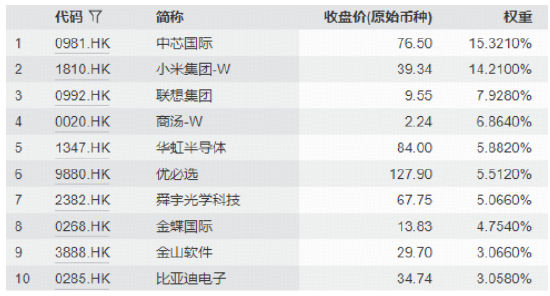
Market Overview - The A-share market opened strongly on January 5, 2026, with the Shanghai Composite Index breaking through 4000 points, while the Hang Seng Index maintained its gains after a 2.76% increase on January 2 [1][7] - Chinese Ping An saw a significant increase, reaching a peak of 72.85 with a rise of 6.51%, which could lead to increased buying volume in index funds due to its large market capitalization [2][8] Investment Strategies - The analysis suggests that investment opportunities in the Hong Kong market are greater than in the A-share market due to the passive appreciation of the RMB, recommending the selection of leading stocks and index funds [2][8] - For technology investments, the Hong Kong Information Technology ETF (159131) is highlighted as a unique product that tracks the only on-market index fund focused on the "Hong Kong chip" industry chain [2][10] ETF Composition - The top ten components of the Hong Kong Information Technology ETF include: - Semiconductor International (15.32%) - Xiaomi Group (14.21%) - Lenovo Group (7.93%) - SenseTime (6.86%) - Others including UBTECH and Sunny Optical Technology [3][9] - The ETF's composition is 70% hardware and 30% software, focusing on semiconductors, electronics, and computer software, which enhances its ability to capture trends in AI and hard technology in the Hong Kong market [4][10] Additional Investment Options - For investments in soft technology, the Hong Kong Internet ETF (513770) is recommended, which tracks the China Securities Hong Kong Internet Index and focuses on core AI assets in the Hong Kong market, with a current scale of 12.342 billion [6][10]