游艇消费产品

Search documents
培育新增长点 服务消费支持政策出台
Bei Jing Shang Bao· 2026-01-29 23:24
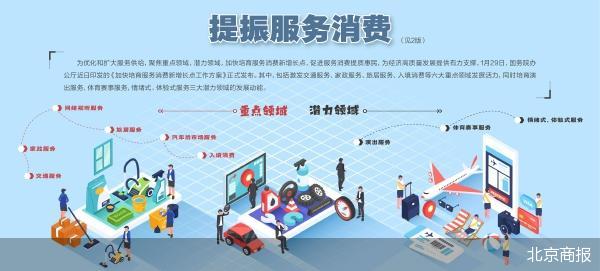
Core Viewpoint - The State Council's recently released "Work Plan for Accelerating the Cultivation of New Growth Points in Service Consumption" aims to enhance service supply and promote quality service consumption through 12 policy measures across six key areas and three potential areas of development [1][5]. Group 1: Key Focus Areas - The six key service consumption areas identified are transportation, housekeeping, online audio-visual, travel and accommodation, automotive aftermarket, and inbound consumption [3]. - The plan emphasizes the integration of railway and tourism, proposing policies to enhance railway tourism services, develop themed trains, and support cruise consumption innovation [3]. - It aims to improve the quality of yacht consumption and related infrastructure, while also promoting night tours and immersive cruise products [3]. Group 2: Inbound Consumption - Inbound consumption is highlighted, with measures to extend the trial period for unilateral visa-free countries and enhance the convenience of entry and exit for foreign visitors [5]. - The plan aims to create high-quality international brands in tourism, healthcare, education, and wellness, while promoting the "Buy in China" brand and optimizing international payment services [5]. Group 3: Potential Development Areas - The plan identifies three potential development areas: performance services, sports event services, and emotional/experiential services [6]. - It proposes optimizing performance management and ticketing systems, while also encouraging the establishment of quality brands in performance and sports events [7][8]. - For emotional and experiential services, the plan suggests innovative regulatory approaches and the establishment of new consumption scenarios [8]. Group 4: Support and Assurance - The plan emphasizes the need for a robust support system to enhance consumer capacity and willingness, including the establishment of a standardized service industry framework [9]. - It calls for the development of credit systems in sectors like elderly care, housekeeping, and tourism, leveraging platforms like "Credit China" for better transparency [9]. - Financial support measures include optimizing loan policies for service industry entities and encouraging financial institutions to develop tailored products for service consumption [10].

国办:打造多样化旅游专列产品,开发沉浸式、多元化邮轮消费产品
Bei Jing Shang Bao· 2026-01-29 11:05
Group 1 - The core viewpoint of the article is the release of the "Work Plan for Accelerating the Cultivation of New Growth Points in Service Consumption" by the State Council, aimed at optimizing and expanding service supply while focusing on key and potential areas to foster new growth points in service consumption [1] Group 2 - In the transportation services sector, the plan emphasizes the development of special support policies to promote the integration of railways and tourism, including the transformation of stations and trains for tourism purposes, and the creation of themed trains such as those for senior tourism [1] - The plan supports local initiatives to innovate cruise consumption, enhance cruise service levels, and develop immersive and diverse cruise consumption products [1] - It promotes the sustainable and healthy development of night cruise boats, encouraging quality upgrades and innovative development in this area [1] - The plan aims to facilitate high-quality development in yacht consumption by revising safety management regulations and ensuring the healthy growth of the yacht industry, while also enhancing infrastructure and support services for yachts [1] - The initiative includes the establishment of yacht display and trading platforms, leveraging events like the China International Consumer Products Expo to support local innovations in yacht consumption scenarios [1]
21社论丨打造交通消费新场景,激发新兴消费市场活力
21世纪经济报道· 2025-12-25 00:57
Core Viewpoint - The article emphasizes the importance of transforming transportation services into a comprehensive service platform that enhances quality of life and stimulates domestic consumption, moving beyond traditional transportation functions [1][2]. Group 1: Investment and Economic Impact - During the "14th Five-Year Plan" period, China's fixed asset investment in transportation reached 18.8 trillion yuan, significantly improving transportation capacity and operational efficiency [1]. - The increasing accessibility of road networks and improved service levels have created conditions for expanding consumption functions in the transportation sector [1]. Group 2: Development Directions - The central economic work conference highlighted the need to implement actions to boost consumption, focusing on three key areas: developing cruise and yacht consumption, promoting high-quality development of small and micro car rentals, and creating cross-regional, distinctive self-driving routes [2]. - The "15th Five-Year Plan" emphasizes building a strong transportation nation, enhancing the modern comprehensive transportation system, and improving cross-regional coordination and integration [2]. Group 3: Upgrading Existing Infrastructure - There is a need to transform traditional transportation nodes like highway service areas and passenger hubs into multifunctional complexes that integrate commercial shopping, cultural experiences, and tourism [3]. - Innovative technologies such as robotic kitchens and smart retail systems should be introduced to enhance service efficiency and personalized experiences at transportation nodes [3]. Group 4: Exploring New Consumption Models - The low-altitude economy is emerging as a new growth engine, with plans to develop air taxis and electric vertical takeoff and landing aircraft (eVTOL) for urban commuting and sightseeing [3]. - The growing emotional role of pets in families calls for the exploration of pet-friendly transportation options, including dedicated waiting areas at major transport hubs [4]. Group 5: Structural Challenges - The article identifies structural challenges such as market barriers, local protectionism, and the need for deeper integration between transportation and related industries like tourism and agriculture [4]. - It calls for unified market rules, deep industry integration, and enhanced infrastructure and service networks to support the healthy development of new transportation consumption scenarios [4].