熊猫mini

Search documents
接盘改造沈阳一工厂,吉利汽车回应:尽最大可能利用各地剩余产能
Mei Ri Jing Ji Xin Wen· 2025-11-04 10:44
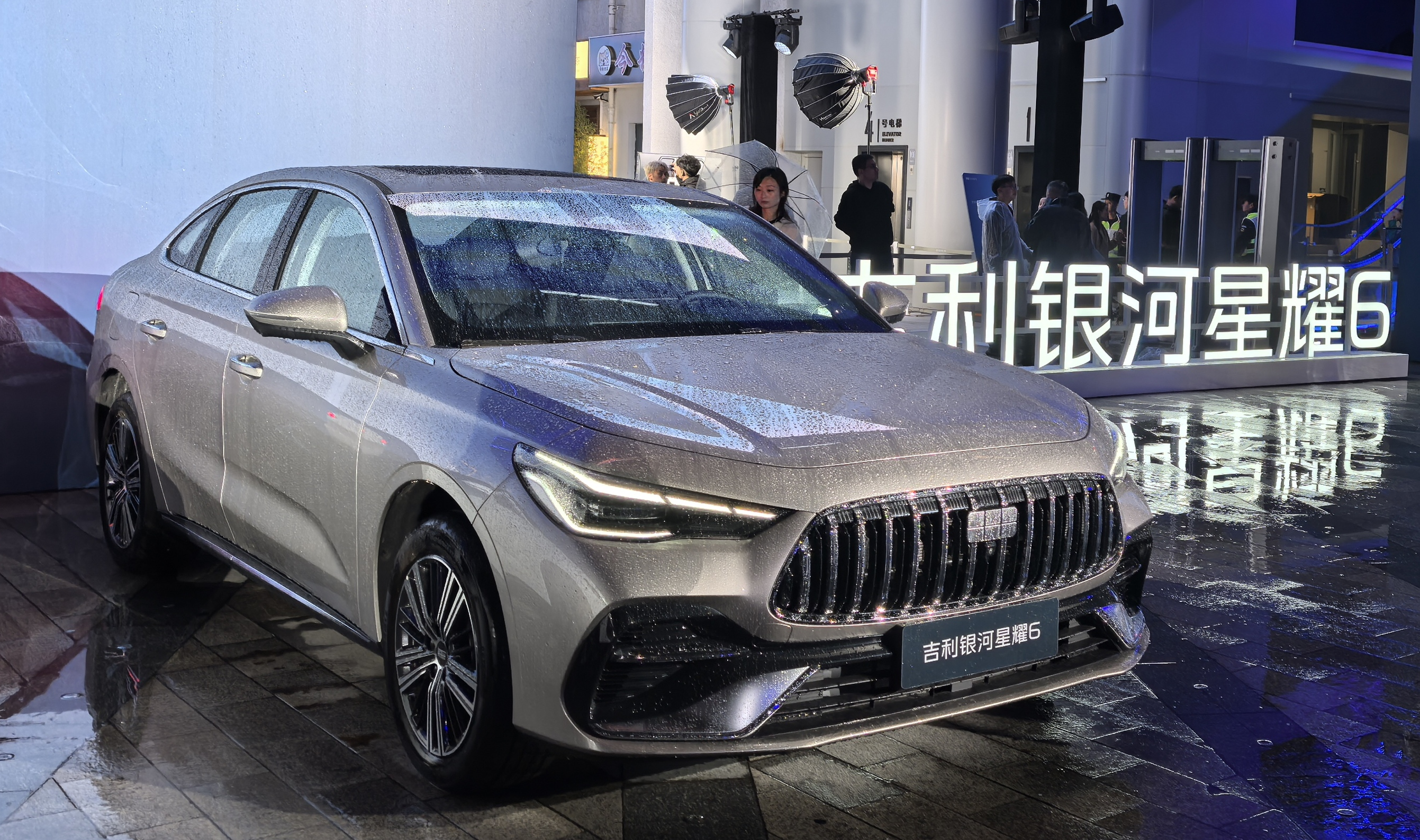
Core Insights - Geely Galaxy brand has achieved significant sales growth, reaching 127,476 units in October, a year-on-year increase of 101% and a month-on-month increase of 5%, marking a historical high [2] - The brand has sold a cumulative total of 1,002,000 units in the first ten months of the year, achieving its annual sales target ahead of schedule and becoming the fastest electric vehicle brand to reach this milestone [2] - Geely is repurposing the former SAIC-GM North Factory in Shenyang to increase production capacity for the Galaxy models, with an investment of approximately 890 million yuan [1][6] Production Capacity and Strategy - The production capacity for Galaxy models is currently under pressure due to rapid sales growth, with existing facilities in various locations having a combined annual capacity of nearly 1 million units [6] - Geely has decided not to build new factories or expand existing ones, focusing instead on optimizing existing production capacity and forming strategic partnerships [7] - The company is actively recruiting for various departments at the Shenyang facility to support the production ramp-up [1] Product Development - The Galaxy product lineup is continuously expanding, with the recent global launch of the new generation Galaxy Xingyao 6, available in seven variants priced between 68,800 to 99,800 yuan [3] - Several models under the Galaxy brand, such as the Galaxy E5 and Galaxy M9, have become bestsellers, contributing to the brand's strong market presence [2][6]


机构:一季度全球新能源车销量突破400万辆 比亚迪市占率居首
Xin Hua Cai Jing· 2025-05-21 09:16
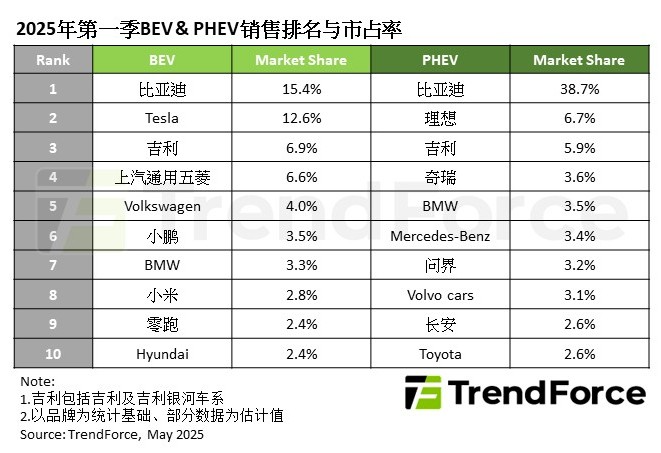
Group 1 - The core viewpoint of the report indicates that global sales of new energy vehicles (NEVs), including Battery Electric Vehicles (BEVs), Plug-in Hybrid Electric Vehicles (PHEVs), and hydrogen fuel cell vehicles, are projected to reach 4.02 million units in Q1 2025, representing a 39% year-on-year increase, with NEVs accounting for 18.4% of total global car sales in that quarter [2][6] Group 2 - In the BEV market, BYD leads with a market share of 15.4%, followed by Tesla at 12.6% and Geely at 6.9%. Geely's sales have surged by 443% year-on-year, driven by new models and competitive pricing [3][5] - In the PHEV segment, BYD holds a dominant market share of approximately 38.7%. Geely has seen significant growth, with a 158% year-on-year increase, ranking third for the first time [6] - Volkswagen ranks fifth in the BEV market with a 41% year-on-year sales increase, while BMW and Hyundai are also among the top ten, with Hyundai's growth supported by its new production base in the U.S. [5][6]


TrendForce:一季度全球新能源车合计销量达402万辆 同比增长39%
智通财经网· 2025-05-21 05:54
Group 1 - The global sales of new energy vehicles (NEVs), including BEVs, PHEVs, and hydrogen fuel cell vehicles, are projected to reach 4.02 million units in Q1 2025, representing a year-on-year increase of 39%, with NEVs accounting for 18.4% of total global car sales in the same period [1] - The estimated total sales of NEVs for the entire year of 2025 is 19.47 million units, reflecting a year-on-year growth of 19.6% [1] Group 2 - In Q1 2025, the sales of BEVs reached 2.67 million units, marking a year-on-year increase of 45%, with BYD maintaining the top position in sales with a market share of 15.4%, followed by Tesla at 12.6% [3] - Geely's sales saw a significant increase of 443% year-on-year, aided by the launch of new models, while Xiaopeng's sales were largely driven by its affordable model, the Mona M03 [3] - Volkswagen ranked fifth in BEV sales, with a year-on-year growth of 41%, driven by its strategy "In China, For China" to enhance its product offerings in the Chinese market [3] Group 3 - The sales of PHEVs in Q1 2025 totaled 1.35 million units, showing a year-on-year increase of 28%, with BYD leading the market with a share of approximately 38.7% [4] - Geely's PHEV sales benefited from the strong performance of the Galaxy series, achieving a 158% year-on-year increase and securing the third position in the market [4] - Some Chinese brands, such as Aito, experienced a decline in sales, with a 47% drop compared to the same period last year, indicating increased competition in the market [4]