
燃煤发电

Search documents
中国电力(02380) - 二零二六年一月售电量
2026-03-04 08:46
中 國 電 力 國 際 發 展 有 限 公 司 China Power International Development Limited (在香港註冊成立的有限責任公司) (股份代號:2380) 香港交易及結算所有限公司及香港聯合交易所有限公司對本公告的內容概不負責,對其準確性或完整 性亦不發表任何聲明,並明確表示,概不就因本公告全部或任何部份內容而產生或因倚賴該等內容而 引致的任何損失承擔任何責任。 | 主要聯營公司或合營公司的 發電廠 | | 售電量(兆瓦時) | | | --- | --- | --- | --- | | | 2026 年 1 月 | 2025 年 月 1 | 同比變化 | | 風力發電 | 159,168 | 142,430 | 11.75% | | 光伏發電 | 16,080 | 21,702 | -25.91% | | 燃煤發電 | 4,221,075 | 3,639,722 | 15.97% | | 合計 | 4,396,323 | 3,803,854 | 15.58% | 1 本公告所載數據僅基於內部管理紀錄,尚未經外部核數師審計或審閱。投資者於 買賣本公司股份時務請審慎行事 ...

国际能源署最新报告预计:全球电力需求将保持强劲增长
Jing Ji Ri Bao· 2026-02-10 00:54
Core Insights - The International Energy Agency (IEA) forecasts strong global electricity demand growth, with an average annual growth rate exceeding 3.5% from 2026 to 2030, driven by industrial, electric vehicle, air conditioning, and data center electricity consumption [1] - By 2030, renewable energy and nuclear power are expected to account for 50% of the global electricity mix, with emerging economies contributing nearly 80% of the new electricity demand [1][2] Group 1: Global Electricity Demand - Global electricity demand is projected to grow by 3% year-on-year in 2025, with the growth rate expected to be 50% higher than the average of the past decade over the next five years [1] - China will remain the main driver of global electricity demand growth, contributing nearly 50% of the increase, with an average annual growth rate of 4.9% over the next five years [1] - India and Southeast Asian countries are expected to significantly increase their share of electricity demand growth in emerging economies by 2030 due to rapid economic growth and rising air conditioning demand [1] Group 2: Renewable Energy and Nuclear Power - By 2030, about half of the global electricity will come from renewable energy and nuclear power, with renewable energy generation expected to grow at an annual rate of 8%, driven by record solar photovoltaic generation [2] - Global nuclear power generation is anticipated to reach a historical high in 2025, supported by increased nuclear capacity in countries like France, China, and India [2] Group 3: Coal and Natural Gas - Despite the decline of coal power, it will remain the largest source of electricity globally until 2030, with coal generation levels stabilizing in 2025 [3] - Natural gas generation is expected to grow at an annual rate of 2.6% by 2030, significantly higher than the 1.4% growth rate of the past five years, primarily driven by rising electricity demand in the U.S. and the Middle East's transition from oil to gas [3] Group 4: Electricity Infrastructure and Investment - The report emphasizes the need for rapid and efficient expansion of the electricity grid to integrate the changing generation structure and high-load demands from electric vehicles and data centers [4] - To meet the electricity demand by 2030, global grid investment must increase by at least 50% from the current $400 billion, alongside significant expansion of the supply chain [4] Group 5: Carbon Emissions and Pricing - Global electricity sector carbon emissions are expected to stabilize in 2025, with a further decline anticipated as low-carbon generation increases [5] - Electricity price disparities among regions continue to exist, with rising prices in the EU and U.S. due to high natural gas prices, while countries like Australia and India see price decreases [5] Group 6: Electricity Security - Recent large-scale power outages highlight the importance of electricity security, making it a priority for countries to enhance the resilience of their power systems [6] - The report calls for modern operational frameworks and updated regulations to address the evolving demands on electricity systems [6]
全球电力需求将保持强劲增长
Sou Hu Cai Jing· 2026-02-10 00:01
Core Insights - The International Energy Agency predicts strong global electricity demand growth, with an average annual increase of over 3.5% from 2026 to 2030, driven by industrial, electric vehicle, air conditioning, and data center electricity consumption [2] - By 2030, renewable energy and nuclear power are expected to account for 50% of the global electricity mix, with significant contributions from emerging economies, particularly China and India [3][4] Group 1: Global Electricity Demand - Global electricity demand is projected to grow by 3% year-on-year by 2025, with the growth rate expected to exceed the economic growth rate in the coming years [2] - Emerging economies will contribute nearly 80% of the new electricity demand by 2030, with China accounting for about 50% of the incremental demand [2] - China's average annual growth rate for new electricity is expected to reach 4.9% over the next five years [2] Group 2: Renewable Energy and Nuclear Power - By 2030, approximately half of the global electricity will come from renewable energy and nuclear power, with renewable energy generation expected to grow at an annual rate of 8% [3] - Solar photovoltaic generation is anticipated to increase by over 600 terawatt-hours annually, contributing significantly to the overall growth of renewable energy [3] - Global nuclear power generation is expected to reach a historical high by 2025, driven by increased capacity in countries like France, China, and India [3] Group 3: Coal and Natural Gas - Despite the decline of coal power, it will remain the largest source of electricity globally until 2030, with regional disparities in coal usage [4] - Natural gas generation is projected to grow at an annual rate of 2.6% by 2030, primarily due to rising electricity demand in the U.S. and a shift from oil to gas in the Middle East [4] Group 4: Electricity Infrastructure and Investment - To meet the electricity demand by 2030, global grid investments need to increase by at least 50% from the current $400 billion, alongside significant supply chain expansions [5] - The report emphasizes the need for enhanced grid flexibility and modernization of operational frameworks to adapt to changing electricity demands [5] Group 5: Carbon Emissions and Environmental Impact - Global electricity sector carbon emissions are expected to stabilize by 2025, with a projected decline in carbon intensity by 14% compared to a decade ago [5] - The electricity production sector remains the largest source of energy-related carbon emissions, generating approximately 13.9 billion tons of CO2 annually [5] Group 6: Electricity Pricing and Competition - Electricity price disparities continue to exist globally, with rising prices in regions like the EU and the U.S. due to higher natural gas prices, while countries like Australia and India see price declines [6] - Recent large-scale power outages highlight the importance of electricity security, making it a priority for nations to enhance the resilience of their power systems [6]

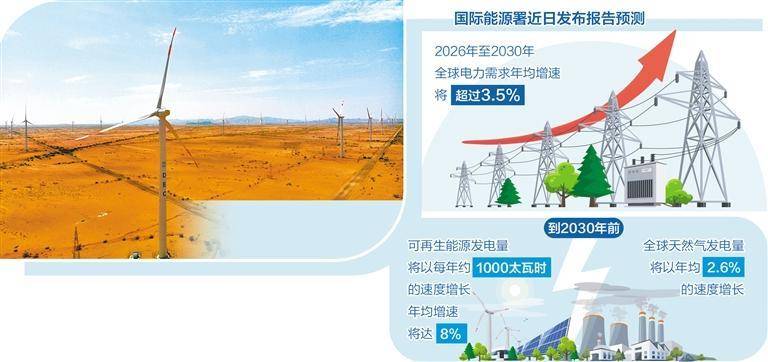
可再生能源与核电2030年将提供全球一半电力
Xin Lang Cai Jing· 2026-02-07 20:47
Core Insights - The International Energy Agency (IEA) predicts that global electricity demand will grow at an average annual rate of over 3.5% from now until 2030, with renewable energy and nuclear power together accounting for 50% of the global electricity mix by 2030 [1] Group 1: Electricity Demand Growth - Electricity demand growth is expected to be at least 2.5 times that of overall energy demand, driven by increased industrial electricity use, the ongoing adoption of electric vehicles, rising air conditioning usage, and increased electricity consumption from data centers and artificial intelligence [1] - Emerging and developing economies remain the primary engines of electricity demand growth, while developed economies are beginning to see an increase in electricity consumption after 15 years of stagnation [1] Group 2: Renewable Energy and Nuclear Power - Global renewable energy generation is on track to surpass coal-fired generation, with record deployment of solar power facilities; the latest data indicates that both sources will be nearly equal by 2025 [1] - Nuclear power generation is also reaching new records, and by 2030, renewable energy and nuclear power combined are expected to provide 50% of global electricity, up from the current 42% [1] Group 3: Coal Power Decline - As renewable energy develops, the share of coal-fired generation in the global electricity mix is expected to decline, projected to return to 2021 levels by 2030 [1] - Consequently, carbon emissions in the global power sector are expected to remain relatively stable from now until 2030 [1]
【环球财经】国际能源署:可再生能源与核电2030年将提供全球一半电力
Xin Hua She· 2026-02-07 09:55
Core Insights - The International Energy Agency (IEA) predicts that global electricity demand will grow at an average annual rate exceeding 3.5% from now until 2030, with renewable energy and nuclear power expected to account for 50% of the global electricity mix by 2030 [1][2] Group 1: Electricity Demand Growth - Global electricity demand growth is projected to be at least 2.5 times that of overall energy demand growth, driven by increased industrial electricity use, the ongoing adoption of electric vehicles, rising air conditioning usage, and increased electricity consumption from data centers and artificial intelligence [1] - Emerging and developing economies remain the primary engines of electricity demand growth, while developed economies are beginning to see an increase in electricity consumption after 15 years of stagnation [1] Group 2: Renewable Energy and Nuclear Power - Global renewable energy generation is on track to surpass coal-fired generation, with the latest data indicating that both will be nearly equal by 2025, driven by record deployment of solar power facilities [1] - Nuclear power generation is also reaching new records, and by 2030, renewable energy and nuclear power combined are expected to provide 50% of global electricity, up from the current 42% [1] Group 3: Coal Power and Carbon Emissions - As renewable energy develops, the share of coal-fired generation in the global electricity mix is expected to decline, projected to return to 2021 levels by 2030 [1] - Carbon emissions in the global power sector are expected to remain relatively stable from now until 2030 [1] Group 4: Investment in Electricity Infrastructure - The growth in global electricity demand is significantly higher than in the past decade, with the increase in electricity consumption by 2030 equivalent to adding more than two EU-sized electricity demands [2] - To meet this demand, annual investment in the electricity grid needs to increase by 50%, with a strong emphasis on the security and resilience of the grid system [2]
福建风电龙头,福能股份:现金流转正,首推中期分红
市值风云· 2025-12-30 10:11
Core Viewpoint - The article emphasizes the growth potential of Funiu Co., Ltd. in the renewable energy sector, highlighting its strategic positioning in both traditional and green energy sources, and its robust financial performance. Group 1: Company Overview - Funiu Co., Ltd. is primarily engaged in clean energy generation and efficient cogeneration, focusing on the Fujian province, with a total installed capacity of 6.1252 million kilowatts as of mid-2025, including 1.809 million kilowatts of wind power and 1.56 million kilowatts of natural gas generation [4][5]. - The company has a clean energy installed capacity ratio of 56.55% [5]. Group 2: Financial Performance - In the first three quarters of 2025, Funiu Co., Ltd. achieved a net profit of 1.989 billion yuan, a year-on-year increase of 12.17%, despite a 4.29% decline in revenue to 10.035 billion yuan [10]. - The gross profit margin for 2024 is projected to be 26.6%, an increase of 2.7 percentage points year-on-year, while the gross profit margin for the first three quarters of 2025 reached 26.04%, up 4.05 percentage points from the previous year [10]. Group 3: Wind Power Business - The wind power segment, although not the largest in installed capacity, is a major profit contributor, with a projected gross margin of 64.1% in 2024, significantly higher than other energy sources [7]. - Funiu Co., Ltd. holds a 22.5% share of the total wind power capacity in Fujian province, positioning it as a leader in the local market [7]. Group 4: Project Pipeline and Future Growth - The company has a robust project pipeline, with plans to expand its installed capacity to 15 million kilowatts by the end of 2025, representing a 145% increase from current levels, and aims to reach 20 million kilowatts by 2030 [18][19]. - Key projects include a combined heat and power project with a total capacity of 2.64 million kilowatts and offshore wind projects totaling 656,000 kilowatts, with expected completion dates in 2025 and 2026 [15]. Group 5: Dividend Policy - Funiu Co., Ltd. has maintained a dividend payout ratio of 30% historically, with a planned mid-term dividend distribution of 203 million yuan in 2025, marking the first occurrence of such a distribution in the company's history [23].

国家发改委印发基础设施REITs项目行业范围清单
Xin Hua Cai Jing· 2025-12-01 11:48
Core Points - The National Development and Reform Commission (NDRC) has issued the "2025 Edition of the Project Industry Scope List for Real Estate Investment Trusts (REITs) in the Infrastructure Sector" to expand the scope of infrastructure REITs [1] - The list aims to enhance the role of infrastructure REITs in revitalizing existing assets and promoting a virtuous investment cycle [1] Group 1 - The application scope includes clean energy projects such as wind power, solar power, hydropower, natural gas power, biomass power, and nuclear power [2] - It also covers energy storage facilities, clean and low-carbon flexible coal power projects, ultra-high voltage transmission projects, incremental distribution networks, microgrids, and charging infrastructure projects [2] - Coal power projects must meet specific conditions, such as having a minimum output of 30% rated load under pure condensing conditions or incorporating low-carbon fuels with a blending ratio of no less than 10% [2] Group 2 - The NDRC emphasizes that projects in areas like rental housing, consumer infrastructure, commercial office facilities, elderly care facilities, and urban renewal must be initiated by independent legal entities engaged in relevant businesses and must not involve residential property development [2]
泰安市政府与华能山东公司签署战略合作协议
Zhong Guo Fa Zhan Wang· 2025-11-28 08:05
Core Points - The signing ceremony between the Tai'an Municipal Government and Huaneng Shandong Company marks a strategic cooperation aimed at enhancing energy transition and green energy development in Tai'an [1][2] - Huaneng Shandong Company plans to leverage its innovation, industry, and funding advantages in collaboration with Tai'an's favorable investment environment and resource endowment [1] - The partnership is expected to contribute significantly to the construction of a modern socialist strong city in Tai'an [1] Group 1 - The signing signifies a new phase of comprehensive deepening of strategic cooperation between Huaneng Shandong Company and Tai'an [2] - Huaneng Shandong Company has previously collaborated with Tai'an in energy security and renewable energy projects, including coal-fired power, centralized wind power, and photovoltaic projects [2] - The local government expresses commitment to providing optimal policy support and a favorable business environment for Huaneng Shandong Company to expand its operations in Tai'an [2]
【英文】国际能源署IEA:电力年中更新2025
Sou Hu Cai Jing· 2025-11-07 08:05
Core Insights - The International Energy Agency (IEA) projects strong global electricity demand growth of 3.3% in 2025 and 3.7% in 2026, driven by industrial demand, air conditioning, data centers, and electrification, despite a slowdown in global economic growth [19][36] - Renewable energy sources, particularly wind and solar, are expected to dominate the increase in electricity supply, covering over 90% of new demand, with renewable generation surpassing coal-fired generation as early as 2025 [2][25] - Regional electricity prices are experiencing significant variations, with wholesale prices in the EU and US rising by 30-40% due to higher gas prices, while prices in India and Australia are declining by 5-15% [3][31] Demand - Global electricity demand is forecasted to grow at an average annual rate of 3.3% in 2025 and 3.7% in 2026, which is a moderation from the 4.4% surge in 2024 but still among the highest rates in the past decade [36] - China and India are expected to contribute 60% of global electricity demand growth, with China's demand projected to increase by 5% in 2025 and India's by 4% [20][49] - The United States is experiencing above-trend electricity demand growth, projected at 2.3% in 2025, driven by data center expansion and electrification [21][51] Supply - Renewable energy sources are set to cover over 90% of the increase in global electricity demand, with wind and solar generation expected to surpass 5,000 TWh in 2025 and 6,000 TWh in 2026 [24][25] - Global coal-fired generation is forecasted to decline slightly in 2025 and further in 2026, while gas-fired generation is expected to increase by 1.3% in 2025 [26][28] - Nuclear power generation is on track to reach a record high in 2025, driven by plant restarts and new reactor commissioning [29] Emissions - Global carbon dioxide emissions from electricity generation are expected to plateau in 2025, with a slight decline forecasted for 2026 as low-emission sources displace fossil fuels [30] - The rapid deployment of renewables is limiting increases in fossil fuel power generation, contributing to a decrease in carbon emissions intensity [30] Prices - Wholesale electricity prices in the EU and US rose by 30-40% in the first half of 2025, while prices in India and Australia decreased by 5-15% [31][33] - The occurrence of negative electricity prices is increasing, highlighting the need for greater flexibility in supply and demand [32] Security and Infrastructure - Recent blackouts in regions like Chile and Spain underscore the importance of electricity security, necessitating robust grid infrastructure and diverse flexibility resources [34]

广州发展涨2.14%,成交额1.04亿元,主力资金净流入125.51万元
Xin Lang Cai Jing· 2025-09-26 06:05
Core Viewpoint - Guangzhou Development's stock has shown a positive trend with a year-to-date increase of 8.78%, reflecting a stable performance in the energy and infrastructure sectors [1][2]. Company Overview - Guangzhou Development Group Co., Ltd. is located in Tianhe District, Guangzhou, Guangdong Province, and was established on November 13, 1992, with its listing date on July 18, 1997 [1]. - The company's main business involves investment, construction, production management, and operation in energy, infrastructure, and logistics [1]. Business Composition - The revenue composition of Guangzhou Development is as follows: coal (50.72%), natural gas (20.30%), coal-fired power generation (10.48%), natural gas power generation (6.75%), oil products (4.21%), wind power (4.03%), photovoltaic power (1.78%), coal power heat (0.85%), gas power heat (0.36%), autoclaved aerated concrete (0.20%), financial services (0.12%), property leasing (0.12%), hazardous chemical storage (0.04%), charging piles (0.02%), and energy storage (0.00%) [1]. Financial Performance - For the first half of 2025, Guangzhou Development achieved an operating income of 23.334 billion yuan, representing a year-on-year growth of 2.01%, and a net profit attributable to shareholders of 1.635 billion yuan, reflecting a significant increase of 42.56% [2]. Shareholder Information - As of June 30, 2025, the number of shareholders for Guangzhou Development was 51,600, a decrease of 1.59% from the previous period, with an average of 67,765 circulating shares per shareholder, an increase of 1.61% [2]. - The company has distributed a total of 10.341 billion yuan in dividends since its A-share listing, with 2.525 billion yuan distributed in the last three years [3]. Institutional Holdings - As of June 30, 2025, Hong Kong Central Clearing Limited was the sixth-largest circulating shareholder, holding 23.6297 million shares, an increase of 41,000 shares from the previous period. Southern CSI 500 ETF ranked as the eighth-largest circulating shareholder, holding 15.6273 million shares, an increase of 1.9676 million shares [3].
