
爱达花城号

Search documents
180天造一艘邮轮!中国造船业垄断全球近七成,美造船业慌了?
Sou Hu Cai Jing· 2025-12-18 12:55
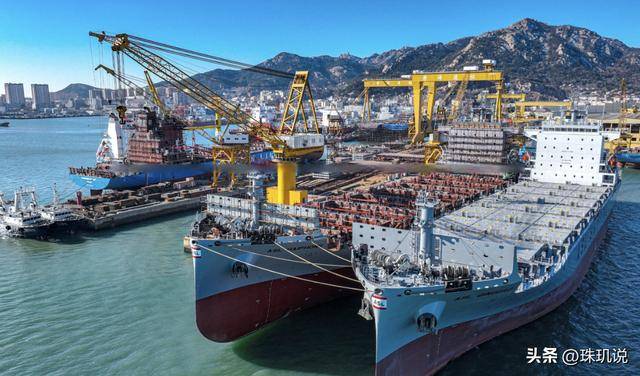
Core Insights - China's shipbuilding industry has maintained its global leadership for 16 consecutive years, capturing nearly 70% of the global market share in new orders and undelivered vessels in the first half of this year [1] Group 1: Financial Support and Talent - The shipbuilding industry in China benefits from strong financial backing from state-owned institutions, allowing for lower interest rates and longer loan terms compared to Western counterparts [3][5] - The development of skilled talent is crucial, with experience gained from projects like the Liaoning, Shandong, and Fujian aircraft carriers contributing to a pool of proficient shipbuilders and engineers [9][11] Group 2: Industrial System and Efficiency - China's complete industrial system enables the production of everything from core equipment to key components, making it unique among global competitors [13] - The efficiency of Chinese shipbuilding has significantly improved, with the time to build large container ships reduced from 28 months to 16 months through digital modeling and streamlined processes [17][19] Group 3: Technological Advancements - China has successfully developed advanced technologies in shipbuilding, including aircraft carriers, large cruise ships, and LNG carriers, previously dominated by Western nations [21] - The Fujian aircraft carrier features innovative technologies such as conventional power with electromagnetic catapults, achieving a 98% domestic production rate [21][23] Group 4: Market Position and Standards - China's shipbuilding industry is increasingly recognized for its quality and efficiency, leading to a growing preference among global shipowners for Chinese shipyards over traditional partners in South Korea and Japan [29][31] - The industry is transitioning from following international standards to setting its own, with innovations in low-carbon technologies and smart control systems aligning with global trends towards carbon neutrality [36][38] Group 5: Future Outlook - The integration of AI and robotics in ship design and manufacturing enhances precision and efficiency, positioning China's shipbuilding sector as a leader in both competitiveness and environmental standards [39][41] - The journey from a follower to a leader in the global shipbuilding market reflects a solid foundation built on consistent efforts and technological advancements, contributing to national pride and industrial strength [43]

爱达邮轮发布大湾区战略,2027年区域运力将翻倍
Cai Jing Wang· 2025-11-10 03:03
Core Insights - Aida Cruises has officially launched its Greater Bay Area strategy at the 18th China Cruise Industry Development Conference, focusing on increasing capacity deployment, promoting three-port linkage, and building an industrial ecosystem to support high-quality development of the regional cruise industry [1] Group 1: Strategic Initiatives - The strategy aims for year-round normalized operations linking Guangzhou, Shenzhen, and Hong Kong, with the deployment of Aida Mediterranean, the first domestically produced large cruise ship Aida Modu, and the second large domestic cruise ship Aida Huacheng in the Greater Bay Area [1] - The company plans to double regional capacity by 2027 compared to 2025 [1] Group 2: Collaborative Efforts - Aida Cruises will promote the establishment of the Greater Bay Area Cruise Integration Development Alliance to gather industry chain forces for collaborative innovation [1] - The company plans to recruit 1,500 crew members within six months through specialized job fairs and supplier conferences, focusing on core procurement needs in five key areas including maritime and hotel operations [1] Group 3: Cultural Integration - Aida Cruises intends to establish a regional operations headquarters in the Greater Bay Area under the unified deployment of China Cruise, launching the "Cultural Heritage on the Waves" themed event during the Guangzhou sailing season from December 2025 to March 2026 to promote the integration of Lingnan culture and cruise culture [1]