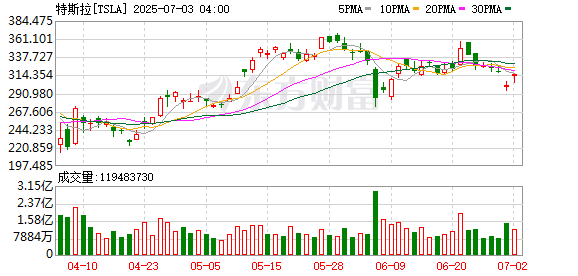
特斯拉智能辅助驾驶(FSD)

Search documents
汽车视点 | 一文透视特斯拉财报:FSD付费用户占比达12%,人形机器人量产在即
Xin Hua Cai Jing· 2025-10-23 04:18
Core Insights - Tesla reported a 12% year-on-year increase in total revenue for Q3 2025, reaching $28.1 billion, with free cash flow hitting a record $4 billion [2] - Adjusted net profit for Q3 2025 was $1.77 billion, a 29% decline compared to the previous year, with earnings per share at $0.39, down from $0.62 [2] - The company delivered a record 497,000 vehicles globally in Q3 2025, driven by a diversified product lineup, including the new Model Y L in China [3][4] Financial Performance - Total revenue for Q3 2025 was $28.1 billion, a 12% increase year-on-year [2] - Free cash flow reached $4 billion, setting a new record for the company [2] - Adjusted net profit was $1.77 billion, a decrease of 29% year-on-year, with earnings per share at $0.39 [2] Vehicle Production and Deliveries - Tesla produced approximately 447,000 electric vehicles in Q3 2025 and delivered 497,000, marking a historical high [2][3] - The introduction of the Model Y L in China significantly boosted sales, with the vehicle quickly becoming the most popular model in stores [3] - In September, Tesla's wholesale sales in China exceeded 90,000 units, a 2.8% year-on-year increase, with Q3 wholesale volume nearing 170,000 units, up 31% quarter-on-quarter [3][4] Market Expansion and Product Development - Tesla's Shanghai factory is ramping up production to meet demand in the domestic and Asia-Pacific markets [4] - The Model Y has become the best-selling vehicle in several European markets, including Norway, Switzerland, and Finland [4] - Tesla's global charging network expanded by over 3,500 superchargers in Q3, with an 18% year-on-year growth [4][5] Technological Advancements - Tesla is advancing its AI capabilities, focusing on autonomous driving and humanoid robots, with plans to release the third-generation humanoid robot in Q1 2026 [6][7] - The company has begun rolling out the FSD V14 version, enhancing the Robotaxi's capabilities [6] - Tesla is collaborating with Samsung to produce AI chips in the U.S. to support its AI training needs [7] Energy Storage Business - Tesla's energy storage segment achieved a record installation of 12.5 GWh in Q3 2025, with a gross profit of $1.1 billion [8] - The company introduced a new industrial energy storage solution, Megablock, aimed at simplifying deployment and integration [8] - Plans for a fourth-generation Megapack are underway, which will streamline the deployment process by integrating conventional substation components [8]


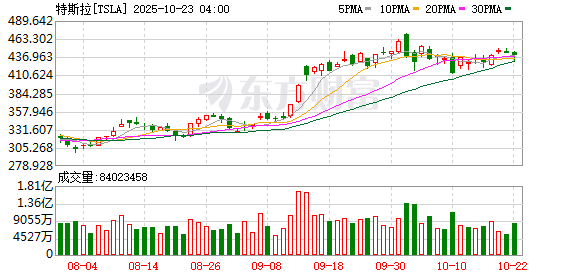
特斯拉FSD在华难落地催生灰色产业链:山寨版安装仅需几百元 官方警示“改装会影响整车质保服务”
Mei Ri Jing Ji Xin Wen· 2025-07-03 09:25
Core Viewpoint - The article discusses the rising popularity of unauthorized Tesla driving modules that claim to enhance the vehicle's autonomous driving capabilities at a fraction of the official cost, raising concerns about safety and warranty implications [2][22][24]. Group 1: Unauthorized Modifications - Unauthorized Tesla driving modules are being sold on e-commerce platforms for a few hundred yuan, significantly cheaper than the official Enhanced Autopilot (EAP) priced at 32,000 yuan [2][22]. - A specific product, the "Tesla multifunction module," has sold 69,000 units, with users praising its ability to "liberate hands" while driving [2][3]. - These modules claim to unlock features like "AP no disturbance" and "automatic lane change," but they fundamentally differ from the official EAP, which includes advanced functionalities like smart parking and advanced summon [8][9]. Group 2: Safety and Warranty Concerns - The unauthorized modules bypass critical safety features, such as the steering wheel grip detection, which could lead to increased accident risks as drivers may become less vigilant [9][12]. - Tesla's official service centers warn that such modifications interfere with the vehicle's computer systems and can void the warranty [12][22]. - A user reported system failures after installing a module, which was confirmed by Tesla's service as being caused by the unauthorized modification, leading to significant repair costs [24]. Group 3: Market Dynamics - The demand for these unauthorized modules stems from the high cost of Tesla's official features and the lack of certain comfort options in Tesla vehicles, prompting consumers to seek cheaper alternatives [17][22]. - The pricing strategy of Tesla's EAP and Full Self-Driving (FSD) features is significantly higher than competitors, leading consumers to explore unauthorized options despite the risks involved [22][25]. - The article notes that while these unauthorized products attract consumers, they do not pose a significant threat to Tesla's FSD rollout in China, which faces its own technical and regulatory challenges [25][26]. Group 4: Regulatory and Competitive Landscape - The approval process for Tesla's FSD in China is uncertain, with recent regulatory changes imposing stricter requirements on software updates and vehicle safety [26]. - Local competitors in the smart driving sector are rapidly emerging, which may limit Tesla's market share and influence in the region [26][27]. - Tesla has begun to push FSD features in China, indicating a strategic move to integrate its advanced driving capabilities into the local market [27][28].