特朗普企业金卡

Search documents
百万美元兜售美国居留权,特朗普这个脑洞开得有点大 | 京酿馆
Xin Jing Bao· 2025-09-21 10:37
Group 1 - The introduction of the "Trump Gold Card" allows individuals to obtain U.S. residency by paying $1 million or $2 million through corporate sponsorship, significantly reducing the initial price from $5 million [2][4] - The "Trump Gold Card" program is expected to issue approximately 80,000 cards and is currently in a trial phase, with the potential to replace existing EB-1 and EB-2 visa categories [4][5] - The increase in H-1B visa fees to $100,000 aims to compel U.S. companies to hire domestic employees instead of foreign workers, which may lead to operational challenges for major firms reliant on skilled foreign labor [7][8] Group 2 - The proposed changes to immigration and visa policies reflect a shift in focus from attracting skilled talent to targeting high-net-worth individuals, which may undermine the competitiveness of U.S. industries [10] - The financial implications of these policies are significant, with the Trump administration projecting potential revenue increases in the hundreds of billions, although the actual effectiveness of these measures remains uncertain [9][10] - The current U.S. national debt stands at $36.7 trillion, and the fiscal strategies employed by the Trump administration, including tax cuts and increased tariffs, are projected to exacerbate the federal deficit in the coming years [10]

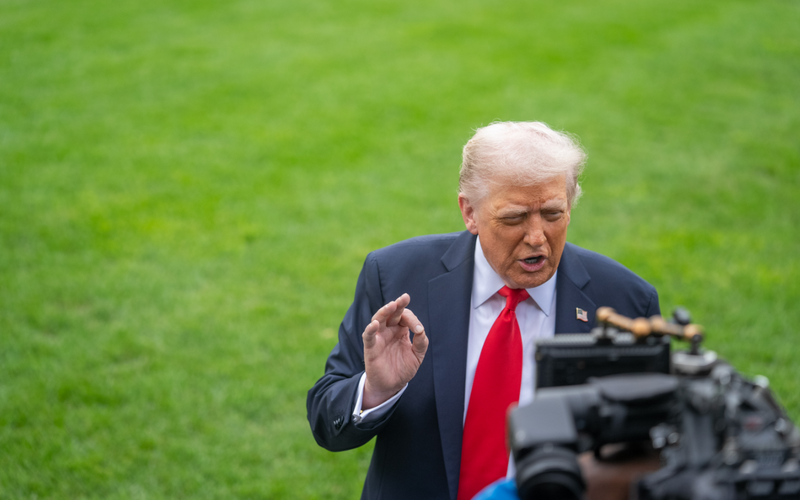
百万美元兜售美国居留权,特朗普这个脑洞开得有点大
Xin Jing Bao· 2025-09-21 10:33
Group 1 - The "Trump Gold Card" program allows individuals to obtain U.S. residency by paying $1 million or $2 million through corporate sponsorship, significantly reducing the initial price from $5 million announced earlier this year [1][3] - The program is divided into three categories: the "Gold Card" for individuals, the "Platinum Card" for longer stays, and the "Corporate Gold Card" for companies sponsoring employees [3][4] - The introduction of the "Gold Card" effectively undermines the existing EB-1 and EB-2 visa programs, which were designed to attract skilled talent to the U.S. [4][5] Group 2 - The increase in H-1B visa fees to $100,000 aims to compel U.S. companies to hire domestic workers instead of foreign employees, particularly in tech and finance sectors [5][6] - Major U.S. companies like Amazon, Google, and Microsoft have been the largest users of H-1B visas, with a significant portion of visa holders coming from India [5][6] - The new fee structure may lead to a reevaluation of relationships between large corporations and the Trump administration, as companies face challenges in hiring skilled labor [6][7] Group 3 - Trump's economic policies, characterized by tax cuts domestically and increased tariffs internationally, are seen as attempts to address a growing fiscal deficit, which has reached $36.7 trillion [7][8] - The administration's focus on monetizing visas reflects a shift from attracting technical talent to prioritizing high-net-worth individuals, potentially compromising U.S. competitiveness [7][8] - The overall strategy may backfire, as the U.S. risks losing its appeal to global talent and wealthy individuals due to these aggressive policy changes [8]
【环球财经】“特朗普金卡”来了 美国现在有多缺钱
Xin Hua She· 2025-09-20 11:37
Core Points - The Trump administration has introduced a new visa program called the "Golden Card," aimed at attracting foreign individuals with exceptional abilities willing to support the U.S. [1][5] - The program allows individuals to obtain expedited visa processing by paying $1 million to the U.S. Treasury or $2 million through corporate sponsorship [1][7] - The initiative is expected to generate over $100 billion in revenue, which will be allocated for tax cuts, economic growth projects, and debt repayment [5] Visa Program Details - The "Golden Card" costs $1 million for permanent residency, while a forthcoming "Platinum Card" will be priced at $5 million, allowing holders to stay in the U.S. for up to 270 days without paying taxes on non-U.S. sourced income [7] - Corporations can sponsor employees for the "Trump Corporate Golden Card" at a cost of $2 million per employee [7] Legislative Context - The increase in fees for H-1B visa applicants to $100,000 and the "Golden Card" program can be enacted by presidential announcement, while the "Platinum Card" requires Congressional approval [8] - Experts predict that the new visa initiatives may face legal challenges from the business community and employees, as only Congress has the authority to establish new visa programs and impose fees [8] Economic Context - The introduction of the "Golden Card" program is seen as a response to the U.S.'s severe fiscal challenges and rising debt levels, which have surpassed $37 trillion [10] - The program aims to alleviate financial pressures by selling residency rights to wealthy immigrants, although the funds raised are expected to be insufficient compared to the scale of the national debt [10]