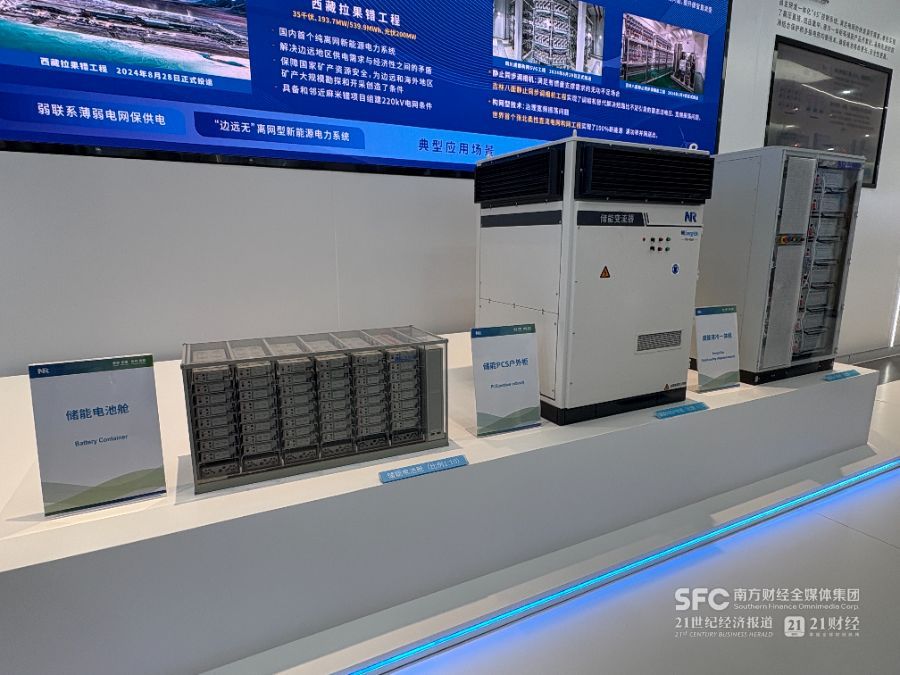
特高压直流输电设备

Search documents
国网豪掷4万亿!帮主郑重:新电网背后的黄金赛道
Sou Hu Cai Jing· 2026-01-15 13:27
Core Insights - The State Grid of China has announced a staggering investment of 4 trillion yuan during the 14th Five-Year Plan period, representing a 40% increase compared to the previous plan, signaling a profound revolution in China's energy system [1][3] Investment Focus - The 4 trillion yuan will primarily be allocated to the construction of a "new power system," which includes three main pillars: 1. Strengthening the backbone of the grid through the construction of ultra-high voltage power networks to enhance transmission capacity by over 30% [3] 2. Upgrading distribution networks in urban, rural, and remote areas, as well as exploring microgrids for greater flexibility and reliability [3] 3. Implementing digitalization and intelligence initiatives, including an "AI+" action plan to empower traditional grids with digital technology [3] Strategic Goals - The investment is driven by two clear strategic objectives: 1. Ensuring "energy security" and "green transformation" to support the rapid growth of renewable energy installations, with an expected annual increase of 200 million kilowatts [3] 2. Stimulating "industrial growth" and "new productive forces" by upgrading a vast industrial chain from ultra-high voltage equipment to AI algorithms [3] Investment Opportunities - For investors, this plan outlines a "blue ocean" of opportunities, with a tiered investment strategy: 1. The first tier focuses on "core equipment certainty," including ultra-high voltage direct current transmission equipment and smart distribution network components, which are expected to see the most rigid demand [4] 2. The second tier emphasizes "digital transformation growth," benefiting companies involved in data collection, analysis, and AI solutions for the grid, which may have greater growth potential than traditional hardware [4] 3. The third tier highlights "related industry extension," where a stronger and smarter grid will support the widespread adoption of electric vehicles and virtual power plants, benefiting the entire renewable energy ecosystem [4] Conclusion - The State Grid's 4 trillion yuan plan represents a "super order" for the future, emphasizing the importance of energy infrastructure construction centered around the new power system during the 14th Five-Year Plan [5]

特高压“心脏”中的中国电力出海密码
2 1 Shi Ji Jing Ji Bao Dao· 2025-09-18 06:35
Core Viewpoint - The development of ultra-high voltage direct current (UHVDC) transmission technology is becoming a significant aspect of China's international presence, with companies like Borui Electric leading the way in overseas projects [1][2]. Group 1: Company Overview - Borui Electric is a key player in China's UHVDC technology, providing core equipment for 19 out of 23 completed UHVDC projects in the country [3]. - The company has supplied the highest voltage level UHVDC converter valves for the Changji-Guquan ±1100kV project, which is considered the "heart" of the UHVDC system [3]. - Borui Electric is also involved in the first overseas UHVDC converter valve renovation project at the Itaipu Hydropower Station in Brazil, showcasing its innovative solutions [4]. Group 2: Industry Trends - The UHVDC technology is crucial for large-capacity, long-distance power transmission and is widely applied in major engineering projects both domestically and internationally [2]. - As of 2025, it is projected that wind and solar power will account for approximately 46% of China's total installed power capacity, necessitating the use of UHVDC for long-distance transmission [4]. - The flexible direct current (VSC) technology is emerging as a solution to integrate renewable energy sources into the grid, with Borui Electric participating in significant projects like the world's largest flexible DC back-to-back project in the Guangdong-Hong Kong-Macao Greater Bay Area [5]. Group 3: Future Developments - The application of UHVDC technology is accelerating, with the first UHV flexible direct current project starting construction in July 2024 [5]. - Borui Electric is advancing the development of grid-forming energy storage systems and other innovative technologies to support the new power system [7].