球形齿轮

Search documents
机器人产业ETF(159551)净流入近2000万份,机构:国内外人形机器人产品不断迭代
Mei Ri Jing Ji Xin Wen· 2025-09-23 07:21
Group 1 - The robot industry ETF (159551) saw a net inflow of 18 million units, indicating strong investor interest in robot assets [1] - Elon Musk announced that Tesla will hold internal meetings focusing on AI/autonomous driving systems, the production plan for the Optimus robot, and vehicle production and delivery [1] - The UK startup Humanoid launched the HMND 01 Alpha, the country's first humanoid robot for industrial applications, which is 220 cm tall, can move at a speed of 7.2 km/h, and carry over 15 kg [1] Group 2 - Domestic companies are advancing robot technology, collaboration, and open-source initiatives, while Japanese companies plan to mass-produce spherical gears by 2027 [2] - Jushi Electronics released an AI head assembly for robots and a global controller based on NVIDIA's Jetson Thor, significantly enhancing performance [2] - The humanoid robot industry is rapidly iterating products and exploring large-scale production and commercial applications, potentially opening up broader market opportunities beyond the automotive sector [2] Group 3 - The robot industry ETF (159551) tracks the robot index (H30590), which selects listed companies involved in the research, manufacturing, and software solutions for industrial and service robots [3] - The index reflects the growth potential and market dynamics of the robot technology and automation equipment sector [3] - Investors without stock accounts can consider the Guotai Zhongzheng Robot ETF linked funds (020289 and 020290) [3]

人形机器人关键部件取得突破!日企将率先量产球形齿轮,或颠覆机器人与太空装备设计范式
机器人圈· 2025-09-18 09:02
Core Viewpoint - The article discusses the revolutionary development of spherical gears, which are set to be mass-produced by Kanematsu by 2027, potentially transforming various industries such as robotics, aerospace, and precision equipment [5]. Group 1: Traditional Gear Limitations - Traditional gear systems, including precision planetary gear reducers, harmonic reducers, RV reducers, and spherical envelope worm gear reducers, have significant limitations such as low reduction ratios, maintenance needs, and high costs [6][8][9][10][11]. - These traditional systems require multiple combinations to achieve multi-directional movement, leading to complexity and inefficiency, which spherical gears aim to address [11]. Group 2: Spherical Gear Technology - The spherical gear system consists of three main components: a spherical gear body with precision teeth, and two saddle gears that engage with the sphere to enable multi-degree rotation [13][14]. - Spherical gears allow for 360-degree unrestricted rotation, overcoming the limitations of traditional gears that only permit unidirectional transmission [14]. - The transition from resin to metal materials for spherical gears has significantly improved durability, making them suitable for industrial applications [16]. Group 3: Importance and Applications - Spherical gears simplify structures, leading to lightweight designs and energy savings. For example, using spherical gears in camera gimbals can reduce weight by 30% and lower energy consumption [17]. - In humanoid robots, spherical gears can directly output dual-degree movements, enhancing efficiency and reducing heat generation compared to traditional single-degree devices [19]. - Spherical gears are also suitable for space equipment, medical devices, and research tools, enabling complex multi-axis movements and simulating gravity changes [20]. Group 4: Market Potential - The global gear market is projected to reach $294 billion by 2030, with spherical gears expected to penetrate large markets such as automotive transmissions and wind power equipment [21]. - Kanematsu is collaborating with NISSEI to establish mass production processes and is in discussions with three other companies to meet future demand [21].

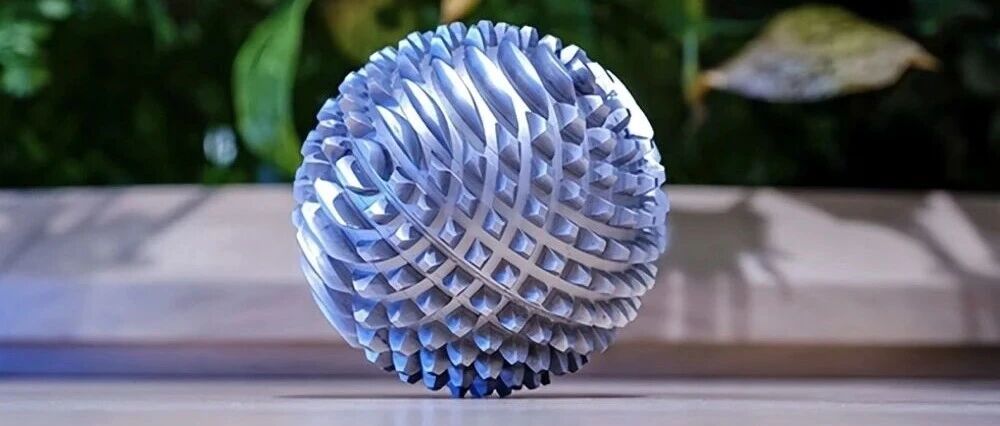
日企将全球首次量产球形齿轮
日经中文网· 2025-09-15 02:56
Core Viewpoint - The article discusses the development and potential applications of a new spherical gear, which allows for 360-degree rotation in multiple directions, promising to reduce the number of components in machinery and improve efficiency in various industries [2][4][5]. Group 1: Development and Production - Kanematsu, in collaboration with Yamagata University, is set to mass-produce spherical gears globally for the first time by 2027 [2]. - NISSEI, a subsidiary of Brother Industries, has established a stable production process for spherical gears and is in discussions with about three companies to promote their adoption in industrial and precision equipment [4]. - Kanematsu has obtained exclusive rights to produce and sell spherical gears from Yamagata University and has signed a sub-license agreement with NISSEI for production and sales [4]. Group 2: Technical Advantages - Spherical gears consist of three components, allowing for a significant reduction in the number of parts needed for machinery, which can lead to lighter and more efficient designs [5]. - The transition from resin to metal materials for spherical gears has greatly enhanced their durability, making them suitable for industrial applications [4]. Group 3: Potential Applications - Spherical gears are expected to be used in humanoid robots, enabling more human-like movements, and in drones for 360-degree camera installations [7]. - In space applications, spherical gears could improve energy efficiency and reduce failure risks, particularly in solar panels for satellites [7]. - The gears may also find applications in the chemical and pharmaceutical research sectors, allowing for precise control of rotation speed and direction [7]. Group 4: Market Outlook - The global gear market is projected to reach $222.1 billion by 2025, with a 32% growth expected by 2030, driven by increased demand in automotive components and wind power generation [7]. - Kanematsu and NISSEI are currently focused on developing gears for various applications, but there may be production capacity challenges if demand expands into larger markets like automotive transmission systems [8].