瑞昌黑芝麻

Search documents
“金名片” 培育近万亿元“大产业”
Xin Lang Cai Jing· 2026-01-29 18:45
Core Insights - The geographical indication (GI) products in China have reached an annual output value close to 1 trillion yuan, marking five consecutive years of growth [1] - By the end of October 2025, China will have recognized a total of 5,066 GI products and approved over 52,000 entities to use GI special marks [1] Group 1: Brand Effect - GI certification provides a national "identity card" for local products, protecting brands and helping them access broader markets [1] - The brand value of "Zengcheng Simao Rice" in Guangdong has exceeded 5 billion yuan, with over 150 GI-related trademarks registered in the province [2] Group 2: Technology-Driven - Various regions are leveraging technology to enhance GI products, including mechanized sowing, green planting techniques, and smart production lines [3] - The "Ruichang Black Sesame" in Jiangxi has implemented a "technology courtyard" in collaboration with agricultural experts to improve yield and develop innovative products [3] Group 3: Expanding Beyond Raw Materials - Regions are moving from merely selling raw materials to extending the industrial chain, integrating cultural tourism and deep processing to create higher added value [4] - For instance, "Baoshan Small Grain Coffee" in Yunnan has developed coffee estates and processing workshops, promoting a "coffee + cultural tourism" model [4] Group 4: Economic Development - GI products are recognized as a "golden business card" for distinctive industries, effectively contributing to regional economic development [5] - The National Intellectual Property Administration plans to establish national GI protection demonstration zones and implement strategies to promote trademark branding and GI utilization [5]
地理标志“金名片”培育近万亿元“大产业”
Xin Lang Cai Jing· 2026-01-23 22:57
Core Insights - The geographical indication (GI) products in China have reached an annual output value close to 1 trillion yuan, marking five consecutive years of growth [1] - By the end of October 2025, China is expected to have recognized a total of 5,066 GI products and approved over 52,000 entities to use GI special marks [1] Group 1: Brand Development - The brand value of "Zengcheng Simao Rice" in Guangzhou has exceeded 5 billion yuan, showcasing the potential of GI products to transform local specialties into major brands [2] - More than 150 GI products have been registered as certification and collective trademarks in Guangdong province, facilitating their entry into markets across the Guangdong-Hong Kong-Macao Greater Bay Area and beyond [2] Group 2: Technological Innovation - Various regions are leveraging technology to enhance GI products, with advancements such as mechanized sowing, green planting techniques, and smart production lines improving efficiency and sustainability [3] - The establishment of "technology courtyards" and digital management systems in regions like Ruichang City and West Lake Dragon Well is driving modernization and traceability in production processes [3] Group 3: Value Chain Expansion - Many regions are moving beyond merely selling raw materials to extending their value chains through integration with tourism, deep processing, and cross-industry innovation [4] - For instance, the "Baoshan Small Grain Coffee" GI product in Yunnan has led to the development of coffee estates and processing workshops, promoting a "coffee + tourism" model [4] - The "Enshi Potato" in Hubei has diversified into high-end raw materials, while Fujian's "Fuding White Tea" has introduced innovative product combinations to meet new consumer demands [4]
五连增!地理标志“金名片”培育近万亿元“大产业”
Zhong Guo Jin Rong Xin Xi Wang· 2026-01-23 12:19
Core Insights - China's geographical indication products have reached an annual output value close to 1 trillion yuan, marking five consecutive years of growth [1] - By the end of 2025, China is expected to have recognized 5,066 geographical indication products and approved over 52,000 entities to use geographical indication trademarks [1] Group 1: Brand Effect - Geographical indication certification provides a national "identity card" for local products, protecting brands and helping them access broader markets [1] - The brand value of "Zengcheng Simao Rice" has exceeded 5 billion yuan, showcasing the potential of geographical indication products [2] Group 2: Technological Innovation - Various regions are leveraging technology to enhance geographical indication products, including mechanized sowing, green planting techniques, and smart production lines [3] - The "Ruichang Black Sesame" production process has become increasingly technology-driven, with collaborations for scientific breeding and innovative product development [3] Group 3: Industry Chain Expansion - Regions are moving beyond merely selling raw materials to extending into the entire industry chain, creating higher added value through integration with tourism and deep processing [4] - The "Baoshan Small Grain Coffee" geographical indication product has led to the development of coffee estates and processing workshops, promoting a "coffee + tourism" model [4] - The "Enshi Potato" has diversified into high-end raw materials, while "Fuding White Tea" companies have introduced new product combinations to meet changing consumer demands [4]
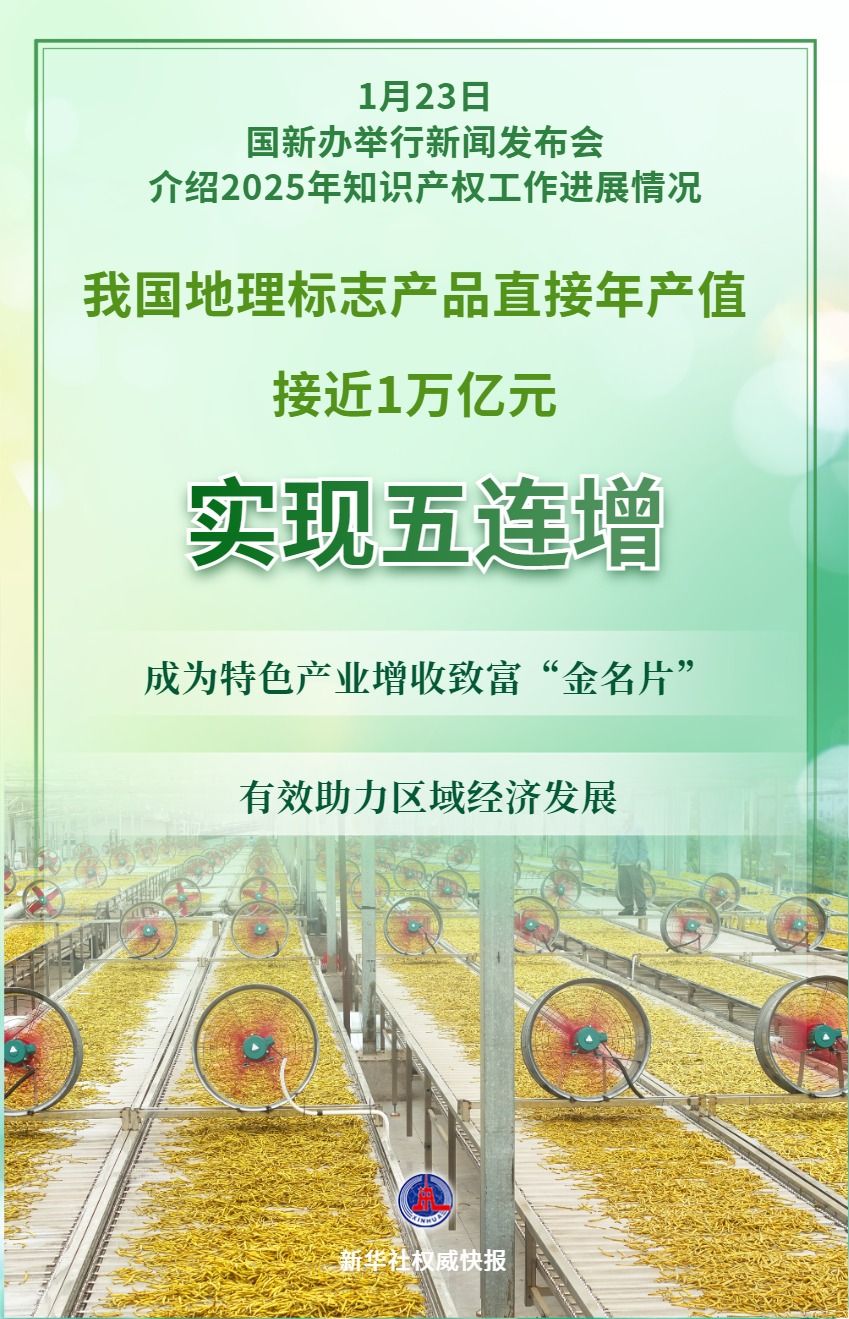
新华鲜报|五连增!地理标志“金名片”培育近万亿元“大产业”
Xin Hua She· 2026-01-23 12:17
Core Insights - The geographical indication (GI) products in China have reached an annual output value close to 1 trillion yuan, marking five consecutive years of growth [1] - By the end of October 2025, China is expected to have recognized a total of 5,066 GI products and approved over 52,000 entities to use GI special marks [1] Group 1: Brand Development - GI products are defined as those whose quality, reputation, or other characteristics are essentially determined by their geographical origin [3] - The certification of GI products provides a national "identity card" that protects brands and helps them access broader markets [3] Group 2: Economic Impact - The brand value of "Zengcheng Simao Rice" in Guangzhou has exceeded 5 billion yuan, showcasing the economic potential of GI products [4] - In Guangdong province, over 150 GI products have been registered as certification and collective trademarks, facilitating their entry into markets across the Greater Bay Area and beyond [4] Group 3: Technological Advancements - Various regions are leveraging technology to enhance GI products, including mechanized sowing, green planting techniques, and smart production lines [6] - The establishment of "technology courtyards" and digital management systems in GI product areas is driving modernization and efficiency [6] Group 4: Industry Chain Expansion - Regions are moving beyond merely selling raw materials to extending their industry chains through integration with tourism, deep processing, and cross-industry innovation [7] - Examples include the development of coffee processing workshops in Yunnan and diversified products derived from "Enshi potatoes" in Hubei [9]

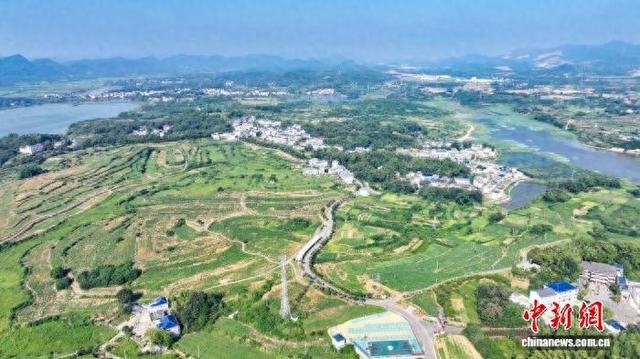
土特产有了“科技范” 江西瑞昌推动特色农产品转型升级
Zhong Guo Xin Wen Wang· 2025-08-12 12:42
Core Insights - The article highlights the successful cultivation of black sesame in Ruichang City, Jiangxi Province, emphasizing the region's unique environmental advantages and the establishment of standardized planting and production bases for black sesame [1][5]. Group 1: Agricultural Practices - The black sesame cultivation utilizes a "rapeseed-sesame rotation" model to enhance land utilization efficiency after harvesting rapeseed [1]. - The cultivation focuses on high-yield and disease-resistant varieties, specifically the local old variety and the Gan Zhi 14, with the first batch expected to be harvested next month [3]. Group 2: Economic Impact - The establishment of the black sesame technology center and the creation of a public brand for agricultural products have contributed to increased agricultural efficiency and farmer income [1][5]. - The collaboration with local research institutions and universities aims to improve the yield and disease resistance of black sesame, thereby enhancing the overall quality of the industry [3]. Group 3: Community Involvement - The harvesting process involves local villagers, who are employed during the sesame harvest season, thus providing additional income opportunities for the community [3].