
西湖龙井

Search documents
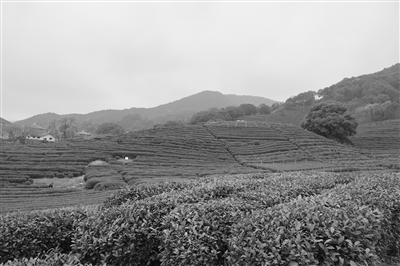
西湖龙井预计3月中旬零星开采
Mei Ri Shang Bao· 2026-02-26 22:18
Core Insights - The West Lake Longjing tea trees are approaching the harvesting period as they enter the growth phase after winter [2][3] - The growth of the tea buds is closely linked to temperature, with an average daily temperature of over 10°C required for the buds to enter the rapid growth stage [2] - The expected harvesting time for the West Lake Longjing tea is anticipated to be earlier than last year, around mid-March [3] Group 1 - The tea trees in the Longwu Tea Mountain are showing signs of growth, with small buds visible, indicating the approach of the harvesting season [2] - The tea buds are currently in the "dormant phase," and will only begin to grow rapidly once the temperature conditions are met [2] - The recent warm weather has been beneficial for the tea farmers, although the tea buds have not yet reached the necessary conditions for harvesting [2] Group 2 - A slight drop in temperature is expected around March 8, which may delay the growth of the tea buds, but extreme weather is not anticipated to cause frost damage [3] - The tea farmer expresses confidence in the quality of this year's West Lake Longjing tea due to favorable winter conditions, including snowfall that has allowed for better nutrient accumulation [3] - The expected effective accumulated temperature suggests that the tea will enter the rapid growth phase after March 10 [3]

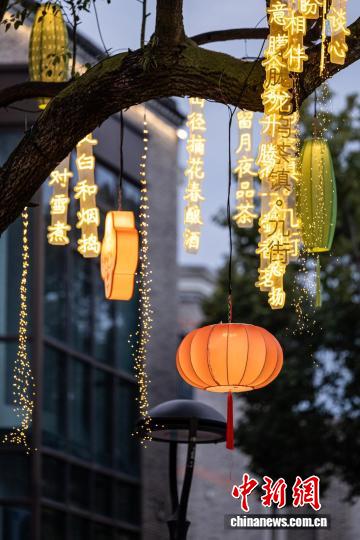
杭州龙坞茶镇:千盏祥龙花灯照茶田
Zhong Guo Xin Wen Wang· 2026-02-25 00:44
Group 1 - The lantern festival in Longwu Tea Town, Hangzhou, Zhejiang Province, creates a vibrant atmosphere with thousands of lanterns illuminating the area during the Spring Festival [1][6] - Longwu Tea Town is known as the largest production area of West Lake Longjing tea, surrounded by mountains and tea gardens, earning the nickname "Ten Thousand Loads of Tea Town" [3] - The festival features two giant dragon-shaped lanterns, showcasing the unique cultural heritage of the region and the craftsmanship of the West Lake Cultural Tourism Group [3][4] Group 2 - The main entrance of the festival features a striking "Dragon Rising Tea Town" lantern, designed to resemble a dragon with golden scales, symbolizing prosperity and vitality [4][7] - The festival offers a unique experience by integrating tea culture with the lantern display, allowing visitors to enjoy tea while admiring the lanterns, promoting a poetic and leisurely lifestyle [6] - The lantern festival will continue until the 15th day of the first lunar month, providing an extended opportunity for visitors to engage with the festivities [6]
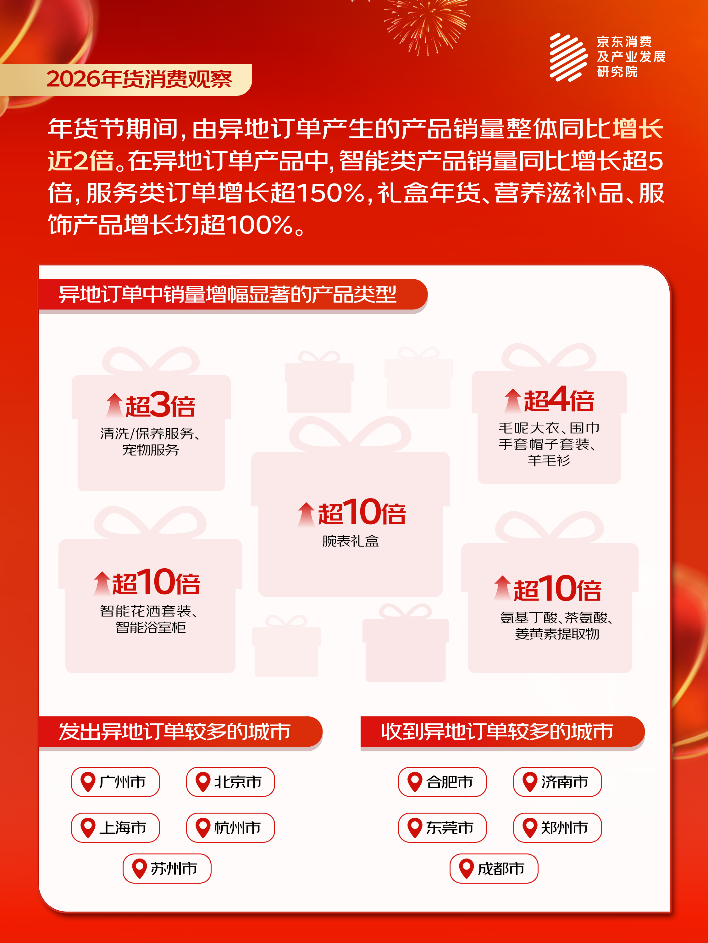
京东消费观察看“流动的年货”:异地年货订单同比增长近2倍,合肥、济南、东莞等地收到更多外省包裹
Zhong Jin Zai Xian· 2026-02-11 09:22
Core Insights - The article highlights the significant increase in cross-regional orders for traditional Chinese New Year goods, with overall sales growth of nearly 200% since the start of the festival season [4][6] - The trend reflects a shift in consumer behavior, where younger generations are sending not only traditional foods but also modern products and services to their families, indicating a blend of cultural heritage and contemporary lifestyle [2][8] Group 1: Cross-Regional Order Trends - Cross-regional orders have seen a nearly 200% increase in product sales, with specific regions like Tibet, Xinjiang, and Yunnan experiencing over 300% growth in order volume [4][6] - Major cities such as Guangzhou, Beijing, and Shanghai are the primary sources of these orders, while cities like Hefei, Jinan, and Zhengzhou are the main recipients [6][9] Group 2: Product Categories and Consumer Preferences - The diversity of products in cross-regional orders has expanded from traditional foods to include smart products and health supplements, with smart toilets and watch gift boxes seeing sales growth exceeding 1000% [2][8] - Local specialties have also gained traction, with overall sales growth of over 140%, particularly in Zhejiang, which saw a 571% increase [9][12] Group 3: Consumer Motivations and Cultural Significance - Consumers prioritize unique flavors and authenticity when selecting local specialties, with 56.6% emphasizing the importance of "authentic taste" [3][11] - The emotional connection to traditional foods and the desire to share these experiences with family are significant motivators for purchasing [15]

一份特色茶产品背后的文化消费升级密码
Xin Lang Cai Jing· 2026-02-01 01:44
Group 1 - The core idea of the articles emphasizes the cultural empowerment of tea, transforming it into a valuable commodity through innovative experiences and culinary integration [2][4][6] - In Fujian, the "Xiehui Tea Culture Museum" offers a unique menu that combines tea with various dishes, enhancing the dining experience and allowing consumers to engage with tea culture [2][3] - A survey indicates that 72% of respondents are willing to pay 20% more for brands with rich cultural connotations, highlighting the importance of cultural depth in branding [2] Group 2 - The integration of tea culture into modern lifestyles is evident in various innovative business models, such as "non-heritage tea spaces" and tea-themed cafes, which enhance consumer experiences [4][6] - In Yunnan, a tea-making experience center allows visitors to actively participate in the tea production process, fulfilling a deeper consumer desire for engagement and personal connection to the product [3][5] - The new tea beverage market is thriving, particularly among younger consumers, who are drawn to modern, stylish interpretations of traditional tea, blending it with contemporary flavors and cultural elements [6]
人文经济激活消费新动能丨一份特色茶产品背后的文化消费升级密码
Xin Hua Wang· 2026-01-31 10:54
Group 1 - The article highlights the cultural consumption upgrade in the tea industry, showcasing how traditional tea products are being integrated into modern lifestyles and consumer experiences [1][2]. - Innovative tea and food pairings, such as the "tea + meal" concept, are gaining popularity, with 72% of surveyed consumers willing to pay 20% more for culturally rich brands [2][3]. - The integration of tea culture into various consumer experiences, such as hands-on tea-making workshops, is enhancing consumer engagement and driving sales [3][4]. Group 2 - The new tea beverage market is thriving, particularly among younger consumers who are drawn to modern, stylish interpretations of traditional tea [7][8]. - The supply of base tea materials from Fujian is significant, with over 160,000 tons provided in 2023, accounting for more than half of the national supply, supporting innovation in new tea drinks [7][8]. - The tea industry is evolving through cultural integration, with brands leveraging unique cultural elements to differentiate themselves and avoid homogenization in the market [7][8].
“金名片” 培育近万亿元“大产业”
Xin Lang Cai Jing· 2026-01-29 18:45
Core Insights - The geographical indication (GI) products in China have reached an annual output value close to 1 trillion yuan, marking five consecutive years of growth [1] - By the end of October 2025, China will have recognized a total of 5,066 GI products and approved over 52,000 entities to use GI special marks [1] Group 1: Brand Effect - GI certification provides a national "identity card" for local products, protecting brands and helping them access broader markets [1] - The brand value of "Zengcheng Simao Rice" in Guangdong has exceeded 5 billion yuan, with over 150 GI-related trademarks registered in the province [2] Group 2: Technology-Driven - Various regions are leveraging technology to enhance GI products, including mechanized sowing, green planting techniques, and smart production lines [3] - The "Ruichang Black Sesame" in Jiangxi has implemented a "technology courtyard" in collaboration with agricultural experts to improve yield and develop innovative products [3] Group 3: Expanding Beyond Raw Materials - Regions are moving from merely selling raw materials to extending the industrial chain, integrating cultural tourism and deep processing to create higher added value [4] - For instance, "Baoshan Small Grain Coffee" in Yunnan has developed coffee estates and processing workshops, promoting a "coffee + cultural tourism" model [4] Group 4: Economic Development - GI products are recognized as a "golden business card" for distinctive industries, effectively contributing to regional economic development [5] - The National Intellectual Property Administration plans to establish national GI protection demonstration zones and implement strategies to promote trademark branding and GI utilization [5]
武林广场将变身“年味聚集地”
Hang Zhou Ri Bao· 2026-01-28 02:33
Group 1 - The event "Drunken Memory of Hangzhou Fresh - Common Prosperity Welcoming New Year" will take place from January 30 to February 1, 2026, at Wulin Square in Gongshu District, aiming to boost consumption and expand domestic demand [1] - The market will feature over 100 specialty stalls, providing a one-stop experience for traditional Hangzhou New Year flavors, and is part of the annual initiative to deepen the development of the municipal agricultural product public brand "Drunken Memory of Hangzhou Fresh" [1] Group 2 - The market is organized into four main themed exhibition areas and two special zones, catering to the New Year shopping needs of citizens and reviving old Hangzhou memories [2] - The "Traditional New Year Goods Area" will offer a variety of cured meats and dry goods, complemented by local wines, creating a festive atmosphere for stocking up [2] - The "Supply and Marketing Quality Products Area" will showcase geographical indication products like West Lake Longjing tea and Lin'an mountain walnuts, along with seasonal fresh produce from local farmers [2] - The "Handmade New Year Flavor Area" will feature non-heritage representatives demonstrating traditional crafts, allowing citizens to engage in activities like paper cutting and spring couplet writing [2] - The "Current Experience Area" will provide freshly made traditional snacks and warm beverages, enhancing the festive experience [2] - A special zone called "Mom's Taste" will present over 20 enterprises offering handmade sauces and specialty snacks, highlighting women's empowerment and creativity [2] - The "Common Prosperity Workshop Area" will focus on local resources, delivering products directly from farms to tables, supporting villagers' income while providing quality New Year goods [2] - During the event, citizens can obtain limited New Year consumption vouchers at the service desk, which can be used for direct discounts at stalls [2]
本周五,来赶一场“年货市集”
Hang Zhou Ri Bao· 2026-01-26 03:37
Core Viewpoint - The "Drunken Memory of Hangzhou Fresh · Common Prosperity Welcomes the New Year" 2026 Hangzhou New Year Goods Market will take place from January 30 to February 1, featuring over 100 unique stalls showcasing traditional Hangzhou flavors and products [1] Group 1: Event Details - The market will be open daily from 10 AM to 5 PM and will be divided into four main themed exhibition areas and two special zones [1] - The "Traditional New Year Goods Area" will recreate the old Hangzhou scene of stocking up for the lunar month, featuring preserved meats, dried fish, and sauce ducks [1] - The "Supply and Marketing Quality Products Area" will highlight geographical indication products such as West Lake Longjing tea and Lin'an mountain walnuts [1] Group 2: Cultural and Culinary Highlights - The "Intangible Cultural Heritage Fun · Handmade New Year Flavor Area" will invite representatives of intangible cultural heritage to demonstrate traditional crafts like paper-cutting and sugar painting [1] - The "New Year Food Collection · On-site Experience Area" will offer traditional snacks like Hangzhou soup dumplings and Tonglu rice cakes made fresh on-site [1] - The "Mom's Taste" special zone will feature over 20 exhibiting companies showcasing products like Xiaoshan radish and Yuhang handmade rice cakes [1] Group 3: Consumer Engagement and Promotions - Citizens can follow the "Hangzhou Supply and Marketing" official WeChat account for the latest market strategies, product recommendations, and event highlights [1] - During the event, attendees can receive New Year consumption vouchers at the service desk, which can be used for direct discounts on-site (limited quantity, first come first served) [1]
地理标志“金名片”培育近万亿元“大产业”
Xin Lang Cai Jing· 2026-01-23 22:57
Core Insights - The geographical indication (GI) products in China have reached an annual output value close to 1 trillion yuan, marking five consecutive years of growth [1] - By the end of October 2025, China is expected to have recognized a total of 5,066 GI products and approved over 52,000 entities to use GI special marks [1] Group 1: Brand Development - The brand value of "Zengcheng Simao Rice" in Guangzhou has exceeded 5 billion yuan, showcasing the potential of GI products to transform local specialties into major brands [2] - More than 150 GI products have been registered as certification and collective trademarks in Guangdong province, facilitating their entry into markets across the Guangdong-Hong Kong-Macao Greater Bay Area and beyond [2] Group 2: Technological Innovation - Various regions are leveraging technology to enhance GI products, with advancements such as mechanized sowing, green planting techniques, and smart production lines improving efficiency and sustainability [3] - The establishment of "technology courtyards" and digital management systems in regions like Ruichang City and West Lake Dragon Well is driving modernization and traceability in production processes [3] Group 3: Value Chain Expansion - Many regions are moving beyond merely selling raw materials to extending their value chains through integration with tourism, deep processing, and cross-industry innovation [4] - For instance, the "Baoshan Small Grain Coffee" GI product in Yunnan has led to the development of coffee estates and processing workshops, promoting a "coffee + tourism" model [4] - The "Enshi Potato" in Hubei has diversified into high-end raw materials, while Fujian's "Fuding White Tea" has introduced innovative product combinations to meet new consumer demands [4]
五连增!地理标志“金名片”培育近万亿元“大产业”
Zhong Guo Jin Rong Xin Xi Wang· 2026-01-23 12:19
Core Insights - China's geographical indication products have reached an annual output value close to 1 trillion yuan, marking five consecutive years of growth [1] - By the end of 2025, China is expected to have recognized 5,066 geographical indication products and approved over 52,000 entities to use geographical indication trademarks [1] Group 1: Brand Effect - Geographical indication certification provides a national "identity card" for local products, protecting brands and helping them access broader markets [1] - The brand value of "Zengcheng Simao Rice" has exceeded 5 billion yuan, showcasing the potential of geographical indication products [2] Group 2: Technological Innovation - Various regions are leveraging technology to enhance geographical indication products, including mechanized sowing, green planting techniques, and smart production lines [3] - The "Ruichang Black Sesame" production process has become increasingly technology-driven, with collaborations for scientific breeding and innovative product development [3] Group 3: Industry Chain Expansion - Regions are moving beyond merely selling raw materials to extending into the entire industry chain, creating higher added value through integration with tourism and deep processing [4] - The "Baoshan Small Grain Coffee" geographical indication product has led to the development of coffee estates and processing workshops, promoting a "coffee + tourism" model [4] - The "Enshi Potato" has diversified into high-end raw materials, while "Fuding White Tea" companies have introduced new product combinations to meet changing consumer demands [4]