
生成式人工智能系统

Search documents
人工智能如何重新定义主数据管理
3 6 Ke· 2026-02-11 06:20
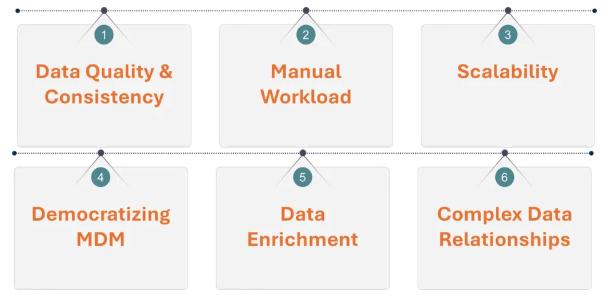
Core Insights - Master Data Management (MDM) is essential for organizations, providing shared definitions for key entities to support operations, reporting, and analysis [1] - Traditional MDM often fails to meet expectations due to slow implementation, heavy reliance on manual processes, and dependence on a few expert teams [1][2] - Generative AI is set to transform MDM by introducing context, pattern recognition, and automation, making data management more adaptive and scalable [1][4] Need for Evolution - The environment in which MDM was originally designed has changed significantly, with larger data volumes, more diverse data sources, and faster change rates, making traditional MDM inadequate [2][4] Challenges in Traditional MDM - Data quality and consistency are foundational but increasingly difficult to maintain in a complex ecosystem with diverse data sources [4] - Manual workloads dominate data management tasks, slowing down processes and tying scalability to human resources [4] - Traditional MDM platforms struggle with scalability as data volumes grow, impacting governance and integrity [4] - Access to master data is often limited to experts, hindering collaboration and distancing business teams from the data they rely on [4] - Enriching master data with external sources can create value but is often costly and slow to implement at scale [4] - Complex relationships between entities are difficult to represent and maintain in traditional MDM models [4] Enhancements through Generative AI - Generative AI enhances core MDM functions by introducing context, learning, and automation, shifting reliance from manual operations to intelligent processes [5][7] - Intelligent management reduces manual review by prioritizing queues and suggesting solutions, thus shortening resolution cycles [7] - Context-based standardization allows for more meaningful data normalization, moving beyond fixed rules to incorporate real-world context [7] - Smart matching without fixed thresholds improves accuracy by using semantic comparisons rather than rigid scoring models [7][8] Improved Decision-Making and Data Quality - Generative AI enables more intelligent survival decisions by evaluating data quality signals and context to determine the most reliable values [8] - Context-aware data quality management identifies semantic errors that traditional rule-based checks might miss, allowing for earlier detection of quality issues [8][10] Core Functions of Generative AI in MDM - Generative AI strengthens data quality, management, and governance, enhancing daily MDM execution without altering its fundamental responsibilities [9] - It improves data quality and validation by addressing context-related issues that traditional MDM struggles to resolve [10] - Core entity identification and golden record creation are enhanced through natural language processing and pattern recognition, improving accuracy in identifying duplicates and relationships [12] - Governance execution is improved as Generative AI helps MDM understand context, ensuring compliance with internal policies and external regulations [14][16] Use Cases for Generative AI in MDM - Generative AI can automatically enrich master data by sourcing missing information from trusted external sources [19] - It checks data values for contextual reasonableness, enhancing data validation processes [19] - Context-aware standardization allows for the recognition of synonymous terms, improving data consistency [19] - Automated compliance monitoring helps detect regulatory violations by comparing master data against known lists [19] - Generative AI can identify relationships between entities, detect anomalies, and suggest corrections, enhancing overall data integrity [20] Integration of Generative AI into MDM - Generative AI can be integrated throughout the MDM lifecycle, from data collection to management and publication, ensuring data quality and governance are addressed early [24][26] - It operates as an additional layer on top of existing MDM systems, enhancing daily operations without changing the core principles of MDM [26] Market Trends and Future Directions - Organizations are increasingly adopting Generative AI in a practical manner, often through pilot projects that demonstrate value before scaling [27] - Some companies are fundamentally redesigning MDM to integrate AI at its core, moving beyond mere enhancements to create a more intelligent system [28] - The use of knowledge graphs and industry standards is becoming more prevalent to support interoperability and richer data exchanges [29] Conclusion - Generative AI is set to revolutionize MDM by making processes faster, more automated, and less reliant on manual oversight, ultimately transforming the user experience and enhancing decision-making capabilities [30]

马斯克旗下AI聊天机器人将进驻美国防部
Yang Shi Xin Wen· 2026-01-14 21:17
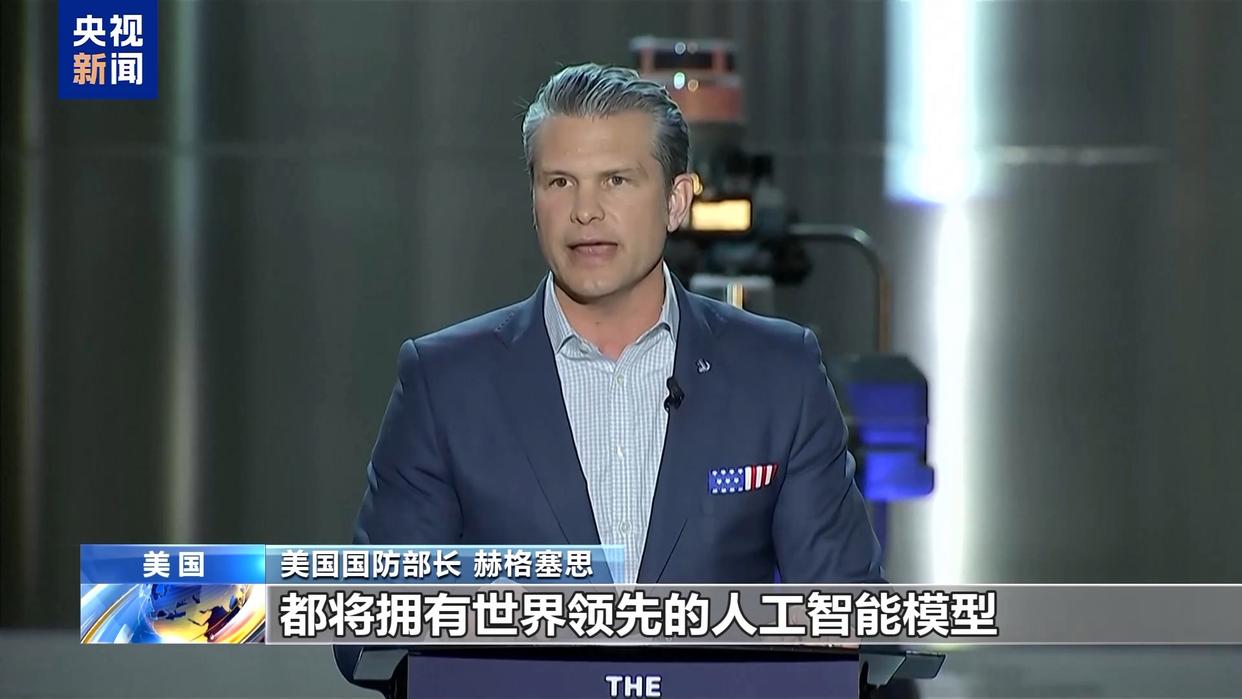
Group 1 - The U.S. Department of Defense plans to integrate Elon Musk's AI chatbot "Grok" into its networks alongside Google's generative AI systems [1][4] - The introduction of AI systems is seen as a method for the Pentagon to reduce costs and improve efficiency, although caution is advised regarding the potential for sensitive information leaks and inaccuracies in AI outputs [9] - The boundaries between U.S. tech companies and defense contractors are becoming increasingly blurred, with companies like Anduril, Palantir, and Shield AI competing for lucrative new defense contracts [11] Group 2 - Concerns have been raised by netizens regarding the militarization of AI, with some criticizing the implications of AI systems potentially handling sensitive military tasks [5][7] - There are fears that the deployment of AI could lead to a scenario where an army of AI soldiers takes on dangerous tasks, raising ethical and operational concerns [7]

特朗普政府重新接纳马斯克?美防长回应
Xin Jing Bao· 2026-01-13 07:17
Group 1 - The core point of the article highlights the meeting between Hegseth and Musk, indicating a sign of the Trump administration's renewed acceptance of Musk [1] - Hegseth announced that Musk's AI chatbot "Grok" will be introduced into the Pentagon's network, suggesting a collaboration between Musk's technology and the U.S. Department of Defense [1] - "Grok" is set to operate alongside Google's generative AI system within the U.S. Department of Defense, indicating a significant integration of advanced AI technologies in military operations [1]
17个新职业折射经济运行两重“新”意
Zheng Quan Ri Bao· 2025-07-24 16:13
Group 1 - The Ministry of Human Resources and Social Security has officially released the seventh batch of new occupations, including 17 new professions such as cross-border e-commerce operation manager and drone swarm flight planner, along with 42 new job types [1][2] - Since 2019, the Ministry has cumulatively published 110 new occupations, reflecting the evolving nature of "profession" and attracting a diverse workforce, while also indicating two aspects of economic renewal [1][3] - The first aspect of economic renewal is the accelerated cultivation and growth of new productive forces, with rapid technological advancements and the emergence of new industries, as evidenced by R&D expenditure reaching approximately 2.7% of GDP, surpassing the EU average [1][2] Group 2 - The rapid development of artificial intelligence is highlighted by the introduction of new job types such as "generative AI system tester" and "generative AI animation creator," showcasing the technology's impact across various sectors [2] - Emerging industries are thriving, with strategic emerging service enterprises reporting nearly 10% revenue growth in the first five months of the year, driven by innovation and industry integration [2] - The second aspect of economic renewal is the rise of new consumption patterns characterized by personalized and diversified consumption, reflecting structural changes in consumption content, scenarios, and philosophies [2][3]