生成式人工智能(AIGC)

Search documents
面向产业的算法治理研究(2025年)
Sou Hu Cai Jing· 2026-02-11 12:13
Core Insights - The report emphasizes the need for a trustworthy algorithm governance system that transitions from compliance-driven to trust-driven approaches, addressing issues such as algorithmic "black boxes," data misuse, and discrimination [1][10][11]. Group 1: Algorithm Overview - Algorithms are becoming a core production factor in the digital economy, reshaping industry forms, labor relations, and social governance [9][15]. - The integration of deep learning algorithms with advanced production factors is driving the development of new productive forces, showcasing significant potential for industrial upgrades and high-quality digital economic growth [15][16]. Group 2: Global Algorithm Regulation - China focuses on comprehensive lifecycle governance, emphasizing personal information protection and user rights through regulations like the Personal Information Protection Law and the Internet Information Service Algorithm Recommendation Management Regulations [23][25]. - The U.S. prioritizes innovation while ensuring individual empowerment and public power constraints, with laws like the Anti-Robot Boss Act and the Preventing Addictive Content Exploitation of Children Act [26][27]. - The EU builds a strong regulatory compliance framework centered on rights, with laws such as the General Data Protection Regulation and the Digital Services Act, ensuring transparency and user rights [28][30]. Group 3: Algorithm Governance Framework - The governance framework consists of three pillars: technology, rules, and platforms, focusing on transparency, information protection, fairness, and content security [10][11][22]. - The report advocates for a shift from a compliance-driven approach to a user-driven trustworthy algorithm practice system, balancing efficiency and fairness [21][22]. Group 4: Challenges in Algorithm Governance - The report identifies multiple challenges in algorithm governance, including the lack of transparency in decision-making processes, privacy risks, and the potential for reinforcing social biases [18][19]. - It highlights the need for a multi-stakeholder governance model that includes government, industry, and public participation to address these challenges effectively [19][31].


大模型在会计行业的应用仍处于技术导入期
Xin Hua Cai Jing· 2025-05-25 11:42
Core Insights - The forum hosted by Shanghai National Accounting Institute revealed the top ten information technologies impacting the Chinese accounting industry by 2025, with AI general models ranking first and multimodal data analysis making its debut [1][2] - The five potential impact technologies identified include generative AI (AIGC), financial multimodal vertical models, AI agents, digital employees with intelligent scheduling management, and the integration of finance, taxation, and data [1][2] - The rapid evolution of information technology and the proactive adoption of new technologies by accounting professionals indicate a significant shift in the industry [1][3] Group 1: Current and Potential Technologies - AI general models are currently in the technology introduction phase within the accounting sector, but their disruptive potential is widely recognized by experts and the public [1][2] - Multimodal models are reshaping the entire financial management process by integrating structured and unstructured data [2] - The application of AI technology in the medical sector illustrates the need for balancing safety and ethics, emphasizing the importance of human intervention in intelligent decision-making [2] Group 2: Industry Transformation and Challenges - The emergence of new AI models like DeepSeek is accelerating the digital transformation of the accounting industry, shifting financial functions from traditional accounting to strategic empowerment [2][3] - Financial digital employees are transitioning from pilot testing to large-scale implementation, indicating a significant evolution in the accounting profession [2] - The integration of advanced technologies necessitates a recognition that machines cannot replace human business insight, highlighting the importance of a collaborative future between humans and machines [2]
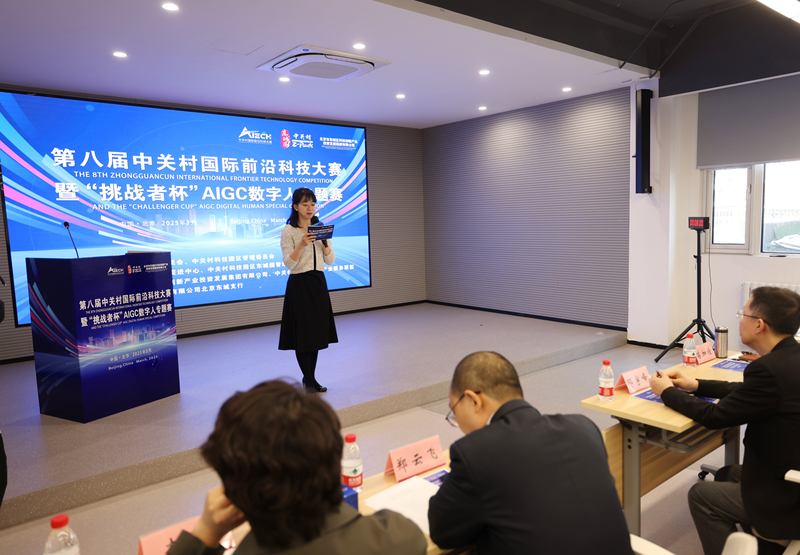
生成式人工智能数字人专题赛走进中关村东城园
Xin Jing Bao· 2025-03-25 12:07
Core Insights - The eighth Zhongguancun International Frontier Technology Competition and "Challenger Cup" AIGC (Generative Artificial Intelligence) Digital Human Special Competition commenced on March 25, featuring 14 participating projects, with six high-quality enterprises successfully advancing [1][2] Group 1: Event Overview - The competition is organized by the Beijing Municipal Science and Technology Commission and the Zhongguancun Science Park Management Committee, with support from various local organizations [1] - The event aims to discover emerging technological forces and high-quality growth projects in the AIGC sector, providing tailored services for enterprises settling in the East City [2] Group 2: Competition Details - A global call for quality projects was made, with initial evaluations conducted through online assessments, leading to 14 projects advancing after comprehensive evaluation by five experts [2] - The competition atmosphere was described as tense and lively, with projects presenting and responding to expert questions, culminating in six enterprises being recognized in the AIGC digital human field's top three [2] Group 3: Industry Context - The East City Park is positioned as a core innovation hub within the Zhongguancun Science Park, focusing on cultural empowerment, technological innovation, and corporate headquarters [4] - The rapid development of AIGC is reshaping global industrial patterns, impacting areas from intelligent customer service to supply chain optimization, indicating a significant productivity revolution [2]