
生成式AI BOX

Search documents
智微智能(001339):智联网整体解决方案提供商,强化AI算力服务能力
Hua Yuan Zheng Quan· 2026-03-13 09:11
Investment Rating - The report assigns an "Accumulate" rating for the company, marking its first coverage in the market [5][7]. Core Insights - The company, Zhiwei Intelligent, is a leading provider of intelligent network hardware products and solutions, focusing on AI computing service capabilities and a comprehensive ability system covering multiple application scenarios [6][10]. - The report highlights the significant growth in AI computing demand, which is driving a new capital expenditure cycle for global cloud service providers (CSPs), with expected capital expenditure growth rates of 65% in 2025 and around 40% in 2026 [10][35]. - The company is actively enhancing its AI computing service capabilities, offering a full range of services from planning and design to equipment delivery and operational optimization [10][58]. Summary by Sections Financial Performance - The company is projected to achieve revenues of RMB 4,547 million in 2025, with a year-on-year growth rate of 12.72%, and further increase to RMB 5,163 million in 2026 [5][74]. - The net profit attributable to shareholders is expected to reach RMB 217 million in 2025, with a significant growth of 74.08%, and RMB 458 million in 2026, reflecting a growth of 110.74% [5][74]. - The earnings per share (EPS) is forecasted to be RMB 0.86 in 2025 and RMB 1.82 in 2026, with corresponding price-to-earnings (P/E) ratios of 87.62 and 41.58 [5][74]. Business Segments - The company operates in four core business segments: Industry Terminals, ICT Infrastructure, Industrial IoT, and Intelligent Computing, with a strong focus on AI applications [6][14]. - The Industry Terminals segment is expected to grow at a rate of 4% to 5% from 2025 to 2027, generating revenues of RMB 27.01 million to RMB 29.63 million [8][75]. - The ICT Infrastructure segment is projected to see revenue growth of 2% to 4%, reaching RMB 6.44 million to RMB 6.90 million [8][75]. - The Industrial IoT segment is anticipated to grow significantly at rates of 30% to 40%, with revenues expected to reach RMB 2.12 million to RMB 3.71 million [8][75]. - The Intelligent Computing segment is forecasted to experience explosive growth, with revenue projections of RMB 6.23 million to RMB 13.93 million, reflecting growth rates of 107% to 38% [9][75]. Market Trends - The report emphasizes the increasing capital expenditures by major CSPs, with significant investments planned by companies like Google, Meta, and Amazon to enhance their AI capabilities and infrastructure [35][39]. - The domestic market is also witnessing a similar trend, with companies like Alibaba and Tencent ramping up their capital expenditures to support cloud and AI infrastructure [39][41]. - The demand for AI servers is expected to grow rapidly, with the global market projected to reach USD 158.7 billion by 2025, indicating a robust growth trajectory [48][50].
智微智能的前世今生:2025年三季度营收29.73亿元行业排第9,净利润2.42亿元行业排第10
Xin Lang Cai Jing· 2025-10-31 00:00
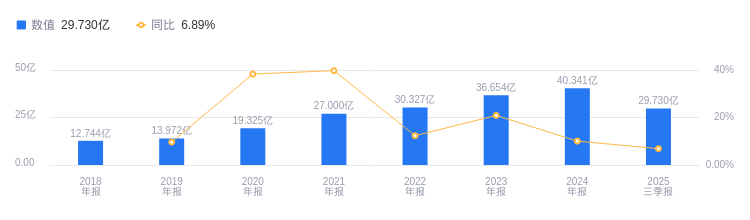
Core Viewpoint - Zhimi Intelligent, established in 2011 and listed in 2022, focuses on AI infrastructure, edge computing, and IoT, with applications in education, finance, and healthcare [1] Financial Performance - For Q3 2025, Zhimi Intelligent reported revenue of 2.973 billion yuan, ranking 9th in the industry, with a year-on-year growth of 6.89% [2][6][7] - The net profit for the same period was 242 million yuan, ranking 10th in the industry, with a year-on-year increase of 59.3% [2][6][7] - The main business segments include terminal products (1.043 billion yuan, 53.57%), ICT infrastructure (307 million yuan, 15.78%), intelligent computing (298 million yuan, 15.31%), and industrial IoT (145 million yuan, 7.46%) [2] Profitability and Debt - As of Q3 2025, the asset-liability ratio was 57.49%, higher than the industry average of 34.38% [3] - The gross profit margin was 22.32%, which is below the industry average of 34.46% but improved from 17.76% in the previous year [3] Shareholder Information - As of September 30, 2025, the number of A-share shareholders increased by 27.30% to 48,800, with an average holding of 2,442.64 shares [5] - Major shareholders include Hong Kong Central Clearing Limited and various mutual funds, with some changes in holdings compared to the previous period [5] Business Highlights - The subsidiary Tengyun Zhican achieved revenue of 298 million yuan in H1 2025, focusing on AIGC lifecycle services [6] - New product launches include the HAT computing rental cloud platform and the Edge AI Box product series [6][7] - Significant progress was made in humanoid robotics with key clients [6][7] Future Projections - Revenue projections for 2025 to 2027 are 4.735 billion, 5.565 billion, and 6.454 billion yuan, respectively, with net profits expected to be 254 million, 483 million, and 716 million yuan [6][7]

智微智能前三季度净利润同比增长59.3%,机器人业务实现突破
Ju Chao Zi Xun· 2025-10-22 11:00
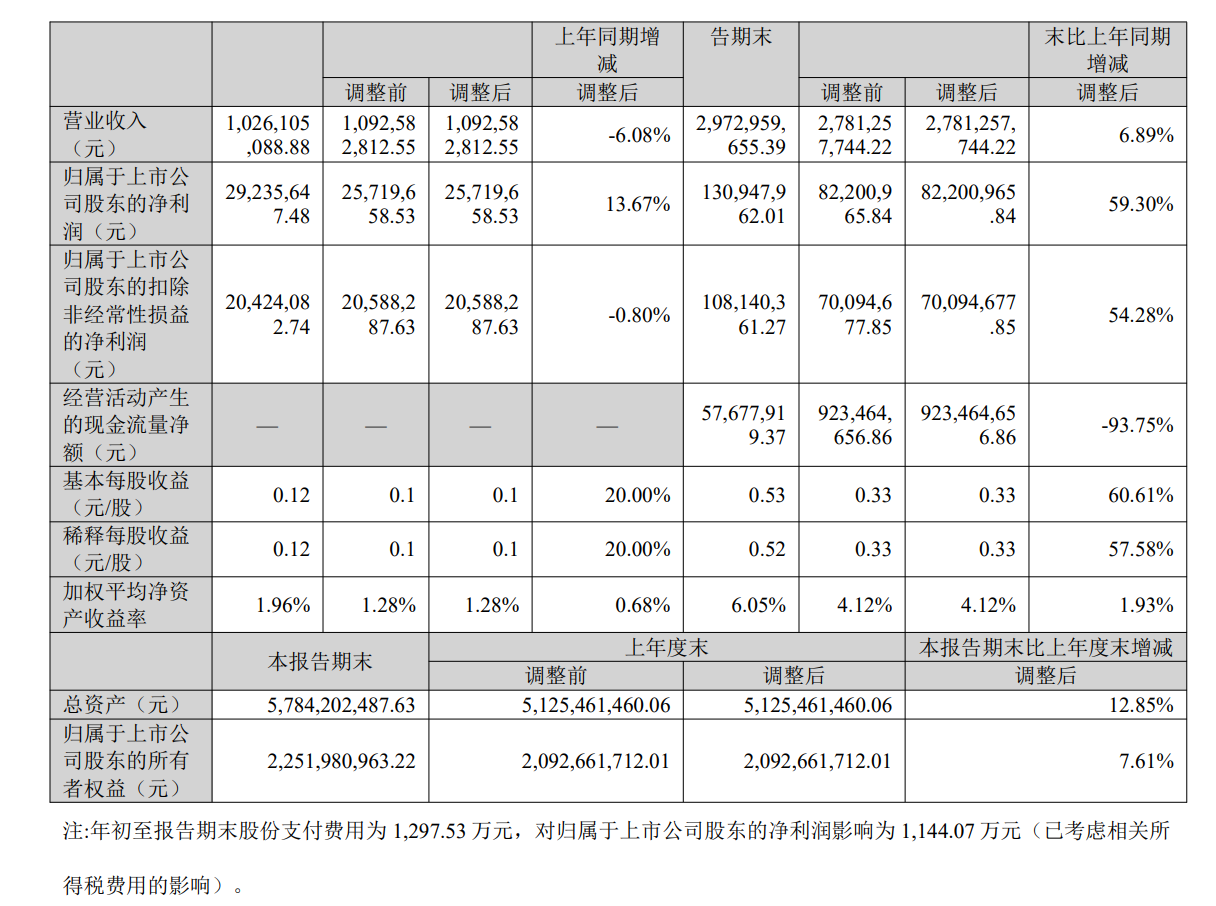
Core Viewpoint - Shenzhen Zhimi Intelligent Technology Co., Ltd. reported a decline in revenue for Q3 2025, while net profit showed growth, indicating mixed financial performance amidst strategic advancements in AI technology [1][2]. Financial Performance - Q3 revenue was 1.026 billion yuan, a decrease of 6.08% year-on-year [2]. - Net profit attributable to shareholders was 29.24 million yuan, an increase of 13.67% year-on-year [1][2]. - For the first three quarters, total revenue reached 2.973 billion yuan, up 6.89% year-on-year, while net profit attributable to shareholders was 131 million yuan, reflecting a significant increase of 59.3% [1][2]. AI and Robotics Development - The company is actively embracing AI technology, focusing on cloud, edge, and endpoint solutions in its product planning [2]. - In the cloud AI sector, Zhimi Intelligent offers comprehensive AI computing power lifecycle services and has launched the HAT computing power leasing cloud platform to address core issues such as resource scarcity and low utilization [2]. - In the edge AI domain, the company has introduced a full-stack product series using chips like NVIDIA Jetson and Rockchip [2]. - The company achieved significant progress in humanoid robotics, marking a breakthrough from 0 to 1 with its robot control systems [3].
深圳市智微智能科技股份有限公司2025年第三季度报告
Shang Hai Zheng Quan Bao· 2025-10-21 18:38
Core Viewpoint - The company reported a revenue of 2.973 billion yuan for the first three quarters of 2025, representing a year-on-year growth of 6.89%, while the net profit attributable to shareholders increased by 59.30% to 131 million yuan, indicating a strong performance despite short-term pressures from strategic adjustments and investments in innovation [3][18]. Financial Performance - The company achieved a revenue of 2.973 billion yuan in the first three quarters, with a year-on-year increase of 6.89% [3]. - The net profit attributable to shareholders reached 131 million yuan, reflecting a significant year-on-year growth of 59.30% [3]. - The company has initiated a comprehensive shift towards enhancing the contribution of high-value businesses, focusing on AI integration across cloud, edge, and endpoint sectors [3]. Strategic Initiatives - The company is actively upgrading its existing product lines and focusing resources on innovative products within core sectors, which may exert short-term pressure on performance but aims to establish a healthier and more competitive business portfolio [3]. - In the AI cloud sector, the company launched the HAT computing rental cloud platform, addressing key issues of resource scarcity and low utilization rates, with steady growth in registered users [3]. - The company introduced a full-stack product series in the edge AI sector, utilizing various chip technologies to meet diverse AI application needs [4]. Asset Impairment - The company reported a total asset impairment provision of 53.8017 million yuan as of the end of the third quarter, which will reduce the net profit attributable to shareholders by 45.6722 million yuan [19][20]. - The impairment provision includes a significant loss of 48.9257 million yuan related to inventory, which represents over 30% of the company's audited net profit from the previous fiscal year [19][20]. Shareholder Information - The company completed the repurchase and cancellation of 10,148 shares of restricted stock due to performance targets not being met [9]. - A total of 176 million shares held by major shareholders will be released from restrictions on August 15, 2025, representing approximately 69.89% of the total share capital [10]. - The company disclosed plans for share reductions by certain senior management and major shareholders, with specific timelines and amounts outlined [11].
智微智能(001339) - 2025年9月10日投资者关系活动记录表
2025-09-10 09:32
Company Overview - Shenzhen Zhimi Intelligent Technology Co., Ltd. is a leading provider of intelligent internet hardware products and solutions in China, recognized as a national high-tech enterprise and a "specialized and innovative" small giant enterprise [2][3] - The company focuses on building a robust hardware foundation for industrial digitalization, promoting intelligent internet applications across various scenarios [2][3] Business Segments - Main business areas include industry terminals (e.g., PCs, OPS, cloud terminals), ICT infrastructure (servers, switches, cybersecurity hardware), industrial IoT (robot controllers, industrial motherboards, industrial computers, AI edge devices), and intelligent computing [3][4] - The product layout meets diverse AI application needs in sectors such as AI high-performance computing, robotics, smart education, smart office, smart finance, industrial automation, and smart healthcare [3][4] Strengths in Computing Power - The company aims to be an "AIGC full lifecycle service provider," focusing on computing power planning and equipment supply, with computing power leasing as a new growth area [3][5] - As of mid-2025, the order backlog has exceeded the total for the previous year, indicating strong market competitiveness [3][5] - The HAT cloud platform, launched in April 2025, offers flexible resource scheduling and cost optimization, supporting various customer needs with a standardized computing power unit and pay-per-use model [3][5] Product Innovations - The "Zhiqing" series of robot brain domain controllers utilizes NVIDIA Jetson chips, offering AI computing options ranging from 100 TOPS to 2070 FP4 TFLOPS [4][6] - The company has established a comprehensive "end-to-end" service system covering the entire lifecycle of equipment, ensuring timely service response and reliable spare parts supply [3][5] Future Strategy - The company plans to embrace AI comprehensively, focusing on three main areas: cloud, edge, and terminal, with five product categories in development [5][6] - In the edge AI sector, the company offers integrated computing power machines with various configurations to meet diverse computing needs in professional creation, data centers, and high-performance computing clusters [6][7] - The generative AI BOX supports local deployment of models, covering large language models (LLM) and visual language models (VLM), providing robust support for complex applications [6][7]