
智联网

Search documents
信仰与突围:2026人工智能趋势前瞻
3 6 Ke· 2025-12-22 09:32
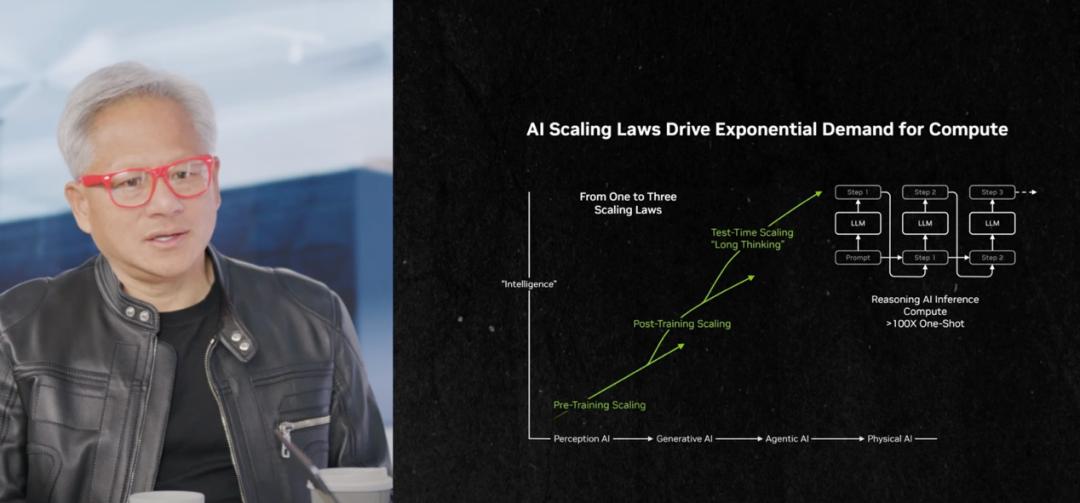
Core Insights - The AI industry is experiencing intense competition, particularly with the emergence of models like Gemini 3, prompting OpenAI to accelerate the release of GPT 5.2 to regain its competitive edge [1] - There is a growing skepticism regarding the scalability of large models, with some experts suggesting that the current scaling laws may be reaching their limits, indicating a potential shift in focus towards more innovative learning methods [2][3] - The future of AI is expected to be characterized by a combination of scaling and structural innovations, including advancements in multimodal models that could lead to significant leaps in AI capabilities [4][5] Group 1: Scaling and Innovation - The Scaling Law has been a driving force behind the evolution towards AGI, but recent trends indicate a slowdown in performance improvements, leading to questions about its long-term viability [2] - Despite criticisms, the Scaling Law remains a practical growth path, as it allows for predictable capability enhancements through increased training and data optimization [3] - The AI infrastructure in the U.S. is set to attract over $2.5 trillion in investments, with large data center projects exceeding 45 GW in capacity, reinforcing the importance of scaling in AI development [3] Group 2: Multimodal Models - The advent of multimodal models like Google's Gemini and OpenAI's Sora signifies a pivotal moment in AI, enabling deeper content understanding and the generation of diverse media formats [5] - Multimodal advancements are expected to drive a nonlinear leap in AI intelligence, as they allow for a more comprehensive understanding of the world through various sensory inputs [5][10] - The integration of multimodal capabilities could facilitate a closed-loop technology pathway for AI, enhancing its ability to perceive, decide, and act in real-world environments [10] Group 3: Research and Development - The research landscape for large models is diversifying, with numerous experimental labs emerging that focus on various aspects of AI, including safety, reliability, and multimodal collaboration [12][13] - Innovative approaches such as evolutionary AI and liquid neural networks are being explored to reduce reliance on traditional scaling methods and enhance model adaptability [13][14] - New evaluation methods are being developed to better assess AI capabilities, focusing on long-term task completion and dynamic environments rather than static benchmarks [15] Group 4: AI for Science - AI for Science (AI4S) is transitioning from academic breakthroughs to practical applications, with initiatives like DeepMind's automated research lab set to revolutionize scientific experimentation [22][23] - The U.S. government is prioritizing AI4S as a national strategy, aiming to create a nationwide AI science platform that integrates vast scientific datasets with supercomputing resources [25] - While widespread commercial adoption of AI4S may still be a few years away, significant advancements in research efficiency and automation are anticipated by 2026 [26] Group 5: AI Glasses and Consumer Electronics - AI glasses are projected to reach a critical sales milestone of 10 million units, marking a significant shift in consumer electronics towards wearable AI technology [45][47] - The success of AI glasses hinges on reducing hardware complexity and enhancing user experience, moving from traditional app-based interactions to intention-based commands [48] - The potential for AI glasses to generate vast amounts of data could lead to new algorithms and advertising models, fundamentally changing user interaction with technology [48] Group 6: AI Safety and Governance - As AI capabilities advance, safety and ethical considerations are becoming increasingly important, with a notable decline in public trust despite rising usage [50][51] - The industry is focusing on developing safety technologies and governance frameworks to ensure responsible AI deployment, with a significant portion of computational resources allocated to safety research [54] - Regulatory proposals are emerging that mandate systematic testing and monitoring of high-risk AI models, indicating a shift towards more stringent safety standards in AI development [54]



和音:共同把握信息革命发展的历史主动
Ren Min Ri Bao· 2025-11-10 07:41
Group 1 - The concept of building a community with a shared future in cyberspace, proposed by President Xi Jinping, marks its 10th anniversary this year, emphasizing global cooperation and governance in the internet space [1] - The World Internet Conference in Wuzhen showcases innovative technologies such as autonomous vehicles and AI solutions, highlighting the event's role as a platform for global dialogue and technological advancement [2] - China has been a significant contributor to global internet development and governance, actively participating in international cybersecurity processes and promoting digital cooperation [3] Group 2 - China advocates for true multilateralism in global internet governance, emphasizing equitable resource distribution and addressing complex cybersecurity threats [4] - The country promotes international collaboration through various initiatives, such as the establishment of networks for internet enterprise cooperation in Africa and forums for internet development in Latin America and ASEAN [4] - The ongoing information revolution presents opportunities for deeper international cooperation, with China committed to advancing the shared vision of a community in cyberspace [4]
在水乡乌镇,感受照耀未来的“互联网之光”
Xin Hua She· 2025-11-09 08:08
Group 1 - The 2025 World Internet Conference Wuzhen Summit is held in Wuzhen, Zhejiang from November 6 to 9, showcasing the "light of the internet" that illuminates the future [1] - The "Internet Light" Expo focuses on "AI and Knowledge Empowerment," featuring over 600 enterprises and institutions from more than 50 countries and regions [3][4] - The expo serves as a platform for demonstrating new technologies, products, and scenarios in the field of artificial intelligence, including various intelligent glasses and digital solutions that significantly enhance production efficiency [5] Group 2 - Seventeen internationally representative projects received the Leading Technology Award at the conference, covering cutting-edge fields such as large models, intelligent networks, embodied intelligence, and quantum computing [8] - The summit highlights the global tech community's shared concerns and active exploration of a digital future, marking the tenth anniversary of the concept of building a community with a shared future in cyberspace [12] - The event features discussions on the present and future of artificial intelligence, with representatives from six companies sharing insights [10]

创新成果与人才活力相互赋能 乌镇峰会搭建对接桥梁加速数智红利落地
Yang Shi Wang· 2025-11-08 02:56
Group 1 - The 2025 World Internet Conference in Wuzhen focuses on building a collaborative and secure digital future, emphasizing the importance of open cooperation in cyberspace [1] - The conference features practical activities such as the Leading Technology Award and a talent recruitment fair, showcasing advancements in global digital technology and bridging the gap between talent and industry [1][3] - The talent recruitment fair attracted over 1,100 companies and nearly 10,000 job positions, with AI-related roles like AI development engineers and senior algorithm engineers being particularly in demand [3] Group 2 - The Leading Technology Award received submissions from 34 countries and regions, with over 400 valid entries covering cutting-edge fields such as large models, intelligent networks, embodied intelligence, and quantum computing [4] - A total of 17 internationally representative projects were selected, including key technologies and applications related to the BeiDou-3 satellite navigation system and high-fidelity digital human technology driven by script-based multi-modal collaboration [4] - The Wuzhen Summit aims to empower innovation outcomes and talent vitality through diverse initiatives, facilitating the application of frontier technologies and the gathering of industry talent [6]
智微智能(001339) - 2025年9月10日投资者关系活动记录表
2025-09-10 09:32
Company Overview - Shenzhen Zhimi Intelligent Technology Co., Ltd. is a leading provider of intelligent internet hardware products and solutions in China, recognized as a national high-tech enterprise and a "specialized and innovative" small giant enterprise [2][3] - The company focuses on building a robust hardware foundation for industrial digitalization, promoting intelligent internet applications across various scenarios [2][3] Business Segments - Main business areas include industry terminals (e.g., PCs, OPS, cloud terminals), ICT infrastructure (servers, switches, cybersecurity hardware), industrial IoT (robot controllers, industrial motherboards, industrial computers, AI edge devices), and intelligent computing [3][4] - The product layout meets diverse AI application needs in sectors such as AI high-performance computing, robotics, smart education, smart office, smart finance, industrial automation, and smart healthcare [3][4] Strengths in Computing Power - The company aims to be an "AIGC full lifecycle service provider," focusing on computing power planning and equipment supply, with computing power leasing as a new growth area [3][5] - As of mid-2025, the order backlog has exceeded the total for the previous year, indicating strong market competitiveness [3][5] - The HAT cloud platform, launched in April 2025, offers flexible resource scheduling and cost optimization, supporting various customer needs with a standardized computing power unit and pay-per-use model [3][5] Product Innovations - The "Zhiqing" series of robot brain domain controllers utilizes NVIDIA Jetson chips, offering AI computing options ranging from 100 TOPS to 2070 FP4 TFLOPS [4][6] - The company has established a comprehensive "end-to-end" service system covering the entire lifecycle of equipment, ensuring timely service response and reliable spare parts supply [3][5] Future Strategy - The company plans to embrace AI comprehensively, focusing on three main areas: cloud, edge, and terminal, with five product categories in development [5][6] - In the edge AI sector, the company offers integrated computing power machines with various configurations to meet diverse computing needs in professional creation, data centers, and high-performance computing clusters [6][7] - The generative AI BOX supports local deployment of models, covering large language models (LLM) and visual language models (VLM), providing robust support for complex applications [6][7]
智微智能2025年中报:营收与净利润显著增长,现金流及应收账款需关注
Zheng Quan Zhi Xing· 2025-07-31 22:13
Revenue and Profit - The company reported a total revenue of 1.947 billion yuan for the first half of 2025, representing a year-on-year increase of 15.29% [2] - The net profit attributable to shareholders reached 102 million yuan, a significant year-on-year growth of 80.08% [2] - The second quarter alone saw a revenue of 1.095 billion yuan, up 12.31% year-on-year, with a net profit of 59.6 million yuan, reflecting a 36.7% increase [2] Profitability - The company's gross margin improved to 24.4%, an increase of 28.0% year-on-year [3] - The net profit margin rose to 9.31%, marking a year-on-year increase of 52.82%, indicating effective cost control and efficiency improvements [3] Expense Control - Total operating expenses (selling, administrative, and financial expenses) amounted to 127 million yuan, accounting for 6.51% of revenue, which is a year-on-year increase of 17.19% [4] - Administrative expenses saw a significant rise of 53.93%, primarily due to increased salaries for subsidiary management [4] Cash Flow and Financial Position - The company's cash and cash equivalents reached 1.701 billion yuan, a year-on-year increase of 31.59%, largely due to improved customer payments [5] - Operating cash flow per share was 1.05 yuan, down 45.49% year-on-year, attributed to increased supplier prepayments [5] - Accounts receivable decreased to 496 million yuan, a reduction of 34.56% year-on-year, indicating improved collection but raising concerns about the ratio of accounts receivable to profit, which stands at 396.88% [5] Asset Structure - Interest-bearing liabilities increased to 487 million yuan, a significant year-on-year rise of 147.88%, driven by funding needs for new business ventures [6] - Inventory levels increased, primarily due to preparations for large projects and spare parts [6] Main Business Composition - The largest segment of revenue came from the industry terminal, accounting for 53.57% of total revenue at 1.043 billion yuan, with a gross margin of 11.45% [7] - The intelligent computing business, while only contributing 15.31% of revenue, accounted for 53.15% of main profits with a high gross margin of 84.71%, indicating its high value addition [7] Regional Distribution - The South China region generated the highest revenue at 553 million yuan, representing 28.41% of total revenue, with a gross margin of 16.72% [8] - The North China region had the highest gross margin at 58.17%, with revenue of 342 million yuan, accounting for 17.56% of total revenue [8] Development Prospects - As a leading provider of intelligent network hardware products and solutions in China, the company is poised to benefit from the growth of the AI industry and the recovery of the PC sector [9] - The company has launched new products such as AIOPS, AIPC, and AI edge gateways to meet various AI+ scenario demands [9] - R&D investment increased, with R&D expenses for the first half of the year at 91 million yuan, a year-on-year growth of 1.02%, supported by a portfolio of 772 valid patents and 245 software copyrights [9] Summary - Overall, the company achieved significant growth in revenue and net profit in the first half of 2025, with a marked improvement in profitability [10] - However, attention is needed on cash flow management and accounts receivable to ensure sustainable future growth [10]