
生鲜灯

Search documents
美颜“生鲜灯”为何禁而不止?
Xin Hua She· 2026-01-30 08:44
Core Viewpoint - The article highlights the ongoing issue of "fresh light" used in markets to enhance the appearance of meat and other fresh produce, despite regulations prohibiting such practices. The enforcement of these regulations remains inconsistent, leading to continued consumer deception [1][5][11]. Group 1: Regulatory Actions - The revised "Regulations on the Quality and Safety Supervision of Edible Agricultural Products Market Sales" took effect on December 1, 2023, aiming to eliminate misleading lighting practices in markets [1]. - Market regulatory authorities have initiated special inspections targeting the use of "fresh lights," with a focus on encouraging compliance among nearly 3,000 vendors in Nanning [6][11]. - Despite regulations, some vendors continue to use "fresh lights," citing competitive pressures and the difficulty of enforcement by regulatory bodies [5][13]. Group 2: Market Observations - In Nanning, while major supermarkets have switched to cold white lighting, some smaller markets still utilize "fresh lights," particularly in less regulated areas [2][3]. - Observations in various markets reveal that some vendors employ red-tinted lighting to enhance the appearance of meat, despite being aware of the regulations against such practices [3][5]. - The use of "fresh lights" is not limited to meat; vendors also apply similar lighting to fruits to make them appear more appealing [5][6]. Group 3: Consumer Impact - Consumers are often unaware of the deceptive practices associated with "fresh lights," leading to potential misrepresentation of product quality [10][14]. - The article emphasizes the need for consumers to compare products under natural light to avoid being misled by artificially enhanced appearances [14]. Group 4: Industry Response and Recommendations - Industry experts suggest that a comprehensive national standard for lighting used in fresh food sales is necessary to provide clear guidelines for enforcement [11][13]. - E-commerce platforms are urged to take responsibility for the sale of "fresh lights," implementing measures to remove such products from their listings [14]. - The article calls for a collaborative effort between regulatory bodies and market operators to promote compliance and educate vendors on the importance of transparency in food sales [13].

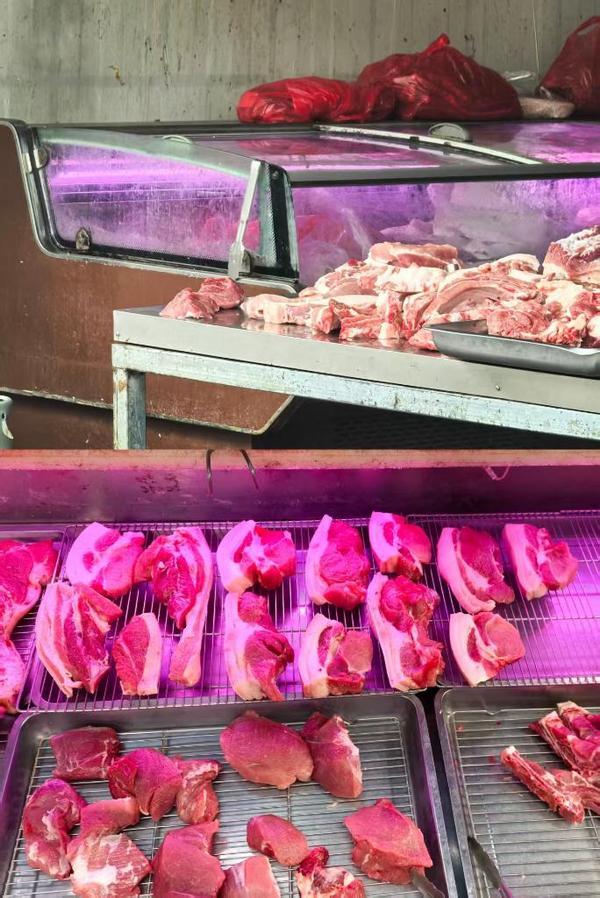
新华视点|美颜“生鲜灯”为何禁而不止?
Xin Hua Wang· 2026-01-30 08:20
Core Viewpoint - The article highlights the ongoing issue of "fresh light" or "beautifying light" used in markets to enhance the appearance of meat and other fresh produce, despite regulations prohibiting such practices. The enforcement of these regulations remains inconsistent, leading to continued consumer deception and market challenges [1][12]. Group 1: Regulatory Actions - The revised "Regulations on the Quality and Safety Supervision of Edible Agricultural Products Market Sales" took effect on December 1, 2023, aiming to eliminate the use of "fresh lights" that mislead consumers about the true color of food products [1]. - Market regulatory authorities have initiated special inspections to address the use of "fresh lights," with some regions reporting a significant reduction in their usage [1][12]. - Despite these efforts, some markets and vendors continue to use "fresh lights," indicating a gap in enforcement and compliance [2][4]. Group 2: Market Observations - In certain areas, particularly in lower-tier markets, the use of "fresh lights" remains prevalent, with vendors employing various methods to conceal the lights from consumers [2][4]. - Observations in Guangxi show that while larger supermarkets use natural lighting, smaller vendors still rely on "fresh lights" to enhance the visual appeal of their products [2][8]. - The use of "fresh lights" is particularly common for pork and brightly colored fruits, as vendors believe it boosts sales [6][12]. Group 3: Consumer Impact and Awareness - Consumers are often unaware of the deceptive practices associated with "fresh lights," leading to potential misrepresentation of product quality [5][14]. - Regulatory officials emphasize the importance of consumer vigilance, suggesting that purchasing fresh products under natural light can help avoid deception [14]. - The article notes that many vendors acknowledge the regulations but feel pressured to use "fresh lights" to remain competitive [6][12]. Group 4: E-commerce and Product Availability - Despite regulations, "fresh lights" are still available for purchase on various e-commerce platforms, with some products marketed specifically for enhancing meat appearance [9][11]. - Vendors have adapted their marketing strategies to exploit regulatory gaps, offering products that can switch between different light colors to evade detection [9][11]. - The lack of a unified national standard for "fresh lights" complicates enforcement and consumer protection efforts [12][13]. Group 5: Recommendations for Improvement - Experts suggest that a comprehensive national standard for lighting used in fresh food sales should be established to provide clear guidelines for enforcement [13]. - Local markets have begun implementing practices to phase out "fresh lights," such as centralized procurement of compliant lighting solutions [13]. - E-commerce platforms are urged to take responsibility for monitoring and removing non-compliant products from their listings to prevent the circulation of "fresh lights" [13].
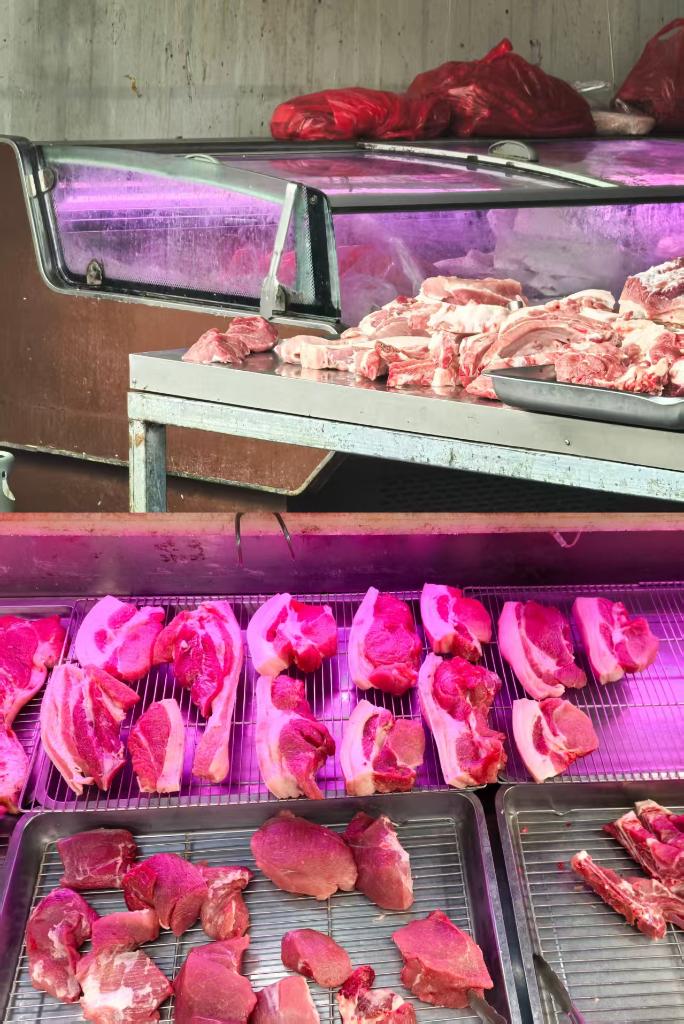
生鲜灯为何禁而不止
Jing Ji Ri Bao· 2025-12-23 00:03
Core Viewpoint - The use of "fresh lights" in markets creates a deceptive visual effect that misleads consumers about the freshness of meat products, violating their right to know and undermining trust in transactions [1][2]. Group 1: Regulatory Context - The 2023 "Regulations on the Quality and Safety Supervision of Edible Agricultural Products Market Sales" prohibits the use of lighting that significantly alters the sensory characteristics of food products to mislead consumers [1]. - Despite regulations, fresh lights are still commonly found in markets, and some vendors sell advanced versions that can adjust color temperature and be remotely controlled to evade inspections [1]. Group 2: Market Dynamics - The issue of fresh lights reflects management gaps in the circulation of fresh agricultural products, particularly in traditional markets where individual operators dominate, making standardized management and effective regulation challenging [2]. - Market managers often lack the ability to constrain misleading practices, especially those that are subtle and not easily detectable [2]. Group 3: Proposed Solutions - Addressing the fresh light issue could start with regulated agricultural markets, where a unified lighting system could be installed and managed, allowing for bulk purchasing to reduce costs and management difficulties [2]. - By eliminating fresh lights, a more honest and transparent market environment can be created, enhancing consumer confidence and promoting safe shopping experiences [2].
生鲜灯不能两年都关不了
Xin Jing Bao· 2025-12-10 06:17
Core Viewpoint - The article highlights the ongoing issue of non-compliance with regulations regarding the use of "fresh lamps" in the sale of perishable food products, indicating that despite the implementation of new regulations, these lamps continue to be used in various markets, misleading consumers and undermining market integrity [2][3]. Regulatory Compliance - The new regulation, effective from December 1, 2023, prohibits the use of lighting that significantly alters the sensory characteristics of fresh food products, aiming to protect consumer rights and ensure fair trading [2]. - Despite the regulation, many vendors still utilize prohibited red lamps and other deceptive lighting methods, indicating a failure in enforcement and compliance [2][3]. Market Surveillance - Following the implementation of the new regulation, market regulatory authorities have conducted extensive inspections across various sales venues, leading to a temporary reduction in the presence of fresh lamps in markets [3]. - However, the persistence of these lamps in the market raises questions about the effectiveness of regulatory measures and the ability to enforce compliance, particularly in decentralized retail environments [3][4]. Challenges in Enforcement - The term "fresh lamp" lacks a strict legal definition, which complicates enforcement efforts, as the regulation does not specify clear standards for color characteristics or temperature values [3]. - Regulatory bodies face challenges in monitoring a vast number of small, individual retail outlets, and there is a lack of effective cross-regional regulatory mechanisms for online sales of non-compliant lamps [3][4]. Recommendations for Improvement - The article suggests the establishment of a unified national standard for fresh lighting technology to provide clear guidelines for enforcement [4]. - It also recommends creating a cross-regional enforcement mechanism to enhance regulatory coverage and accountability for online sales of fresh lamps [4]. - Food vendors are encouraged to promote products without deceptive lighting to build consumer trust and foster fair competition in the market [4][5].