生鲜零售

Search documents
山姆被吐槽“双标”后,有平台火速改了!
新华网财经· 2026-03-21 02:31
Core Viewpoint - The controversy surrounding Sam's Club's Norwegian salmon, labeled as "sashimi-grade," has emerged due to its packaging indicating it should be cooked before consumption, raising concerns about consumer safety and marketing practices [3][4][11]. Regulatory Standards - The salmon in question adheres to the GB 2733-2015 standard, which applies to fresh and frozen animal products, indicating it is not intended for raw consumption [4][6]. - In contrast, the GB 10136-2015 standard, which some other retailers use, specifies requirements for raw animal products, including microbial and parasite content, making them safer for raw consumption [12][13]. Consumer Misunderstanding - Many consumers have been misled by the product's labeling and store staff claims that the salmon is safe for raw consumption, leading to confusion about whether to trust the packaging or the staff [9][11]. - Other retailers like Hema and Pupu Supermarket have begun clearly labeling their salmon products as "raw consumption GB 10136 standard," differentiating them from Sam's offerings [13]. Health Risks - Experts warn that salmon can carry parasites due to its life cycle, and consuming raw salmon poses risks, especially for vulnerable populations such as pregnant women and those with weakened immune systems [17]. - Common misconceptions exist regarding the effectiveness of condiments like wasabi and vinegar in killing parasites, which are not sufficient for ensuring safety [17].



创始人跑路,8名董事辞职:“不卖隔夜肉”的钱大妈,三闯IPO有戏吗?
商业洞察· 2026-03-12 09:37
Core Viewpoint - Qian Dama International Holdings Limited is preparing for an IPO, aiming to become the "first stock in community fresh food" despite recent turmoil involving the founder's exit and significant management changes [1][24]. Group 1: Company Overview - Qian Dama has grown from a small meat stall in Dongguan to a community fresh food giant with nearly 3,000 stores, leveraging a "no overnight meat" model to create a strong brand presence [1][6]. - In 2024, Qian Dama's gross merchandise value (GMV) reached 13.5 billion RMB, capturing 2.2% of the community fresh food market, with a dominant presence in South China [2][4]. Group 2: Financial Performance - Revenue growth has stagnated, with 2023 and 2024 revenues reported at 11.744 billion RMB and 11.788 billion RMB, respectively, showing an average growth rate of less than 0.5% [5][17]. - The company faces increasing financial pressure, with a debt ratio soaring to 196.7% and net current liabilities reaching 1.716 billion RMB, indicating significant short-term repayment challenges [5][17]. Group 3: Business Model Challenges - The "daily fresh" model, while initially successful, has led to profitability issues, with franchisees reporting losses and a decline in single-store sales from 12,000 RMB per day in 2023 to 9,000 RMB in 2025 [16][17]. - The franchise system is under strain, with 1,159 franchise stores closing in recent years, and the company has seen a net increase of only 6 new stores in 2024 [17][24]. Group 4: Market Position and Competition - Qian Dama has struggled to expand beyond South China, with 68.6% of its stores located in the region, contributing 65.9% of its revenue [20][21]. - The competitive landscape is intensifying, with new retail formats like community group buying and instant retail challenging Qian Dama's market share [21][24]. Group 5: Future Outlook - The company is seeking to raise funds through an IPO to address operational challenges and improve its business model, while facing a deadline imposed by investors for listing by January 2027 [24][25]. - Despite efforts to stabilize operations and reassure stakeholders about the founder's involvement, the company must overcome significant growth and profitability hurdles to ensure long-term sustainability [24][25].

2026年中国社区生鲜行业报告:社区零售的效率革命与模式重构
Qin Ce Xiao Fei Yan Jiu· 2026-02-28 13:39
Investment Rating - The report indicates a positive outlook for the community fresh food industry, highlighting significant growth potential driven by efficiency improvements and near-field demand [12][15][58]. Core Insights - The community fresh food market in China is rapidly evolving, with a shift from traditional markets to community-based retail models, which are expected to dominate the market by 2029 [15][19][58]. - The market size of China's fresh food retail is projected to grow from RMB 49,908 billion in 2019 to RMB 82,339 billion by 2029, with a compound annual growth rate (CAGR) of 4.6% from 2024 to 2029 [15][19]. - The community fresh food segment is experiencing a structural transformation, with online and offline channels increasingly integrating to meet consumer demands for convenience and quality [12][19][58]. Summary by Sections Industry Overview - The report outlines that approximately 80% of the fresh food market remains offline, with a clear trend towards chain store development [39][53]. - The community fresh food market is characterized by high-frequency purchases and essential consumer needs, with consumers buying vegetables and meat significantly more often than other categories [9][19]. Competitive Landscape - The competitive landscape is described as fragmented, with a few leading players holding a small market share; the top five companies account for only 7.3% of the market [71]. - The community fresh food sector is marked by a "big market, small leaders" dynamic, where various business models coexist, including community stores, pre-positioned warehouses, and online-to-offline (O2O) platforms [40][71]. Supply Chain Development - The evolution of the fresh food supply chain is segmented into four stages, from traditional distribution to the integration of new retail and e-commerce models, enhancing efficiency and consumer orientation [10][11][20]. - Challenges in the supply chain include high waste rates and inefficiencies, prompting a shift towards shorter, more integrated supply chains [20][30]. Consumer Trends - Consumer preferences are shifting towards community-based shopping experiences, with nearly 60% of fresh food retail expected to occur in community settings by 2024 [19][58]. - The report notes a growing emphasis on health and quality in food consumption, reflecting broader trends in consumer behavior and dietary preferences [36][58]. Future Outlook - The community fresh food retail market is anticipated to continue its growth trajectory, with market penetration expected to rise from 4.8% in 2019 to 15.4% by 2029 [58]. - The report emphasizes the importance of supply chain efficiency and innovation in meeting the evolving demands of consumers in the fresh food sector [60][64].
新春走基层丨鲜货琳琅海外来
He Nan Ri Bao· 2026-02-18 23:08
Core Insights - The import of fresh seafood and fruits has significantly increased during the Chinese New Year, reflecting a shift in consumer preferences towards quality and variety in food choices [1][2][4] Group 1: Import Trends - A total of 103 tons of Atlantic salmon from Norway and Iceland arrived at Zhengzhou International Airport, benefiting from expedited customs services [1] - In January, the total import volume of fresh produce in Henan province reached 1,726.14 tons, marking a year-on-year increase of 141.06%, with imported seafood alone increasing by 156.27% [2] Group 2: Consumer Behavior - Consumers are increasingly opting for imported fresh produce as gifts, indicating a shift in gifting culture towards more unique and practical options [2] - The demand for imported fruits in county-level markets has surged, with some chain supermarkets reporting over a 40% year-on-year increase in sales [2] Group 3: Market Dynamics - The consumption of imported fresh produce has evolved from occasional indulgence to a staple in households, aligning with the growing emphasis on quality and diversity in consumer spending [4] - The "Happy Shopping Spring Festival" campaign in Henan, which includes the distribution of 200 million yuan in consumer vouchers, aims to stimulate spending across various sectors, including retail and dining [4]
年夜饭,新味道多一点
Xin Lang Cai Jing· 2026-02-16 21:33
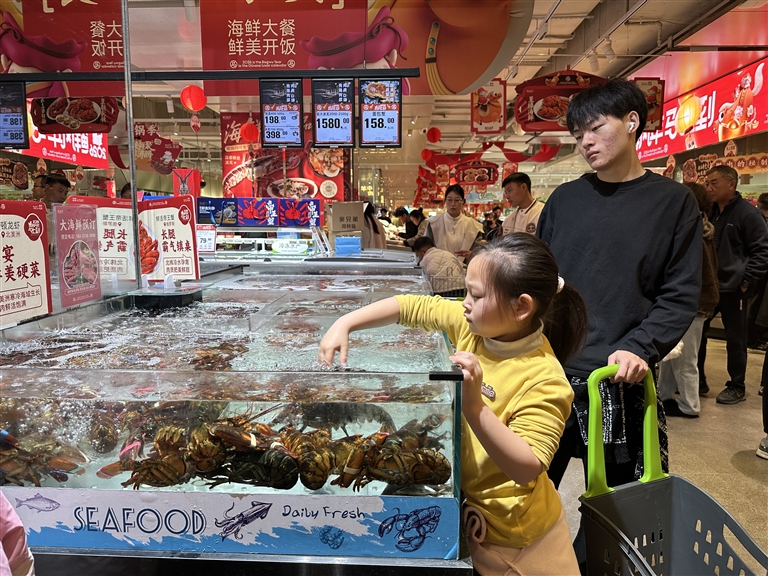
Core Insights - The article highlights the increasing popularity and evolving offerings of Chinese New Year dinner packages, particularly in Yunnan, with a focus on seafood and innovative dishes [2][3][4] Group 1: Restaurant Offerings - The Happy Seafood Restaurant has seen a rise in pre-bookings for New Year's Eve dinners, with capacity for over 600 guests and new menu items like Malaysian fish [2] - The Xiangyun Huiguan restaurant offers a range of dinner packages priced from 698 yuan to 3998 yuan, with the 2998 to 3298 yuan packages being the most popular [3] - New dishes such as "Cloud and Gui Freshly Made Tofu" and other Yunnan-inspired items have been introduced to attract consumers [3] Group 2: Consumer Trends - More young people are taking charge of New Year's dinner decisions, leading to a demand for diverse and innovative menu options [3] - The market for quick-preparation dishes has surged, with a reported 60% increase in sales for seafood and New Year's dinner products during peak days [4] - Consumers are increasingly focused on emotional value and health in their dining choices, prompting restaurants to offer smaller portion sizes and special options for pets [4]
最高检:社区团购绝不是法外之地,多家头部平台企业承诺为消费者兜底
Zhong Guo Jing Ying Bao· 2026-02-12 15:47
Core Viewpoint - The Supreme People's Procuratorate (SPP) is actively addressing food and drug safety issues through public interest litigation, focusing on collaborative governance across various sectors and regions to tackle persistent problems in the food safety chain [1][2][3]. Group 1: Key Actions and Achievements - The SPP has organized a nationwide effort involving 348 targeted initiatives to address specific food safety issues, with local procuratorates focusing on prominent local problems [1]. - In Guizhou, the focus was on "meat safety," leading to a 100% compliance rate in veterinary drug residue testing and full coverage of the disposal of dead livestock [1]. - In Qinghai, a model was developed to identify over 1,200 instances of fraudulent or duplicate inspection certificates, resulting in significant regulatory actions across 14,000 sales entities [1]. Group 2: Collaborative Governance - Local procuratorates are breaking down barriers between departments and regions to enhance food safety oversight, as seen in Liaoning, where a consensus was reached between market regulation and agricultural departments regarding bean sprout production [2]. - In Sichuan, collaboration between market regulation and transportation departments led to the identification and rectification of 233 food safety issues in highway service areas [2]. - A nationwide initiative was launched to address systemic issues in community group buying, resulting in the supervision and rectification of over 31,000 distribution points [2]. Group 3: Community Group Buying and Legal Oversight - The SPP has initiated civil public interest litigation to address consumer complaints in community group buying, which has seen over 600 million users across more than 80% of urban communities [3][4]. - The SPP emphasizes that community group buying platforms must adhere to civil law and cannot evade responsibility for consumer rights violations [3]. - Following public hearings, 93 civil public interest lawsuits were filed against platforms for illegal practices, leading to commitments from several major platforms to improve food safety and consumer protection [4].
盒马首发荷兰Tessa苹果
Bei Jing Shang Bao· 2026-02-12 13:01
Group 1 - The Tessa apple from the Netherlands has been launched at Hema, marking its entry into the Chinese market after receiving market access approval in May last year [1][3] - The introduction of Tessa apples coincides with the end of the cherry season, with other imported fruits like Chilean cherries, Spanish crispy persimmons, and Australian Queen plums also being introduced [3] - Hema's national fruit procurement director noted that during the Spring Festival, consumers prefer to try new fruits, leading to a peak period for new imported fruits [3] Group 2 - The Dutch ambassador's deputy highlighted that the approval of Dutch apples for the Chinese market enriches the fruit trade between China and the Netherlands [3] - Hema has also launched Tasmanian salmon and various new gift boxes under its own brand Bello Vitahouse, which includes reduced-sugar Belgian chocolate [3] - The Tessa apple is characterized by its rich flavor, firm flesh, and balanced sweetness and acidity, aligning with Chinese consumer preferences for apples [3]
春节前盒马鲜生配送范围扩大,山东多地“30分钟达”覆盖更广
Qi Lu Wan Bao· 2026-02-12 10:41
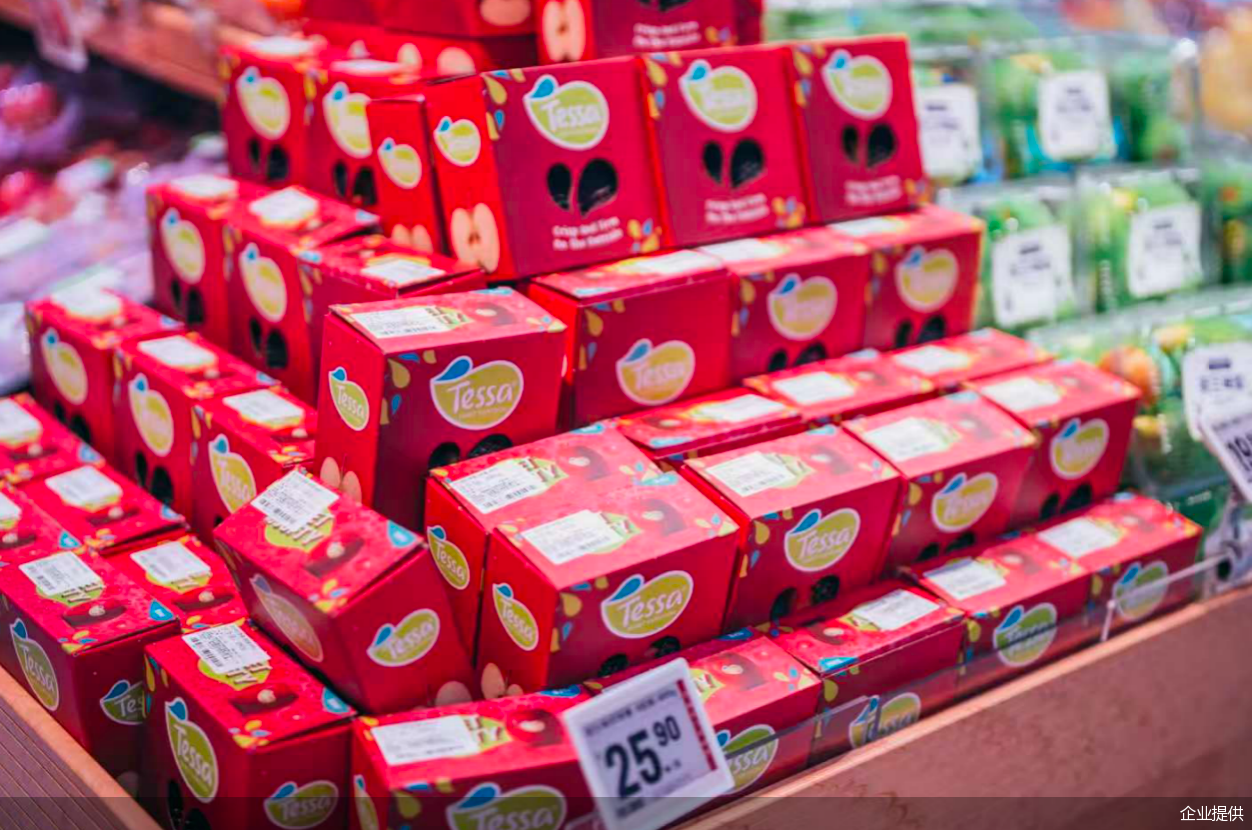
Group 1 - The core point of the articles highlights the significant increase in demand for online grocery delivery services during the Chinese New Year, prompting Hema Fresh to expand its delivery range in five cities in Shandong province [1] - Hema Fresh has extended its delivery radius from "3 kilometers in 30 minutes" to cover nearly 280,000 users across cities like Qingdao, Jinan, Yantai, Linyi, and Weifang, aiming to provide fresh and healthy products to more consumers [1] - The company has prepared for the surge in orders three months in advance, focusing on fresh produce, New Year dish supplies, and home services to meet consumer expectations for the festive season [1] Group 2 - Hema Fresh has reported a tenfold increase in the stock of king crabs, with over 300 tons prepared for the festive season, indicating a shift in consumer behavior towards this seafood as a staple for family gatherings [2] - The demand for salmon has also surged, with stock levels reaching five times the usual amount, particularly in cities like Jinan and Linyi, where demand has increased by over 500% [2] - To ensure a steady supply of quality vegetables, Hema Fresh has secured 11,000 acres of farmland across 153 bases nationwide, allowing users to access both high-quality and affordable produce during the New Year [2]
年轻人告别“囤货”,厨房小白“整顿”春节餐桌
Xin Jing Bao· 2026-02-12 07:31
Core Insights - The younger generation is reshaping the Chinese New Year consumption market by favoring convenience and rational spending over traditional bulk purchasing and extensive cooking [1][2][8] - Fresh food retail platforms are adapting to these changes by offering instant delivery services and innovative meal options that cater to the preferences of young consumers [1][4][8] Group 1: Consumer Behavior Changes - Young consumers are moving away from bulk buying and instead opting for on-demand purchasing through fresh food platforms, which allows for fresher ingredients and reduced waste [2][8] - The trend of "not stocking up" is becoming a new consensus among consumers, particularly among the younger demographic who prioritize convenience and efficiency [8] Group 2: Retail Strategies - Fresh food platforms like Dingdong Maicai and Hema are enhancing their delivery capabilities and product offerings to meet the demands of young consumers during the festive season [3][4][8] - Dingdong Maicai plans to maintain its "no closure during the Spring Festival" policy, ensuring delivery services are available even during peak shopping times [2][3] Group 3: Product Offerings - Retailers are focusing on easy-to-cook, high-quality dishes that require minimal preparation, appealing to young consumers who seek both convenience and a sense of tradition during the New Year [5][6][7] - Hema has collaborated with celebrity chefs to create popular meal kits that reflect regional flavors and are easy to replicate at home, resulting in a significant increase in sales [7] Group 4: Industry Trends - The fresh food retail industry is moving towards a more refined, scenario-based, and quality-focused approach, shifting from merely selling products to providing comprehensive solutions for various dining occasions [8] - The instant retail market in China is projected to reach a scale of 1 trillion yuan by 2026, indicating significant growth potential driven by changing consumer behaviors [8]
年轻人告别“囤货”,厨房小白“整顿”春节餐桌|年货新趋势
Bei Ke Cai Jing· 2026-02-12 07:21
Core Insights - The younger generation is reshaping the Chinese New Year consumption model, favoring convenience and instant delivery over traditional bulk purchasing and complex cooking [1][9] - Fresh food retail platforms are adapting to these changes by offering innovative services and products that align with the preferences of young consumers [1][9] Group 1: Consumer Behavior - Young consumers are opting for "just-in-time" purchasing, avoiding bulk buying and food waste, with many using fresh food platforms for quick delivery [2][9] - The average spending on traditional New Year goods has been reduced, with consumers now focusing on fresh, quality ingredients delivered to their homes [2][9] - The trend of "no stockpiling" is becoming a new consensus among younger consumers, who are re-evaluating the time and effort spent on traditional New Year preparations [9] Group 2: Retail Strategies - Fresh food platforms like Dingdong Maicai are enhancing their logistics and inventory to meet the demand during the peak season, increasing stock levels to twice the normal amount [4][9] - Companies are implementing incentive programs for delivery personnel during the holiday season to ensure service continuity and efficiency [4][5] - Retailers are focusing on creating tailored product offerings for various festive scenarios, moving from merely selling products to providing comprehensive solutions [9] Group 3: Product Innovation - Platforms are introducing easy-to-cook, high-quality dishes that cater to the younger demographic's desire for convenience and culinary experience [7][8] - Dingdong Maicai has launched 72 types of New Year dishes that require minimal preparation, reflecting regional flavors and culinary innovation [7][9] - Hema Fresh is collaborating with celebrity chefs to create popular dishes that can be easily replicated at home, resulting in significant sales growth [8][9] Group 4: Market Trends - The instant retail sector in China is projected to reach a scale of 1 trillion yuan by 2026, with significant growth expected during festive periods [9] - The shift towards refined, scene-based, and quality-focused retail is evident as platforms adapt to the changing consumer landscape [9]