电子工牌

Search documents
凌晨4点,我戴着电子“镣铐”扫垃圾,时薪不如共享充电宝
凤凰网财经· 2026-02-12 05:20
Core Viewpoint - The article highlights the harsh working conditions and low wages of sanitation workers, emphasizing their struggles with electronic monitoring and strict performance evaluations, which some refer to as "electronic shackles" [1][8][13]. Group 1: Working Conditions - Sanitation workers often start their shifts in the early morning hours, working long hours without proper breaks, with some reporting actual work times exceeding 10 hours daily despite only being credited for 8 hours [6][12]. - The use of electronic badges for tracking their location and work time has raised concerns about privacy and dignity, with workers feeling constantly monitored [8][9][13]. - Performance evaluations are rigorous, with strict penalties for minor infractions, such as leaving a work area for too long or failing to clean up litter promptly [10][11][12]. Group 2: Wages and Financial Struggles - Wages for sanitation workers vary significantly, with some earning as little as 900 yuan in rural areas, while those in larger cities may earn around 2,000 to 3,000 yuan [30][32]. - Many workers face delayed payments, with reports of wages being withheld for months, leading to financial distress [30][34]. - The article notes that despite the demanding nature of their work, sanitation workers often receive minimal benefits, with some lacking social insurance [32][34]. Group 3: Personal Stories and Resilience - The article shares personal stories of workers like Gao Fang, who took up sanitation work after her husband's death, highlighting the emotional toll and the lack of alternative job opportunities for older individuals [34][36]. - Workers express a sense of duty and resilience, often continuing in their roles despite the challenges, driven by the need to support themselves and their families [37][39]. - The narrative illustrates the broader societal issues faced by sanitation workers, including the stigma associated with their jobs and the lack of recognition for their contributions to urban cleanliness [36][38].


壹快评|给环卫工人戴定位器工牌,管理精细不该牺牲尊重
第一财经· 2026-01-24 13:44
Core Viewpoint - The article discusses the implementation of electronic name tags with GPS tracking for sanitation workers in Yuncheng, Shanxi, highlighting concerns about employee monitoring and the implications for worker dignity and safety [3][4][5]. Group 1: Implementation of Electronic Name Tags - Yuncheng city has equipped sanitation workers with electronic name tags since December 2023, intended for safety and emergency management, featuring SOS alerts and automatic clocking in [3][4]. - The city management claims there is no penalty for inactivity, but initial explanations suggested monitoring of work activity and rest periods, raising concerns about the true purpose of the technology [4][5]. Group 2: Employee Monitoring Concerns - The electronic name tags are seen as a tool for increased surveillance rather than solely for safety, with implications that they may be used to prevent workers from slacking off [5][6]. - The article compares the use of such tracking devices to historical practices of monitoring livestock and criminals, questioning the necessity of such precise tracking for sanitation workers [5][6]. Group 3: Management and Employee Relations - The article emphasizes that management practices should respect employee dignity and rights, arguing that technology should empower rather than control workers [6][7]. - Positive examples of respectful management, such as the Chongqing Meixin Group's approach to employee communication during salary adjustments, are contrasted with the negative implications of invasive monitoring practices [7].
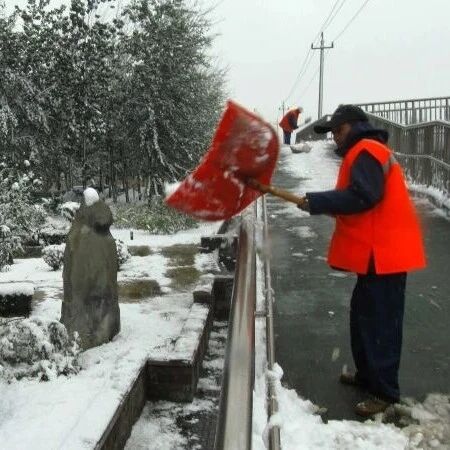
壹快评|给环卫工人戴定位器工牌,管理精细不该牺牲尊重
Di Yi Cai Jing· 2026-01-24 12:50
Core Viewpoint - The implementation of electronic name tags for sanitation workers in Yuncheng, Shanxi, has sparked controversy, raising concerns about employee monitoring and respect for workers' dignity [1][2][3] Group 1: Electronic Name Tags - The Yuncheng city management bureau announced that from December 2023, sanitation workers will be equipped with electronic name tags for safety and emergency management, which include SOS functions and automatic clocking in [1] - Initial explanations suggested that the tags would monitor work activity and ensure compliance with work schedules, leading to public perception of increased surveillance rather than solely safety [2][3] Group 2: Employee Monitoring Concerns - Critics argue that while safety is important, the primary function of the electronic tags appears to be employee monitoring, which could lead to a culture of distrust [2][3] - The comparison of electronic tags to devices used for livestock and criminal monitoring raises ethical questions about the treatment of sanitation workers [2][3] Group 3: Management Practices - Effective management should prioritize respect for employees and their working conditions, rather than imposing strict monitoring measures that may feel oppressive [3][4] - Positive examples, such as the Chongqing Meixin Group's approach to employee communication and wage adjustments, highlight the importance of treating employees with dignity and respect [4][5] Group 4: Conclusion on Management Philosophy - Organizations that respect and care for their employees are more likely to earn respect from both employees and society [4][5] - The balance between technological advancements in management and the preservation of employee dignity is crucial for fostering a positive work environment [5]
云享科技:从“痛点攻坚”到“生态共荣”,数字星河照亮治理之路
Xin Lang Cai Jing· 2025-11-28 17:17
Core Viewpoint - The article highlights the advancements and practical achievements in the field of smart city management, particularly through the case study of Guangzhou Yunxiang Data Technology Co., Ltd, which focuses on AI and big data to enhance urban governance efficiency [1][4]. Company Overview - Yunxiang Technology, established in November 2017, is a wholly-owned subsidiary of Guangzhou Baiyun Industrial Investment Group, with a registered capital of 100 million yuan. The company specializes in new-generation information technology, including video surveillance, cloud services, system integration, big data operations, and smart city construction [1][4]. - The company holds 56 software copyrights, 3 invention patents, and has developed various data products and information systems [1]. Digital Governance Engines - Yunxiang Technology has developed three digital governance engines: the intelligent sanitation scheduling system, the gas safety digital closed loop, and the AI work order governance hub, aimed at addressing urban management challenges [4][5]. - The intelligent sanitation scheduling system tracks over 7,000 sanitation workers in real-time, optimizing operational routes and resource allocation [5]. - The gas safety digital closed loop includes 16 types of hazard identification models, enhancing safety inspections and compliance [5]. Performance Improvements - After two years of implementation, urban governance efficiency in Baiyun District has significantly improved, with a 62% reduction in sanitation vehicle idle rates and a savings of 11 million yuan in fiscal expenditure [6]. - The gas safety inspection coverage increased from 68% to 100%, maintaining a zero occurrence of carbon monoxide poisoning for two consecutive years [6]. - The AI work order system achieved a 92% accuracy rate in automatic identification of urban issues, reducing average processing time from 14 hours to 2 hours [6]. Collaborative Ecosystem - Yunxiang Technology promotes a collaborative ecosystem by attracting over 20 innovative enterprises and partnering with leading companies like Huawei to enhance smart city management solutions [7]. - A framework agreement was signed with Huawei Cloud to jointly develop and market smart city management solutions, aiming to replicate the "Baiyun model" nationwide [7]. Expansion and Recognition - The smart city management system has been successfully implemented in various districts and cities, with potential business opportunities exceeding 300 million yuan across more than 30 cities [8]. - The company's achievements have garnered attention from over 200 organizations, including government departments and universities, showcasing its practices at national conferences [9]. Transformational Impact - The digital transformation led by Yunxiang Technology is not merely a technological upgrade but a comprehensive restructuring of governance concepts and collaboration mechanisms, contributing valuable experiences for nationwide smart city management [11].