
瘦身鱼

Search documents
倾听吧 长江心
Xin Lang Cai Jing· 2026-01-15 22:30
Core Insights - The article discusses the significant ecological improvements in the Yangtze River due to a five-year fishing ban, highlighting the recovery of native fish species and water quality [2] Group 1: Ecological Improvements - The fishing ban from 2021 to 2024 has led to the monitoring of 198 native fish species, which accounts for 83% of the historical total [2] - The aquatic biological integrity index has improved by two levels compared to pre-ban conditions [2] - The annual production capacity of the Yangtze sturgeon has reached over 4 million tails [2] Group 2: Community and Economic Changes - Former fishermen have transitioned to new livelihoods, such as running restaurants and engaging in construction, reflecting a shift in community dynamics [2] - The article emphasizes the personal stories of individuals who have adapted to life after the ban, showcasing their resilience and entrepreneurial spirit [2] Group 3: Research and Conservation Efforts - The article highlights the dedication of researchers and conservationists who have been working for decades to protect the biodiversity of the Yangtze River [2] - It mentions the generational transfer of knowledge and commitment among scientists, indicating a long-term investment in ecological preservation [2]

红军长征胜利90周年前夕 重访长征路上“第一座难走的山”
Guang Xi Ri Bao· 2025-12-29 03:06
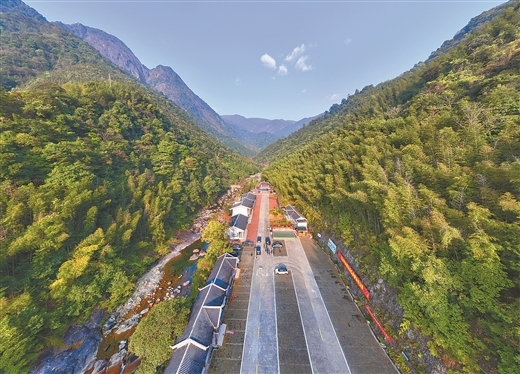
Core Viewpoint - The article reflects on the historical significance of the Old Mountain Boundary, a challenging part of the Long March, and highlights the transformation of the area into a thriving tourist destination, showcasing the blend of cultural heritage and economic development [3][4][5]. Group 1: Historical Context - The Old Mountain Boundary was famously traversed by the Central Red Army in the winter of 1934, marking it as a significant historical site [5][7]. - The area has evolved from a site of hardship for local residents to a place of cultural and economic revitalization, with the Long March serving as a backdrop for this transformation [4][20]. Group 2: Economic Development - The introduction of the Huajiang Tourism Highway has significantly improved access to the region, reducing travel time and enhancing the visitor experience [5][11]. - Local businesses, such as the Longquan Mountain Villa and "Youshu" homestay, have reported substantial increases in revenue, with some achieving over 300 million yuan in annual income [7][11]. - The bamboo industry in the region has seen a boom, with local entrepreneurs capitalizing on international demand for bamboo products, leading to an annual output value of 5 billion yuan [13][14]. Group 3: Cultural Integration - The area is now a key node in the Long March National Cultural Park, integrating historical education with tourism [7][20]. - Local schools emphasize red education, teaching students about the historical significance of the Long March and fostering a sense of community and heritage [22][23]. Group 4: Future Prospects - Ongoing infrastructure projects, including new highways and cable cars, are set to further enhance connectivity and tourism potential in the region [20][21]. - The combination of historical significance, natural beauty, and modern amenities positions the Old Mountain Boundary as a promising site for continued economic growth and cultural preservation [12][20].
四中全会精神在基层|产量降了,产值还升——重庆丰都这样养鱼
Xin Hua She· 2025-11-12 10:57
Core Insights - The fish farming base in Fengdu, Chongqing, has experienced a 35% decrease in total production but a 10.3% increase in total output value, indicating a successful strategy in enhancing product quality over quantity [2][4]. Group 1: Production and Value - The "slim fish" produced at the base has a market price of 16 to 18 yuan per pound at the farm gate, with retail prices ranging from 25 to 30 yuan, reflecting its high market demand due to lower fat content and better taste [3][4]. - The base has invested in facilities that promote fish exercise, akin to a "treadmill," which contributes to the quality of the fish by reducing fat and enhancing meat texture [3][4]. Group 2: Environmental and Nutritional Factors - The fish are raised in high-quality water sourced from natural springs, which is rich in beneficial elements like selenium and strontium, further increasing the nutritional value of the "slim fish" [3][4]. - The local government is working on establishing a brand standard for "rich strontium and selenium fish" to enhance market reach and ensure product quality through a comprehensive traceability system [4][5]. Group 3: Economic Impact and Future Plans - The annual output value of "slim fish" is projected to reach 5 million yuan, marking a 50% year-on-year increase, benefiting local farmers across six towns [4]. - The county is also exploring financing options to integrate "smart aquaculture" with photovoltaic energy, aiming to reduce operational costs and generate additional income from electricity sales [4][5].