
智慧渔业

Search documents
一湖清水养好鱼
Xin Lang Cai Jing· 2026-02-25 22:05
Group 1 - The core viewpoint of the articles highlights the successful implementation of ecological fishing practices in Mingguang City, Anhui Province, which has led to improved water quality and sustainable fishery resources [1][2] - Since the launch of the winter fishing festival on February 7, workers have been actively catching fish, with one boat reportedly containing approximately 20,000 pounds of fish [1] - The local government has invested nearly 100 million yuan in the comprehensive management of the Yushan Lake, which included the removal of fish enclosures and the promotion of ecological restoration, resulting in water quality stabilizing to Class III standards [1] Group 2 - The local agricultural bureau is promoting ecological aquaculture models and expanding sales channels through live-streaming e-commerce and participation in various exhibitions [2] - The establishment of digital fishery bases and the introduction of smart systems for water quality monitoring and precision control in aquaculture are aimed at ensuring reliable product quality for long-term brand development [2] - The company has adopted a scientific breeding model that emphasizes the balance of aquatic life, ensuring sustainable utilization of ecological resources [1]
阳会军:未来十年水产营养关注品质与生态,诚一创新打造“1+6”养殖模式┃穗风不惑
Nan Fang Nong Cun Bao· 2026-02-14 09:34
Core Viewpoint - The future focus of aquaculture nutrition will shift from feed ratio and growth rate to quality and ecology, as stated by Yang Huijun, Vice President of Guangzhou Feed Industry Association and Chairman of Chengyi Group [7][32]. Group 1: Company Development - Chengyi Group has been deeply engaged in the aquaculture sector for over 20 years, focusing on technological innovation and establishing a comprehensive industrial chain that includes aquaculture feed, breeding, ecological farming, smart aquaculture, and food processing [11][16]. - The company has developed three core business areas: compound premix feed, ecological farming, and smart aquaculture, which have been built through a gradual and thoughtful process [18][17]. - Chengyi Group pioneered the "1+6" ecological farming model, which involves the main breeding of grass carp alongside six other fish species, establishing demonstration bases in Guangzhou Nansha, Foshan Sanshui, and Yueyang, Hunan [24][25]. Group 2: Technological Innovation - Chengyi has focused on the research and development of aquatic compound premix feed, utilizing puffed feed technology to enhance feed utilization and fish growth rates, thereby promoting the widespread use of puffed feed for freshwater fish [20][21]. - The company has invested nearly ten years in developing a smart aquaculture system that automates feeding and oxygenation equipment, with over 2,000 units promoted, facilitating the transition of traditional aquaculture to standardization, mechanization, and informatization [26][27][28]. Group 3: Industry Trends - The aquaculture industry is expected to prioritize the cultivation of high-quality fish species that improve meat quality and disease resistance, as well as explore the addition of flavor substances and health components in feed [34][35]. - The industry is gradually advancing towards low-carbon, ecological, and intelligent farming practices, with Chengyi's "1+6" ecological farming model aimed at reducing environmental burdens while attracting younger individuals to the aquaculture sector [36][37]. - Yang Huijun emphasized that while China is a major aquaculture country, it still has a gap to bridge to become a strong aquaculture nation, with the future of the industry relying on technically skilled young people [38].


昌江现代智慧渔业产业园项目开工
Hai Nan Ri Bao· 2026-02-10 03:38
Core Viewpoint - The launch of the Changjiang Modern Smart Fishery Industrial Park, with a total investment of 6.1 billion yuan, marks a significant step towards the transformation and upgrading of the fishery industry in Changjiang County [1]. Group 1: Project Overview - The project includes the construction of water intake, wastewater treatment, and supporting facilities, which are essential for the smart fishery industrial park [1]. - The total area of the Changjiang Modern Smart Fishery Industrial Park is 7,120 acres, with an overall construction period of 5 years [1]. Group 2: Technological and Environmental Focus - The construction will incorporate advanced technologies, emphasizing digitalization, intelligence, and green practices to create an environmentally friendly technological project [1]. - The project aims to shift the local fishery industry from traditional methods to modern, intelligent, and sustainable practices, supporting the integration and transformation of the entire fishery supply chain [1].
新春走基层|我在长江边上养鱼苗
Ren Min Wang· 2026-02-09 07:18
Core Insights - The article highlights the advancements in fish breeding and aquaculture practices in Wanzhou District, Chongqing, emphasizing the integration of technology in traditional methods to enhance productivity and efficiency [1][3][4]. Group 1: Aquaculture Developments - The total fish production in Wanzhou District is projected to reach 25,700 tons by the end of 2025, reflecting a year-on-year growth of approximately 4.42% [2]. - The research institute has successfully achieved an annual production of 20 million fry of various fish species, including the rare and conventional varieties, contributing to biodiversity restoration in the Yangtze River [3][4]. Group 2: Technological Integration - The shift from traditional fish farming to "smart aquaculture" is evident, with the adoption of digital devices for oxygenation, feeding, disease control, and water treatment, leading to improved survival and breeding rates of fish [3]. - Innovative technologies, such as smart water flow devices, have been introduced to enhance breeding conditions, significantly increasing the willingness of fish to spawn [3]. Group 3: Conservation Efforts - Since the comprehensive fishing ban in the Yangtze River basin in 2021, Wanzhou has conducted multiple restocking activities, releasing 790,000 fish of nine species to promote biodiversity recovery [4]. - Future plans include the release of an additional 2.42 million fish to further support the ecological restoration of the Yangtze River [4].
从靠海吃海到多元生金,广州番禺古渔港蜕变“多功能经济区”
Nan Fang Du Shi Bao· 2026-02-09 07:04
Core Insights - The traditional fishing port image is being transformed in Panyu, Guangzhou, with a modern fishing port economic zone that integrates various industries such as smart fisheries, marine equipment, and cultural tourism [1] Group 1: Housing and Employment for Fishermen - The Panyu district has addressed the housing issues of fishermen by constructing 1,017 new residential units, allowing 600 households to move from inadequate living conditions to modern accommodations [2] - The introduction of a fishing port cultural street has created nearly 1,000 new job opportunities in sectors like dining and boat services, enabling local fishermen to find employment close to home [2][3] - Rental income from the repurposed properties has significantly increased, with collective village income rising from 695,000 to 2,877,600, a fourfold increase [3] Group 2: Technological and Industrial Upgrades - The fishing industry in Panyu is undergoing a transformation with the establishment of a modern fishery industrial park and marine biological science park, attracting 2.78 billion in social investment [4] - The region is focusing on cultivating over 30 premium aquaculture species and 19 "Yue" brands, with significant production figures such as 60 billion shrimp larvae annually [5] - The construction of the largest semi-submersible marine ranch platform in China, "Xinhuan 1," is set to enhance the local marine equipment manufacturing sector [5] Group 3: Cultural and Economic Development - The fishing port cultural street is being developed to activate the waterfront economy, transforming the area from reliance on subsidies to self-sustaining income generation [6] - The project aims to create a 5A scenic area by integrating local cultural resources and enhancing tourism, with an expected annual visitor count of 4 million [6] - The cultural street will feature a variety of attractions, including a water market and seafood restaurants, while also providing free stalls for elderly fishermen to promote their crafts [7]
刘小涛在连云港调研时强调做强优势产业壮大县域经济 努力推动高质量可持续发展
Xin Hua Ri Bao· 2026-02-09 00:10
Group 1 - The provincial government emphasizes the importance of implementing Xi Jinping's important speech on Jiangsu's work and the resolutions from the provincial party congress and economic work meeting to promote high-quality and sustainable development [1] - The China East Sea Crystal City is highlighted as the world's largest crystal trading market, with a focus on enhancing brand building, research and development, and product value to meet consumer demands [1] - The development of county-level characteristic industries is seen as a means to boost local economies and promote common prosperity, with an emphasis on innovation and entrepreneurship [1] Group 2 - The promotion of a circular economy and sustainable development is emphasized, particularly in the context of the recycling plastic industry [2] - The need for comprehensive green transformation in agriculture is highlighted, with a focus on integrating technology and quality into marine aquaculture and fisheries [2] - The importance of ensuring the operational stability of grassroots medical institutions and improving access to healthcare for the community is stressed [2]

连云港:从近海丰收到深蓝启航 海洋渔业在高质量发展中演绎变革
Xin Lang Cai Jing· 2026-01-18 14:16
Core Viewpoint - The article highlights the transformation and growth of the marine aquaculture industry in Lianyungang, showcasing advancements in technology, strategic development, and the integration of various sectors to enhance productivity and sustainability in the fishing industry [1][2][3][6][7]. Group 1: Aquaculture Development - Lianyungang's aquaculture is experiencing a significant harvest season, with 400,000 acres of seaweed and shellfish farming areas contributing to a vibrant marine economy [1]. - The introduction of a "oyster reef + seaweed raft" model allows for increased productivity, yielding two to three times the benefits per acre [1]. - The total aquatic product output is projected to reach 890,000 tons in 2024, with an expected increase to 950,000 tons by 2025, emphasizing the rise of high-value marine products [2]. Group 2: Technological and Strategic Innovations - The development of marine fisheries in Lianyungang is driven by four key forces: strategy, technology, industry, and safety, working in synergy to promote high-quality growth [3]. - Innovations in breeding techniques have led to a 95% survival rate and over 30% monthly growth for rainbow trout, while new clam varieties show a growth rate improvement of over 20% [3]. - Strategic partnerships with agricultural and scientific institutions have facilitated the implementation of policies that support the development of high-value marine industries [3]. Group 3: Infrastructure and Safety Enhancements - The establishment of a comprehensive safety system, including the deployment of 600-ton and 300-ton fishery law enforcement vessels, enhances monitoring and regulatory capabilities [4]. - The construction of modern fishing port facilities and cold chain logistics in the national-level fishing port economic zones supports the integration of industry and tourism [6][7]. Group 4: Future Prospects - The launch of the "Suhai No. 1" self-propelled closed salmon farming vessel marks a new phase in deep-sea aquaculture, with an expected annual production of over 8,000 tons of salmon [6]. - The development of a "blue industry chain" from Antarctic krill to high-value products like krill oil is indicative of the growing sophistication of Lianyungang's marine economy [6]. - The dual-core development model of the national-level fishing port economic zones aims to create a synergistic relationship between fishing, tourism, and urban development [7].
喀什·寻鲜记|“养”在云端的鱼
Xin Lang Cai Jing· 2026-01-18 02:59
Core Viewpoint - The establishment of a smart aquaculture base in Kashgar, Xinjiang, utilizing technology to transform saline-alkali land into productive fish farming areas, is enhancing local employment and economic development while providing fresh seafood to the community [1][2][3]. Group 1: Technological Advancements - The aquaculture base features 42 indoor recirculating water farming workshops, allowing for a fish stocking density of 30 to 50 kilograms per cubic meter, significantly higher than traditional methods [2]. - The implementation of a fully covered 5G network and IoT systems enables real-time monitoring of water quality parameters, with automated processes for oxygenation, temperature control, and sterilization [2]. - The system maintains water temperature at around 25°C and dissolved oxygen levels above 5 mg/L, resulting in faster fish growth and a reduction in farming cycles by nearly one-third [2]. Group 2: Economic Impact - Each fish farming pool can generate an annual net profit of over 80,000 yuan, contributing to the extension of the industrial chain, including cold chain logistics, feed processing, e-commerce sales, and dining consumption [3]. - The project is expected to create approximately 200 flexible employment opportunities annually through the introduction of a "fish-plant symbiosis" system, which will utilize treated aquaculture wastewater for irrigation of medicinal herbs and flowers [2][3]. - The second phase of the project is anticipated to add over 30 new jobs, further boosting local employment [2]. Group 3: Community Engagement - Local residents, including university graduates, are returning to their hometowns for employment opportunities at the aquaculture base, applying their knowledge and skills while contributing to the local economy [2]. - The base has gained market recognition, with increasing sales and positive customer feedback, indicating a promising future for locally farmed fish [3]. - The initiative is part of a broader strategy for rural revitalization, transforming previously barren saline-alkali land into productive aquaculture areas, thus enhancing the community's quality of life [3].
渔业筑牢安全屏障守护高质量发展
Huan Qiu Wang· 2025-12-29 07:50
Core Viewpoint - The article highlights the significant progress and transformation in China's fishery industry, emphasizing the shift towards high-quality development, ecological restoration, and enhanced safety measures in fishing practices. Group 1: Industry Growth and Production - In the first eleven months of 2025, China's total aquatic product output reached 66.49 million tons, marking a year-on-year increase of 4.05%, thereby strengthening the supply foundation for urban and rural residents' food security [5][8] - The total output of aquatic products is projected to reach 73.58 million tons in 2024, with the total fishery economic output exceeding 3.4 trillion yuan, and per capita income for fishermen increasing to 27,131 yuan [6][8] - The structure of the fishery industry is evolving, with the tertiary sector accounting for nearly 30% of the total, indicating a positive trend in value addition and industry chain extension [8] Group 2: Ecological Restoration - The ten-year fishing ban on the Yangtze River has led to the monitoring of 344 native fish species, with an increase of 36 species, and the resource volume of the four major fish species' fry is now 6.2 times that of pre-ban levels [5][11] - The ecological integrity index of the Yangtze River has been steadily improving, with significant increases in biodiversity and the successful natural reproduction of endangered species like the Yangtze sturgeon [12] Group 3: Technological Advancements and Safety Measures - The introduction of advanced fishing equipment and smart monitoring systems has significantly improved safety in fishing operations, with a notable reduction in fishing accidents and fatalities [9][10] - The implementation of systematic safety governance and regulatory measures has led to a 68.3% decrease in fishing vessel accidents and a 29.6% reduction in fatalities compared to 2021 [10]
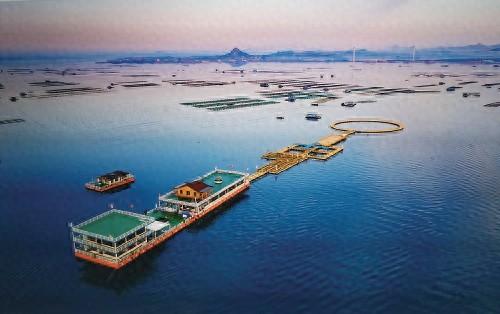
智慧渔业要闯三道“关”(新媒视点)
Ren Min Ri Bao· 2025-12-21 23:46
Core Viewpoint - The traditional fishing industry in China faces multiple challenges, including resource constraints, rising production costs, and environmental pressures, leading to the emergence of smart fisheries as a solution for modernization and sustainable development [1] Group 1: Current Challenges - The fishing industry is experiencing tightening resource constraints, increasing production costs, diversified market demands, and heightened ecological pressures [1] - Smart fisheries are being hindered by high costs and complexity of smart equipment, leading to reluctance among fishermen to adopt these technologies [2] - There is a lack of digital infrastructure in remote fishing areas, which limits the application of real-time monitoring and remote control technologies [2] - The aging workforce in the fishing industry has low digital literacy, resulting in underutilization of advanced systems [2] - Many smart fisheries projects focus on construction rather than sustainable operation, leading to a lack of long-term viability [2] - Data related to production, weather, market, and logistics is fragmented across various departments, creating "data silos" that hinder industry-wide collaboration [2] Group 2: Pathways for Development - To advance smart fisheries, it is essential to adapt technology to meet the real needs of the fishing industry, ensuring practicality and usability for fishermen [3] - A comprehensive big data platform covering the entire fishing industry chain is necessary to facilitate data sharing and integration across various sectors [3] - Establishing clear responsibilities and secure data sharing mechanisms will allow fishermen and enterprises to benefit from data-driven insights [3] - Training tools and applications should be developed to assist traditional fishermen and older aquaculture operators, ensuring they can keep pace with technological advancements [4] - Investment in new infrastructure, including stable communication networks and power supply in various fishing areas, is crucial for widespread adoption of smart technologies [4] - The development of smart fisheries should follow a principle of gradual implementation, balancing top-down planning with grassroots exploration [4] Group 3: Future Outlook - Smart fisheries are positioned to become a core driving force for the transformation and upgrading of the fishing industry, contributing to the revitalization of fishing areas and high-quality development [5] - The integration of smart fisheries into the broader context of digital China and agricultural modernization is expected to propel the industry forward [5]