
百多邦

Search documents
中美施贵宝将易主 老牌合资药企洗牌
Bei Jing Shang Bao· 2026-02-05 16:37
Core Viewpoint - The restructuring of China-U.S. Shanghai Bristol-Myers Squibb Co., a joint venture with over 40 years of history, is underway as Shanghai Pharmaceuticals plans to sell its 30% stake, marking a significant shift in ownership amid declining performance [1][6]. Group 1: Share Transfer Details - Shanghai Pharmaceuticals intends to publicly auction its 30% stake in China-U.S. Bristol-Myers Squibb with a minimum price of RMB 1.023 billion, following the sale of a 60% stake by Bristol-Myers Squibb to Hillhouse Capital [3][4]. - After the transfer, Shanghai Pharmaceuticals will no longer hold any shares in China-U.S. Bristol-Myers Squibb, aiming to optimize its investment structure and maximize asset value [3][4]. Group 2: Financial Performance - China-U.S. Bristol-Myers Squibb's revenue has plummeted over 60% from a peak of RMB 4.724 billion in 2016 to an estimated RMB 1.795 billion in 2024, with a net profit of only RMB 248 million [6][7]. - The company reported revenue of RMB 1.096 billion and a net profit of RMB 87.12 million for the first three quarters of 2025, indicating ongoing financial struggles [6]. Group 3: Market Dynamics and Strategic Choices - The decline in performance is attributed to the expiration of patents for key original drugs and the inability to secure competitive new drug pipelines from foreign partners, leading to a lack of growth drivers [7]. - The decision by Shanghai Pharmaceuticals to divest is seen as a rational choice to recover over RMB 1 billion in capital, aligning with the need to focus on high-growth areas and optimize resource allocation [7][8]. Group 4: Industry Trends - China-U.S. Bristol-Myers Squibb is not the only joint venture undergoing restructuring; other early foreign-invested pharmaceutical companies like Xi'an Janssen and China-SK have also made similar adjustments [8][9]. - The exit of these joint ventures reflects a broader transformation in the Chinese pharmaceutical landscape, driven by policy changes, strategic refocusing by multinational companies, and a shift in market competition dynamics [10].


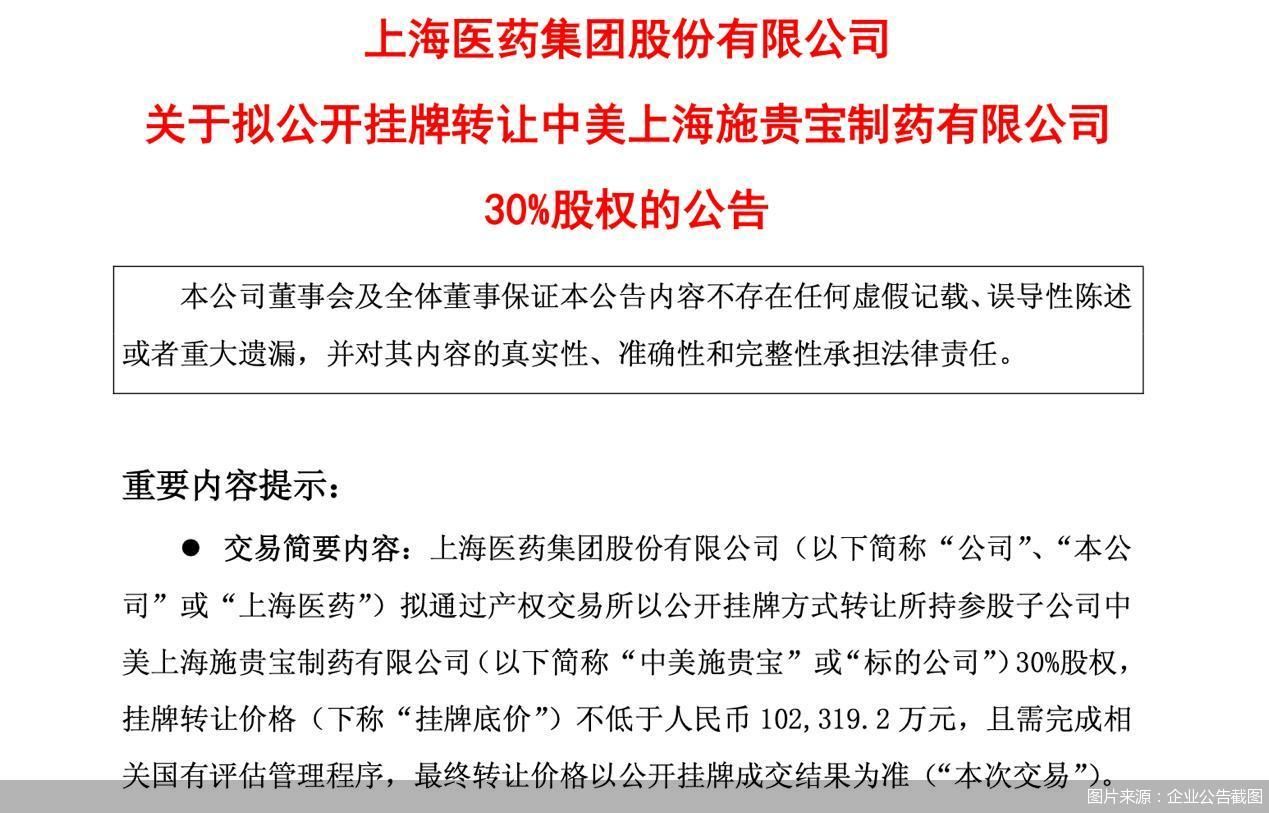
上海医药拟转让中美施贵宝30%股权,又一家中外合资巨头迎来洗牌时刻
Bei Jing Shang Bao· 2026-02-05 09:38
Core Viewpoint - The restructuring of China-U.S. Bristol-Myers Squibb (BMS) marks a significant shift in the landscape of joint ventures in the pharmaceutical industry, driven by declining performance and strategic realignment [1][10]. Group 1: Share Transfer Details - Shanghai Pharmaceuticals plans to publicly transfer its 30% stake in China-U.S. Bristol-Myers Squibb through a property trading platform, with a minimum listing price of RMB 1.023 billion [1][5]. - BMS previously sold its 60% stake in the joint venture to Hillhouse Capital, with the transaction expected to complete in early 2026 [5][6]. - The transfer of shares is part of a broader trend where early joint ventures in the pharmaceutical sector are undergoing ownership changes and brand integrations [1][10]. Group 2: Financial Performance - China-U.S. Bristol-Myers Squibb's revenue has declined over 60% from its peak of nearly RMB 5 billion in 2016 to an estimated RMB 1.795 billion in 2024 [1][8]. - The company reported a net profit of only RMB 248 million in 2024, with revenues of RMB 1.096 billion in the first three quarters of 2025 [8][9]. - The decline in performance is attributed to market pressures and an aging product line, with key original drugs losing patent protection and facing competition from low-cost generics [9][11]. Group 3: Strategic Implications - The decision by Shanghai Pharmaceuticals to divest its stake is seen as a rational choice to maximize asset value and protect shareholder interests, particularly for minority shareholders [9][10]. - The shift in focus from mature drug businesses to innovative drug development aligns with the strategic direction of Shanghai Pharmaceuticals [9][11]. - The exit of early joint venture giants from the market reflects a significant transformation in the Chinese pharmaceutical landscape, driven by policy changes and evolving market dynamics [10][11].
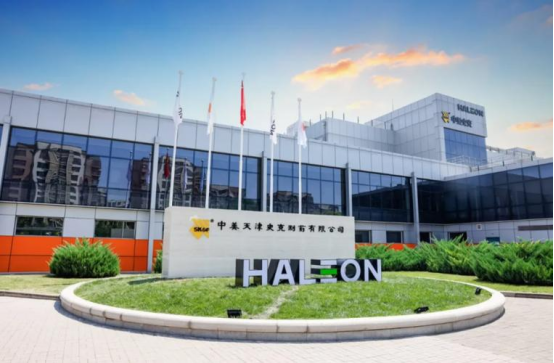
前沿探索融入严谨智造,中美史克天津工厂以近四十年品质坚守打造行业典范
Yang Shi Wang· 2026-01-26 09:25
Core Insights - The Chinese pharmaceutical and health industry is undergoing a significant structural adjustment driven by the "Healthy China 2030" strategy, shifting from basic availability of medicines to a focus on quality and safety [1] - Companies are increasingly prioritizing quality innovation and smart manufacturing as key competitive advantages in the evolving market landscape [1] Group 1: Company Overview - The Tianjin plant of China-Skyrise, wholly owned by Heliang, has been operating in China for nearly 40 years and emphasizes "rigorous manufacturing and quality commitment" as its development foundation [1] - The plant was the first to obtain national GMP certification in 1998 and has played a role in the quality upgrade of China's pharmaceutical industry [1] - The plant produces approximately 160 million boxes of well-known medicines annually, such as Fenbid and New Contac, reflecting a deep understanding of local health needs [1] Group 2: Technological Advancements - The plant is accelerating the layout of its smart manufacturing system with a focus on a "dual intelligence control" precision engineering system [4] - An investment is planned for a smart workshop dedicated to Fenbid production, featuring top-tier international production lines and real-time monitoring systems to enhance product consistency and stability [4] - The plant's modern laboratory platform supports product quality and original research manufacturing, enabling the completion of numerous process optimization projects each year [5] Group 3: Research and Development - Original research technology is a core competitive advantage for the Tianjin plant, which has successfully localized the production of original drugs [6] - The plant has made significant breakthroughs in core pharmaceutical technologies, such as membrane-controlled sustained-release technology for New Contac and multi-layer sustained-release for Fenbid [8] Group 4: Sustainability Initiatives - The Tianjin plant integrates green manufacturing and sustainable development into its strategic operations, optimizing energy structures and implementing effective measures for emissions reduction [9] - The plant utilizes 100% green electricity in its operations and has established a distributed outdoor photovoltaic project with a capacity of 1,120.56 kW [9] - The plant has received greenhouse gas carbon neutrality certificates since 2022 and is set to obtain national green factory certification in 2024, showcasing its commitment to environmental protection [12]
首家中美合资药企60%股权确认出售!BMS表态继续投资中国市场,会影响药物供应吗?
Xin Lang Cai Jing· 2025-09-16 23:54
Core Viewpoint - BMS is selling its 60% stake in Shanghai BMS Pharmaceutical Co., Ltd. to an affiliate of Hillhouse Capital, with the transaction expected to be completed by early 2026, as part of its long-term strategic resource allocation in response to evolving business needs [1][2]. Group 1: Company Strategy - The sale of the stake in SASS reflects BMS's commitment to its production strategy, aiming to balance internal resources through strong external partnerships and deepen regional strategic layouts [1]. - BMS maintains a strong commitment to the Chinese market and plans to continue investing under its "China 2030 Strategy," focusing on accelerating the introduction of innovative therapies and improving drug accessibility for patients [1][4]. Group 2: Industry Context - Shanghai BMS, established in 1982, is the first Sino-American joint venture pharmaceutical company in China, with BMS holding 60% of the shares, Shanghai Pharmaceutical Group 30%, and China National Pharmaceutical Group 10% [2]. - The trend of joint venture pharmaceutical companies exiting the Chinese market is evident, with examples including Johnson & Johnson's rebranding of Xi'an Janssen and Hengrui's acquisition of the remaining shares of MSD [2][3]. - The exit of these joint ventures marks the end of an era, as they previously provided many classic drugs to the Chinese market, but the current market is now filled with more cost-effective generic alternatives [3]. Group 3: Future Outlook - The departure of joint venture companies does not indicate a complete exit of foreign pharmaceutical companies from the Chinese market; instead, many are refocusing on innovative drug businesses and introducing more innovative products in China [4]. - Concerns about the potential withdrawal of classic drugs from the market are mitigated by the expectation that these products will transition to new companies, which may revitalize their market presence [4].
清仓天津史克中期利润暴涨背后:达仁堂营收连降、屡遭监管处罚
Xin Jing Bao· 2025-07-19 01:00
Core Viewpoint - The company DaRenTang is experiencing significant fluctuations in its financial performance, primarily due to the sale of its stake in Tianjin Shike, which has historically been a major source of profit. However, the company is facing challenges with declining revenue and quality control issues in its core business operations [1][4][9]. Financial Performance - DaRenTang expects a net profit attributable to shareholders of 1.84 billion to 2 billion yuan for the first half of 2025, representing a year-on-year increase of 180% to 204% [1]. - The net profit excluding non-recurring gains is projected to be 560 million to 620 million yuan, reflecting a decrease of 12% to 2% year-on-year [1]. - The substantial increase in net profit is mainly due to the sale of its stake in Tianjin Shike, which generated a post-tax profit of 1.31 billion yuan [1][5]. Stake Sale Details - DaRenTang sold 13% of its stake in Tianjin Shike to Haleon (China) for 1.759 billion yuan, completing the transaction by the end of December 2024 [2]. - In April 2025, the company announced the sale of an additional 4.6% and 7.4% stakes in Tianjin Shike for 622 million yuan and 1 billion yuan, respectively, completing the transactions by June 2025 [3]. Revenue Decline - The company has reported a continuous decline in revenue over the past two years, with revenues of 8.222 billion yuan, 7.307 billion yuan, and 1.455 billion yuan for 2023, 2024, and the first quarter of 2025, respectively, indicating year-on-year declines of 0.33%, 11.14%, and 30.22% [6]. - In 2024, the net profit excluding non-recurring gains fell by 21.62% to 746 million yuan, with both major business segments experiencing revenue declines [6]. Product Performance - Among the top ten products, eight experienced varying degrees of sales decline in 2024, with significant drops in sales volume for key products such as Jingwanhong Ointment and Qingfei Xiaoyan Wan [7]. - The inventory levels for several products surged dramatically, indicating potential overproduction or reduced demand [7]. Quality Control Issues - DaRenTang has faced multiple regulatory penalties related to drug production quality and compliance issues, including fines and warnings from authorities such as the FDA [9]. - The company has received numerous consumer complaints regarding product quality and service, highlighting ongoing challenges in maintaining standards [9]. Strategic Adjustments - In response to declining performance, DaRenTang has divested from its commercial business by transferring its stake in Tianjin Zhongxin Pharmaceutical Co., Ltd. to focus on core operations [8].

强化在华非处方药领域布局,赫力昂全资控股中美史克
Guo Ji Jin Rong Bao· 2025-07-09 10:01
Group 1 - Haleon has completed the acquisition of the remaining 12% stake in China-SK Pharmaceutical Co., Ltd, marking the end of a nearly 40-year joint venture with a total transaction value of 1.623 billion yuan [1][2] - The joint venture, established in 1984, was set to last until June 30, 2025, but the lifting of foreign ownership restrictions in China allowed Haleon to take full control [2] - The separation signifies a shift in the business landscape, as joint ventures have become less adaptable to the evolving strategies of multinational pharmaceutical companies [1][3] Group 2 - China-SK has been a significant player in the Chinese pharmaceutical market, focusing on pain management, respiratory health, skin health, and digestive health, with well-known brands such as Fenbid and New Contac [3][4] - Following the acquisition, Haleon plans to enhance its development strategy for China-SK, leveraging its strong brand portfolio and established sales network while investing in product lines based on consumer demand [4][5] - China is a key market for Haleon, driving global growth and enhancing brand competitiveness, with the acquisition seen as a major milestone in deepening its commitment to the Chinese market [5]

中美史克终结近40年合资历史!赫力昂完成全资控股
第一财经· 2025-07-09 03:18
Core Viewpoint - The acquisition of the remaining 12% stake in the joint venture China-US Tianjin Schering Pharmaceutical Co., Ltd. by Heliang marks the end of a nearly 40-year partnership, allowing Heliang to fully control the company and strengthen its position in the Chinese OTC market [1][2]. Group 1: Company Acquisition - Heliang has completed the acquisition of the remaining 12% stake in China-US Tianjin Schering, making it a wholly-owned subsidiary [1]. - The acquisition process involved two transactions in September 2024, where Heliang increased its stake from 55% to 88% by acquiring shares from Darentang and Tianjin Pharmaceutical Group [1]. - The joint venture was originally established in 1987 by GSK and local partners, and Heliang became an independent company after spinning off from GSK in July 2022 [1][2]. Group 2: Market Position and Strategy - China has become the second-largest health consumption market globally, providing significant opportunities for multinational companies focused on consumer health [2]. - Heliang's full acquisition of China-US Tianjin Schering will enhance its presence in the OTC drug sector in China [2]. - The company has been expanding its regional market presence by establishing subsidiaries in cities like Chengdu, Xi'an, Shanghai, and Guangzhou to penetrate lower-tier markets [2]. Group 3: Consumer Trends and Product Development - There is an increasing demand for nutritional health products, particularly those that boost immunity, driven by rising health awareness among consumers [3]. - Heliang aims to maintain flexibility and responsiveness in a rapidly changing market, focusing on continuous innovation to build consumer trust [3]. - The OTC and nutritional health product markets are influenced by various factors, including product functionality, pricing, and brand trust, necessitating ongoing innovation to capture market share [3].
中美史克终结近40年合资历史!赫力昂完成全资控股
Di Yi Cai Jing· 2025-07-08 15:10
Core Insights - The Chinese pharmaceutical market has undergone significant changes over the past 40 years, with foreign pharmaceutical companies adjusting their strategies as the joint venture model may no longer be suitable for current market dynamics [1][3] - Heliang has completed the acquisition of the remaining 12% stake in its OTC joint venture, China-US Tianjin Schering Pharmaceutical Co., Ltd. (referred to as "China-US Schering"), making it a wholly-owned subsidiary and ending nearly 40 years of joint venture history [1][3] - The acquisition enhances Heliang's position in the Chinese OTC market, which is experiencing growing consumer demand for health products, making China the second-largest health consumption market globally, after the United States [3] Company Developments - Heliang's acquisition of China-US Schering involved two transactions in September 2024, increasing its stake from 55% to 88% through the transfer of shares from Darentang (13%) and Tianjin Pharmaceutical Group (20%) [1] - China-US Schering focuses on pain management, respiratory health, skin health, and digestive health, with brands like Fenbid, New Contac, and Fufang [3] - Heliang has established subsidiaries in cities like Chengdu, Xi'an, Shanghai, and Guangzhou to enhance product penetration in lower-tier markets [3] Market Trends - There is an increasing demand among Chinese consumers for health products, particularly in the nutrition and immune-boosting segments, driven by heightened health awareness [4] - Heliang, having spun off from GSK in 2022, aims to maintain flexibility and responsiveness in a rapidly changing market, facing diverse consumer preferences and intense competition [4] - The OTC and nutritional health product markets are directly consumer-facing, requiring companies to innovate continuously to build trust and meet complex consumer decision-making factors [4]

赫力昂全资收购中美史克,强化在华非处方药领域布局
Zhong Guo Chan Ye Jing Ji Xin Xi Wang· 2025-07-08 08:50
Group 1 - Haleon has completed the acquisition of the remaining 12% stake in its OTC joint venture, China-SK Pharmaceutical Co., Ltd., making it a wholly-owned subsidiary [1] - The acquisition signifies Haleon's commitment to the Chinese market, which is crucial for driving global growth and enhancing brand competitiveness [1] - China-SK has a strong historical presence and is recognized for its brands in pain management, respiratory health, skin health, and digestive health [1] Group 2 - Haleon aims to enhance daily health with its mission and will continue to support the innovation and development of OTC products in China [2] - The company plans to deepen its channel layout to reach a broader consumer base with its health products and services [2] - Haleon's product portfolio includes six core categories: oral health, nutritional health, pain management, respiratory health, digestive health, and skin health [3]
累计套现超30亿元,达仁堂清仓“现金奶牛”天津史克
Huan Qiu Lao Hu Cai Jing· 2025-04-16 10:28
Core Viewpoint - The company Daren Tang announced the transfer of its equity stakes in Tianjin Shike, resulting in a significant financial gain and a strategic shift towards focusing on its core business operations [1][3]. Group 1: Transaction Details - Daren Tang transferred 4.6% and 7.4% stakes in Tianjin Shike to Helion (China) and Haleon CH SARL, respectively, for a total transaction price of approximately 1.623 billion RMB [1]. - The transaction price reflects a 35% premium on the asset valuation, leading to an estimated investment income of about 1.54 billion RMB for Daren Tang [1]. - Post-transaction, Daren Tang will no longer hold any equity in Tianjin Shike [1]. Group 2: Financial Impact - The transaction is expected to increase Daren Tang's net profit by 1.3 billion RMB after tax, positively impacting its 2025 net profit outlook [1]. - In the previous year, Daren Tang had also sold a 13% stake in Tianjin Shike, generating a profit of 1.759 billion RMB, which contributed to a 125.94% year-on-year increase in net profit [1]. - Despite the profit from the stake sale, Daren Tang's non-recurring net profit declined by 21.62% year-on-year, marking the first negative growth in seven years [1]. Group 3: Company Performance - Daren Tang's revenue has been declining for two consecutive years, with only one core product, Qingyan Diban, showing sales growth of 37.06% in 2024 [3]. - Other products, including Jingwanhong Ointment and Zilong Jinjian, experienced significant sales declines, with some products seeing over 10% drop in sales volume [3]. - The company aims to utilize the funds from the transaction for business expansion, including strategic acquisitions, R&D projects, and market development [3]. Group 4: Tianjin Shike's Performance - Tianjin Shike reported a revenue of 3.582 billion RMB and a net profit of 982 million RMB in 2023, with projected revenues of 3.559 billion RMB and net profits of 711 million RMB for 2024 [2]. - Tianjin Shike's strong performance has been a significant contributor to Daren Tang's overall profits, accounting for 30% of its total profit in 2023 [3].