
清肺消炎丸

Search documents
医药周报:基药目录前瞻、JPM大会看点
Guolian Minsheng Securities· 2026-01-22 02:45
Investment Rating - The report maintains a positive investment rating for the pharmaceutical sector [6] Core Insights - The pharmaceutical sector experienced a week-on-week decline of 0.68%, underperforming compared to the ChiNext and CSI 300 indices, ranking 17th among all industries [2][36] - The report emphasizes the importance of innovation, international expansion, and overcoming challenges as key themes for investment in 2026, with a focus on BD 2.0, small nucleic acids, and supply chain opportunities [3][4] - The upcoming adjustment of the National Essential Drug List is seen as critical, aiming to address clinical needs that have evolved since the last update in 2018, particularly in pediatrics, oncology, and rare diseases [5][14] Summary by Sections National Essential Drug List Adjustment Analysis - The current drug list has not been updated since 2018, leading to a disconnect with clinical needs, necessitating a systematic adjustment [14] - The adjustment will focus on filling gaps in disease coverage, particularly in pediatrics, oncology, and rare diseases, while also solidifying the integration of collective procurement and national negotiation outcomes [18][19] - The report identifies potential beneficiaries in traditional Chinese medicine, particularly in areas with previously weak coverage [28] JP Morgan Conference Overview - The 44th JP Morgan Health Conference highlighted strategic developments from major global pharmaceutical companies, showcasing their core pipeline advancements and key clinical milestones for 2026 [33] - Companies like Pfizer, Merck, and Eli Lilly presented their focus on innovative treatments and upcoming clinical trials, indicating a robust pipeline for future growth [34][35] Pharmaceutical Market Review and Hotspot Tracking - The pharmaceutical sector's performance in early 2026 has shown a 7.08% increase, outperforming both the CSI 300 and ChiNext indices [36] - The report notes a shift in market sentiment, with certain innovative sectors like AI healthcare and medical robotics showing strong performance, while traditional sectors faced adjustments [2][3]
津药达仁堂入选“2026呼吸健康共同体”首批成员单位
Zhong Guo Jin Rong Xin Xi Wang· 2025-12-07 11:54
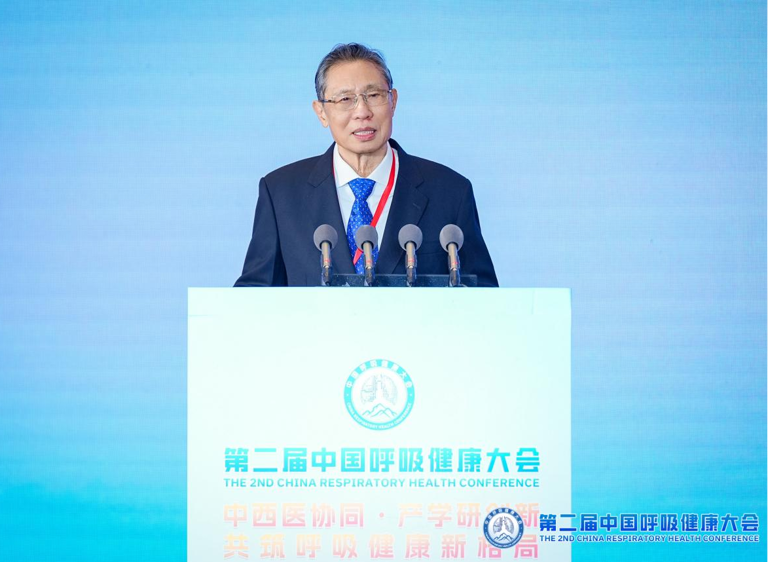
Group 1 - The second China Respiratory Health Conference opened in Guangzhou, focusing on "Collaborative Innovation of Traditional and Western Medicine: Building a New Pattern of Respiratory Health" with over 2,000 experts and scholars in attendance [1] - The "2026 Respiratory Health Community" was established during the opening ceremony, with Tianyao Darentang being one of the first member units [3] - Tianyao Darentang, a traditional Chinese medicine company with a 500-year history, has a product portfolio of 599 drug approvals, including 122 exclusive varieties, covering various health areas [4] Group 2 - In the respiratory product line, Tianyao Darentang has 102 varieties, showcasing key products such as Qingyan Diban and Qingfei Xiaoyan Wan at the conference [5] - The company aims to protect and develop traditional Chinese medicine while promoting respiratory health, focusing on collaboration within the community to enhance innovation [5]


中药股集体业绩“爆雷” 片仔癀、同仁堂等未能幸免 到底咋回事?
Xi Niu Cai Jing· 2025-05-09 07:08
Core Viewpoint - The financial report of Pianzaihuang for 2024 reveals significant challenges, with a 26.07% year-on-year decline in net profit for Q4, marking the lowest level since 2019, and a record low revenue growth of 7.25% over the past decade, reflecting broader difficulties faced by the traditional Chinese medicine industry [2][8]. Industry Situation - The primary challenge for Pianzaihuang is the rising cost of raw materials, particularly natural cow bile, which has surged from 650,000 yuan per kilogram to 1,650,000 yuan per kilogram over the past two years [3]. - The overall Chinese medicine sector is experiencing a collective downturn, with Pianzaihuang being relatively better off compared to other companies like Zhongsheng Pharmaceutical and Taiji Group, which reported drastic profit declines [7][8]. Financial Performance - Pianzaihuang's Q4 net profit was 290 million yuan, down 26.07% year-on-year, while the annual revenue growth was only 7.25%, the lowest in a decade [2][4]. - The company attempted to mitigate rising costs by increasing prices by 28.8% in 2023, but revenue and net profit growth rates fell to 15.69% and 13.04%, respectively, in the same year [4][5]. Cost Structure - Direct material costs account for over 90% of the total costs in various product categories, including liver disease and cardiovascular medications, indicating a heavy reliance on raw materials [4][7]. - The cost of direct materials for liver disease medications reached 164.48 million yuan, representing 96.52% of total costs, while cardiovascular medications saw a 56.1% increase in material costs year-on-year [4]. Market Dynamics - The price of Pianzaihuang's product has reached the upper limit of consumer acceptance, with retail prices significantly lower than the official price, indicating challenges in passing on costs to consumers [5]. - The collective "explosion" in the Chinese medicine sector is attributed to policy changes, including the expansion of centralized procurement, which has led to significant price reductions and profit declines for many companies [9][15]. Future Outlook - The Chinese medicine industry must address the impacts of centralized procurement policies, which have resulted in price drops and profit squeezes, while also focusing on innovation and diversification to mitigate risks associated with raw material costs [16][17]. - Companies like Pianzaihuang are exploring diversification strategies, but the effectiveness of these efforts remains limited, highlighting the need for a more robust approach to research and development [17][18].


累计套现超30亿元,达仁堂清仓“现金奶牛”天津史克
Huan Qiu Lao Hu Cai Jing· 2025-04-16 10:28
Core Viewpoint - The company Daren Tang announced the transfer of its equity stakes in Tianjin Shike, resulting in a significant financial gain and a strategic shift towards focusing on its core business operations [1][3]. Group 1: Transaction Details - Daren Tang transferred 4.6% and 7.4% stakes in Tianjin Shike to Helion (China) and Haleon CH SARL, respectively, for a total transaction price of approximately 1.623 billion RMB [1]. - The transaction price reflects a 35% premium on the asset valuation, leading to an estimated investment income of about 1.54 billion RMB for Daren Tang [1]. - Post-transaction, Daren Tang will no longer hold any equity in Tianjin Shike [1]. Group 2: Financial Impact - The transaction is expected to increase Daren Tang's net profit by 1.3 billion RMB after tax, positively impacting its 2025 net profit outlook [1]. - In the previous year, Daren Tang had also sold a 13% stake in Tianjin Shike, generating a profit of 1.759 billion RMB, which contributed to a 125.94% year-on-year increase in net profit [1]. - Despite the profit from the stake sale, Daren Tang's non-recurring net profit declined by 21.62% year-on-year, marking the first negative growth in seven years [1]. Group 3: Company Performance - Daren Tang's revenue has been declining for two consecutive years, with only one core product, Qingyan Diban, showing sales growth of 37.06% in 2024 [3]. - Other products, including Jingwanhong Ointment and Zilong Jinjian, experienced significant sales declines, with some products seeing over 10% drop in sales volume [3]. - The company aims to utilize the funds from the transaction for business expansion, including strategic acquisitions, R&D projects, and market development [3]. Group 4: Tianjin Shike's Performance - Tianjin Shike reported a revenue of 3.582 billion RMB and a net profit of 982 million RMB in 2023, with projected revenues of 3.559 billion RMB and net profits of 711 million RMB for 2024 [2]. - Tianjin Shike's strong performance has been a significant contributor to Daren Tang's overall profits, accounting for 30% of its total profit in 2023 [3].