百度豆包

Search documents
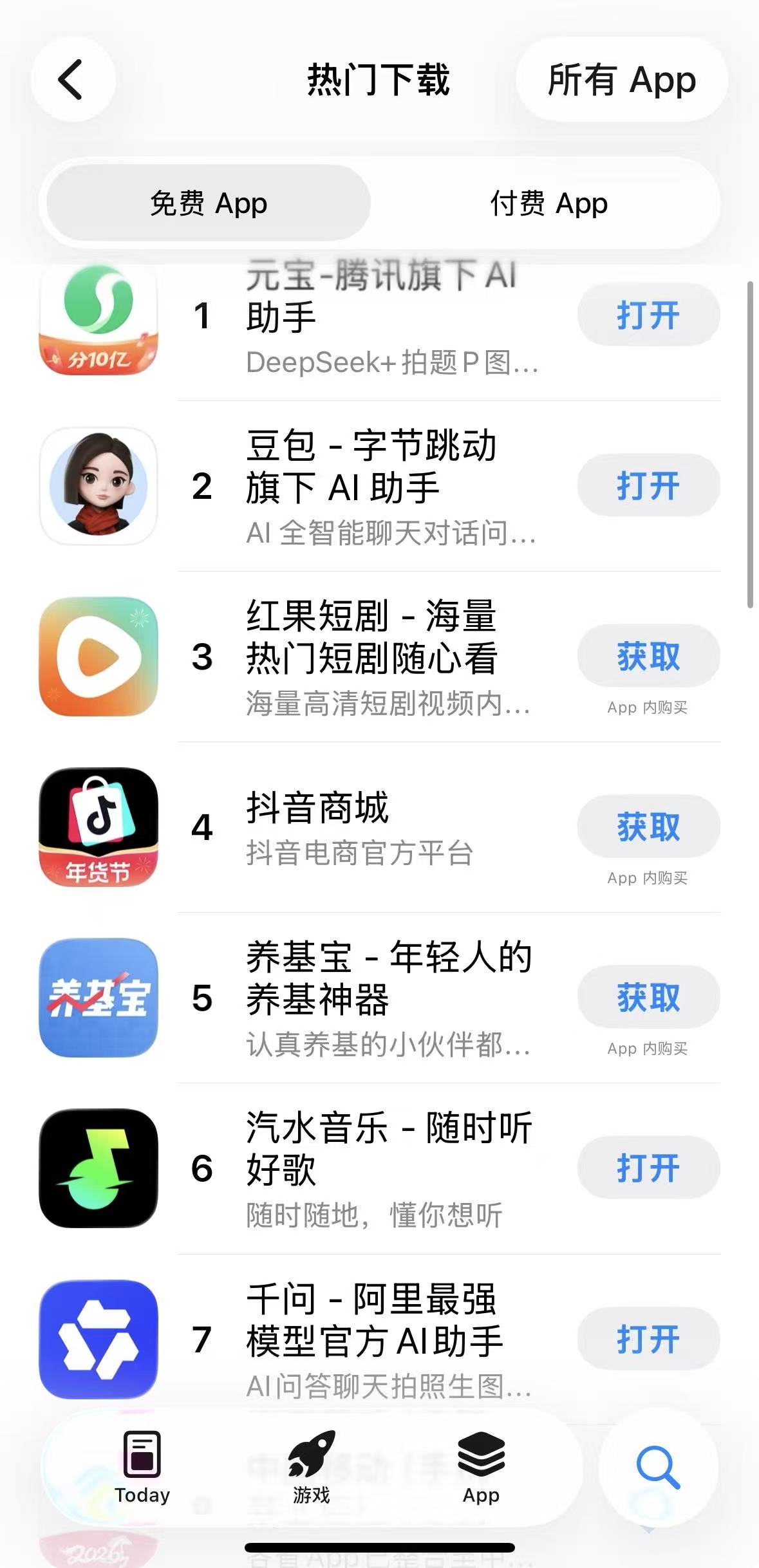
2026年春节“AI红包”派发超45亿元 “脉冲式流量”后用户黏性成关键
Xin Hua Cai Jing· 2026-02-25 03:27
Core Insights - The 2026 Spring Festival AI "ecological battle" marked a significant shift in the domestic AI industry from technical competition to a focus on consumer scenarios, with major players investing over 4.5 billion yuan during the holiday [1] - Different strategies were employed by major companies: Doubao leveraged exclusive AI collaboration with the Spring Festival Gala, Alibaba's Qianwen combined "free orders + consumption" to drive real transactions, while Tencent's Yuanbao utilized social interactions within the WeChat ecosystem to maintain user engagement [1][2] Investment and Market Dynamics - The competition is increasingly concentrated among leading platforms, creating significant barriers for smaller players, as the focus shifts from model parameters to integrating AI into daily consumption, social, and entertainment scenarios [2] - The ability to convert short-term user engagement into long-term value will be crucial for success in the AI market, with key factors including addressing real user pain points, continuous model iteration based on user data, and seamless integration into existing ecosystems [2][3] User Retention and Experience - Retaining users post-campaign will depend more on the core value and experience of AI products rather than the size of the red envelopes offered, emphasizing the importance of integrating AI assistants into real-life scenarios [3] - Historical context suggests that successful integration of payment behaviors into social interactions, as seen with WeChat red envelopes, is essential for transforming short-term traffic into lasting user engagement [3]



“春节大战”在即,马云现身阿里千问春节项目组
Di Yi Cai Jing· 2026-02-05 01:55
Core Viewpoint - Alibaba is heavily investing in the "super entrance of the AI era" through its "Qianwen" initiative, aiming to capture consumer engagement during the upcoming Spring Festival [1][2]. Group 1: Investment and Strategy - Alibaba has announced a significant investment of 3 billion yuan in its "Spring Festival Treat Plan," marking the largest investment in a Spring Festival campaign in the company's history [2]. - The "Qianwen C-end Business Group" was established in December 2025, integrating various business segments including Qianwen APP, Quark, AI hardware, UC, and Shuqing, under the leadership of Alibaba's Vice President Wu Jia [1]. Group 2: Marketing and Promotion - Qianwen APP will exclusively sponsor four television stations' Spring Festival Gala, incorporating AI capabilities such as AI-generated videos, image recognition, and Q&A into the event [3]. - During the gala, Qianwen will distribute exclusive command red envelopes, allowing viewers to participate in real-time interactions while watching the show [3]. Group 3: Challenges and Competition - Wu Jia acknowledged potential internal coordination challenges in promoting AI shopping, emphasizing the importance of user experience as the primary goal [2]. - The competitive landscape is heating up, with WeChat also cracking down on excessive marketing during the Spring Festival, which may impact Alibaba's promotional strategies [2][3].
阿里30亿加入战局,AI应用“春节大战”升级
Di Yi Cai Jing· 2026-02-02 06:50
Group 1 - The 2026 Spring Festival has become a battleground for major internet companies focusing on "AI entry points" [1][2] - Alibaba's Qianwen app announced a 3 billion yuan initiative for the Spring Festival, promoting AI shopping through a "Spring Festival Treat Plan" [1] - Other companies like ByteDance and Baidu are also heavily investing in cash red envelopes, with Baidu allocating 500 million yuan and Tencent distributing 1 billion yuan [2] Group 2 - Analysts suggest that the Spring Festival is a key moment for AI product launches, with companies using red envelopes to encourage app installations and user engagement with AI features [3] - Despite the influx of cash incentives, experts believe that subsidies alone will not significantly alter market dynamics, as the red envelopes do not directly correlate with AI functionality [6] - The competition is seen as a battle for user habit formation rather than a direct market share challenge [6]