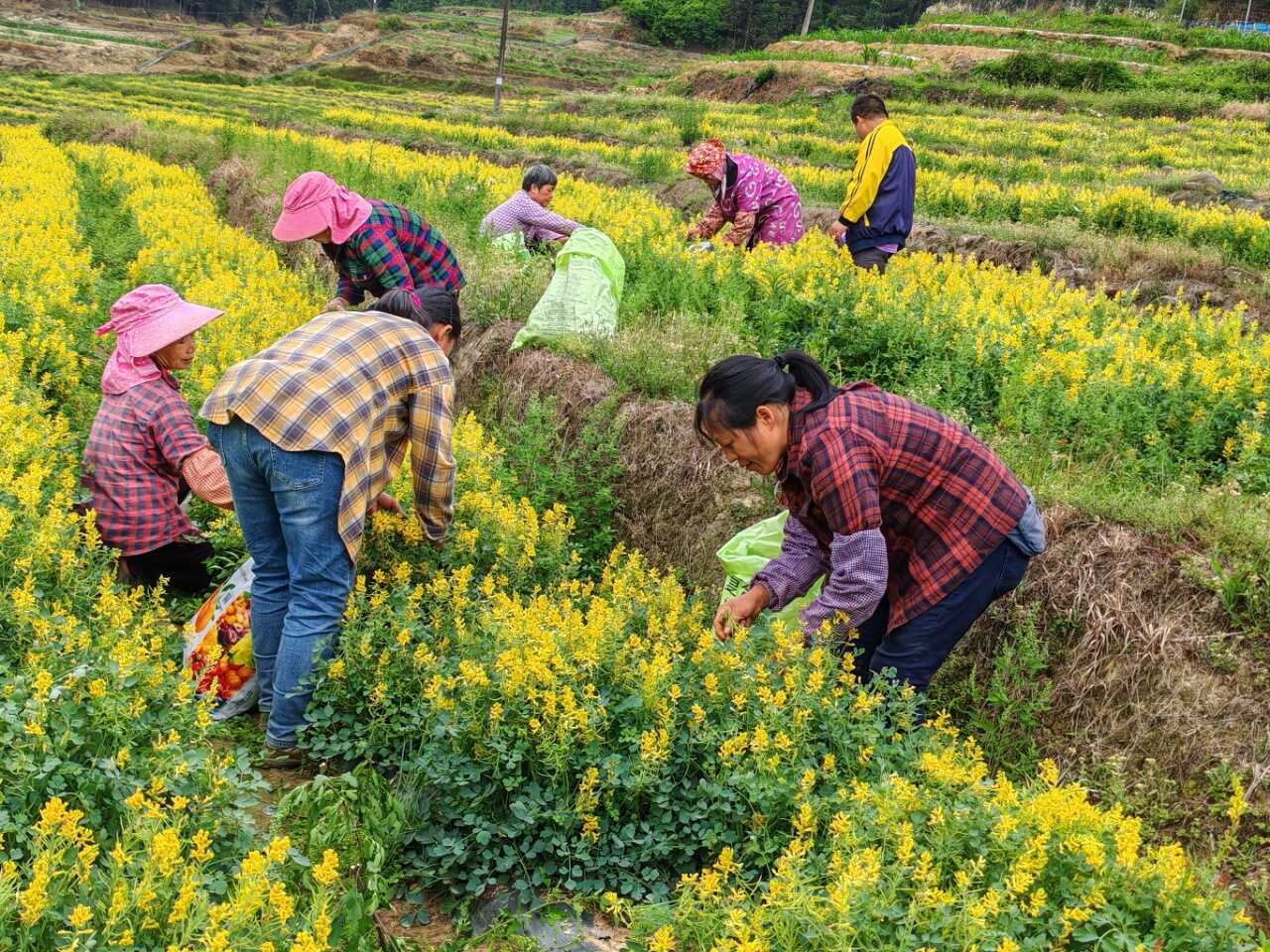
百部

Search documents
梁木强:南药匠心点“木”成金,一方“良方”强农兴村丨粤匠担当 兴农之道④
Nan Fang Nong Cun Bao· 2025-11-21 06:05
Core Viewpoint - The article highlights the journey of Liang Muqiang, who transformed the agricultural landscape in Deqing County by developing the southern medicine industry, focusing on innovation, community involvement, and technology to enhance farmers' income and promote sustainable agricultural practices [1][72]. Group 1: Company Development - Guangdong Dekang Agricultural Technology Co., Ltd. was established by Liang Muqiang, focusing on the development of rare medicinal materials through a comprehensive model that includes research, seedling cultivation, planting, processing, and sales [18][19]. - The company has achieved significant milestones, including the production capacity of 15 million high-quality seedlings annually, contributing to the income of thousands of local farmers [4][5]. - Dekang Agriculture has been recognized as a national high-tech enterprise and has obtained 18 national invention patents, showcasing its commitment to innovation [23][25]. Group 2: Agricultural Innovation - The company has developed a new comprehensive breeding system that combines various advanced techniques, achieving standardized and factory-based production of seedlings [28][29]. - Dekang Agriculture has selected 100 rare medicinal plant varieties for development and has successfully cultivated 32 new varieties with significantly improved traits [26][27]. - The company has established a 5,000 square meter primary processing center to address challenges related to the transportation and processing of fresh medicinal materials [52][54]. Group 3: Community Engagement - The "company + base + cooperative + farmer" model has been implemented, leading to the establishment of 22 cooperatives that engage over 700 members and create more than 1,000 job opportunities [31][32][44]. - The average annual income of cooperative farmers increased from 18,000 yuan per mu in 2021 to 25,000 yuan per mu in 2023, marking a 39% growth [42]. - Dekang Agriculture has been recognized as a demonstration base for entrepreneurship and employment, significantly contributing to local job creation [43]. Group 4: Knowledge Dissemination - Liang Muqiang actively participates in setting industry standards and has led efforts to establish local standards for various medicinal plants [46][47]. - The company has conducted over 120 training sessions, reaching more than 18,000 participants, to disseminate agricultural knowledge and techniques [62][64]. - Dekang Agriculture has facilitated loans and provided agricultural supplies to farmers, helping them overcome financial barriers to cultivation [66][67].


中药饮片质量问题频出,11项国家炮制规范草案细化质量标准
Xin Jing Bao· 2025-06-19 14:19
Core Viewpoint - The National Pharmacopoeia Commission has published 11 draft standards for the processing of traditional Chinese medicine (TCM) decoction pieces, addressing quality issues that have arisen this year due to frequent non-compliance in drug inspections [1][2]. Group 1: Draft Standards for TCM Decoction Pieces - The 11 draft standards cover various TCM decoction pieces including Banbianlian, Zisuye, Beishashen, Guanghuoxiang, Yimucao, Gaoliangjiang, Shudihuang, Shichangpu, Jingjie, Qicaotan, and Qicaoshan, specifying guidelines for processing, characteristics, and storage [2]. - For example, the processing standard for Banbianlian includes removing impurities, washing, cutting, drying, and sieving, while its characteristics and storage requirements are also detailed [2]. Group 2: Quality Inspection Reports - Multiple regions have reported non-compliance in TCM decoction pieces during drug quality inspections, with notable failures in Shanxi Province where 6 batches of decoction pieces were found non-compliant, involving well-known companies [3]. - In Jiangxi Province, 18 products were reported as non-compliant, including 11 batches of TCM materials and decoction pieces, with issues related to characteristics, identification, and microbial limits [4]. Group 3: Regulatory Actions and Expert Insights - Regulatory bodies are intensifying scrutiny on TCM decoction pieces, as evidenced by significant fines imposed on companies for producing substandard products, such as Anhui Baicui Jinfang Pharmaceutical Co., which faced penalties totaling 3.11 million yuan [4]. - Experts attribute the prevalence of substandard TCM decoction pieces to various factors, including the complexity of sourcing raw materials, lack of professional knowledge among suppliers, and the challenges of standardizing production practices [5][6].
“小透明”出大彩!四川江油趟出改革强村新路
Zhong Guo Fa Zhan Wang· 2025-06-06 15:51
Core Insights - The article highlights the transformation of Baisha Village's agricultural economy through collective farming and innovative business models, leading to significant increases in income and economic development [1][2][3] Economic Growth - The collective economy of Baisha Village has grown from 100,000 yuan in 2020 to 1,172,600 yuan in 2024, with per capita net income exceeding 32,000 yuan [2] - The village has been recognized as an advanced model for integrated collective economic development in the province [2] Collective Farming Model - The village implemented a "land share + guaranteed dividends" model, consolidating 3,000 acres of farmland into a cooperative, which enhances food security and quality while aligning with villagers' interests [3][4] - Each villager is recognized as a member of the collective economic organization, with individual rights and collective control working in tandem [3] Agricultural Development Strategy - The village's agricultural strategy focuses on three pillars: traditional planting, economic crops, and brand development, aiming for stable and efficient growth [5] - The production base for high-quality grain and oil has been established, with projected output exceeding 9 million yuan in 2024 [5] Brand and Product Development - The introduction of automated rice processing lines has increased the annual rice production capacity to 2,000 tons, enhancing the brand value of "Baisha Yurun" [6] - The price of ordinary rice has risen from less than 3 yuan per pound to between 4 and 8 yuan, with "zinc-rich" rice reaching up to 30 yuan per pound [6] Integration of Industries - The village has successfully integrated primary, secondary, and tertiary industries, promoting modern agricultural practices and enhancing product quality [7][8] - A comprehensive brand strategy has been implemented, combining cultural storytelling with marketing efforts to boost sales and community engagement [8]
广西东兰县:锚定10亿目标 中草药产业“绿叶”变“金叶”
Zhong Guo Jing Ji Wang· 2025-05-01 00:03
Core Viewpoint - The development of traditional Chinese medicine (TCM) in Donglan County is being positioned as a key driver for rural revitalization, leveraging ecological planting and deep processing to create a comprehensive industry chain [7][9]. Group 1: Agricultural Practices and Economic Impact - The introduction of tissue culture and semi-wild planting methods has increased the yield of the herb "Yao Huang Lian" from 30 kg to 200 kg per mu, with over 5,000 mu of planting area established in the county [3][7]. - The "medicine-grain intercropping" model allows farmers to plant rice after harvesting Yao Huang Lian, leading to multiple harvests from the same land [3][7]. - The economic benefits of these practices are significant, with Yao Huang Lian yielding 500 kg per mu and generating a value of 25,000 yuan, while other herbs like "Shan Wu Gui" can yield 5,000 kg per mu with a value of 50,000 yuan [3][7]. Group 2: Industry Development and Government Support - Donglan County has established a comprehensive TCM industry chain with a total planting area of 171,800 mu and an annual output of over 6,500 tons of medicinal materials [7][8]. - The county government has created the Donglan County TCM Development Center to coordinate and promote industry growth, with an annual budget of over 50 million yuan for infrastructure improvements [8]. - The leading pharmaceutical company, Guangxi Hefeng Pharmaceutical, has adopted a "company + base + cooperative + farmer" model, achieving a production value of 400 million yuan in 2024 [8][9]. Group 3: Cultural and Tourism Integration - The integration of TCM with tourism has led to the development of unique experiences such as medicinal cuisine and health teas, generating over 10 million yuan in revenue [9][10]. - Donglan County plans to enhance its TCM brand by establishing demonstration bases and promoting geographical indication trademarks, aiming to attract more tourists and increase economic output [10]. - In the first quarter of 2025, the county received 867,100 tourists, with TCM health tourism accounting for over 45% of total consumption [10].