中医药产业发展

Search documents
学术探讨|中医药产业服务区域经济发展的实践策略
Xin Lang Cai Jing· 2026-02-10 22:10
Core Viewpoint - Traditional Chinese medicine (TCM) is recognized as a valuable cultural heritage and a significant economic resource, with government policies aimed at promoting its development and integration with the digital economy [1][2]. Group 1: Resource Endowment - The focus is on leveraging TCM resources to create a new economic development framework, emphasizing government leadership, social collaboration, market guidance, and public participation [2]. - There is a need to enhance the protection of high-quality medicinal herb resources and establish standardized quality control mechanisms for TCM cultivation [2]. - Policies will support the cultivation of medicinal herbs and incentivize public and social institutions involved in TCM resource protection [2]. Group 2: Market Demand - TCM should be integrated with various industries such as agriculture, health, and tourism to create new business models and economic growth points [3]. - Development of TCM-related tourism and wellness services, as well as innovative cultural products, is encouraged to meet diverse consumer needs [3]. - The industry aims to extend its value chain by processing by-products from TCM production into renewable materials and organic fertilizers, contributing to a green economy [3]. Group 3: Technological Innovation - The integration of technology is essential for developing a collaborative network in smart healthcare, enhancing digital systems for diagnosis and treatment [4]. - Sharing of research and historical data in TCM is promoted to foster collaboration and innovation [4]. - A digital platform for TCM product certification and traceability will be established, utilizing technologies like IoT and blockchain to enhance transparency and brand value [4].
“携手以岭,共赢未来”宁安市人参加工基地建设项目签约仪式圆满举行
Feng Huang Wang Cai Jing· 2026-02-08 14:23
Core Viewpoint - The signing ceremony for the construction of a ginseng processing base in Ning'an City, Heilongjiang Province, marks a strategic collaboration between local government and Yiling Pharmaceutical, aiming to leverage local medicinal herb resources for industry development [1][2]. Group 1: Company Insights - Yiling Pharmaceutical's Vice General Manager expressed gratitude for the support from the Ning'an municipal government, highlighting the collaboration as a strategic move to enhance the company's presence in high-quality medicinal herb regions [2]. - The company aims to utilize Ning'an's resource advantages and policy support to strengthen its core competitiveness in specialty products like ginseng, promoting value chain upgrades [2]. Group 2: Industry Development - The project is seen as a significant milestone in the development of the medicinal herb industry in Ning'an, showcasing a partnership between government and enterprise to foster high-quality industry growth [2]. - The local government emphasizes a service-oriented approach to support businesses, viewing them as valuable assets for development and focusing on creating an optimal business environment for investment and growth [2].


云南两会热议:中医药“厚家底”如何转化为“强动能”
Zhong Guo Xin Wen Wang· 2026-01-30 06:07
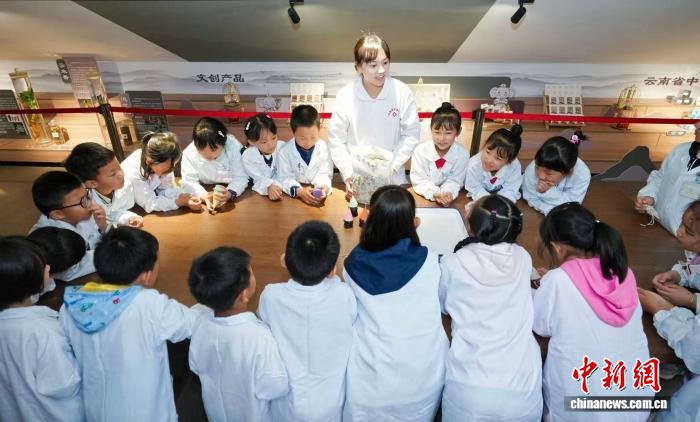
Core Viewpoint - The development of the traditional Chinese medicine (TCM) industry in Yunnan is being discussed during the provincial two sessions, focusing on transforming its rich resources into strong economic momentum [1][6]. Group 1: Industry Resources and Current Status - Yunnan is a major province for Chinese medicinal materials, possessing 8,875 out of approximately 18,800 medicinal biological resources in China [1]. - The area dedicated to TCM cultivation in Yunnan reaches 10.72 million acres, maintaining the top position in the country for six consecutive years [1]. - The production of key medicinal materials like Sanqi and Dendrobium accounts for over 90% of the national output, with the comprehensive output value of TCM exceeding 180 billion yuan [1]. Group 2: Challenges and Recommendations - The processing conversion rate of TCM in Yunnan is only 29%, indicating a significant gap between raw material production and value-added processing [1]. - Suggestions from committee members include promoting the "Linxia Sanqi" model to utilize forest land for cultivation, thereby enhancing the quality of medicinal materials [2]. - The establishment of a collaborative conversion mechanism between medical institutions, research institutes, and enterprises is recommended to bring clinically validated formulations to market [2]. Group 3: Industry Development Strategies - A collective proposal suggests systematic efforts in breeding, standardization, deep processing, and research support to develop TCM into a pillar industry following tobacco [3]. - The integration of TCM with cultural tourism and health care is emphasized, with proposals to create TCM health tourism demonstration bases leveraging Yunnan's climatic and ecological advantages [3]. - Initiatives to enhance consumer engagement through cultural festivals and health experience activities are proposed to promote TCM as a lifestyle choice [5]. Group 4: Policy Alignment - The Yunnan provincial government has outlined plans in its 2026 work report to extend the TCM industry chain, cultivate major TCM varieties, and enrich the cultural and health tourism aspects of TCM [5]. - Yunnan Baiyao has established the world's first "lighthouse factory" in the field of TCM health products, reflecting the alignment of industry development with government policy [5].
十九城产业新坐标·河南经济新方位丨南阳:万斛药香 科创远航 南阳中医药产业全链突围
He Nan Ri Bao· 2026-01-23 01:12
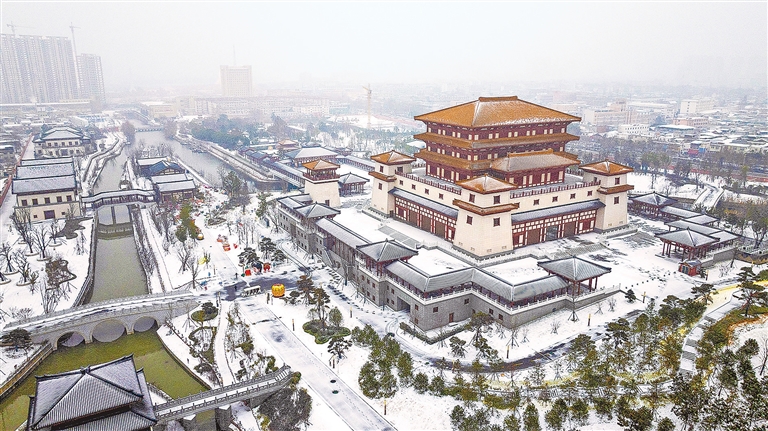
Group 1 - Nanyang is leveraging its cultural heritage as the core engine for the development of its traditional Chinese medicine (TCM) industry, with the establishment of the Medical Sage Cultural Park attracting over 1 million visitors by 2025 and boosting sales of cultural and health products by 47% year-on-year [1] - The city has achieved a remarkable increase in annual output value from 26 billion to 45 billion yuan over five years, positioning "Wan Medicine" as a significant marker of industrial upgrade in Henan province [1] - Nanyang has successfully built a comprehensive industrial chain encompassing "industry + agriculture + commerce + healthcare + wellness + food," ensuring full control from production to end-user [2] Group 2 - Nanyang's mugwort industry dominates the market, holding over 70% of the national share and generating an annual output value exceeding 20 billion yuan, with over 1,000 product varieties developed [3] - The city has established a robust healthcare network with 65 TCM hospitals and 1,058 TCM clinics, ensuring that 100% of township health centers and 95% of village health stations provide TCM services [3] - The implementation of the "Nanyang Model" for family contract services by thousands of TCM practitioners has been recognized in the "Healthy China Medical Blue Book" [3] Group 3 - Nanyang has 34 academicians and experts serving as development advisors, while 132 high-end TCM talents trained by the Zhongjing Academy are contributing to public health [5] - The newly enacted "Nanyang City TCM Industry Development Promotion Regulations" aims to strengthen the protection of local medicinal resources, providing a solid foundation for industry growth [5] - With 1.68 million acres of medicinal herb cultivation and 53 large-scale TCM enterprises, Nanyang is fostering a cluster effect and promoting the integration of TCM with cultural tourism [5]

首单天然牛黄进口落地福建 牛黄价格攀升现状有望得到抑制
Xin Hua Cai Jing· 2026-01-15 03:35
Core Viewpoint - The successful import of 200 grams of natural bezoar from Argentina marks China's first import of this precious traditional Chinese medicine ingredient, reflecting the expansion of the country's import capacity for valuable Chinese medicinal materials [1][2]. Group 1: Industry Context - The import of natural bezoar is a response to the severe shortage and high demand for this ingredient in the domestic market, which has historically led to smuggling and associated risks [2]. - The domestic supply of natural bezoar is limited due to the low probability of its formation in cattle, making it rare and valuable [1][2]. - The rising prices of natural bezoar have increased the costs of related traditional Chinese medicines, creating a mismatch between raw material demand and production capacity [1][2]. Group 2: Company Impact - The successful import is significant for Zhangzhou Pien Tze Huang Pharmaceutical Co., Ltd., as it may alleviate production and supply pressures for their traditional Chinese medicines [2]. - The company plans to potentially expand its import volume of natural bezoar based on production needs, indicating a strategic move to stabilize its supply chain [2]. - As the first company to import natural bezoar, Zhangzhou Pien Tze Huang is positioned to benefit from the newly opened supply channel, which could lead to a more stable pricing environment for this ingredient [2][3].

给每味中药饮片配上新“医保身份证”
Xin Lang Cai Jing· 2026-01-10 18:28
Core Viewpoint - The National Healthcare Security Administration (NHSA) has revised the coding rules for traditional Chinese medicine (TCM) decoction pieces, providing each piece with a new "medical insurance ID," which aims to enhance the efficiency of medical insurance services and support the high-quality development of the TCM industry [1][2]. Group 1: New Coding System - The new coding system assigns a unique medical insurance identification code to each TCM decoction piece, which serves as a "universal key" in various aspects such as billing, reimbursement, and fund supervision [1]. - The updated system includes over 10,000 TCM decoction piece codes, covering more than 3,000 types of medicinal materials and encompassing 22 categories of different effects, achieving a "nationally unified code" [1]. Group 2: Enhancements in Transparency - The revision retains four core elements: identification code, standard classification code, efficacy classification code, and name code, while adding two new key codes: the "authentic medicinal material identification code" and the "TCM decoction piece enterprise code" [2]. - The authentic medicinal material identification code provides geographical certification for specific varieties, while the enterprise code allows for precise tracking of production responsibility, enhancing transparency and accountability in the industry [2]. Group 3: Future Developments - The NHSA plans to continuously improve the TCM decoction piece information database and will organize relevant enterprises to update and maintain coding information in a timely manner [2]. - There are ongoing efforts to solicit opinions on the coding scheme for traceability codes, aiming to promote more standardized and refined management of TCM decoction pieces [2].
研判2025!中国颈椎病用药行业政策汇总、产业链、发展现状、竞争格局和发展趋势分析:颈椎病患者群体增加,行业需求量持续上涨[图]
Chan Ye Xin Xi Wang· 2025-10-25 02:03
Core Insights - The aging population in China is leading to an increase in cervical spondylosis cases, particularly among those aged 60 and above, while younger demographics are also increasingly affected due to modern lifestyle habits [1][7] - The market for cervical spondylosis medication is projected to reach 13 billion yuan in 2024, reflecting a year-on-year growth of 16.1% [1][7] - The industry is supported by government reforms aimed at expanding healthcare coverage and improving the pharmaceutical sector [1][5] Industry Overview - Cervical spondylosis is caused by degenerative changes in the cervical spine, leading to various types such as nerve root type, spinal cord type, sympathetic type, and vertebral artery type [3] - The treatment typically begins with non-surgical methods, including physical therapy, exercise therapy, and medication [4] Market Dynamics - The cervical spondylosis medication market is expanding due to an increase in patient numbers, with over 200 million patients reported in 2024, and more than 40% of them being under 30 years old [6][7] - The demand for cervical spondylosis medications is rising as healthcare reforms enhance public access to medical services [1][7] Competitive Landscape - The market is characterized by intense competition among domestic pharmaceutical companies, with some firms focusing on product development and brand building to capture market share [8][9] - Key players in the industry include Yunnan Baiyao Group, Renhe Pharmaceutical, and Henan Lingrui Pharmaceutical, among others [9] Industry Trends - The product structure is evolving, with non-steroidal anti-inflammatory drugs (NSAIDs) remaining dominant, while new drug types like targeted therapies and biological agents are emerging [10] - Companies are increasingly looking to expand into international markets, enhancing brand presence and product quality to compete globally [11][12] - Sales channels are diversifying, with a growing emphasis on online sales and the establishment of specialized health sections in pharmacies [13]

特一药业(002728) - 002728特一药业投资者关系管理信息20251024
2025-10-24 10:28
Group 1: Product Strategy and Sales Performance - The company has implemented a refined channel management strategy for its core product, "Zhi Ke Bao Pian," focusing on different specifications and targeted marketing efforts [3][4][5]. - As of the end of Q3 2023, sales of "Zhi Ke Bao Pian" reached 435 million pieces, which is 64% of the sales volume from the same period last year, exceeding initial expectations [5]. - The company aims to achieve an annual sales target of 100 million boxes for "Zhi Ke Bao Pian" within 3-5 years, with a target channel coverage rate of approximately 40% [5]. Group 2: Online and Offline Sales Channels - The online sales team has expanded from 2 to 12 members, establishing a comprehensive operational system for B2C and O2O channels [6][7]. - In Q3 2025, "Zhi Ke Bao Pian" ranked first in the cough medicine category on JD.com and was among the top three in the "non-prescription cough medicine" category on Pinduoduo [6][7]. - The company plans to enhance its online presence while maintaining strong offline channel partnerships, focusing on synergistic marketing strategies [8]. Group 3: Marketing and Sales Expenses - Sales expenses for the first three quarters of 2025 totaled approximately 23.63 million yuan, showing significant growth compared to previous years due to increased investment in brand building and marketing strategies [11][12]. - The marketing promotion expenses saw the most substantial increase, reflecting a shift to a diversified advertising approach [12]. - The company anticipates maintaining a sales expense ratio of around 35% for the full year, with expectations for a gradual decrease in this ratio as sales scale increases [13]. Group 4: Future Product Development and Market Expansion - The company has developed a comprehensive product lineup in the respiratory system category, including cough and cold medications, with a focus on enhancing market penetration for "Zhi Ke Bao Pian" [9][10]. - The "Pifu Bing Xue Du Wan" product has seen stable sales of approximately 15 million yuan in Q3 2025, with plans for channel expansion and professional promotion in the third terminal market [14][15]. - The company is exploring potential mergers and acquisitions to enhance its competitive edge and support long-term growth, particularly in the context of the Chinese medicine industry [16].

三年磨一剑,看潍坊青州如何下好中医药产业发展“一盘大棋”
Qi Lu Wan Bao Wang· 2025-10-20 23:41
Core Viewpoint - The traditional Chinese medicine (TCM) industry in Qingzhou is emerging as a significant growth driver for the local economy, supported by a comprehensive development strategy and a focus on industry integration [1][2][3] Industry Development - Qingzhou has identified TCM as one of its five key industries, establishing a new system for TCM development that emphasizes full-chain integration and industry fusion [1][2] - The city has a historical background in TCM, with records of medicinal herb cultivation dating back to the Southern and Northern Dynasties, and has been recognized for high-quality local medicinal materials [2] Agricultural Expansion - Qingzhou has promoted standardized cultivation of medicinal herbs, with successful varieties like "Qingzhou Hawthorn" and "Qingzhou Scorpion" included in the local medicinal material list [2] - The area dedicated to medicinal herb cultivation has expanded to over 100,000 acres, supporting a diverse range of herbs such as hawthorn, ginger, and duzhong [6] Talent and Innovation - The city is enhancing its TCM workforce through partnerships with educational institutions, including a framework agreement with Shandong University of Traditional Chinese Medicine [3] - High-level talent has been recruited, and technology transfer initiatives have been established, resulting in the establishment of research stations and successful technology conversions [3] Full Industry Chain - Qingzhou's TCM industry encompasses various sectors, including herb cultivation, processing, and pharmaceutical manufacturing, with a focus on high-end development [3][4] - Leading companies like Yaowang Pharmaceutical and Bokang Traditional Chinese Medicine are driving innovation and efficiency in the industry, contributing to a cluster development model [4] Diversification and Integration - The city is actively promoting a "TCM + health food" model, encouraging the development of products that integrate medicinal and dietary benefits [5] - TCM is being integrated into health and wellness tourism, with several locations recognized as TCM health tourism destinations [6] Cultural Promotion - Qingzhou is committed to preserving and promoting TCM culture through the establishment of cultural exhibition centers and community outreach programs [7][8] - The city has identified and is protecting numerous intangible cultural heritage projects related to TCM, enhancing public awareness and appreciation of TCM culture [8]
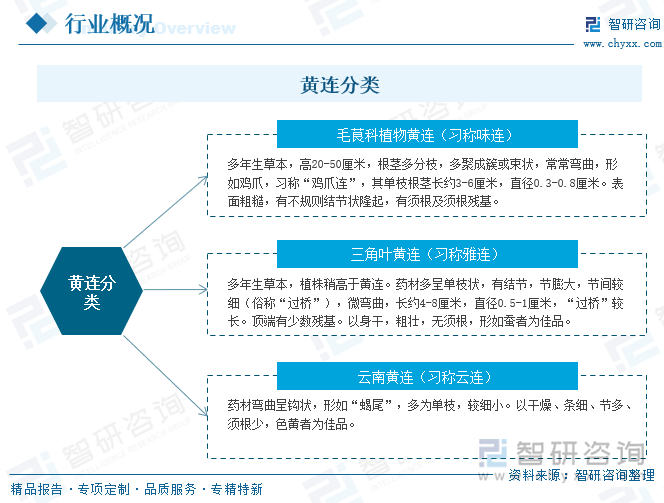
2025年中国黄连市场政策汇总、产业链图谱、供需现状、进出口贸易、竞争格局及发展趋势研判:黄连衍生产品日渐丰富[图]
Chan Ye Xin Xi Wang· 2025-08-05 02:10
Overview - The increasing national health awareness and the recognition of traditional Chinese medicine's "preventive treatment" concept have led to a growing demand for Huanglian, which has properties such as clearing heat and dampness, and detoxifying [1][9] - The demand for Huanglian in China is projected to reach 2,938 tons in 2024, representing a year-on-year growth of 8.4% [1][9] Market Policy - The Chinese government has issued several policies to support the development of the traditional Chinese medicine industry, creating a favorable environment for the Huanglian industry [4][6] - Key policies include measures to strengthen scientific regulation of traditional Chinese medicine, promote innovation, and enhance the quality of traditional Chinese medicine [4][6] Industry Chain - The Huanglian industry chain includes upstream planting, midstream processing, and downstream sales, with a focus on high-quality cultivation and various product forms [7] - Products include raw Huanglian, processed slices, traditional Chinese medicine, health products, and cosmetics [7] Development Status - The market demand for Huanglian is increasing, with applications in pharmaceuticals and health products [9] - In addition to meeting domestic needs, Huanglian is also exported, with an expected export volume of 234.67 tons and an export value of $10.81 million in 2024 [11] Competitive Landscape - The Huanglian industry is characterized by a fragmented market with many small-scale enterprises; over 80% of registered Huanglian-related companies have a registered capital of less than 1 million [13] - Notable companies include Jiuxin Traditional Chinese Medicine Group and Hongya County Wawushan Pharmaceutical Co., Ltd., which focus on quality control and product development [15][17] Development Trends - Future applications of Huanglian are expected to expand into health products, functional foods, and cosmetics, driven by consumer demand [20] - The international market's growing demand for natural medicines presents opportunities for Huanglian exports, prompting companies to enhance quality standards and product quality [20]