监控摄像头

Search documents
英国保护《大宪章》摄像头是中国造,有人挑事:这是民主象征,令人痛心
Guan Cha Zhe Wang· 2026-02-01 04:33
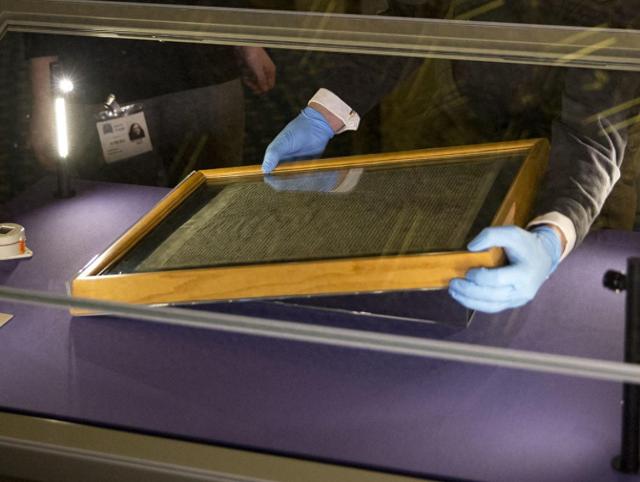
Core Viewpoint - The incident involving the monitoring cameras produced by Chinese company Dahua Technology at Salisbury Cathedral has sparked controversy, with anti-China forces demanding the removal of the equipment due to alleged human rights concerns related to Xinjiang [1][5]. Group 1: Incident Overview - Salisbury Cathedral, which houses one of the four original copies of the 1215 Magna Carta, has faced backlash for using surveillance cameras made by Dahua Technology, a Chinese firm [1][4]. - The World Uyghur Congress (WUC), an organization known for its anti-China stance, has sent letters to both Salisbury Cathedral and the Parthenon in Greece, urging the removal of Chinese-made surveillance equipment [1][5]. - The WUC has been labeled a separatist organization by the Chinese government and has been involved in various anti-China activities [1]. Group 2: Allegations and Responses - The WUC claims that Dahua's technology is implicated in "genocide or crimes against humanity" in Xinjiang, asserting that the surveillance systems play a role in monitoring and controlling the region [1][7]. - Ukrainian organizations have echoed these concerns, alleging that the cameras have systemic security vulnerabilities that were exploited by Russia during the conflict with Ukraine [6][7]. - Dahua Technology has firmly denied these allegations, stating that it has never developed products aimed at targeting specific ethnic or national groups and that its products meet international cybersecurity standards [7]. Group 3: Broader Context - Since 2022, the UK government has been urging departments to stop installing Chinese-made surveillance cameras in sensitive buildings, a trend that has been followed by other countries like Australia [7]. - The Chinese government has consistently opposed the broadening of national security concepts to unjustly suppress Chinese companies and has emphasized the importance of fair trade practices [7].



职场“电子眼”怎么对着我工位拍?
Xin Lang Cai Jing· 2026-01-21 18:31
Core Viewpoint - The article discusses the increasing trend of employers installing surveillance cameras and monitoring employees' computer and phone usage, raising concerns about the balance between employers' management rights and employees' privacy rights [1][2][3]. Group 1: Employee Monitoring Practices - Some companies have installed surveillance cameras in workplaces, leading to individual monitoring of employees without prior notice, which has caused discomfort and anxiety among workers [1][2]. - Legal disputes have arisen regarding the legitimacy of monitoring employees' personal devices, with courts ruling that employers must inform employees about such monitoring practices to ensure legality [2][3]. Group 2: Legal and Ethical Considerations - Experts emphasize that monitoring can be a double-edged sword; if it exceeds reasonable boundaries, it may infringe on personal privacy rights [3][6]. - Employers are advised to adhere to the principles of necessity and proportionality when implementing monitoring systems, ensuring that the scope and intensity of surveillance are justified by legitimate business needs [6][7]. Group 3: Case Studies and Judicial Outcomes - In a notable case, a company was allowed to use surveillance footage as evidence in court to justify the dismissal of an employee for violating safety regulations, indicating that monitoring in non-private areas is generally permissible [5][6]. - Legal experts suggest that monitoring practices should be transparent and communicated to employees, with a focus on maintaining compliance with privacy laws [7].
亡羊补牢 卢浮宫加装一处“防盗窗”
Xin Hua She· 2025-12-24 00:30
Core Viewpoint - The Louvre Museum in France has implemented emergency security measures, including the installation of protective bars on a window following a jewelry heist in October, where thieves entered through that window [1] Group 1: Security Measures - The Louvre has decided to install protective bars on a street-facing window of the Apollo Gallery as an immediate response to the robbery incident [1] - Discussions are ongoing regarding the reinforcement of other windows, and the museum plans to install over a hundred surveillance cameras around its perimeter starting in 2026 [1] Group 2: Incident Details - On October 19, four masked individuals used a lift to break into the Apollo Gallery and stole several pieces of jewelry, with an estimated value of approximately €88 million, which remains missing [1] - A previous audit report from 2018 highlighted the Apollo Gallery's balcony as a security weak point, noting the risk of criminals using lifting devices to access the museum [1][1]
宁波“小洛熙事件”:共建社会信任不能仅靠监控
Jing Ji Guan Cha Bao· 2025-12-18 14:41
Core Viewpoint - The incident involving the premature infant "Xiao Luoxi" highlights the limitations of relying solely on surveillance technology to build social trust, emphasizing the need for deeper systemic changes in communication and accountability within the healthcare sector [1][4]. Group 1: Incident Overview - The investigation into the death of the infant after heart surgery revealed deficiencies in risk assessment, communication with family, and postoperative monitoring by the medical team [1]. - The surgical room was equipped with two cameras, one for monitoring anesthesia and another wide-angle camera without recording capabilities, which has raised public concerns about the adequacy of surveillance [1][2]. Group 2: Public Reaction and Trust Issues - Public outrage stems from empathy towards the grieving family and a broader anxiety about trust in medical institutions, leading to demands for accountability through video evidence [2][4]. - The reliance on surveillance reflects a societal trend where technology is increasingly seen as a means to fill trust gaps, with cameras becoming ubiquitous in various settings [2][3]. Group 3: Ethical Considerations of Surveillance - While surveillance can serve as a critical tool for accountability, it also poses risks of privacy violations and may not capture the complexities of medical procedures [3][4]. - The application of monitoring technology must adhere to ethical principles, ensuring that it does not infringe on individual rights or create an environment of distrust [3][4]. Group 4: Building Trust Beyond Surveillance - Restoring social trust requires more than just technological solutions; it necessitates a focus on institutional integrity, effective communication, and fostering positive interpersonal relationships [4][5]. - Transparency and empathy in public communications during crises are essential for reducing suspicion and building trust within the community [4].

明年年底前卢浮宫将加装100个摄像头
Xin Jing Bao· 2025-11-22 04:59
Core Points - The Louvre Museum plans to install 100 surveillance cameras by the end of next year to prevent theft and robbery incidents [1] - The museum will also implement an "anti-intrusion system" to prevent intruders from approaching the building [1] - This decision follows a recent incident on October 19, where four masked individuals coordinated to steal nine pieces of jewelry from the museum [1]
加拿大政府下令:海康威视停止在加运营并关闭业务
是说芯语· 2025-06-28 06:54
Group 1 - The Canadian government has ordered Hikvision to cease operations in Canada due to national security concerns, as stated by Minister Mélanie Joly [1] - The decision was made after a multi-step review process that evaluated information and evidence provided by Canadian security and intelligence agencies [1] - The scope of the national security review under the Investment Canada Act does not cover Hikvision's operations outside of Canada [2] Group 2 - The Canadian government has prohibited government departments, agencies, and Crown corporations from procuring or using Hikvision products [3] - There will be a review of existing assets to ensure that no old Hikvision products are used in the future [3] - The statement did not specify how Hikvision could potentially harm Canada's national security [3]

研判2025!中国监控摄像头行业发展历程、产业链、发展现状、竞争格局及发展趋势分析:行业销量持续上涨,双目和多目摄像头成为市场新宠[图]
Chan Ye Xin Xi Wang· 2025-05-19 01:07
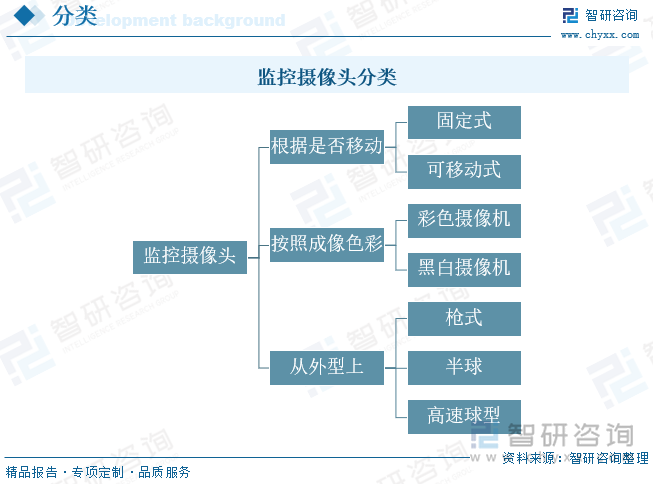
Core Insights - The demand for video surveillance is increasing due to heightened safety awareness, making it a crucial tool for public security [1][13] - The Chinese surveillance camera industry is experiencing rapid growth, with sales projected to rise from 40.39 million units in 2020 to 53.49 million units by 2024, reflecting a compound annual growth rate (CAGR) of 7.3% [1][13] - The market for optical lenses, essential for camera image quality, is also expanding, with a projected market size of 17.39 billion yuan in 2024, up 7.81% year-on-year [9] Industry Overview - Surveillance cameras are semiconductor imaging devices characterized by high sensitivity, strong light resistance, low distortion, compact size, long lifespan, and vibration resistance [3] - The industry is segmented into fixed and movable cameras, color and black-and-white cameras, and various shapes such as bullet, dome, and PTZ cameras [3] Industry Development - The evolution of surveillance cameras in China has progressed from analog to digital, with significant advancements in technology and increased government support for the security industry [5] - The integration of AI, big data, and cloud computing is driving the shift towards intelligent and networked surveillance systems [5] Market Segmentation - The market is segmented into various types of cameras, with dual and multi-lens cameras expected to capture the largest market share at 32.5% by 2024, followed by bullet-PTZ cameras at 20.1% [15] - Online sales dominate the market, with traditional e-commerce platforms like JD.com and Tmall accounting for 47.6% of sales, while offline sales represent 43.9% [17] Competitive Landscape - The market features a mix of leading brands focusing on innovation and mid-tier brands offering cost-effective products [19] - Key players include Hikvision, Dahua Technology, and Tiandy Technologies, among others [19][21] Future Trends - The industry is expected to benefit from advancements in AI, 5G, IoT, and cloud computing, enhancing the capabilities of surveillance cameras [26] - The application of surveillance cameras is expanding across various sectors, including urban management, internal security for businesses, and smart city initiatives [27][28]