
盒马超盒算NB

Search documents
即时零售“南下之战”!美团与盒马为何争相抢滩大湾区?
Sou Hu Cai Jing· 2026-03-24 02:13
Core Insights - The rapid development of the instant retail market highlights the increasing importance of internet giants in the retail sector, moving beyond user reach and traffic entry to supply chain integration, technological innovation, and ecosystem construction [1] - Meituan's "Happy Monkey" is expanding into the Greater Bay Area, targeting markets with growth potential while facing challenges such as cross-regional coordination, cold chain logistics, and competition from established brands like Hema [1][3] - The instant retail industry is undergoing a transformation, with brands needing to focus on efficiency and service as core competitive advantages [1] Market Expansion and Competition - Meituan's "Happy Monkey" is adopting a hard discount model with plans to expand from 9 to 1000 stores, targeting cities like Guangzhou, Shenzhen, and Foshan [3] - Hema plans to open nearly 10 new stores in the Greater Bay Area by 2025, focusing on emerging cities and creating a comprehensive network [3] - The competition in the Greater Bay Area is intensified by the high density of cities and the region's economic advantages, with a projected instant retail market size exceeding 1 trillion yuan by 2026 [6][7] Supply Chain and Logistics - Effective supply chain management is crucial for cross-province coordination, requiring a robust technical support system for real-time traffic data and order prediction [4] - Meituan's logistics capabilities include a vast network of nearly 8 million delivery riders and a sophisticated dispatch system that optimizes delivery routes [5] - Cold chain logistics face challenges in high-temperature environments, necessitating advancements in temperature control technology [5] Consumer Behavior and Market Trends - The Greater Bay Area exhibits a unique "dual consumption" pattern, with high disposable income and a demand for both premium and discount products [14] - Instant retail is evolving from simple product transactions to comprehensive life service offerings, with significant growth potential in fresh produce, daily necessities, and pharmaceuticals [6][17] - The market is witnessing a shift from subsidy-driven growth to a focus on efficiency and service quality, with brands like Meituan and JD.com emphasizing rapid delivery and customer satisfaction [17] Strategic Positioning - Meituan's "Lightning Warehouse" and Hema's "Store-Warehouse Integration" models present different cost structures and operational strategies, impacting their competitive sustainability [8][9] - Hema has established a localized supply chain in the Greater Bay Area, collaborating with local suppliers to enhance product offerings and customer experience [11][12] - The competition is reshaping the market landscape, with smaller players facing pressure from the pricing strategies of larger brands [15][16] Future Outlook - The expansion of instant retail is not merely geographical but also a test of supply chain capabilities and operational efficiency [19][20] - The industry is expected to see a shift towards automation and professionalization in the delivery workforce, enhancing service quality and operational efficiency [20] - As consumer habits evolve towards instant gratification, the demand for diverse product categories in instant retail is likely to grow, presenting opportunities for both large and small players [20]



零售快报 | 中国快速消费品市场平稳前行,心智与效率之争再升级
凯度消费者指数· 2026-02-04 03:53
Core Insights - The consumer index data from Worldpanel indicates that the sales of China's urban fast-moving consumer goods market will grow by 1.5% year-on-year in 2025, maintaining a stable development trend [1] - The contribution rate of final consumption expenditure to economic growth has reached 52.0%, an increase of 5.0 percentage points compared to 2024, making it the main driver of economic growth [2] - The retail market is experiencing a dual trend of "acceleration" and "braking," with retailers focusing on high-potential areas while optimizing existing resources [13][15] Market Performance - In 2025, the sales growth rate in the eastern and northern regions will exceed the overall growth rate, with lower-tier cities showing a sales growth rate of 1.9%, indicating ongoing potential in the sinking market [1] - The beverage and food categories are leading growth, with annual sales increasing by 3.6% and 3.1% respectively [1] - The modern channel sales in urban areas will see a slight decline of 0.3% in 2025, with small supermarkets capturing the demand for daily household consumption [4] Retailer Dynamics - Walmart has surpassed the Gao Xin Retail Group, with its Sam's Club maintaining rapid sales growth, increasing its market share in modern channels by 1 percentage point compared to the previous year [4] - The top ten retailers are experiencing a continuous decline in market share, with a 0.7 percentage point drop in modern channels [5] - Local retailers like Anhui Hejiafu and Hubei Huangshang are maintaining their market share in modern channels, showcasing their competitive edge [8] Consumer Behavior Trends - The consumer demand is diversifying, with new consumption scenarios emerging, particularly in out-of-home dining, which is expected to see a 6% year-on-year increase in customer flow in 2025 [2] - The penetration rate of the pre-positioned warehouse model has reached 9%, a year-on-year increase of 2.2 percentage points, indicating a shift in consumer shopping habits towards instant delivery [10] - The retail industry is evolving towards a "near-field optimization and far-field expansion" model, focusing on precise consumer engagement and comprehensive coverage [9] Strategic Shifts - Retailers are increasingly focusing on developing private labels, with the penetration rate of private brands reaching 56.8%, up over 11 percentage points from the previous year [14] - The discount retail format remains popular among consumers, with penetration rates for bulk snack stores and discount stores increasing by 4.8 and 2.9 percentage points respectively [14] - The integration of online and offline channels is deepening, with platforms like Taobao and JD.com transforming into comprehensive service platforms [17][18] Future Outlook - The retail market is expected to continue its dual path of "acceleration" and "braking," with ongoing adjustments and optimizations [15] - The focus will shift towards building emotional connections with consumers and enhancing demand response efficiency, moving from merely meeting needs to anticipating them [11][12] - The competition in the retail sector will become more complex and diverse, requiring brands and retailers to innovate and enhance service experiences to maintain competitive advantages [20][21]



2025折扣店众生相:互联网大厂打闪电战、传统商超改门店自救|年终盘点
Sou Hu Cai Jing· 2026-02-02 19:33
Group 1: Market Dynamics - The discount retail sector in China is experiencing rapid expansion with both new and existing players increasing their store openings [2][4] - JD Discount Supermarket opened its 10th store in Suzhou, marking a significant milestone for its 2026 expansion [2] - Lele's growth has transitioned from a first-mover advantage to a scale advantage, with over 9,000 stores by August 2025 [4] Group 2: Competitive Landscape - Traditional supermarkets like Wumart are cautiously entering the hard discount space, with plans to open 25 stores in Beijing by the end of 2025 [5] - Soft discount formats are facing challenges, with HiTeGo's store count dropping from nearly 500 in 2024 to about 300 by the end of 2025 [5][6] - The discount retail landscape is showing structural differentiation, with hard discount players expanding while soft discount formats struggle [5][6] Group 3: Business Models and Strategies - Different brands are adopting varied strategies in store models, product structures, and operational modes, reflecting a period of exploration and iteration in the industry [7] - JD's "big store model" contrasts with typical small community stores, featuring larger spaces and a wider range of SKUs [7][8] - Lele's flexible store formats cater to different market segments, with a mix of small community stores and larger supermarkets [12] Group 4: Supply Chain and Efficiency - The competition in the discount sector has shifted from price to efficiency, with supply chain management and operational capabilities becoming critical [15][16] - Developing private labels is a core strategy for discount retailers to establish competitive advantages, with private label gross margins significantly higher than traditional brands [15] - Lele's approach focuses on operational frugality and leveraging its purchasing power without developing private labels, achieving competitive pricing [17] Group 5: Future Trends - The discount retail sector is still in its early stages, with a limited number of stores concentrated in high-consumption areas like the Yangtze River Delta [6] - The rise of discount stores is not just an isolated innovation but is fundamentally reshaping the traditional retail value chain and distribution logic [20] - As competition intensifies, the industry is expected to undergo significant restructuring and resource consolidation [19]
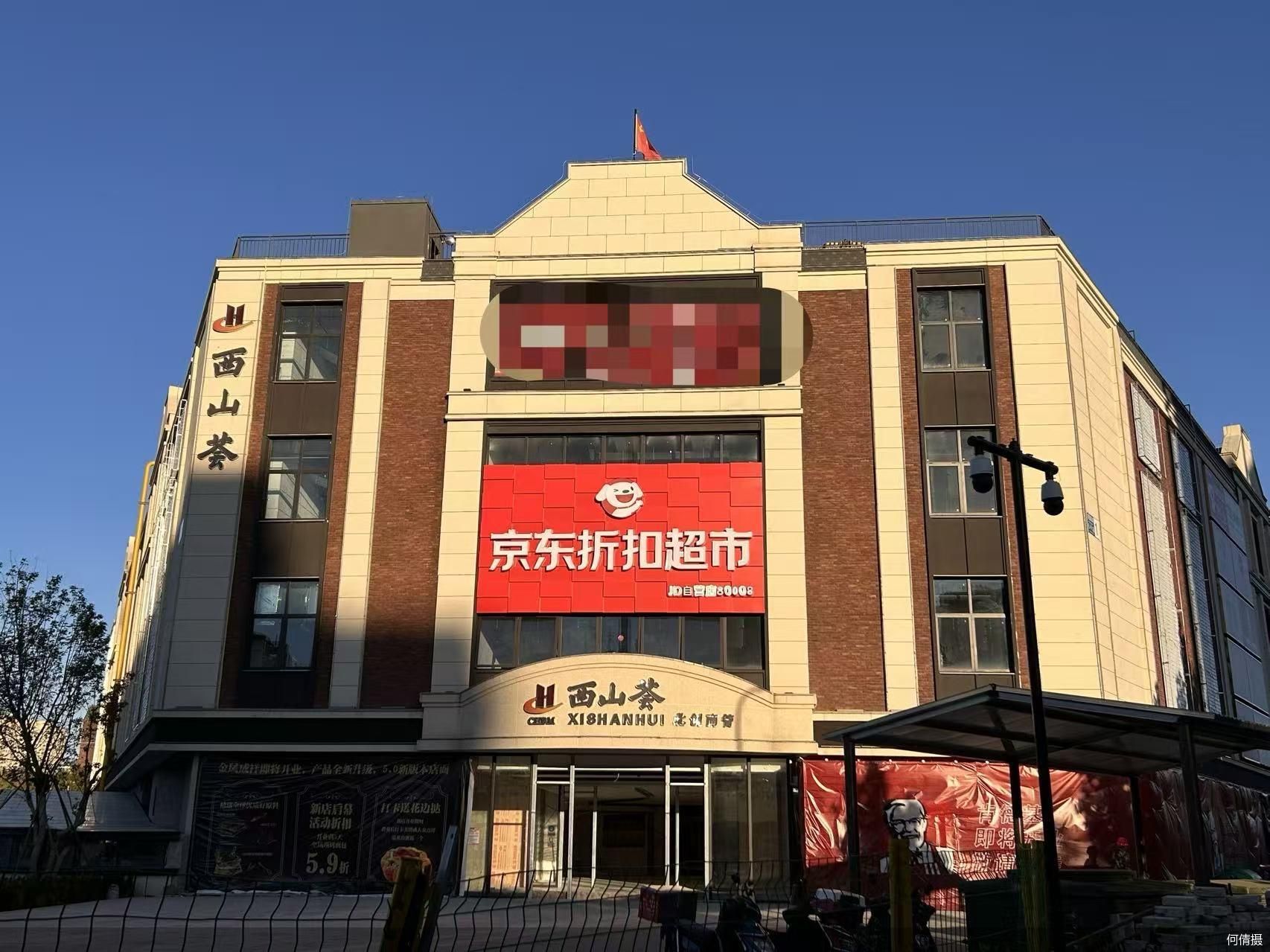
紧邻美团,京东折扣超市北京首店将落地门头沟 为何大厂偏爱五环外
Bei Jing Shang Bao· 2025-11-10 14:32
Core Insights - The competition in the instant retail sector is intensifying as major players like JD.com and Meituan are establishing physical stores in close proximity to each other, targeting community commerce as a key battleground [1][5][7] - The focus on essential consumer goods and 30-minute delivery services is aimed at capturing daily purchasing needs, particularly in suburban areas where operational costs are lower and market gaps exist [1][6][8] Group 1: Market Dynamics - JD.com is set to open its first discount supermarket in Beijing's Mentougou district, strategically located near Meituan's "Happy Monkey" supermarket, highlighting the competitive landscape of physical retail [4][5] - Both companies are leveraging their brand power to attract consumers in community settings, with JD.com focusing on essential goods and Meituan emphasizing fresh produce and baked goods [5][8] - The trend of hard discount models is gaining traction, with major retailers like Yonghui and Meituan introducing private label products to enhance consumer appeal [6][9] Group 2: Strategic Positioning - The new JD.com discount supermarket will be part of a larger shopping center that includes various services, aiming to create a comprehensive community lifestyle hub [7][8] - Meituan's "Happy Monkey" supermarket has already gained significant visibility since its opening, indicating a strong initial consumer response [5][6] - Both companies are avoiding saturated urban core areas and instead focusing on suburban markets where they can test their discount models with lower pressure [6][14] Group 3: Consumer Behavior - The shift towards community-focused retail is driven by the need for high-frequency consumer interactions, with both companies aiming to meet the demand for essential goods in densely populated residential areas [8][9] - The competitive landscape is characterized by a focus on cost control and operational efficiency, as retailers streamline their offerings to maintain profitability in a price-sensitive market [9][10] - The collaboration between e-commerce giants and local shopping centers is seen as a way to revitalize community commerce and enhance the shopping experience for consumers [11][12]
盒马超盒算NB将开放加盟
Jing Ji Guan Cha Wang· 2025-09-18 11:28
Core Insights - Hema plans to expand its hard discount supermarket brand "Super Box" through a franchise model, prioritizing applicants with existing stores in the Jiangsu, Zhejiang, and Shanghai regions [1][2][4] - The brand name "Super Box" is a rebranding of Hema's previous "Hema NB," indicating its maturity and readiness for independent growth [3][5] - The hard discount supermarket sector is becoming increasingly competitive, with major players like JD and Meituan entering the market [4] Company Strategy - Hema's franchise model aims to facilitate rapid scaling and reduce operational costs, allowing the brand to focus on brand building, supply chain optimization, and digital transformation [2][4] - The company has set an ambitious goal of achieving a GMV of 100 billion yuan by 2024, with a strategic focus on its core formats, Hema Fresh and Hema NB [3] Market Dynamics - As of the end of August, the number of Super Box stores has approached 300, reflecting significant growth in the hard discount supermarket segment [4] - The pricing strategy in Super Box stores features extremely low prices on various products, supported by a streamlined SKU selection and a high proportion of private label goods [4] - The sustainability of the hard discount model relies on high sales volume and efficient operations to achieve profitability [4]